Healthcare Gala Networking Doctors 2026: Inside the Physician-First Event Experience Most Medical Conferences Completely Ignore
Introduction: The Conference Experience Most Physicians Never Get
Each year, tens of thousands of healthcare professionals descend on industry events like HIMSS 2026, which drew roughly 24,000 to 30,000 attendees to Las Vegas in March. Yet here is the uncomfortable truth most conference guides will not tell you: the majority of those attendees are C-suite executives, health IT vendors, and digital health investors, not the physicians who see patients every day.
This creates a structural problem the industry has largely ignored. Major healthcare conferences are built around B2B lead generation and executive decision-making, leaving practicing physicians without a purpose-built networking and recognition experience designed around their actual needs.
This is where the category of healthcare gala networking for doctors in 2026 becomes essential. It represents a growing, underserved space that large conference roundups consistently overlook. This article examines why physician-specific gala events matter, what the TopDoctor Magazine gala format offers, and how attending or being recognized at such an event can meaningfully advance a physician’s career and well-being.
Why the Biggest Healthcare Conferences in 2026 Were Not Built for Physicians
The composition of major 2026 healthcare conferences tells the story clearly. According to Chief Healthcare Executive, more than 25,000 healthcare leaders registered for HIMSS 2026, with nearly one-third coming from the C-suite and nearly three-quarters identified as decision-makers or influencers.
Events like ViVE and HLTH follow the same pattern. They are framed around digital transformation, health IT investment, and vendor-buyer relationships. Clinical peer recognition and physician career development are simply not the focus.
Even respected industry roundups reflect this gap. Healthcare Dive’s “Top Healthcare Conferences to Attend in 2026” covers HFMA, the World Health Summit, and digital health events, but makes no mention of physician-specific gala dinners or peer recognition events. Conference networking guides frame all attendee value through a B2B lens: booth traffic, lead generation, and investor meetings.
The result is a clear structural gap. Practicing physicians who attend these events often find themselves peripheral to the core programming, with little agenda content addressing clinical peer relationships, specialty-specific recognition, or physician well-being.
The Physician Recognition Crisis No One Is Talking About
The data makes the case that this gap is more than an inconvenience. According to the American Medical Association, while physician burnout rates have declined for the fourth consecutive year, 41.9% of physicians still report at least one symptom of burnout. Only 56.2% report feeling valued by their organization.
The social dimension is equally concerning. The Physicians Foundation’s 2025 Wellbeing Survey found that 54% of physicians report feelings of burnout and 46% report withdrawing from family, friends, or co-workers. This is not just exhaustion; it is professional isolation.
The financial stakes are significant. According to Freed.ai, physician turnover from burnout carries an estimated cost of $500,000 to $1,000,000 per departure, making recognition and community-building investments financially meaningful for entire health systems.
There is also a strong evidence base for peer-centered solutions. A randomized clinical trial published in JAMA Network Open found that physician peer coaching produced a statistically significant reduction in burnout and improvement in professional fulfillment and work engagement.
It is no surprise, then, that regional medical galas have experienced a 30% to 40% increase in attendance across 2025 and 2026. The physician recognition crisis is not merely a wellness issue; it is a matter of career sustainability, patient care quality, and health system resilience.
What Is a Healthcare Gala for Doctors, and Why Does the Format Matter?
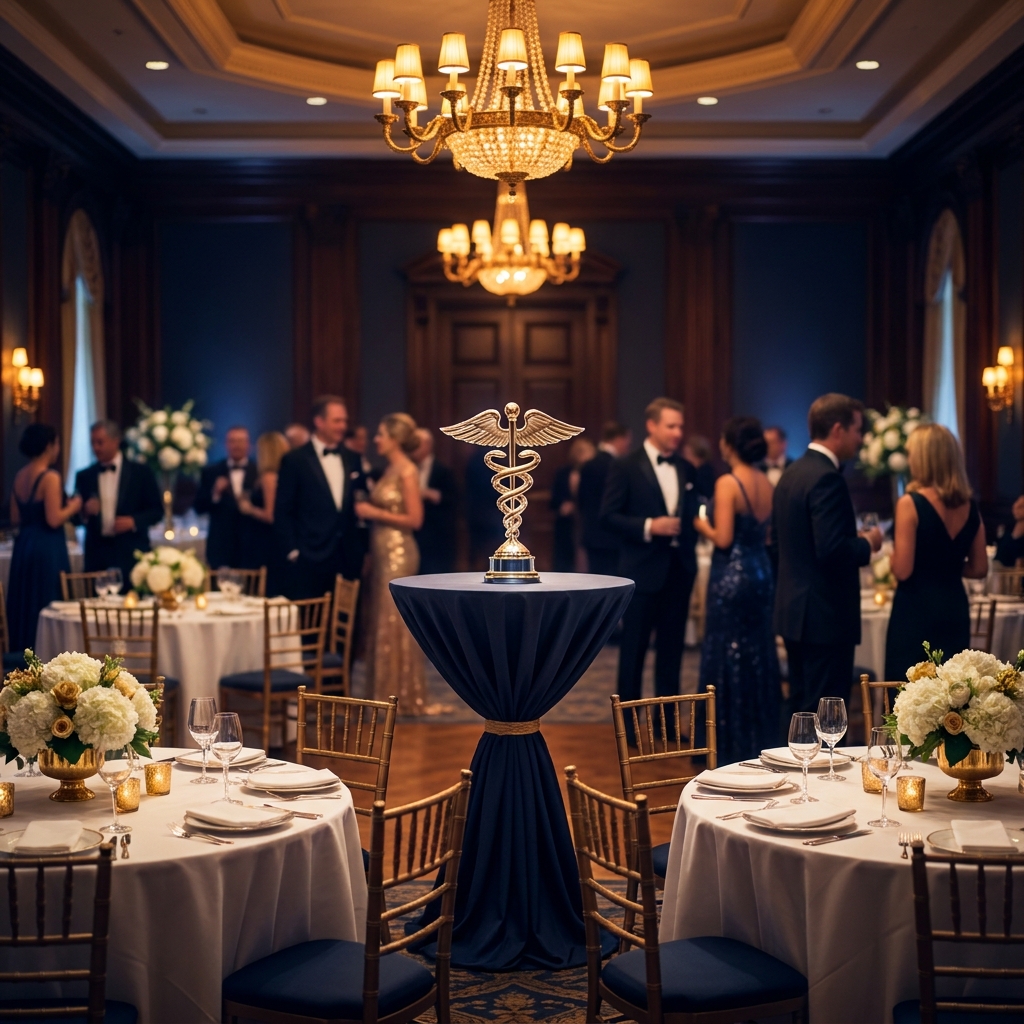
A physician-focused healthcare gala is a distinct event format. It is typically multi-day, intimate, and peer-driven, combining formal recognition (an awards ceremony), professional education (CME), charitable engagement, and high-value networking in a curated environment.
The contrast with large conferences is stark. Attendance at top-tier medical galas typically ranges from 300 to over 1,500 guests, a scale that creates an environment where meaningful peer relationships can actually form, unlike convention-center events with tens of thousands of attendees moving past each other.
Several components make the gala format uniquely valuable for physicians:
- Peer-nominated awards that carry genuine credibility
- Structured networking with fellow clinicians rather than vendors
- CME education relevant to clinical practice
- A celebratory atmosphere that publicly acknowledges physician contributions
The format has also evolved. In 2025 and 2026, digital components such as live-streaming, social media walls, digital award certificates, and post-event highlight reels distributed via LinkedIn and YouTube now extend gala reach far beyond the event itself. This matters for careers: a 2025 working paper published on SSRN found that physician peer recognition influences patient consultation selection, meaning awards and public recognition carry tangible practice-building value.
Inside TopDoctor Magazine’s Physician-First Gala Experience
TopDoctor Magazine is a digital-first healthcare media company with more than 197 published issues. Its mission centers on bridging the gap between healthcare providers and patients while fostering connections within the broader health and wellness community.
The TopDoctor Medical Gala Awards Dinner is built around a clear idea: a multi-day event purpose-built around physician peer recognition, CME education, charitable giving, and clinical networking. It directly addresses the structural gap left by executive-focused conferences.
The event draws physicians, hospital executives, pharmaceutical and device company representatives, and healthcare investors. This creates a cross-sector networking environment that benefits physicians without centering the agenda on vendor interests. The intimate, curated nature of the event is a deliberate design choice that enables the depth of connection large conferences cannot provide.
Day-by-Day: What Physicians Experience at the TopDoctor Gala
For physicians wondering what actually happens at a medical gala, the following is a practical preview of the three-day arc.
Day 1: Charity Golf and Evening Networking
Day 1 opens with a charity golf event. For a $297 donation fee, participants compete for prizes that include cash and a car, with proceeds benefiting Veterans. This connects physician participation to a meaningful philanthropic cause from the very first hour.
The golf format offers dual value. It creates low-pressure, recreational relationship-building that allows physicians to connect authentically before any formal programming begins. The evening then transitions into a networking party, an informal setting where physicians can meet peers across specialties ahead of the structured Day 2 agenda.
The Veterans charity component is not incidental. It reflects TopDoctor’s organizational values and resonates strongly with physicians who prioritize service and giving back.
Day 2: CME Education and the Gala Awards Ceremony
Day 2 begins with physician educational training. This is CME-eligible content designed for practicing clinicians, covering topics relevant to clinical practice, emerging medicine, and professional development, not a series of health IT vendor pitches.
The centerpiece is the formal gala dinner and awards ceremony, a celebratory experience that publicly honors physicians in front of their peers. The awards span seven categories: Technology, Patient Recommendation, Peer Review, Local Area, Ultimate Practice, Entrepreneurship, and Philanthropy.
What gives these awards legitimacy is the nomination process. Nominations must be submitted by another doctor, a patient, or a TopDoctor Magazine representative, never by the nominee. For a profession where only 56.2% of physicians feel valued by their organization, public peer recognition in a formal setting carries significant professional and psychological weight.
Day 3: Advanced Education and Presentations
Day 3 serves as the educational deepening phase, offering additional presentations and sessions that allow physicians to continue learning after the awards ceremony.
This structure creates sustained peer relationship development rather than the transactional, badge-scanning networking of large conferences. Connections formed on Day 1 deepen through shared learning on Day 3. The format also aligns with the 2026 trend of live CME events blending in-person moments with digital touchpoints. Taken together, the three days deliver a complete physician experience: philanthropy, community, recognition, and education in one curated arc.
The Seven Award Categories: What They Recognize and Why They Matter
The breadth of the TopDoctor award categories ensures that excellence across many dimensions of medical practice can be acknowledged, not just a single “physician of the year.”
- Technology: Honors physicians innovating clinical practice through technology adoption, digital health tools, or medical device integration.
- Patient Recommendation: Recognizes physicians whose patients advocate for their care, grounding recognition in the patient-physician relationship.
- Peer Review: The most credibility-intensive category, recognizing physicians whom colleagues identify as exemplary and directly aligned with the peer-driven recognition model the research supports.
- Local Area: Celebrates physicians making a meaningful impact in their specific geographic community.
- Ultimate Practice: Recognizes excellence in practice management, patient experience, and clinical operations.
- Entrepreneurship: Honors physicians building companies, developing products, or advancing healthcare business models.
- Philanthropy: Recognizes physicians whose charitable giving and community service extend beyond their clinical role.
Unlike single-category awards at large conferences, this multi-category structure reflects the genuine diversity of physician career paths.
How Physician Gala Recognition Translates to Real Career Value
The practical question is worth addressing directly: what does attending or being recognized at a physician gala actually do for a doctor’s career? The answer spans several concrete areas.
- Referral network expansion: Specialty-diverse networking creates cross-referral relationships that siloed conferences cannot replicate.
- Practice visibility and patient acquisition: The SSRN working paper found that peer recognition influences patient consultation selection, so awards directly affect patient choice.
- CME credit: The educational programming satisfies licensure requirements while connecting physicians to peers.
- Media and editorial coverage: TopDoctor Magazine’s editorial platform means honorees receive profile coverage, digital magazine features, and social media recognition.
- LinkedIn and social media amplification: Digital award certificates and highlight reels create shareable career milestones that compound over time.
- Well-being and professional fulfillment: The JAMA Network Open peer coaching trial confirms that structured peer engagement reduces burnout and improves fulfillment.
How TopDoctor’s Gala Compares to Other 2026 Physician Recognition Events
The 2026 landscape includes several notable recognition events, each with its own focus. BlackDoctor’s 11th Annual Top Blacks in Healthcare Awards Gala (April 2026, Ritz-Carlton, Washington DC) recognized 13 healthcare leaders with major pharma sponsors including Novo Nordisk, Amgen, UCB, and Novartis. It is a strong model, but focused on a specific demographic niche.
The National Medical Association Annual Convention (July 25 to 29, 2026, San Juan, Puerto Rico) connects 2,500-plus healthcare professionals across 26 specialties, but is community-specific and conference-heavy rather than gala-intimate. MassMEDIC’s Medtech Impact Symposium and Gala (April 2026, Boston) uses the symposium-plus-gala format but targets medtech stakeholders. The CHPA Health In Hand Foundation Gala (November 2026, Philadelphia) focuses on OTC and pharma marketing awards, not physician excellence.
TopDoctor’s gala occupies a uniquely differentiated position: multi-specialty, physician-first, peer-nominated, CME-integrated, charitable, and built around the physician’s career and well-being. Its three-day format also creates substantially deeper peer relationship development than single-evening galas.
Who Should Attend a Healthcare Gala Networking Event in 2026
The gala format suits physicians at multiple career stages.
- Early-career physicians benefit from building a peer network and establishing visibility early, creating a public professional identity that grows over time.
- Mid-career physicians experiencing burnout or isolation find particular value, given the data on physician withdrawal from social connections.
- Physicians building or scaling a practice can leverage the Ultimate Practice and Entrepreneurship categories alongside referral network expansion.
- Physicians in high-burnout specialties have the most to gain. Advisory Board data identifies emergency medicine, urological surgery, and hematology/oncology as among the highest-stress specialties.
- Physicians who want to give back will appreciate the Veterans charity golf component and the Philanthropy award category.
The event also draws hospital executives, pharmaceutical representatives, and healthcare investors, making it valuable for physicians who want cross-sector relationships without attending a conference designed entirely around those stakeholders.
How to Nominate a Physician for the TopDoctor Awards
The nomination process is straightforward and built on peer-driven integrity. Submissions must come from another doctor, a patient, or a TopDoctor Magazine representative, never the nominee.
The criteria are clear. The nominee must be a force for positive change in medicine and wellness and must make meaningful contributions to their profession and/or patients. The process requires positive patient testimonials, a 30 to 45 minute initial interview commitment, and submission of photos, videos, or other relevant information.
When choosing a category, nominators should consider which of the seven awards best fits the physician’s strengths, whether that is Technology, Peer Review, Philanthropy, or another. Nominating a colleague, mentor, or peer is an act of professional community and peer support, not self-promotion. Readers can find the nomination platform and event registration details at topdoctormagazine.com.
Conclusion: The Physician-First Event Experience Medicine Has Been Missing
While major healthcare conferences in 2026 serve executive and vendor audiences with great sophistication, practicing physicians have been systematically underserved by the conference industry. The physician-first gala format directly addresses that gap.
The evidence points in one direction. Declining but still significant burnout rates, a recognition gap in which only 56.2% of physicians feel valued, and clinical research on peer engagement all suggest the same conclusion: structured peer recognition events are not a luxury; they are a professional and well-being necessity.
The 30% to 40% increase in regional medical gala attendance signals that physicians are actively seeking these experiences. The question is whether the events they find are designed with their needs at the center. TopDoctor Magazine’s gala answers that question with a purpose-built, multi-day, peer-nominated, CME-integrated, charitable format that treats physician recognition as the primary goal. As healthcare continues to evolve, the physicians who thrive will be those with strong peer networks, recognized expertise, and a genuine sense of professional belonging.
Physicians looking to stay current between events can also benefit from a curated health magazine for medical professionals reading list to deepen their knowledge and maintain engagement with the broader medical community.
Ready to Be Part of the 2026 Physician Recognition Experience?
Register for the gala. Visit topdoctormagazine.com for upcoming event dates, locations, and registration details for TopDoctor Magazine’s physician-first gala experience.
Nominate a deserving colleague. Recognizing a physician mentor, peer, or colleague for a TopDoctor award is a meaningful way to support the broader medical community.
Stay informed. Subscribe to the free biweekly TopDoctor Magazine newsletter to receive updates on events, award announcements, and physician recognition opportunities.
For physicians drawn to service, the gala opens with a charity golf event benefiting Veterans, an opportunity to give back while building authentic professional connections. Physicians who prioritize their own mental health during the holidays and throughout the year will find that the community and recognition built at events like this gala can be a meaningful part of sustaining long-term well-being.