Telehealth Evolution: How Virtual Care Is Reshaping the Doctor-Patient Relationship in 2026
Introduction: The Exam Room Has Gone Digital
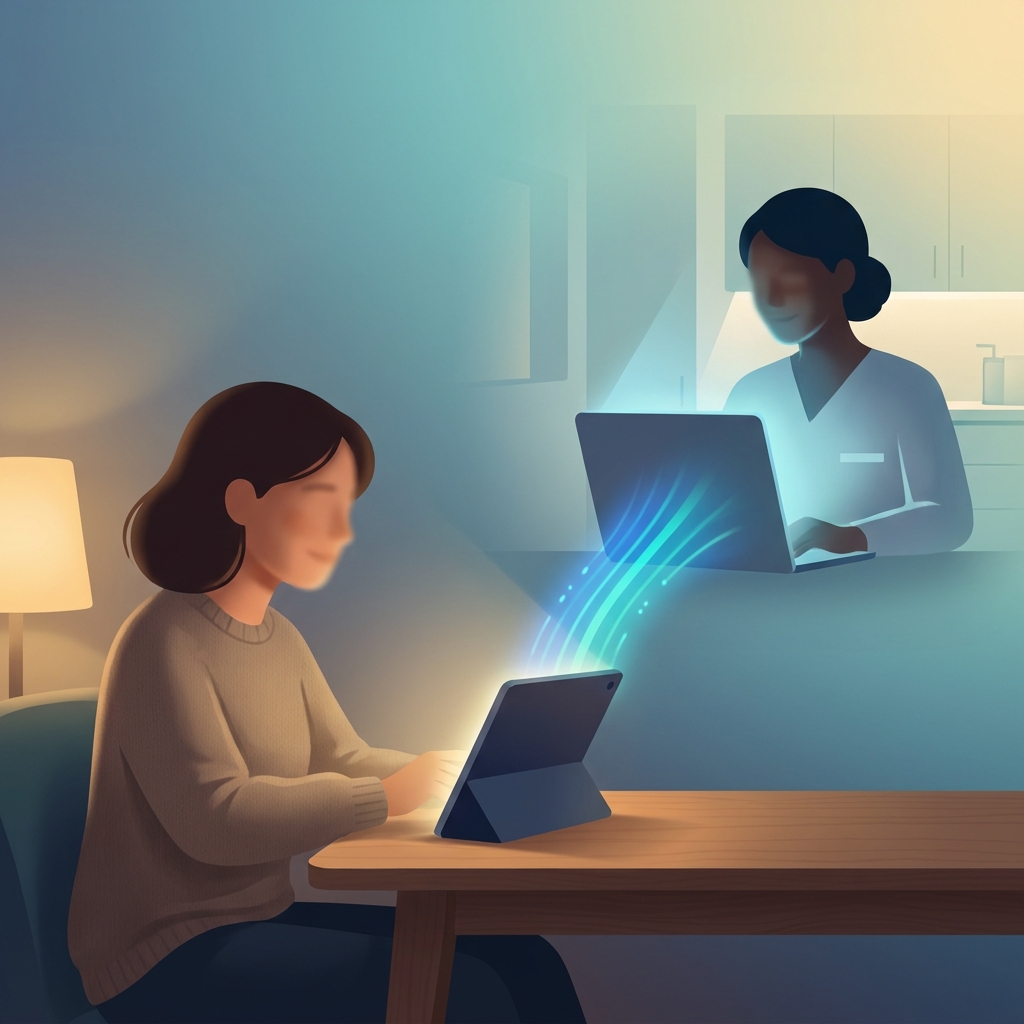
Picture two patients with the same complaint. One drives across town, sits in a crowded waiting room, and finally meets a physician who presses cold fingers against their abdomen. The other opens a laptop at their kitchen table, waves at a doctor on the screen, and describes the same symptoms while a cup of coffee steams beside them. Same medical need. Fundamentally different human experience.
This contrast defines healthcare in 2026. The global telehealth market has reached approximately $191.88 billion, and industry analysts project that 25 to 30 percent of all U.S. medical visits could be virtual by the end of the year. Behind those numbers lies a quieter revolution: telehealth has delivered unprecedented access and convenience, but it has also forced a renegotiation of one of medicine’s most intimate relationships, the bond between doctor and patient.
This article examines that shift through both lenses at once, the physician’s and the patient’s. It explores what each has gained, what each has lost, and what the relationship looks like now. Grounded in 2026 data, it is a human story about how the telehealth evolution is reshaping virtual care.
From Pandemic Pivot to Permanent Infrastructure: Telehealth’s Journey to 2026
Not long ago, telehealth was a niche tool. Only 25.1 percent of physicians used it weekly before the pandemic. By 2024, that figure had nearly tripled to 71.4 percent. What began as an emergency workaround has become permanent infrastructure.
The momentum has not slowed. National telehealth utilization rose 10.1 percent from Q4 2025 to Q1 2026, with 18.4 percent of commercially insured patients filing at least one telehealth claim in the first quarter of 2026. Institutional adoption has followed: 76 percent of U.S. hospitals now connect doctors and patients remotely.
Virtual care in 2026 also looks nothing like the simple video calls of earlier years. The landscape now includes asynchronous care, remote patient monitoring, AI-powered triage, hospital-at-home programs, and continuous wearable-based monitoring. Yet uncertainty shadows this expansion. The Consolidated Appropriations Act of 2026 extended broader Medicare telehealth flexibilities only through December 31, 2027, leaving providers and patients to plan care under a policy clock that keeps ticking.
The Doctor’s New Office: What Physicians Have Gained and Lost
For physicians, virtual care has brought real professional benefits. Schedule flexibility, no commute, access to patients in remote areas, and the ability to see more people in a day are not small things. Two in three clinicians now say virtual-only or hybrid settings best fit their lifestyle.
The burnout picture, however, is more complicated. Hybrid and mostly remote physicians report slightly lower burnout rates, in the mid-40 percent range, compared with the low-50s for mostly in-person physicians. But telehealth alone does not cure burnout. Without systemic workflow redesign, it simply shifts the pressure elsewhere.
The losses are just as real. The physical examination, the ability to read a room, and the tactile and sensory cues that inform clinical judgment all fade behind a screen. Many clinicians worry openly about missing a critical symptom they might have caught in person.
There is also a training gap. Most physicians were educated for in-person care and never formally learned to read a screen. Digital bedside manner is a skill that must be deliberately developed. Meanwhile, documentation consumes 37.1 percent of physicians’ working hours. AI-powered scribes have cut notetaking time by 20 percent per appointment, but that efficiency raises new relational questions about who, or what, is present in the room. According to Sermo survey data, 78 percent of physician respondents are optimistic that AI can improve clinic efficiency, even as 38 percent stress the need for better patient access to telehealth technologies.
Relearning Presence: The Art of Digital Bedside Manner
Building rapport through a screen has its own mechanics. Camera angle and lighting matter. So does eye contact, which paradoxically means looking into the lens rather than at the patient’s face on the monitor. Minimizing distractions and offering deliberate verbal affirmation help fill the space that physical presence once occupied.
The absence of a physical exam forces physicians to lean harder on communication, making the verbal and emotional dimensions of care more important, not less. Research shows that 66 percent of patients say feeling heard and respected directly affects their trust in their doctor, and that patient satisfaction rises by 40 percent with improved physician communication.
Silence and non-verbal cues behave differently on video, requiring physicians to consciously compensate for what the screen strips away. Notably, psychiatry leads all specialties in telehealth adoption, with 85.9 percent of psychiatrists using video visits weekly. Relationship-intensive specialties have adapted most successfully, offering a template for others. Digital bedside manner is now an emerging competency, and medical education is only beginning to formalize it.
The Patient’s Experience: Access, Comfort, and the Intimacy Paradox
For patients, telehealth has demolished familiar barriers. No travel, no waiting rooms, no time off work. The access revolution is undeniable: worldwide, more than 116 million people used online doctor consultations in 2024, up from roughly 57 million in 2019.
Yet the experience carries a paradox. Many patients report feeling more comfortable discussing sensitive topics, especially mental health concerns, from the privacy of home. Others feel the screen introduces an emotional distance that quietly undermines trust.
The digital divide complicates the story further. Rural telehealth grew faster than urban in Q1 2026, at 7.8 percent versus 6.2 percent, but the gap remains stark: 18.6 percent of urban patients filed a telehealth claim compared with only 10.3 percent of rural patients. Broadband gaps and digital literacy barriers disproportionately affect the very populations telehealth was meant to serve.
Peer-reviewed research confirms that patient-provider interactions strongly influence trust, medication adherence, self-management of illness, and quality of life. All of these dynamics are being renegotiated in virtual settings. The friction is measurable: 41 percent of telehealth professionals cite lack of patient trust as a major adoption barrier, and 91 percent report technical difficulties at least occasionally. Both factors directly shape whether a patient feels genuinely cared for.
Trust in the Age of Screens: How the Doctor-Patient Bond Is Being Rebuilt
Trust is the central currency of the doctor-patient relationship, and it is earned differently through a screen. Academic work on telemedicine and the patient-surgeon relationship describes exactly this challenge: virtual care requires adapting how trust, effective communication, and shared decision-making are established.
Transparency has emerged as a universal trust signal. A 2026 JAMA Network Open study found that patients value transparency even in AI contexts, suggesting that honesty about tools, limitations, and processes builds confidence rather than eroding it. Continuity matters too. Patients who see the same virtual provider repeatedly report higher trust, which is why health systems are designing virtual care teams to preserve those ongoing connections.
First-time virtual encounters remain the hardest. Establishing a new relationship without a shared physical space demands intentional effort from both sides. The industry knows this is unfinished business: patient engagement is simultaneously the number one challenge (22 percent) and the number one future priority (55 percent) for telehealth providers in 2026. The relational dimension remains the unsolved problem.
Mental Health’s Telehealth Dominance: A New Model of Therapeutic Relationship
One statistic reshapes everything: 52.1 percent of all telehealth patients received a mental health diagnosis in Q1 2026, ranking first across every U.S. age group and region. Since 2019, mental health telehealth claims have surged by 5,123 percent, a transformation so profound it has effectively created a new delivery model for behavioral health.
Why has mental health thrived in this environment? Seeking help from home reduces stigma. Geographic barriers vanish. The privacy of one’s own space becomes a therapeutic asset. There is also structural necessity: roughly 122 million Americans live in Mental Health Professional Shortage Areas, and a projected shortfall of 99,780 mental health counselors by 2038 makes telehealth not a convenience but a requirement for access.
The therapeutic relationship itself is evolving. The traditional model of episodic 50-minute sessions is giving way to continuous care, supported by mood tracking apps, remote therapeutic monitoring, and asynchronous check-ins between appointments. Therapists have learned that the screen can be both a barrier and a protective container. Reinforcing this shift, CMS’s ACCESS model, launching July 2026, introduces outcomes-based payment for chronic condition management, including a dedicated behavioral health track that embeds digital behavioral health into Medicare’s payment architecture.
AI as the Third Party in the Exam Room
AI is no longer confined to the back office. Increasingly, it is present in the virtual encounter itself, listening, documenting, and sometimes suggesting. Ambient Clinical Intelligence tools auto-generate SOAP notes and provide real-time clinical decision support, potentially recovering up to 20 hours per week for clinicians.
This introduces a delicate relational question. When a patient speaks and an AI simultaneously transcribes and analyzes the conversation, how does that reshape intimacy and trust? The 2026 JAMA Network Open finding on transparency offers guidance: disclosing AI tools is not merely an ethical obligation but a trust-building strategy.
Physicians remain optimistic, with 78 percent of Sermo respondents welcoming AI’s efficiency gains. Still, the profession is working out how to integrate these tools without making patients feel surveilled or depersonalized. With the healthcare technology market projected to grow at 34.5 percent annually from 2026 to 2035, these questions will only intensify. Used transparently, AI can free physicians to be more present and attentive, not less.
Remote Patient Monitoring: When Care Becomes Continuous
Remote patient monitoring has become a defining feature of 2026 care, with the market estimated at approximately $63.75 billion, driven by wearables, AI analytics, and chronic disease management. RPM transforms the relationship from episodic to continuous. Instead of a quarterly check-in, physicians receive a real-time data stream from patients’ devices.
Roughly 40 percent of Americans now rely on wearable technology to monitor their health, and these devices are evolving into medical-grade diagnostic tools with AI-powered analysis. Policy is reinforcing the trend: the CMS 2026 Physician Fee Schedule introduced new CPT codes, 99445 and 99470, that lower monitoring time thresholds and make RPM more accessible and billable, signaling that continuous monitoring is becoming the standard of care.
The relational implications cut both ways. Continuous monitoring can deepen a patient’s sense of being cared for, or it can breed anxiety and surveillance fatigue. Physicians face the challenge of managing a flood of data without losing sight of the person behind the numbers. RPM also underpins the hospital-at-home model, where telehealth and wearables enable acute care in patients’ own homes, redefining what receiving hospital-level care means.
The Equity Challenge: Who Gets Left Behind in the Virtual Care Revolution
Telehealth’s promise of democratized access has not been evenly realized, and the digital divide is a relational and ethical issue, not merely a technical one. The rural paradox is instructive: rural telehealth grew faster than urban in Q1 2026, yet rural utilization remains far lower at 10.3 percent versus 18.6 percent. Growth from a smaller base does not equal equity.
The $50 billion Rural Health Transformation Program represents a meaningful policy response, but infrastructure investment alone cannot close digital literacy gaps. The most vulnerable populations, including elderly patients uneasy with technology, low-income patients without reliable broadband, and communities with historically low trust in healthcare, remain at risk of exclusion. Peer-reviewed research confirms that telehealth can promote equity only if broadband gaps, digital literacy barriers, and structural obstacles are overcome.
The result is a bifurcating relationship. Those with digital access enjoy richer, more continuous care, while those without experience greater isolation from the system. Regulation adds pressure: starting January 31, 2026, most Medicare telehealth services reverted to rural-only rules, though mental health services remain accessible from home, a decision with direct equity consequences.
What the Future Holds: The Hybrid Care Model and the Relationship It Requires
The emerging consensus in 2026 is clear: the future is neither purely virtual nor purely in-person, but hybrid. According to HIMSS, health systems are moving from standalone telehealth programs to virtual-first service lines, building virtual care teams that include nurses, pharmacists, and care coordinators.
The hybrid model demands clarity from the doctor-patient relationship. Providers must communicate when virtual care is appropriate and when in-person care is necessary, without making patients feel dismissed. The regulatory horizon complicates long-term investment, since Medicare flexibilities extend only through December 2027.
As the U.S. telehealth market grows toward a projected $447.69 billion by 2035, the relational infrastructure of virtual care, including trust protocols, digital communication training, and equity frameworks, will determine whether that growth produces better health outcomes. The doctor-patient relationship has always evolved with technology, from the stethoscope to the MRI. Telehealth is not the end of that relationship. It is its next chapter, written by physicians and patients together.
Conclusion: The Screen Between Us Is Not a Wall; It Is a Window
Both physicians and patients have navigated genuine losses and genuine gains in the shift to virtual care. The relationship between them is not diminished; it is different. Trust, empathy, and connection are not properties of physical space. They are properties of intentional human communication, and they can be cultivated through a screen as surely as across an exam table.
The unresolved tensions remain: the digital divide, regulatory uncertainty, AI ethics questions, and training gaps. These represent the work ahead. Yet the mental health story stands as proof of concept. The 5,123 percent growth in mental health telehealth claims since 2019 is not just a number. It is evidence that millions of people found a way to be vulnerable, honest, and helped through a webcam.
Virtual care deserves to be approached not as a compromise but as an invitation: to communicate more deliberately, to build trust more consciously, and to recognize that the evolution of telehealth is ultimately the evolution of care itself.
Stay Informed: Explore More Insights on Virtual Care and the Doctor-Patient Relationship
The transformation of virtual care is exactly the kind of story Top Doctor Magazine exists to tell. Through in-depth physician profiles, healthcare innovation coverage, and patient empowerment resources, the publication bridges the gap between providers and patients with stories that matter.
- For healthcare professionals: Top Doctor Magazine’s editorial features, professional profiles, and multi-category awards program offer a platform to amplify your voice in the evolving virtual care landscape and share your telehealth journey with a broad audience.
- For patients: Use Top Doctor Magazine’s nomination platform to recognize physicians who have delivered exceptional care in virtual settings, whether across a screen or an exam table.
- For everyone: Subscribe to the free biweekly newsletter for ongoing coverage of telehealth trends, digital health tools, and the human dimensions of modern medicine.
Healthcare professionals interested in being featured or recognized are invited to connect with Top Doctor Magazine and become part of a community dedicated to celebrating those who are a force for positive change in medicine and wellness. Bridging the gap between healthcare providers and patients has never mattered more than it does in the age of virtual care.