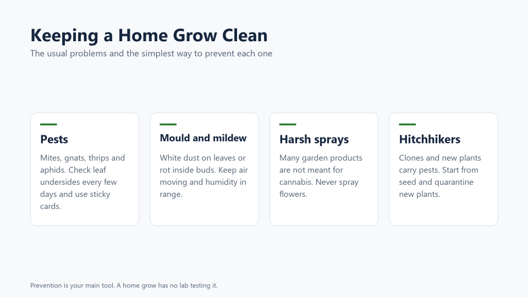
One of the main reasons adults give for growing cannabis at home is control. When you grow your own plants, you decide what goes into the soil, what touches the leaves and how the flowers are dried and stored. That control only means something if you use it well. Pests, mould and a quick reach for the wrong spray bottle can undo the whole point of a home grow.
This guide covers the simple habits that keep a home grow clean, from choosing seeds to storing the harvest. It is written for adults growing where it is allowed. In Canada, adults may grow up to four plants per household under federal law, though Quebec and Manitoba do not permit home growing. In the United States, home growing rules vary by state. Check your local rules before you start.
Why a Clean Grow Matters
Legal cannabis sold in stores in Canada and in many US states is tested for things like pesticide residue, mould and heavy metals. A home grow has no lab checking it. That makes prevention your main tool.
The two biggest problems in a home grow are usually the same:
- Pests. Spider mites, fungus gnats, thrips and aphids can move in quickly, especially indoors where there are no natural predators.
- Mould and mildew. Powdery mildew shows up as white dust on leaves. Bud rot, often caused by a mould called botrytis, starts inside dense flowers where you cannot see it until it spreads.
Growers often react to these problems with strong sprays. Many garden products are made for ornamental plants or vegetables that are washed before eating, not for a flower that is dried and kept. Some pesticides, such as myclobutanil, are not approved for use on legal cannabis in Canada at all. The safer path is to stop problems before they start, and to use only gentle, cannabis-appropriate options when you must act.
Clean Habits for Growing Cannabis at Home
Start with clean genetics. Seeds are the cleanest way to begin a grow. Pests and diseases can hitch a ride on clones and cuttings from other growers, but they rarely travel on seeds. Buy from a seed bank that lists clear details for each strain, including flowering time, height and resistance to mould. If you are not sure where to begin, it helps to read how growers compare autoflower seed banks on germination, genetics and customer support before you buy.
Choose strains that suit your space. Dense, chunky buds look impressive but can trap moisture. If your home or region is humid, look for strains described as mould resistant, or with a slightly airier bud structure. Autoflowering strains finish quickly, which means fewer weeks of exposure to pests and damp autumn weather outdoors.
Keep the grow area clean. Wipe down tents, pots and tools before each grow. Sweep up fallen leaves and avoid leaving standing water in trays, which breeds fungus gnats. Use fresh potting mix instead of reusing old soil that may carry pest eggs.
Control the air. Most mould problems are really air problems. A small clip-on fan that keeps leaves gently moving, plus an exhaust fan that swaps out stale air, does more than any spray. A cheap digital hygrometer tells you what is happening. Many growers aim for these rough targets:
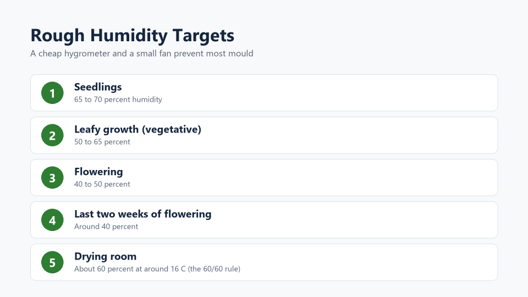
- Seedlings: 65 to 70 percent humidity
- Leafy growth (vegetative stage): 50 to 65 percent
- Flowering: 40 to 50 percent
- Last two weeks of flowering: around 40 percent
Water at the roots, not the leaves. Wet leaves, especially at night, invite mildew. Water the soil around the base of the plant and let the top few centimetres dry before the next watering.
Inspect your plants every few days. Flip leaves over and look at the undersides, where mites and their eggs hide. Yellow sticky cards near the soil and canopy catch flying pests and act as an early warning. A cheap jeweller’s loupe makes tiny pests easy to see. Catching a problem in the first week is far easier than fixing it in the fifth.
Use the gentlest option that works. If pests show up during the leafy growth stage, many growers start with a strong spray of plain water, then move to insecticidal soap or beneficial insects such as predatory mites. Read every label to make sure a product is meant for edible or consumable crops. Once flowers form, avoid spraying them at all. Anything sprayed on buds stays on buds.
Feed with care. Overfed plants grow soft, lush leaves that sap-sucking pests love, while underfed plants are weak and slow to recover from damage. Start with a quality potting mix, add fertilizer at half the strength on the label, and increase only if lower leaves start to pale. Organic options such as worm castings and compost teas feed the soil slowly and are hard to overdo. Healthy, steady growth is one of the most reliable forms of pest prevention.
Quarantine new plants. If you bring in a plant from anywhere else, including a garden centre houseplant, keep it in a separate room for two weeks before it goes near your grow.
Drying, Curing and Storing a Clean Harvest
Many home growers do everything right for three months, then lose part of the harvest in the drying room. Drying is the stage where mould risk is highest, because you are slowly pulling water out of dense plant material.
Dry slow and cool. A common guideline is the “60/60 rule”: around 60°F (about 16°C) and 60 percent humidity, in a dark room with gentle air movement that does not blow directly on the buds. Most harvests take 7 to 14 days to dry. When small stems snap rather than bend, the buds are ready to trim and jar.
Cure in clean glass. Wash and fully dry glass jars before use. Fill them about three quarters full and open them for a few minutes each day during the first week or two to let moisture escape. If buds feel damp or smell like hay or ammonia, leave the lid off for longer.
Check for mould before you store. Break open a few of the densest buds. Grey or white fuzz, dark spots inside the bud or a musty smell are signs of mould. Any affected buds should go in the compost, not in a jar. Mouldy material should not be smoked, eaten or used to make anything else.
Store dark, cool and sealed. Light, heat and air break down cannabis over time. Keep jars in a cupboard away from appliances, and out of reach of children and pets. A small humidity pack made for herbs can help hold the jar at a steady level.
Keep simple records. Note which strain you grew, any pests or mould you saw and how you dealt with them. Over time, your records show you which strains suit your home and which habits keep your harvest clean.
A clean home grow is less about special products and more about steady attention: good seeds, moving air, careful watering and a slow dry. Those habits take a few minutes a day, and they protect everything you put into the plants, from the first seed to the last jar on the shelf.
About the author: This guide was written by the grow team at Pure Seed Genetics, a cannabis seed bank offering feminized, autoflower and CBD seeds to adult growers in Canada, the United States and Australia.