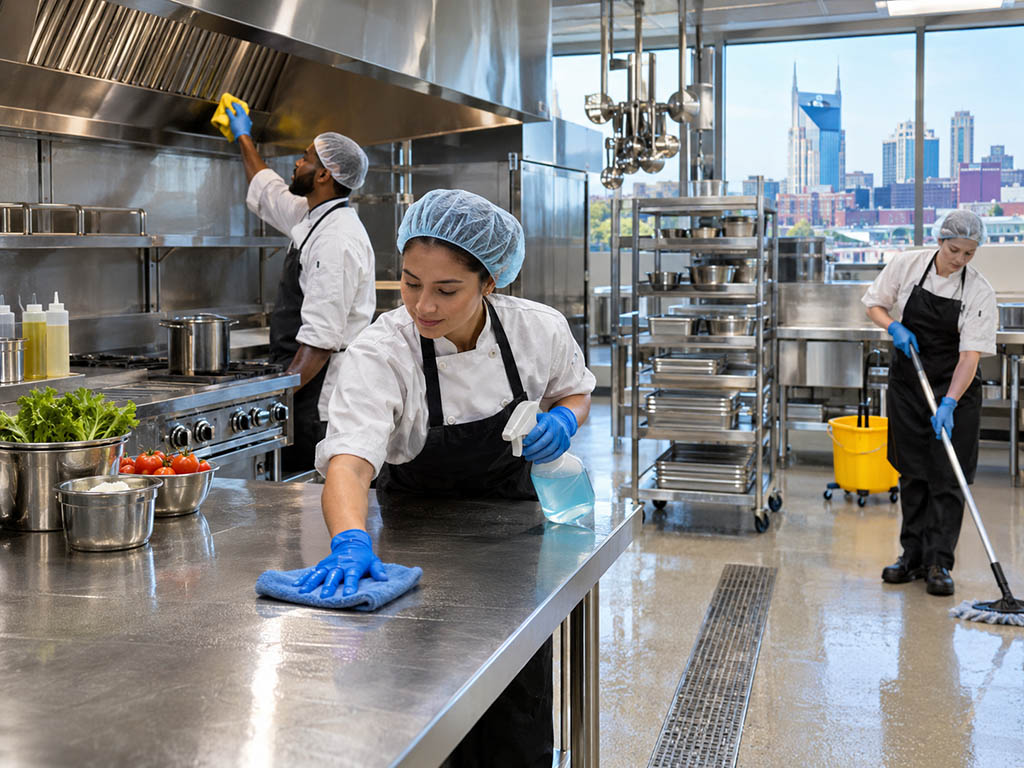
Nashville’s restaurant scene has grown as fast as its music industry, and with that growth comes a less glamorous but equally important responsibility: keeping kitchens clean enough to protect the public’s health. Behind every well-reviewed restaurant or bustling catering hall is a cleaning protocol that rarely gets mentioned on social media but determines whether a business stays open after a health inspection. For culinary businesses in particular, commercial cleaning isn’t a cosmetic choice — it’s a public health function.
Why Professional Cleaning Matters in Food Service
Restaurants, bakeries, catering companies, and commercial kitchens operate under some of the strictest hygiene requirements of any industry. The reasons go beyond appearances:
Regulatory compliance: Local health departments enforce food safety codes modeled on guidance from the FDA Food Code, and violations can trigger fines or closures.
Customer trust: Diners notice sticky tables, dusty vents, and grimy floors, and they rarely return to a restaurant that looks neglected.
Workforce health: Kitchen staff who work in poorly sanitized environments face higher exposure to pathogens, which translates into more sick days and higher turnover.
Millions of Americans get sick from foodborne illness each year, and a significant share of outbreaks trace back to contaminated surfaces and equipment rather than the food itself. That statistic alone explains why cleaning protocols in commercial kitchens have become as scrutinized as the recipes.
What Commercial Cleaning Companies Actually Do
Cleaning firms serving Nashville’s food and hospitality sector typically offer a layered set of services rather than a single generic package:
Janitorial services covering daily dusting, trash removal, and floor care to keep operations running without distraction.
Office and front-of-house cleaning tailored to spaces where customers interact directly with staff.
Gym and fitness center cleaning for hospitality venues that include wellness amenities.
School and institutional facility cleaning, often run on schedules that minimize disruption to students and staff.
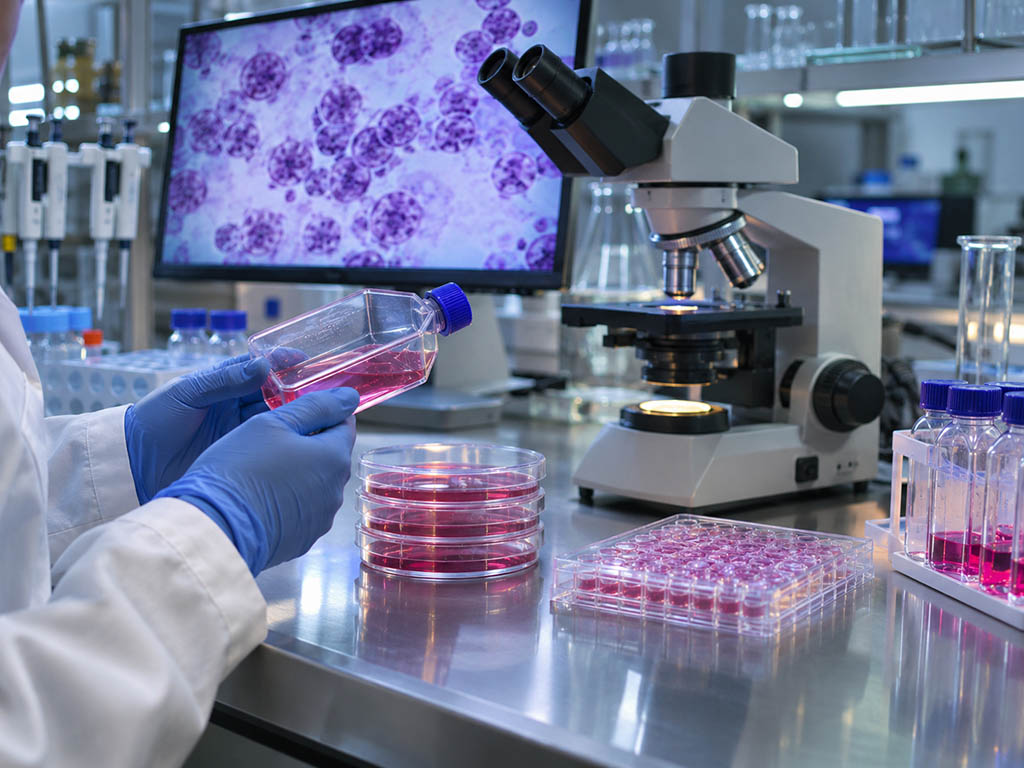
Laboratory cleaning for food-testing facilities that require strict handling of chemicals and biological material.
Each category demands a different protocol, which is why most reputable providers build custom cleaning plans instead of applying one standard to every client.
The Science Behind Disinfecting Protocols
Cleaning and disinfecting are often used interchangeably, but they are distinct processes. Cleaning removes visible dirt and debris, while disinfecting targets the microorganisms left behind. In commercial kitchens, both steps matter equally.
Modern disinfecting methods have advanced considerably over the past decade:
Electrostatic spraying, which charges disinfectant particles so they wrap evenly around surfaces rather than simply falling onto them.
UV light disinfection, used increasingly in healthcare and food-service settings to kill bacteria without chemical residue.
Fogging, which disperses disinfectant as a fine mist to reach corners and equipment seams that manual wiping often misses.
The Occupational Safety and Health Administration has published guidance on safe disinfecting practices for workplaces, underscoring that the chemicals used matter almost as much as the method.
The Case for Green Cleaning Products
Sustainability has become a bigger factor in how Nashville businesses choose their cleaning partners, and for good reason. Green cleaning products reduce the chemical load in food-prep environments, which matters both for air quality and for surfaces that come into direct contact with food.
Among the documented benefits:
Lower pollution footprint, since most green formulas use biodegradable ingredients.
Better indoor air quality, with fewer volatile organic compounds released into enclosed kitchens.
Reduced irritation risk for cleaning staff, who are often exposed to these chemicals daily.
Residue-free surfaces, which matters directly in culinary settings where cutting boards and prep stations need to stay chemical-free.
The Environmental Protection Agency publishes criteria for identifying genuinely greener cleaning products, which is a useful starting point for any business vetting vendors rather than taking marketing claims at face value.
Specialized Cleaning for Industrial and Construction Sites
Beyond restaurants and offices, Nashville’s growth has fueled demand for industrial and construction-adjacent cleaning services. These aren’t glamorous jobs, but they carry real safety stakes:
Industrial floor cleaning prevents dust and debris buildup that leads to slip-and-fall injuries.
Construction sweeping clears leftover materials so sites can be occupied or inspected safely.
Regulatory compliance for both categories helps businesses avoid fines tied to workplace safety violations.
How This Connects Back to Culinary Safety
For restaurants and food producers, all of these services converge around one goal: preventing the kind of contamination that leads to foodborne illness outbreaks. Deep cleaning routines reach areas where pathogens accumulate unnoticed. Disinfection protocols remove what cleaning alone can’t. And compliance expertise keeps businesses aligned with shifting health codes.
Commercial cleaning providers that handle kitchens, including Coverall PCs, Jan-Pro, and Anago Cleaning Systems, generally structure their service plans around food-safety priorities instead of applying generic office protocols. That distinction matters, since a cleaning schedule designed for a corporate office doesn’t account for grease traps, walk-in coolers, or the bacterial load that builds up around prep stations.
The Bottom Line
Commercial cleaning in Nashville has evolved from a back-office line item into a frontline health measure, particularly for the city’s food and hospitality businesses. As health codes tighten and customer expectations rise, the businesses that treat cleaning as a strategic investment — not an afterthought — are the ones most likely to protect both their reputation and the people who walk through their doors.