In the prevailing model of modern mental health, the standard “sick care” approach often feels like a closed loop. A patient enters a clinic with debilitating symptoms, receives a psychiatric prescription, and finds themselves managing those symptoms—and the subsequent side effects—for years, if not their lifetime.
Yet a quiet revolution is taking place in academic research, clinical practice, and nutritional psychiatry, driven by a simple biological truth: the brain is an organ, and like every other organ in the human body, its function is influenced by the nutrients it receives.
For more than two decades, Hardy Nutritionals® has helped advance this conversation through its commitment to broad-spectrum micronutrient research and mental wellness. Founded by David Hardy, the company has become recognized for its work exploring how broad-spectrum nutritional support may influence psychiatric and neurological health.
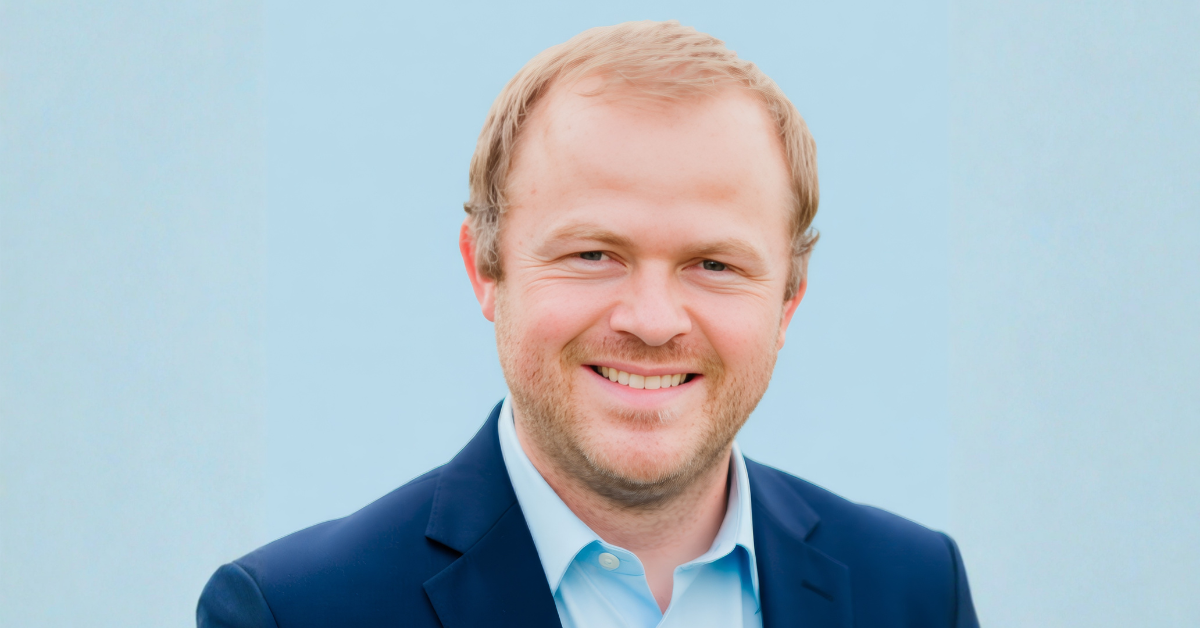
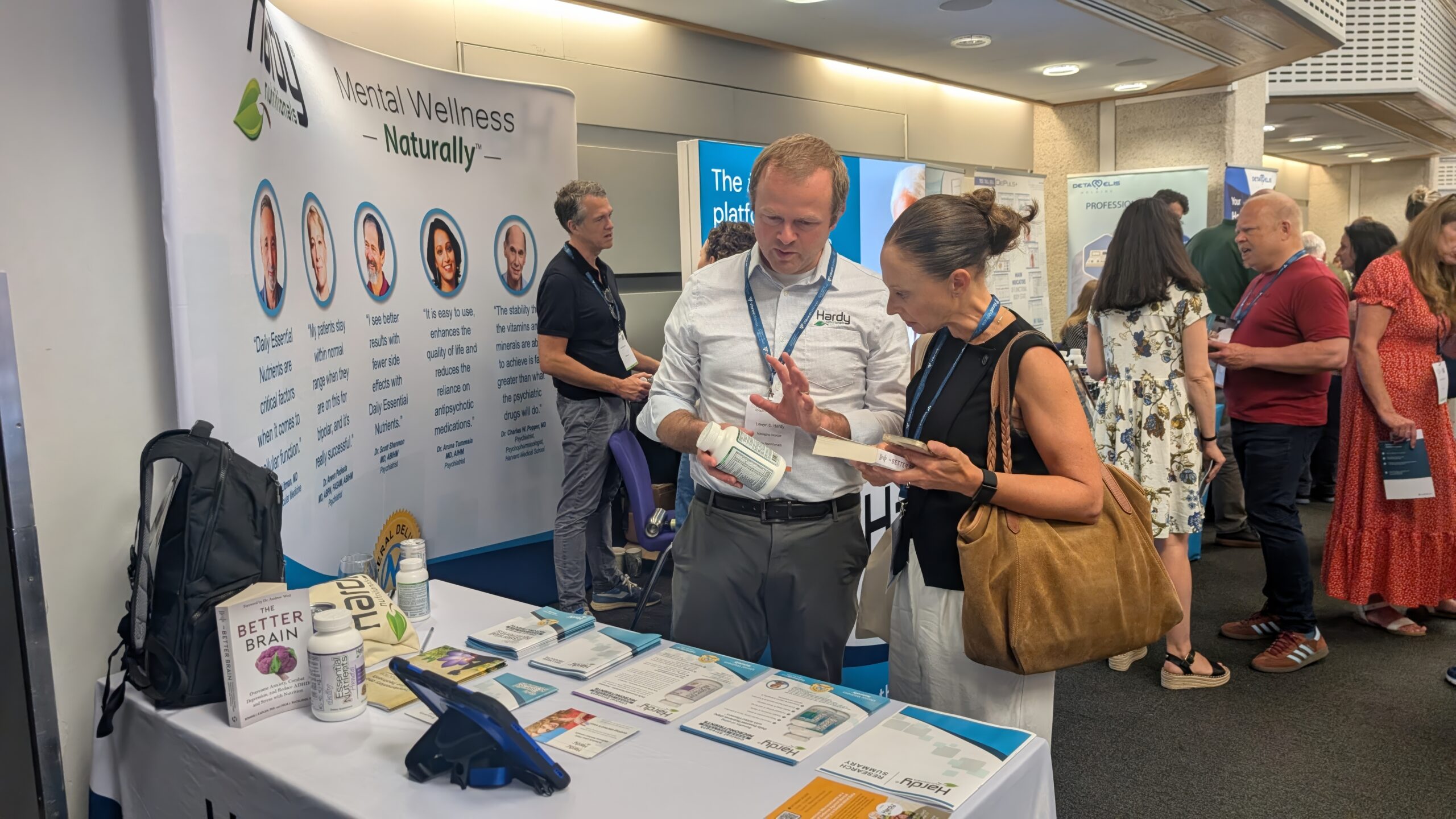
Today, Managing Director Lowyn D. Hardy continues that mission, helping guide the company’s efforts in research, education, and advocacy. Under his leadership, Hardy Nutritionals® remains focused on the belief that micronutrient supplementation is not merely a complementary approach but an important consideration in supporting mental wellness.

A Legacy Born in the Field
To understand the mission of Hardy Nutritionals®, one must look past the modern corporate branding to the foundational lessons learned decades ago. Hardy’s father, a trained high school biology teacher in the 1970s, found the constraints of the classroom insufficient to satisfy his entrepreneurial spirit. His career path took him into the agricultural industry of southern Alberta, Canada, where he spent two decades formulating feed supplements for livestock.
While the goal in agriculture—maximizing yields and health in cattle and hogs—may seem worlds away from human psychiatry, the biological mechanisms are strikingly similar. Through his work with livestock, Lowyn’s father discovered that specific nutrient deficiencies could lead to devastating consequences. For example, fatal grass tetany in cattle can result from a magnesium deficiency, and behavioral volatility in confined hogs can be due to a lack of essential minerals in their diets. By providing a precisely balanced, broad-spectrum array of vitamins and minerals, he found he could mitigate aggression, improve health outcomes, and increase resilience.
In 1996, these lessons were thrust into the human context when Lowyn’s father met Anthony Stephan, whose family had been decimated by severe mental illness. “My dad didn’t have a lot of experience with mental illness in humans, but he did have this experience with animals, and he knew that nutrition was really important,” Lowyn explained.
Lowyn’s father applied the same principles of incorporating a broad spectrum of minerals and vitamins into animal diets to two of Tony’s children who had been diagnosed with Bipolar Affective Disorder. The approach yielded highly transformative results. The situation became deeply personal a few years later, when two of Lowyn’s own siblings were diagnosed with serious psychiatric conditions.
As Lowyn recalled, “For both myself and my dad, this was a turning point. It’s one thing to help other people in a professional setting, but applying it within your own home is where the rubber really meets the road.”

The “Dam” Analogy: Why Broad-Spectrum Matters
One of the most persistent hurdles to changing public perception is the conventional belief that a single nutrient, such as magnesium or Vitamin D, is the “silver bullet” for complex brain disorders. Lowyn argued that this is fundamentally flawed. He frequently employs a poignant analogy to explain why: imagine a dam with dozens of holes. If a technician arrives and plugs only one or two of those holes, the structure remains critically compromised, and the water continues to breach.
“The single nutrient strategy, where you’re only taking one or two nutrients to try to solve the problem, is at odds with human physiology. Optimal functioning requires the presence of a wide range of nutrients consumed in balance rather than one nutrient provided in high doses,” Lowyn stated.
This is the bedrock of the company’s philosophy. Hardy Nutritionals® focuses on delivering a “broad-spectrum” of more than 40 essential nutrients. These aren’t random doses; they are carefully balanced ratios, such as the vital zinc-to-copper balance, designed to support the intricate, co-factor-dependent processes that keep the human brain stable. “Without this comprehensive foundation,” Lowyn explained, “the body simply lacks the building blocks to produce neurotransmitters or regulate mood effectively.”

The Gold Standard of Independent Validation
In an industry often marred by proprietary research and conflicts of interest, Hardy Nutritionals® has taken a notably different, and arguably more difficult, path. From the beginning, the directive was clear: any academic research intended to validate their approach must be entirely independent.
“We haven’t funded the research, nor have we paid any of the researchers conducting it,” Lowyn emphasized. “That independence is important because it means there is no financial conflict of interest with the researchers, universities performing the studies, or the ethics boards overseeing them.”
By donating only the placebo and active vitamin-mineral product to universities, the company allows scientists to maintain full autonomy over their trials. This approach has yielded over 70 peer-reviewed, independent publications in medical journals.
Among these are nine double-blind, randomized controlled trials—the pinnacle of evidence-based medicine. Lowyn pointed to a multi-center study involving 135 children with ADHD across Canada and the United States as a definitive moment for the field. In this trial, children on the micronutrient regimen showed a 54% improvement in symptoms like inattention and anxiety, compared to just 18% in the placebo group—a three-fold difference.
In addition, the study found that children on the micronutrient therapy experienced normal, healthy height growth. In fact, they were six millimeters taller, on average, than those children on placebo. This is a stark contrast to traditional stimulants, which are known to stunt growth due to appetite suppression.
“The kids were way better off on the micronutrient therapy because their symptoms were much more under control,” Lowyn noted, citing research showing this approach costs less than 1% of the total expense of conventional pharmaceutical treatment.

The Global Reach: A Growing Movement in Nutritional Psychiatry
The impact of this research is not confined to the laboratory or North American clinics; it reflects a burgeoning international interest in how nutritional status influences public health at the societal level. Recent systematic reviews and meta-analyses that synthesize data from dozens of independent trials have found that broad-spectrum micronutrient interventions are among the safest and most feasible strategies for addressing aggression, antisocial behavior, and poor developmental outcomes in children and youth.
This international movement is perhaps best exemplified by the NUTRIMUM study, a fully blinded, randomized, controlled trial conducted by researchers at the University of Canterbury in New Zealand and led by world-renowned Professor and Clinical Psychologist, Dr. Julia Rucklidge. The study’s findings, which demonstrated that micronutrient supplementation could significantly improve mental health outcomes for pregnant women and neonatal development in their infants, have garnered attention far beyond New Zealand’s borders. By outperforming traditional prenatal supplements and offering a safer alternative to pharmaceutical antidepressants, this research provides a blueprint for how healthcare systems worldwide might mitigate the long-term risks associated with antenatal depression.
For Lowyn Hardy, these global insights reinforce a vital conclusion: good nutritional status is the cornerstone of both physical and mental well-being. As international researchers continue to document these therapeutic benefits, Hardy Nutritionals® finds itself at the center of a shift that views nutrition not as an alternative but as a primary, science-backed solution for enhancing global mental health and resilience.
Shifting the Healthcare Narrative
“Despite the mounting clinical data, the transition from conventional psychiatry to integrative nutritional support has been a slow, methodical process,” Lowyn observed. However, that tide is turning.
“There are a lot of open-minded health professionals,” he said. “They’ve seen too much ‘sick care,’ patients coming in the front door, continuing to be sick, and not really content with the way their life is going.”
This change is moving into the mainstream. In 2017, the American Psychiatric Association (APA) included a chapter on single- and broad-spectrum micronutrient treatments in one of its textbooks, authored by leading researchers who have specifically studied Lowyn’s micronutrient formulas: Dr. Charles Popper, Dr. Julia Rucklidge, and Dr. Bonnie Kaplan. For Lowyn, this is a significant leap forward, yet he believes the industry must go further. His goal is to “reverse the order of operations” in medicine. Rather than defaulting to pharmacological intervention at the first sign of distress, he advocates for the “rational” first step: stabilizing the body’s nutritional foundation.

A Future of Hope and Autonomy
As Lowyn looks to the future, he is focused on a message of radical hope.
“Mental illness is not a death sentence; it’s not a dead-end road,” he asserted. For families currently navigating the same crises his family faced years ago, he offered a clear, actionable perspective: by addressing the biology first, the brain gains the stability it needs to respond to other helpful interventions, such as cognitive behavioral therapy or counseling.
Whether it is his work with pregnant women suffering from anxiety or his collaborations with integrative psychiatry institutes in Colorado, Lowyn is committed to bridging the gap between nutritional science and clinical practice. He envisions a world where the next generation is nourished from the start, where the reliance on symptom-suppressing chemicals is diminished, and where individuals are empowered to take ownership of their own mental health.
“The first approach should be the simple approach,” Lowyn concluded. “Give the body what it needs to be healthy, and in the majority of cases, it will heal.”
The future of mental wellness begins with a stronger nutritional foundation. Explore the research, discover the science, and learn how Hardy Nutritionals® is helping transform lives at hardynutritionals.com.