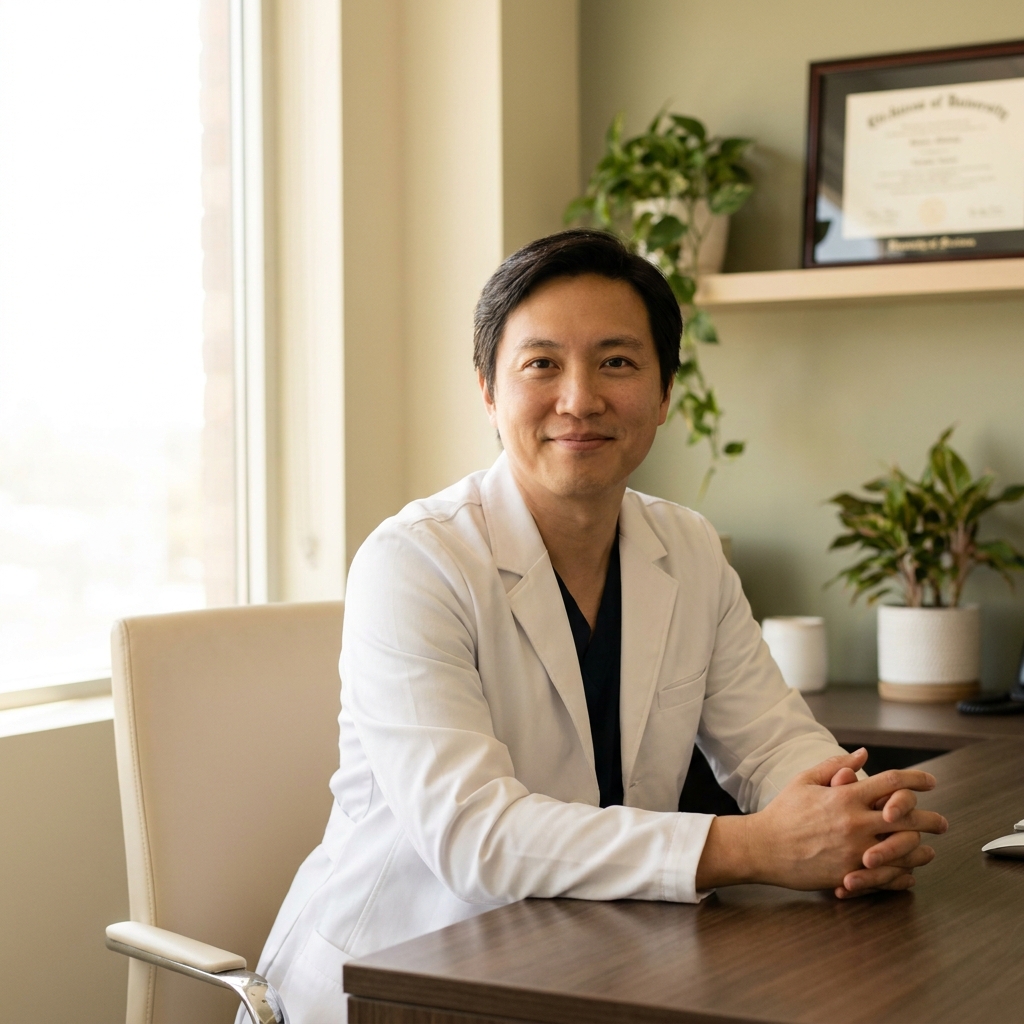
Known globally as Amie Hornaman, Dr. Amie Hornaman has built a reputation as one of the most trusted voices in thyroid and hormone optimization. As host of the top-rated podcast The Thyroid Fixer™, founder of The Better Thyroid and Hormone Institute, and creator of the Fixxr™ supplement line, Dr. Amie has transformed how both patients and clinicians understand and treat thyroid dysfunction. Licensed to prescribe thyroid and bioidentical hormone replacement therapy in all 50 U.S. states and most of Canada, her work bridges conventional medicine and functional optimization—always with the patient at the center.
Dr. Amie’s passion for thyroid health is deeply personal. During her years competing in NPC figure competitions, she experienced severe symptoms, repeated misdiagnoses, and ineffective treatments. That journey through medical dismissal and confusion became the catalyst for her mission: to ensure no one else feels unheard, unseen, or mislabeled when their body is clearly signaling an imbalance.
What follows is an in-depth conversation with Dr. Amie Hornaman, exploring the clinical blind spots, metabolic truths, and patient-first principles that define her approach to thyroid and hormone care.
What do you think is the most misunderstood symptom in thyroid and hormone dysfunction—and why do so many clinicians miss it?
Fatigue is the most misunderstood symptom, followed closely by weight gain. These symptoms often appear long before thyroid labs fall outside conventional ranges. They are missed because so many factors can contribute to fatigue and weight changes—and because clinicians are often overbooked and unable to investigate root causes. Too often, patients are told to “eat less and exercise more” or that their symptoms are simply part of aging. This medical gaslighting leads patients to dismiss their own experience while the underlying dysfunction quietly worsens. Early fatigue and weight gain are frequently signs of impaired T4-to-T3 conversion, yet they are rarely investigated.
You’re known for teaching that thyroid and hormone optimization cannot be separated. Why must they be addressed together?
Hormones operate as an integrated system. Estrogen, progesterone, testosterone, cortisol, and insulin all directly affect thyroid hormone production, conversion, and cellular activity. Elevated cortisol increases reverse T3. Estrogen imbalance alters thyroid binding. Low testosterone reduces metabolic rate. Optimizing the thyroid without addressing these factors leaves patients stuck. The body does not separate these pathways, and effective treatment cannot either.
If you could rewrite the standard thyroid testing panel, what would it include?
I would eliminate the TSH-only model and require a comprehensive thyroid panel: TSH, Free T4, Free T3, Reverse T3, TPO antibodies, and Thyroglobulin antibodies. This allows us to assess production, conversion, cellular blocking, and autoimmunity simultaneously. Anything less is incomplete and leads to missed or delayed diagnoses.
How can clinicians recognize early metabolic slowdown before full hypothyroidism develops?
By paying attention to symptom clusters and trends—not just single lab values. Fatigue, brain fog, constipation, cold intolerance, mood changes, and especially unexplained weight gain are early warning signs. One of the earliest red flags is a downward trend in Free T3, even if it remains within the “normal” range. Catching these patterns early allows intervention before years of metabolic damage occur.
What separates patients who finally break free from fatigue and weight struggles from those who remain stuck?
True optimization. When Free T3 is in the optimal range and reverse T3 is controlled, metabolism moves again. Patients stay stuck when clinicians treat reference ranges rather than the individual, or when thyroid care is separated from hormone and insulin regulation.
Why do you believe lab literacy should be a standard part of modern healthcare?
Lab literacy protects patients. When individuals understand their labs, they cannot be dismissed with “everything looks normal” when their body clearly says otherwise. Teaching patients how to interpret a full thyroid panel turns them into informed partners in care and shields them from medical gaslighting. You cannot fix what you cannot see.
What are the biggest misconceptions patients have about thyroid medication?
The most damaging myth is that T3 is dangerous. T3 is the active hormone the body actually uses. When dosed correctly, it is safe and often life-changing. Another misconception is that increasing T4 alone will solve everything. Many patients do not convert T4 effectively—especially under stress, inflammation, or hormonal imbalance.
What practical adjustments can clinicians make to better support patients who feel dismissed?
Run complete labs. Listen to symptoms. Treat the person, not just the number. Too many clinicians default to antidepressants or symptom-suppressing medications instead of addressing root causes. Asking one simple question—“How do you feel?”—can change outcomes entirely.
You have a book coming out that many call The Thyroid Bible. What drove you to write it?
I wrote it because I lived the experience of being medically gaslit. Women are not getting real answers or real treatment. This book provides the roadmap I never had—how to interpret labs, which medications may actually help, how to dose safely, and how to integrate hormones, insulin, and lifestyle into a complete protocol. My goal is to elevate the standard of care and help women reclaim their health.
With the rise of GLP-1 medications, where does thyroid optimization fit into sustainable fat loss?
GLP-1s can improve appetite control and insulin stability, but they cannot correct low T3 or blocked conversion. When thyroid function is optimized alongside GLP-1 therapy, patients lose fat more efficiently and maintain results. The women who struggle most on GLP-1s are often those with underperforming thyroid function that was never addressed.
Which lifestyle interventions do you wish more providers would emphasize?
Morning sunlight, resistance training, adequate protein intake, blood-sugar stabilization, and consistent sleep rhythms. These foundational practices profoundly impact mitochondrial health, inflammation, and metabolic resilience.
Many midlife women are told their symptoms are ‘normal for their age.’ What should change in that first conversation?
We must stop normalizing suffering. If a woman feels unwell, that is not aging—it is a signal to investigate thyroid health, hormones, insulin, and inflammation. Dismissal is not good medicine.
Why does the misconception around natural desiccated thyroid persist?
It stems from outdated beliefs that NDT is unstable or unsafe. In reality, NDT can be highly effective for the right patient. The issue is not the medication—it is a lack of training in individualized dosing. When properly tailored, NDT works beautifully.
You often call the thyroid the ‘master regulator.’ How does it connect to longevity?
Thyroid hormones drive mitochondrial activity, oxygen consumption, cognitive function, and metabolic stability. Optimizing Free T3 is one of the most powerful longevity interventions available. When thyroid function improves, the brain, heart, and metabolism all benefit.
What impact do you hope your work—and your new book—has on both sides of the exam room?
I want clinicians to have a practical, science-backed framework they can actually use. I want patients to feel seen, informed, and empowered. When both sides share the same understanding, care improves immediately.
Dr. Amie Hornaman’s work represents a paradigm shift in thyroid and hormone medicine—one rooted in data, driven by compassion, and unapologetically patient-first. By treating individuals rather than lab values, she is restoring not only metabolic health, but trust in the medical process itself.

About Michele Hughes
Michele Hughes is the visionary founder of Ageless and Timeless and the dynamic host of the Ageless and Timeless podcast. As a monthly contributor to TopDoctor Magazine, she offers powerful insights on wellness, longevity, and living fully at every stage of life. With a deep passion for health and vitality, and serving as a role model for timeless elegance, Michele empowers audiences to embrace their highest potential and live with purpose and grace. Michele’s podcast, Ageless and Timeless, was one of 20 Inaugural Podcasts selected for the Muscle and Fitness Plus platform that began in 2023.
For more information, please reach out to express interest in being a potential guest on the Ageless and Timeless podcast or to be featured in the TopDoctor Magazine Ageless and Timeless column with Michele Hughes. For podcast collaborations or to have Michele Hughes on your show, please contact her at:
Email: themichelehughescompany@gmail.com
Website: www.agelessandtimeless.com
Instagram: @agelessandimeless
LinkedIn: https://www.linkedin.com/in/michele-hughes-83a3b935/
Facebook: https://www.facebook.com/michele.hughes.186
Ageless and Timeless podcast, on YouTube, iTunes, Spotify, and wherever podcasts are available.