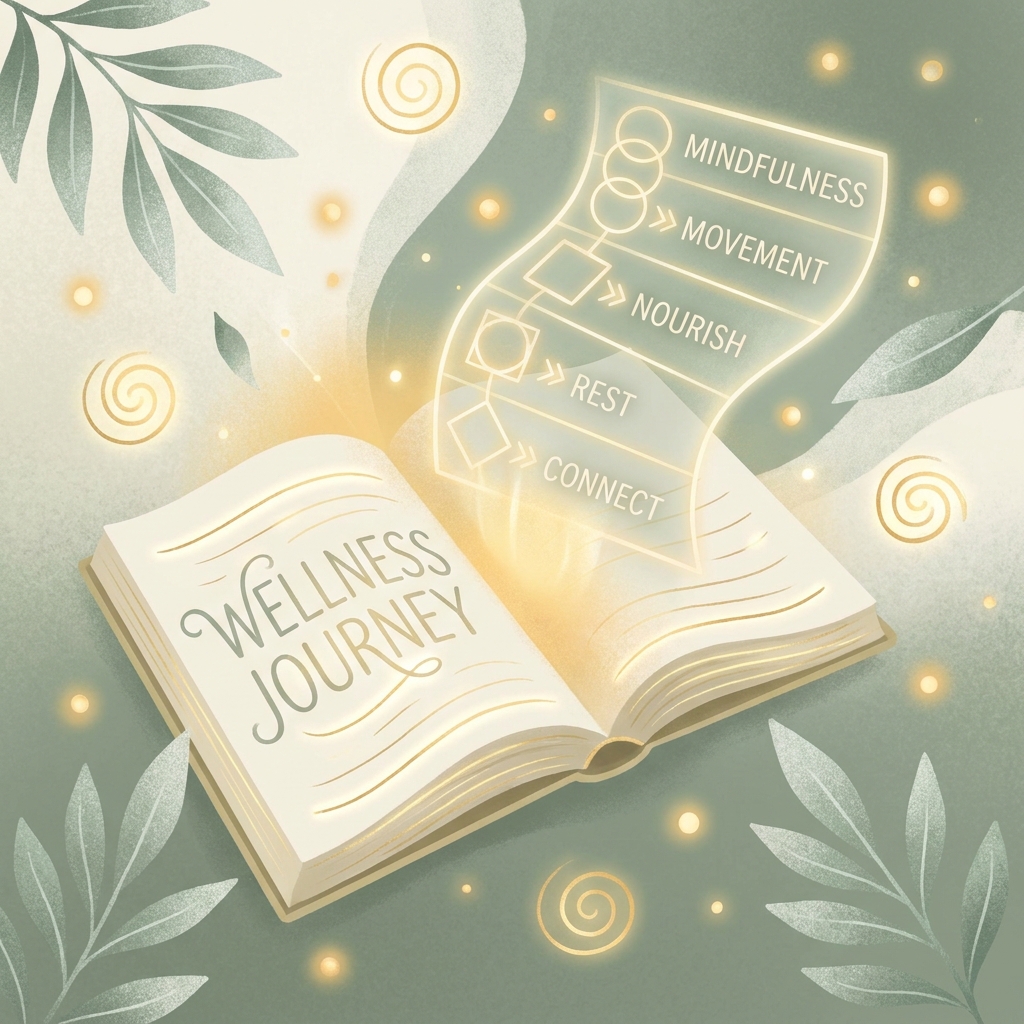
The Best Wellness Book Has an Implementation Plan: 2026 Guide
Introduction: The Wellness Book Problem Nobody Talks About
The global wellness economy hit a record $6.8 trillion in 2024, yet only 13% of U.S. consumers say they are “definitely achieving” their wellness goals. This striking paradox reveals a fundamental truth about the wellness industry: access to information has never been greater, but results remain elusive for the vast majority.
Americans spend over $813 million annually on self-help books, demonstrating an enormous appetite for wellness knowledge. Yet fewer than 5% of readers actually implement the advice they read. The average wellness book buyer purchases three books per year, and most return each title to the shelf without making meaningful changes to their health or habits.
This guide presents a central argument: the best wellness book is not simply the most informative one. It is the one that comes with a built-in implementation plan that produces measurable results. The following sections explore the implementation gap, identify what separates a great wellness book from a shelf decoration, and examine how structured wellness programs represent the evolved answer to this persistent problem.
The Wellness Information Boom and Why It Is Not Working
The scale of the wellness industry is staggering. According to the Global Wellness Institute, the global wellness economy grew 7.9% from 2023 to 2024, reaching $6.8 trillion, with projections pointing to $9.8 trillion by 2029. In the United States alone, wellness represents over $500 billion in annual consumer spending, growing at 4 to 5% per year.
The paradox becomes clear when examining consumer sentiment. A full 84% of U.S. consumers call wellness a “top” or “important” priority, yet only 13% report definitely achieving their wellness goals. This massive gap between intention and outcome defines the modern wellness landscape.
Self-help book sales reflect this disconnect. U.S. self-help book sales reached $813 million in 2023, with self-help accounting for 5.7% of all U.S. fiction and nonfiction sales. Women purchase 74% of these books, and the average buyer returns to the market multiple times per year seeking answers.
The generational dimension adds another layer of complexity. Gen Z is the most wellness-engaged generation on record yet also the most anxious, lonely, and mentally strained. This proves that more information does not automatically produce better health outcomes. Something fundamental is missing from the traditional wellness book model.
The Implementation Gap: Why Most Wellness Books Fail Their Readers
The “implementation gap” describes the well-documented disconnect between reading wellness content and actually changing behavior. This gap is not a minor inefficiency; it represents the central failure of the wellness publishing industry.
A landmark study by Dr. Robert Kohlenberg found that when given a free self-help book, only 20% of recipients read it. Of those who read it, less than 5% implemented the advice. This finding, cited in Todd Kashdan’s analysis, reveals that the problem is not cost or access. The problem is the format itself.
A 2008 analysis of the 50 top-selling self-help books for anxiety and depression uncovered additional concerns. Only 48% shared techniques with supportive evidence, and only 24% offered guidance on how readers can measure their own progress. Without measurement tools, readers have no way to know whether the advice is working.
The gap exists because most wellness books are written around the author’s personal experience, not the reader’s individual circumstances. As Psychology Today notes, “the obvious implication that following their lead will produce similar results often fails.”
Digital formats introduce additional challenges. Buyers often forget they downloaded a digital wellness book and never engage with the content. This makes structure and program design even more critical for digital formats, where the absence of a physical object removes the visual reminder to return to the material.
What Separates a Good Wellness Book from a Great One
Consumer expectations have shifted dramatically in 2026. According to McKinsey’s Future of Wellness report, consumers are moving from “clean label” to “clinical effectiveness,” with roughly half of U.S. consumers citing clinical effectiveness as a top purchasing factor. Readers no longer want inspiration alone; they want results.
The 2026 wellness landscape emphasizes long-term systems over short-term solutions. Consistency has become more valuable than intensity, and readers want routines that simplify life rather than complicate it.
Five Criteria That Define the Best Wellness Book in 2026
Criterion 1: Evidence-backed content. The book’s recommendations should be grounded in research, not anecdote alone. With only 48% of top-selling self-help books sharing techniques with supportive evidence, this criterion alone eliminates half the market.
Criterion 2: A structured implementation roadmap. The book must go beyond information delivery and provide a step-by-step plan the reader can follow. Inspiration without direction produces enthusiasm without outcomes.
Criterion 3: Progress measurement tools. Only 24% of top-selling self-help books offer guidance on how readers can measure their own progress. This feature is non-negotiable for an effective wellness book in 2026.
Criterion 4: Targeted focus areas. Broad, generic wellness advice is less actionable than a program designed around a specific health goal. Whether the focus is gut health, cognitive function, or immune support, specificity enables action.
Criterion 5: Accessible price point with high perceived value. The average self-help book costs $15.99, while structured programs and workbooks command higher perceived value due to their actionability. A $25 structured ebook program sits in the “accessible premium” tier, offering more value than a standard book while remaining affordable for most consumers.
The Rise of Structured Wellness Programs: Beyond the Traditional Book
The market has begun shifting toward companion workbooks and structured programs. According to Ergodebooks, companion journals and workbooks have surged in popularity in 2025 and 2026, transforming passive reading into active engagement, as structured formats bridge the book-to-action gap.
The “health struggler” consumer persona represents a key underserved segment in the wellness market. These individuals are motivated but overwhelmed, seeking help with consistency and accountability. A structured wellness program is uniquely positioned to serve this audience because it reduces the cognitive burden of self-direction.
A program-based ebook outperforms a standalone wellness book because it combines educational content with an actionable roadmap. The reader receives both the “why” and the “how,” eliminating the need to translate concepts into action independently.
Top wellness themes for 2026 that structured programs should address include longevity and healthy aging, gut health and nutrition, mental fitness and nervous system regulation, immune system support, and behavioral and emotional wellness.
Introducing the Road to Wellness Programs by Ozone Purity
Ozone Purity’s Road to Wellness ebook programs represent a direct answer to the implementation gap. These are not simply wellness books; they are structured programs with an educational foundation and a built-in implementation roadmap.
Each program features a dual-layer design. The educational content explains the “why” behind each health area, while the practical implementation plan addresses the “how” and the next steps. This combination eliminates the translation problem that causes most wellness books to fail.
The $25 price point reflects a deliberate accessibility decision. This is dramatically more affordable than life coaching, which averages $244 per session, or wellness retreats, while being significantly more actionable than a $16 standalone book. Each program also offers an optional discounted product bundle for readers who want to move from education to active practice with recommended tools.
Ozone Purity’s broader philosophy positions wellness as a road, not a destination: a progressive journey with milestones, not a one-time information download.
A Closer Look at Each Road to Wellness Program
The four Road to Wellness programs form a cohesive system covering four distinct but interconnected health areas. Each program stands alone, but together they create a comprehensive wellness curriculum.
Program 1: Focus, Memory, and Mental Clarity
This program addresses cognitive performance, mental sharpness, memory retention, and sustained concentration. Mental wellness is the second-fastest-growing wellness segment, expanding at 12.4% annually from 2019 to 2024, with a projected 10.1% annual growth through 2029.
The program delivers educational content on the science of cognitive health paired with a structured implementation plan. An optional product bundle ($290) is available for readers ready to take a hands-on approach. The ideal reader includes professionals, students, or anyone experiencing brain fog, difficulty concentrating, or memory concerns.
Program 2: Digestive Health
This program focuses on gut health, digestion, microbiome support, and gastrointestinal wellness. Gut health and nutrition rank among the top wellness themes for 2026, reflecting growing consumer awareness of the gut-brain connection.
The program provides a structured guide to understanding and improving digestive function with an actionable implementation plan. An optional product bundle ($200) is available for readers who want to complement the program with targeted supplements. The ideal reader includes individuals dealing with bloating, irregular digestion, low energy, or those seeking a foundational detox protocol.
Program 3: Immune System Support
This program addresses immune resilience, cellular defense, and long-term immune system optimization. Immune health remains a top consumer priority, and the shift toward preventive wellness defines the 2026 landscape.
The program delivers educational content on immune function paired with a practical roadmap for building and maintaining immune resilience. An optional product bundle ($350) is available for readers ready to implement a full immune support protocol. The ideal reader includes anyone seeking to strengthen the body’s natural defenses, recover from illness, or build long-term preventive health habits.
Program 4: Behavioral, Emotional, Physical, and Mental Wellness
This comprehensive program addresses the full spectrum of wellness, including behavioral patterns, emotional regulation, physical health, and mental well-being. Gen Z and Millennials are the most wellness-engaged yet most mentally strained generations, signaling that emotional and behavioral wellness requires structured support.
The program delivers an integrated wellness framework that addresses the interconnected nature of mind, body, and behavior through a structured implementation plan. An optional product bundle ($305) is available for readers who want to support their holistic wellness journey with targeted tools. The ideal reader is the “health struggler” persona: motivated but overwhelmed, and seeking a structured system to build consistency and accountability across all dimensions of wellness. Grounding exercises for anxiety are one example of the kind of practical techniques that structured programs in this category can incorporate.
How the Road to Wellness Programs Close the Implementation Gap
Unlike a traditional wellness book that delivers information and leaves the reader to determine application independently, each Road to Wellness program is built around a structured implementation roadmap. The reader knows exactly what to do next at every stage.
Each program addresses the measurement problem directly. Programs are designed to give readers a clear sense of progress, solving the finding that only 24% of top-selling self-help books offer guidance on measuring personal progress.
The targeted design advantage ensures that rather than offering one-size-fits-all advice, each program focuses on a specific health area. This makes guidance more relevant and actionable for the individual reader.
At $25 per program, the Road to Wellness ebooks offer structured, implementation-focused wellness guidance at a fraction of the cost of coaching, retreats, or even many physical wellness books. Readers who want to move beyond education into active practice can access curated product bundles, creating a seamless journey from learning to doing.
Who Should Consider a Structured Wellness Program Over a Traditional Book
The reader who benefits most from a structured wellness program is the “health struggler”: someone who is motivated and wellness-aware but struggling with consistency, accountability, and knowing where to start.
Gen Z and Millennials drive over 41% of annual wellness spending and are increasingly seeking results-oriented, digital-first wellness solutions. A structured ebook program aligns with how these consumers already engage with content.
The reader who has “tried everything” represents another ideal candidate. This is someone who has purchased wellness books before but found them inspiring in the moment and forgettable in practice.
Value-conscious consumers who want more than a $16 book but are not ready to invest in a $244-per-session coach will find the $25 structured ebook program to be the logical middle ground.
Conclusion: The Best Wellness Book Is the One You Actually Use
In a global wellness economy valued at $6.8 trillion where 84% of consumers prioritize wellness but only 13% achieve their goals, the problem is not a lack of information. It is a lack of implementation.
A wellness book is only as valuable as the action it produces. The best wellness book in 2026 is not the most popular or the most beautifully written. It is the one that comes with a structured plan readers can follow.
The Road to Wellness programs represent the evolved answer: four targeted ebook programs that combine educational depth with built-in implementation roadmaps, priced accessibly at $25 each.
Wellness is a road, not a destination. The right program provides the map, the milestones, and the momentum to travel it.
Ready to Move from Reading to Results?
Readers interested in closing their own implementation gap can explore the Road to Wellness ebook programs at ozonepurity.com. Each program is available for $25, representing a modest investment supported by a structured plan designed to produce real, measurable wellness outcomes.
For those ready to go further, each program includes an optional discounted product bundle to support hands-on implementation. Every day spent with a wellness book on the shelf is a day without progress. The Road to Wellness programs are built to change that.