Disclaimer: This article is not medical advice and is intended for general information only. This product is not intended to diagnose, treat, cure, or prevent any disease. Patients should talk to their clinician before starting any supplement, especially during pregnancy or nursing, when taking medication, or with a history of asthma, liver disease, or kidney disease.
Why clinicians keep hearing about NAC
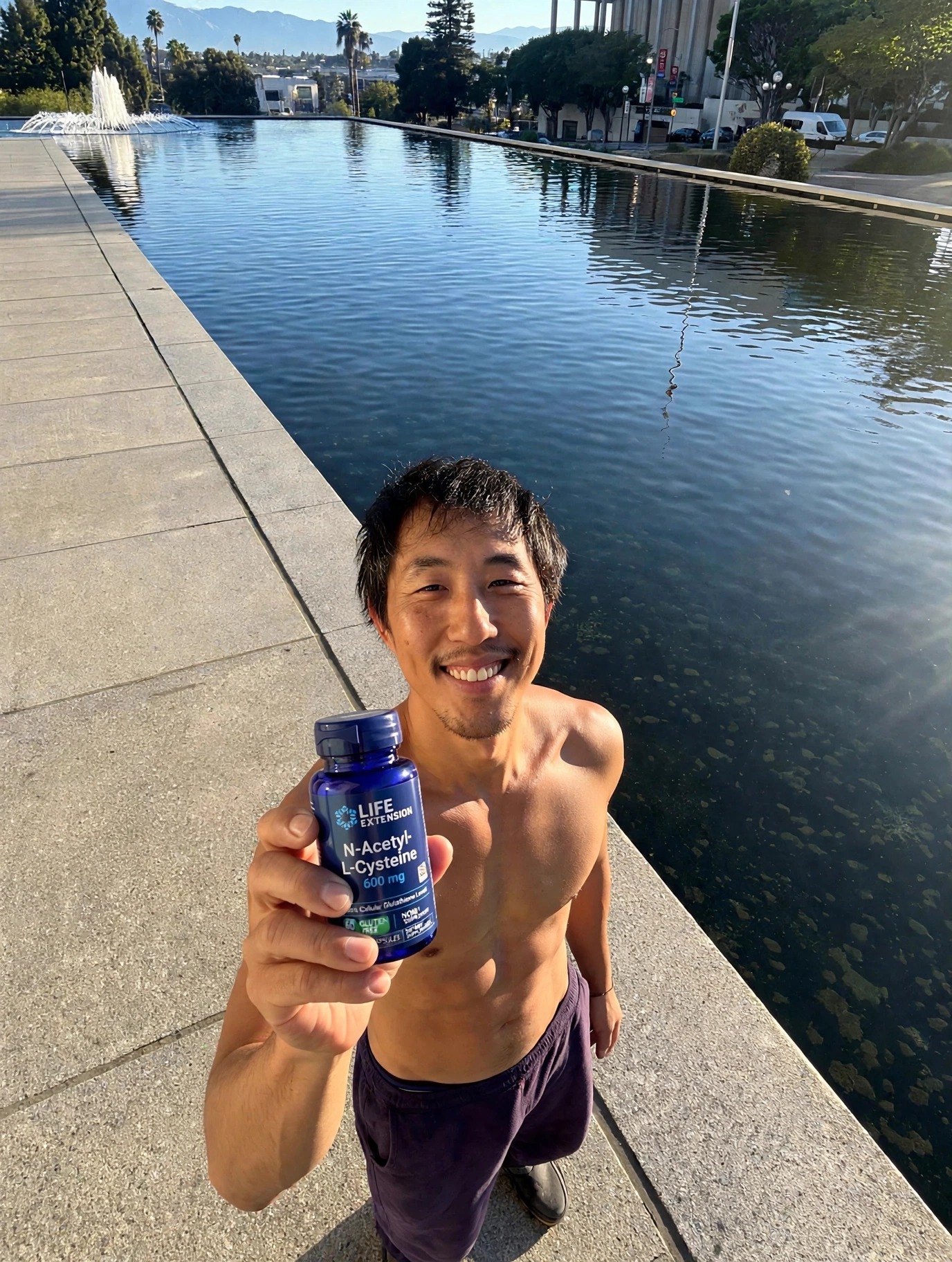
N-Acetyl-L-Cysteine, or NAC, is one of those compounds that shows up in two very different conversations. In hospitals, clinicians know it in specific pharmaceutical forms and doses used for specific indications, under medical supervision. In supplement aisles, it appears as a single ingredient capsule, like the Life Extension bottle pictured here: N-Acetyl-L-Cysteine 600 mg, 60 capsules, gluten free, non-GMO, labeled as boosting cellular glutathione levels. Those are not the same context, and keeping them separate matters. This article is about the supplement context and the biology behind it, written in plain language for readers who want to understand what their patients, or they themselves, are asking about.
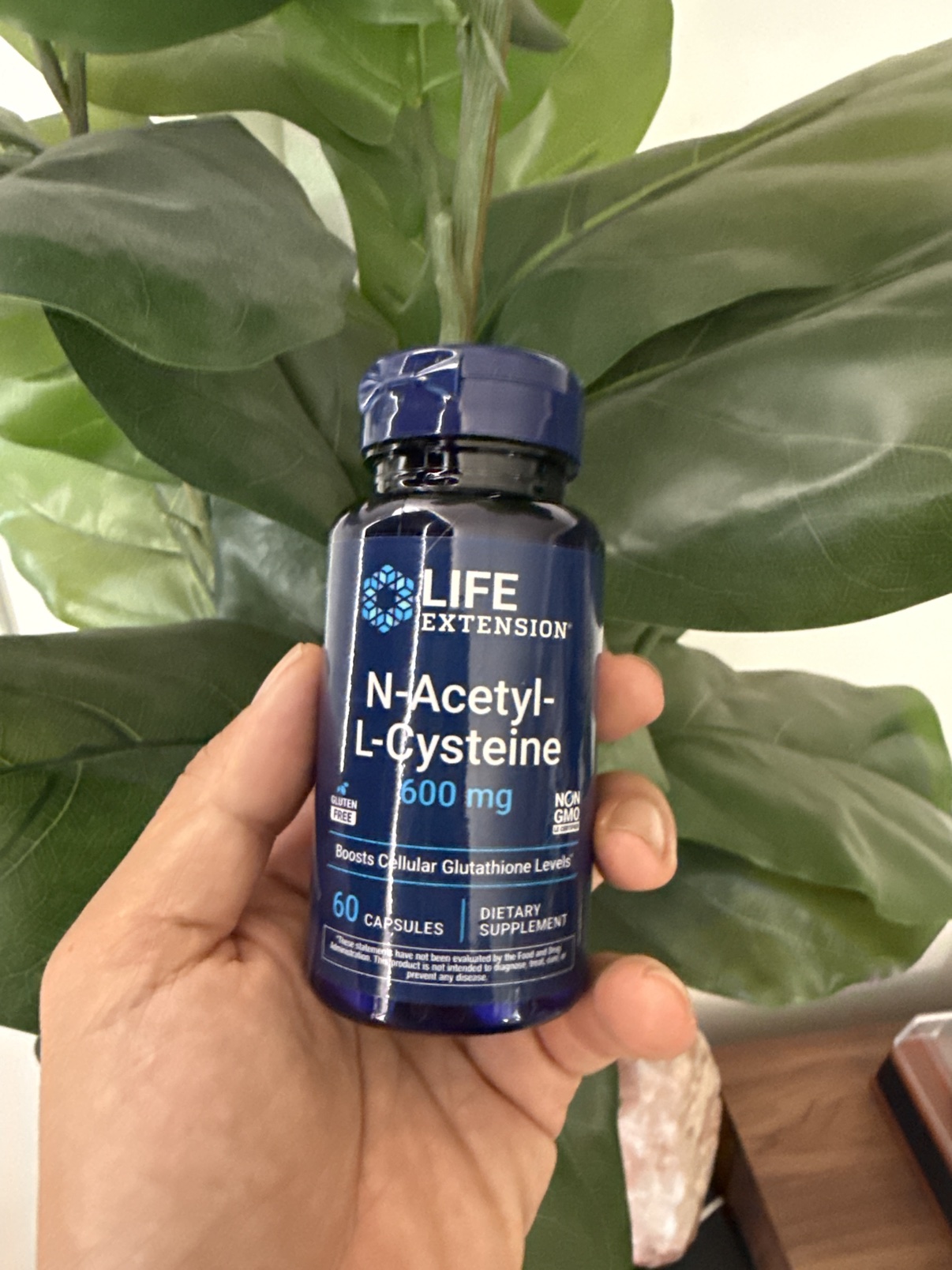
The bottle in the photo: Life Extension N-Acetyl-L-Cysteine 600 mg (not sponsored).
The core biology is straightforward. Glutathione is a tripeptide made inside cells from three amino acids: glutamate, glycine, and cysteine. Of the three, cysteine is usually the rate limiting building block, meaning its availability constrains how much glutathione a cell can make. NAC is an acetylated form of cysteine that is stable in supplement form and serves as a cysteine donor. When a person takes NAC, the body can use the cysteine it provides to support glutathione synthesis. That is the mechanism behind the label claim on this bottle. It is a statement about biochemistry, not a promise of a clinical outcome for any individual.
Glutathione biology in plain language
Glutathione works in several roles at once. It is an antioxidant, directly neutralizing reactive oxygen species, the unstable molecules produced as a normal byproduct of metabolism. It also serves as a cofactor for enzymes, including glutathione peroxidases, which reduce hydrogen peroxide and lipid peroxides to less harmful compounds, and glutathione S-transferases, which help conjugate and clear certain toxins. It participates in maintaining the redox balance inside cells, the equilibrium between oxidation and reduction that keeps proteins and membranes functioning. And it is recycled: oxidized glutathione can be reduced back to its active form by glutathione reductase, using energy from cellular metabolism.
That recycling system is efficient, but it is not infinite. Glutathione levels decline with age, and they fall in states of high oxidative demand, including chronic illness, heavy alcohol use, poor nutrition, and sustained physiological stress. Low protein intake matters here too, because the amino acid supply for glutathione synthesis comes from diet. A patient eating very little protein has less raw material for glutathione, regardless of anything else in their routine. This is one reason nutrition assessment belongs in any conversation about oxidative stress, before any supplement discussion begins.
Oxidative stress itself deserves a careful definition, because the term is used loosely in popular health writing. It describes an imbalance in which reactive oxygen species production exceeds the antioxidant defenses available to neutralize them, leading to potential damage to lipids, proteins, and DNA. It is a real biochemical state, measurable in research settings through markers of oxidation and antioxidant capacity. It is also not a diagnosis, and it is not a single disease. Oxidative stress contributes to many conditions, but naming it as a cause of a specific patient’s problem requires clinical evaluation that no supplement article can provide.
What the research context actually shows
Research on NAC spans several decades and several distinct uses, and the strength of evidence varies sharply by use. In clinical medicine, the best established use is as an antidote for acetaminophen overdose, where intravenous or oral pharmaceutical NAC, given under medical supervision, replenishes glutathione in the liver and is a standard, lifesaving treatment. That use depends on pharmaceutical dosing, timing, and supervision. It is not a reason to take a 600 mg supplement capsule, and no reader should draw that conclusion from this article.
Other research areas include chronic respiratory conditions, where NAC has been studied as a mucolytic and antioxidant, psychiatric conditions, where it has been studied for its effects on glutamate regulation and oxidative stress, and general antioxidant support in aging populations. Results in these areas are mixed, often from small trials, and they do not amount to a settled clinical recommendation for supplement use by the general public. A responsible summary is that NAC has a plausible mechanism, a long safety record in studied populations, and an evidence base that is promising in some areas and inconclusive in others. That is very different from a claim that it treats or prevents disease, and this article makes no such claim.
Dosage is another area where precision matters. The bottle pictured here contains 600 mg per capsule. Research trials have used a wide range of doses, often much higher, in pharmaceutical or investigational settings. The dose on a supplement label is not a research dose, and it is not a recommended daily regimen. This article states the label dose only, 600 mg per capsule, 60 capsules per bottle, and does not recommend how many capsules to take, how often, or for how long. Those decisions belong in a clinician conversation, where individual health status, medications, and goals can be weighed.
Who should talk to a clinician first
Certain situations call for a clinician conversation before any NAC supplement use. Pregnancy and nursing are first on that list, because safety data in those populations is limited for supplement use. Regular medication use is second, because NAC can interact with some drugs, and only a clinician with the full medication list can assess that risk. A history of asthma or breathing difficulty is third, because inhaled NAC can irritate airways in susceptible people, and while oral supplement use is a different route, a history of respiratory sensitivity is exactly the kind of detail a clinician should know about before recommending any new supplement. Liver or kidney disease is fourth, because these organs handle metabolism and clearance, and supplement decisions in that context need individual assessment.
These are talk to your clinician flags, not diagnoses and not predictions of harm. They are the standard of care for any supplement conversation: bring the bottle or a photograph of the label, state the dose and form, list all medications and other supplements, and ask directly whether NAC fits, conflicts, or is simply unnecessary given the person’s diet and health status. A clinician who knows the patient can also assess whether the real issue is something else entirely, for example low protein intake, poor sleep, or an unmanaged condition that deserves attention on its own terms.
Side effects in supplement use are usually mild when they occur, most commonly stomach discomfort, nausea, or an unpleasant sulfur odor. Any new symptom after starting a supplement warrants stopping and contacting a clinician. That guidance applies to every supplement, not just NAC, and it is worth stating plainly because patients often assume that a product sold without a prescription cannot cause problems. Over the counter availability is not the same as universal safety.
How clinicians can frame the conversation
For clinicians reading this, the practical framing is useful. When a patient asks about NAC, the most helpful response starts with what they hope it will do, then moves to the foundation: diet, sleep, activity, alcohol use, and medication review. If protein intake is low, addressing that may matter more than any capsule. If the patient is already eating well, sleeping well, and managing known conditions, a conversation about whether a cysteine supplement adds anything meaningful is a reasonable next step, with the caveat that evidence for general supplement use is limited and individual benefit is uncertain.
Quality assessment is part of that conversation too. Supplement manufacturing is not regulated like pharmaceutical manufacturing. A product’s label dose, purity, and freedom from contaminants depend on the manufacturer’s testing practices. The bottle in the photograph is from Life Extension, a long established company, and it carries gluten free and non-GMO labeling. Those labels answer specific questions, but they do not replace third party testing for identity, purity, and potency. Clinicians can advise patients to look for manufacturers that publish testing standards and certificates of analysis, and to be skeptical of proprietary blends that hide individual ingredient doses.
Cost is also a legitimate clinical consideration. A 60 capsule bottle at 600 mg per capsule has a calculable cost per capsule, and that figure is the honest basis for comparison with other products. If a patient is spending significant money on supplements with uncertain benefit, that money might be better directed toward food, sleep support, or other health priorities with stronger evidence. That is a conversation about values and evidence, not a dismissal of the patient’s interest in their health.
The bottom line for a clinical audience
NAC is a mechanistically clear compound: a cysteine donor that supports glutathione synthesis, the body’s major internal antioxidant system. Its clinical history is real, its supplement evidence is mixed, and its appropriate use depends on the individual. The bottle pictured here, 600 mg per capsule, 60 capsules, gluten free, non-GMO, labeled for cellular glutathione support, is a fair example of the supplement form, and this article has described it only in those terms.
For readers, the takeaway is a question to bring to a clinician, not a decision made from an article: given my health, my medications, and my diet, does a cysteine supplement add anything, and if so, at what dose and for how long? For clinicians, the takeaway is a framework: foundation first, mechanism second, evidence honestly stated, quality checked, and individual assessment before any recommendation. That framework serves patients better than either enthusiasm or dismissal, and it is the standard this publication aims to hold for every supplement topic it covers.
Related reading
NAC and Glutathione: What It Does and Why It Matters