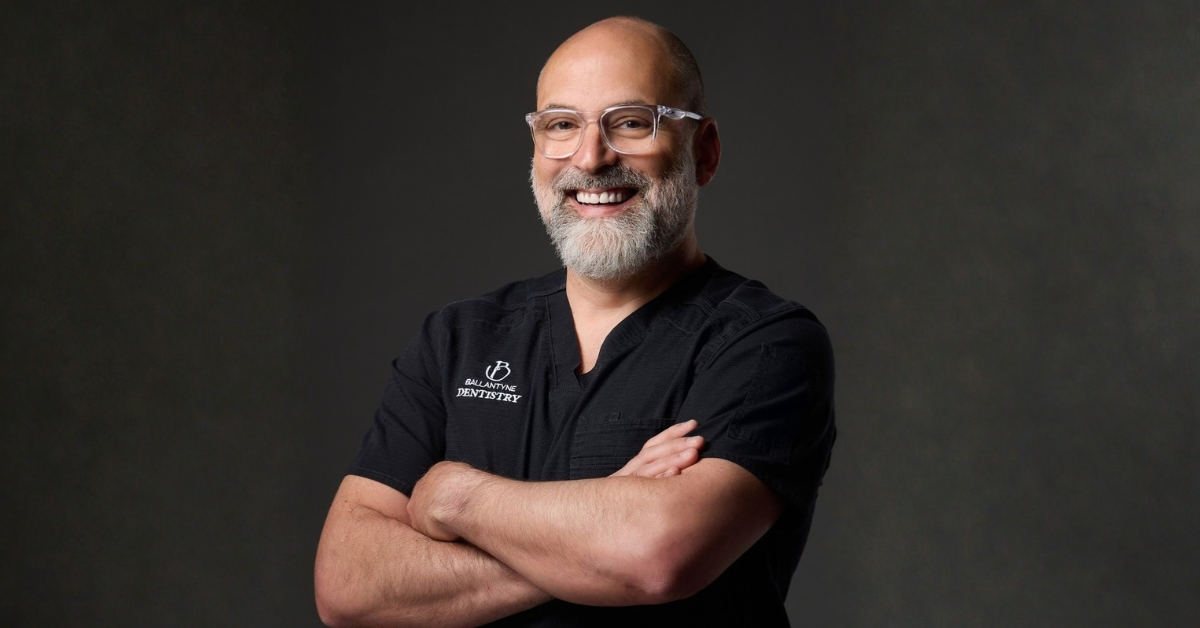
For 30 years, Dr. Christian Yaste has dedicated his career to transforming the way people experience dentistry. An accomplished clinician, author of two books and a clinical textbook on fixed full-arch dentistry, and a respected faculty member and advisor throughout the dental industry, his expertise extends far beyond the traditional dental practice.
Across 25 of those years, he has built Ballantyne Dentistry around a specific kind of patient: adults with severe dental phobia. Opening the practice in Charlotte from the ground up in 2001, Dr. Yaste envisioned a safe space providing comprehensive cosmetic, sedation, implant, and full-arch reconstructive care for patients carrying past dental trauma. That anxiety is firsthand. As a dental student, Dr. Yaste was in a bicycle accident that caused significant dental and facial injuries. He has carried the anxiety from it ever since.
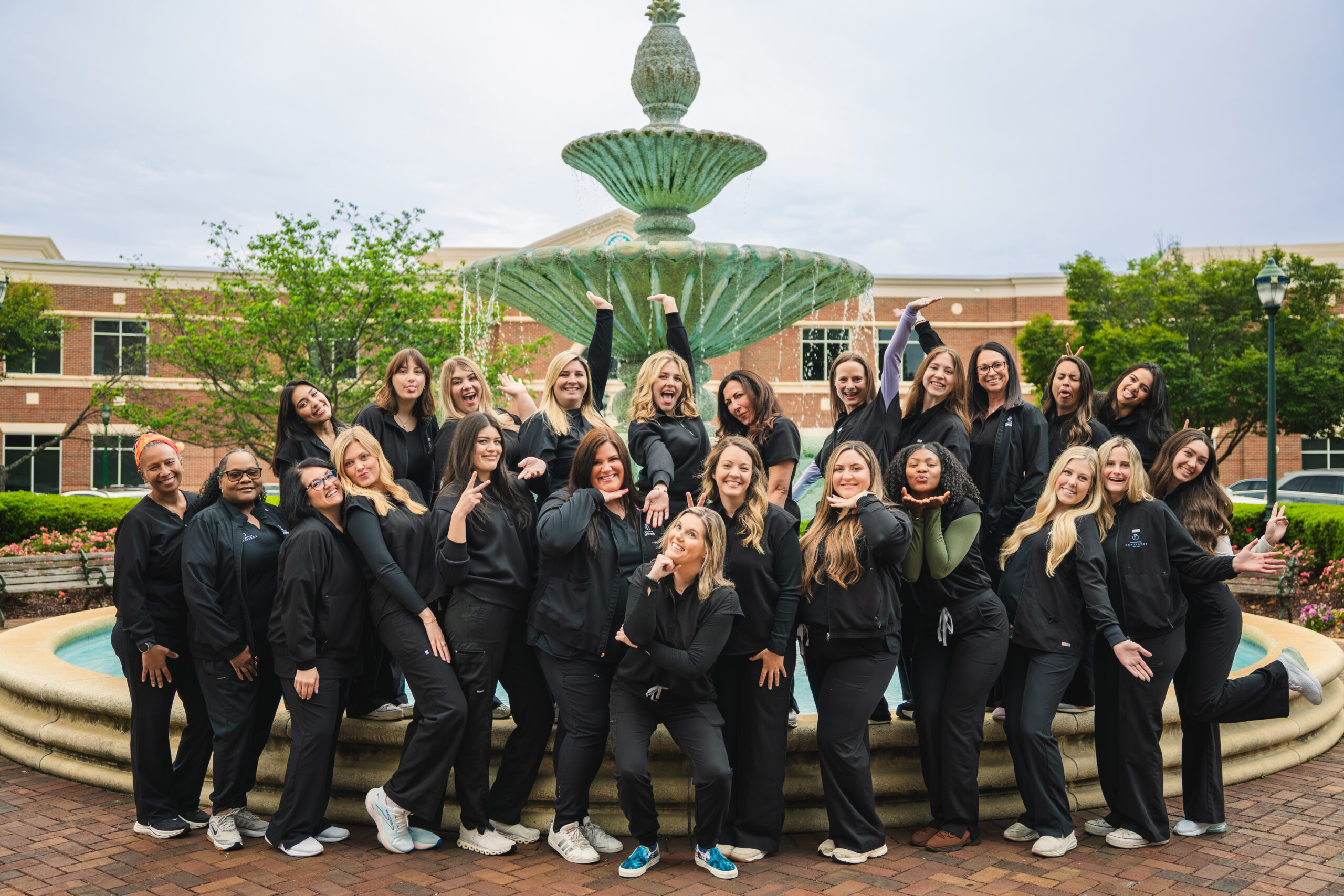
Today, Ballantyne Dentistry has four doctors and a team of 30, maintaining a reputation for forward-thinking care and earning a spot on Fortune’s Top 100 Best Places to Work in Healthcare for three consecutive years. But, according to Dr. Yaste, the practice’s latest technological evolution isn’t about chasing gadgets or following industry fads. It is about a disciplined philosophy of care that answers a simple, unyielding question: Does it actually help the patient in the chair, benefit the team, and make sound business sense?
Twenty-Five Years of Choosing Technology Carefully
Dr. Yaste has spent a quarter-century filtering innovations through a strict operational lens. Ballantyne Dentistry went digital with X-rays early, at a point when Dr. Yaste was told the practice was one of the first in Charlotte to do so, working with expensive, early-generation sensors because he believed digital imaging was where diagnostics were headed.
Yet, for every technology adopted over the last 25 years, far more have been turned away at the door.
“I have been putting technology into this practice for 25 years, and I have said no to far more of it than I have said yes,” Dr. Yaste explained. “There is a filter I run everything through, and I think it will be useful for other practice owners too.”
That filter evaluates three core operational buckets. First, it examines the team, asking whether a new tool supports staff and genuinely improves their daily workflow. Second, it evaluates the patient experience, measuring how a potential investment affects patient comfort, trust, and clinical outcomes. Finally, it analyzes the business side, ensuring any adopted tool makes sound financial sense regarding profitability and ROI for the practice.
One example of this filter in action was when the practice seriously considered bringing a lab in-house, with milling units and the equipment that comes with them. The economics were not what stopped it. The team was. It would have meant asking people to take on work they had not signed up for, or hiring for it, and the only room large enough to hold the equipment was the conference room, which is where the team actually gathers. That work is outsourced instead.
Around the same time, that same filter said yes to 3D printing. The team wanted to learn it, as it let the practice do things faster and offer services it could not before, and the numbers worked—two adjacent technologies, one filter, opposite answers.
When Dr. Yaste first encountered Diagnocat—an AI-powered dental software—at the International Dental Show (IDS) in Germany, it passed cleanly through every compartment of this filter by offering a tangible clinical, team, and patient benefit. If a technology cannot check all three boxes, Dr. Yaste notes, it is not worth looking at or investing in.
The Second Set of Eyes: Overcoming Human Limitations
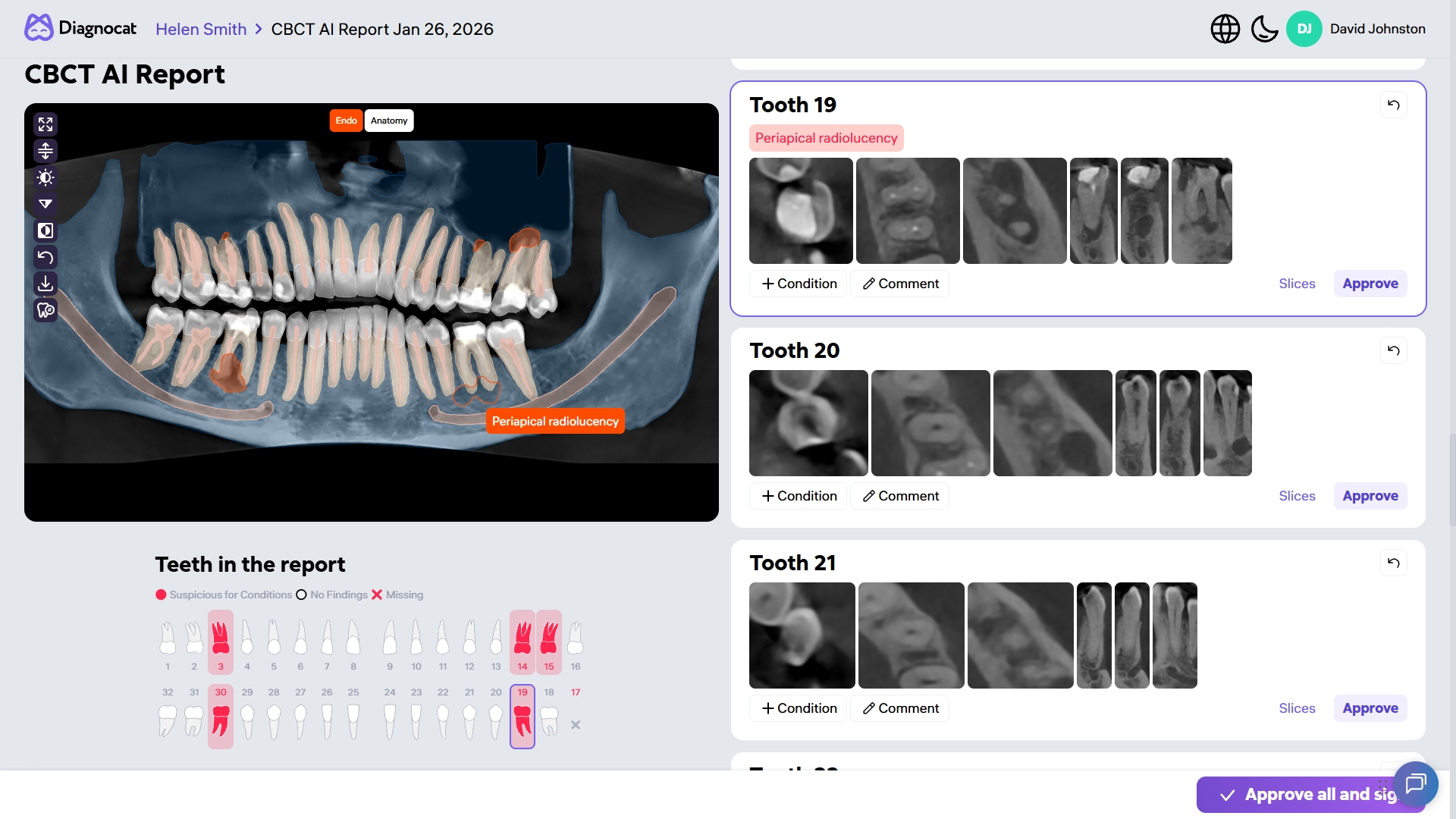
In modern dental workflows, a cone-beam computed tomography (CBCT) scan provides immense, multidimensional detail. However, human bandwidth is finite. Even the most seasoned, brilliant clinicians experience fatigue, distraction, or oversight after a long day of treating complex cases. Dr. Yaste views artificial intelligence not as a replacement for human judgment, but as an objective, tireless assistant that reviews data through a different lens than a tired human eye.
“I can see certain things, but these two eyes don’t find everything,” Dr. Yaste noted. “Now instead of being dependent on me alone, we’re using software trained on large datasets of dental images that analyzes my patient’s scans.”
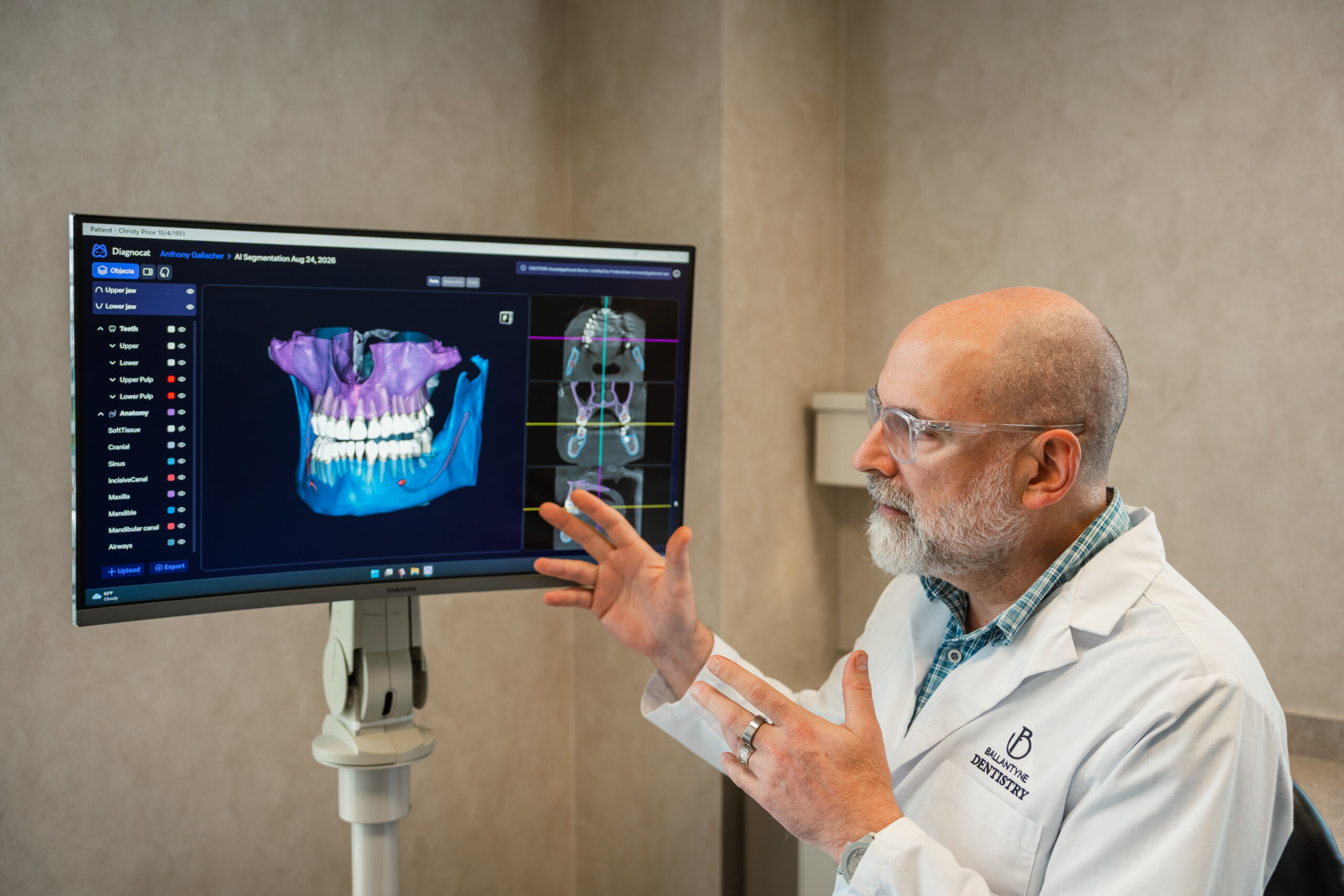
Operating as an advanced diagnostic support tool, the platform automatically segments CBCT scans to generate 3D models of individual teeth, the maxilla and mandible, the maxillary sinuses, and other anatomical structures within the field of view. It acts as an unbiased second read, flagging suspected findings—such as areas of periapical radiolucency or root canal issues—for the dentist to review and verify. The software supports, highlights, and helps the clinician evaluate, but the dentist always retains the ultimate responsibility for making every clinical decision.
Rather than undermining professional expertise, Dr. Yaste finds that it reinforces it.
“The computer doesn’t know who the patient is; there’s no bias,” Dr. Yaste said. “And when patients see that the computer found it too, they believe it.”
Dr. Yaste also uses general-purpose AI tools, separate from his imaging platform, for parts of the job that have nothing to do with a scan. Medication review is one of them.
From Greek to 3D: Transforming the Patient Conversation
For decades, traditional 2D X-rays presented a frustrating communication barrier in the operatory. Showing a flat, grainy radiograph to an untrained patient often resulted in blank stares, confusion, and polite nods, leaving a wide gap in understanding.
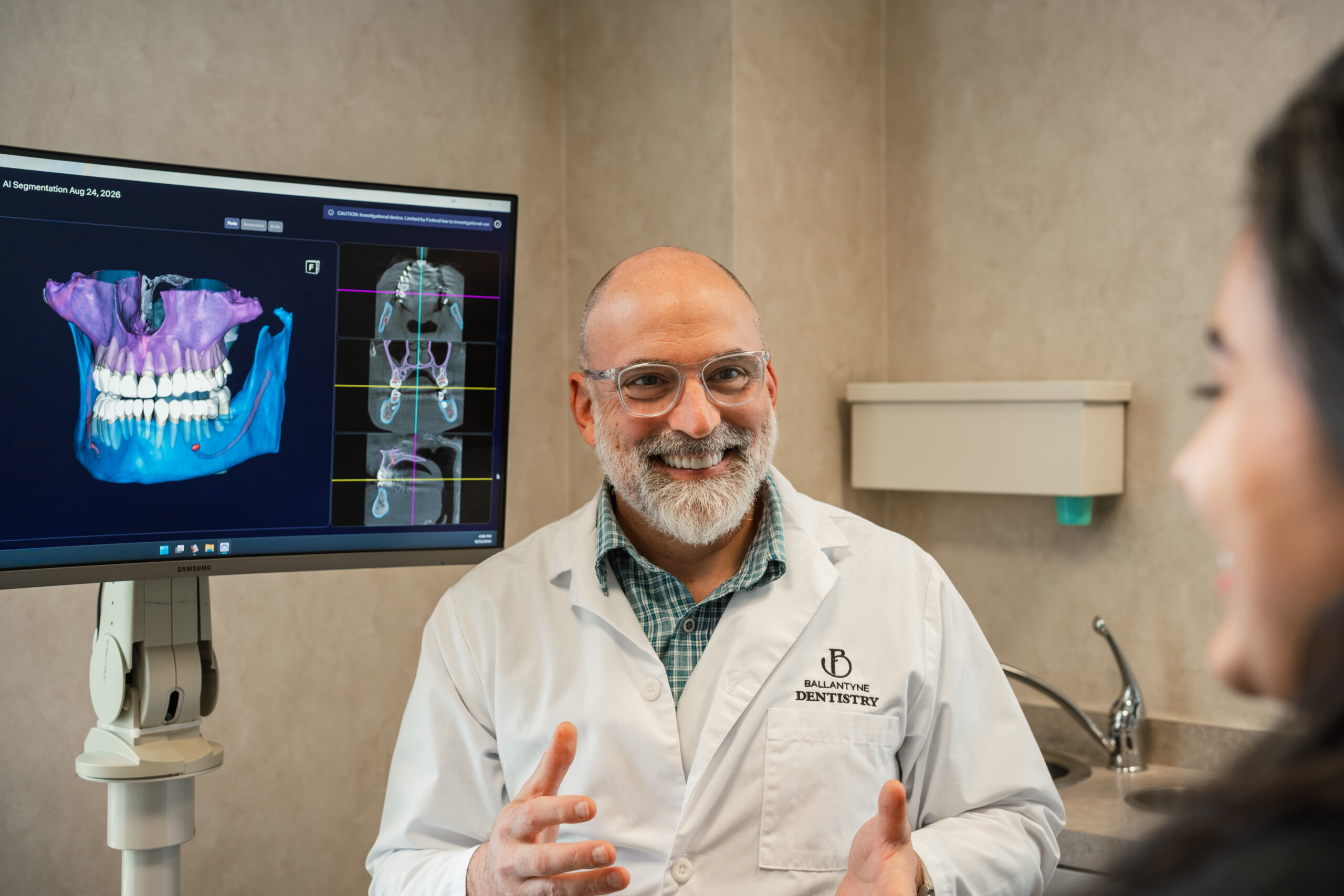
“Patients don’t understand X-rays. It’s like they’re looking at something written in Greek,” Dr. Yaste explained. “But, when you show them a 3D image of their CBCT, all of a sudden it starts to make sense.”
To illustrate this profound shift in patient trust, Dr. Yaste draws an analogy to the automotive industry. Decades ago, car owners took vehicles to a mechanic on blind faith, wondering if a recommended repair was genuine or necessary. Today, a mechanic plugs a car into a diagnostic computer, providing objective, visual data that removes subjectivity and builds immediate transparency.
By utilizing 3D models generated from CBCT scans and supported by AI-assisted analysis, consultations at Ballantyne Dentistry have transformed from one-sided lectures into highly engaging visual collaborations. Patients lean forward in the chair to examine their own anatomical structures, leading to a deeper understanding of their oral health and, consequently, significantly higher case acceptance.
Bringing a Staff of Thirty Along: Managing Practice Culture
Introducing advanced software to a bustling practice with a large staff can invite friction if mishandled. When Dr. Yaste first introduced artificial intelligence at Ballantyne Dentistry, his team initially hesitated because of the learning curve, software intimidation, and workflow disruptions.
Overcoming this required intentionality and leadership. Dr. Yaste and his leadership team gradually introduced the staff to modular features, allowing them to see firsthand how the technology saves time, reduces administrative burdens, and helps patients understand their treatment needs. Even one of the practice’s most experienced hygienists, who was skeptical of adding another piece of software, became an advocate once she saw how clearly it shows a patient their own bone loss.
“If you’re intentional about it and your team helps you, they’ll see the power behind the software and how it’s going to help patients, and they’ll get excited and want to use it,” Dr. Yaste said.
For the younger associate doctors and newer clinicians joining Ballantyne Dentistry, the software serves as an invaluable, accelerated mentoring tool. By providing a consistent second read and literature-scouring capabilities, it boosts diagnostic confidence and helps younger clinicians reach peak clinical proficiency faster than they could on their own. Mentoring younger doctors to avoid historical mistakes and achieve excellence rapidly is one of Dr. Yaste’s core passions as he looks toward the future of his 30-year career.
What AI Is and What It Will Never Be
As apprehension surrounding artificial intelligence persists across the healthcare sector, Dr. Yaste is quick to clarify boundaries. Many software companies and developers are cautious about making sweeping claims, wary of making dentists or patients feel that technology is usurping human authority. Dr. Yaste firmly agrees with this cautious stance.
“AI is not an excuse for using bad judgment,” Dr. Yaste emphasized. “It’s not something that replaces a doctor’s intuition, or what their treatment recommendations are, or their ability to come up with solutions. It’s just a way to streamline things, to save us time, and to find things that we may have overlooked.”
Furthermore, Dr. Yaste notes its incredible power in literature review and administrative recollection. Utilizing ambient transcription tools during patient conversations allows him to capture comprehensive clinical notes without missing critical details. Pairing this with platforms that instantly scour global dental literature and research turns what once took days of manual searching into a 10-second query.
Despite these advanced digital capabilities, technology has firm operational limits within a dental practice. It will not do your job for you; meaning it cannot prep a tooth, perform a filling, place an implant, or execute the physical, technical aspects of clinical dentistry. Similarly, it cannot replace hands-on manual skill or alter a clinician’s physical dexterity and surgical movements. Most importantly, it will never replace human empathy; the warmth, comfort, and psychological reassurance required to treat severe dental phobia remain exclusively human domains.
Staying Ahead of the Patient Expectation Curve
As healthcare conversations increasingly turn toward artificial intelligence, Dr. Yaste urges his peers to look past the industry hype and evaluate tools based on rigorous clinical utility and evolving consumer expectations. Today’s patients are already using consumer AI tools at home to research symptoms, analyze health data, and evaluate conditions before they ever step foot in an office.
Dr. Yaste notes that he would never want to be in a position where a patient walked into the operatory with more current information or deeper insights than the doctor treating them.
“My patients are using AI right now,” Dr. Yaste observed. “They want to know what’s going on in their mouth. I don’t want to be in a position where my patient has more information than I do about their own condition.”
Ultimately, Dr. Yaste emphasizes that AI is no longer a distant theoretical concept; it is a present-day reality accelerating at light speed. For dental practices aiming to stay competitive, efficient, and deeply trusted, adopting proven clinical AI isn’t optional.
“I don’t think it’s the future; it’s already here,” Dr. Yaste concluded. “Our patients expect that we are going to use whatever technology we can to make their experience better, and I think we should.”
Discover how Diagnocat is helping dental professionals enhance diagnostic confidence, streamline workflows, and build greater patient trust by visiting diagnocat.com and exploring the future of AI-powered dental care.