
Trap Tox (Trapezius Botox): What It Is, What It Costs, and What Results to Expect
Trap tox is Botox injected into the upper trapezius, the muscle between the neck and the shoulders. It relaxes the muscle so it looks smaller over several weeks, making the neck look longer and the shoulder line softer. Tension relief starts in 3 to 7 days, visible slimming takes 4 to 6 weeks, and results last 3 to 4 months.
It is an off label use with small, early evidence, and it costs roughly $600 to $1,200 a session in the US. You have probably seen it under a different name. Clinics market it as TrapTox, trap Botox, trapezius Botox, and Barbie Botox, the last name a reference to the long neck and sloped shoulders of a doll. The names sell a look. The honest version is simpler: it is the same drug used in foreheads, put into a much larger muscle, at a much larger dose, for two different goals at once, a cosmetic one and a functional one.
What Is Trap Tox?
Trap tox places botulinum toxin type A into the upper trapezius, between the neck and the shoulders. The toxin blocks the nerve signal that tells the muscle to contract. The muscle relaxes, works less hard, and over weeks gets slightly smaller from disuse, so the neck to shoulder transition softens and the neck reads longer in photos.
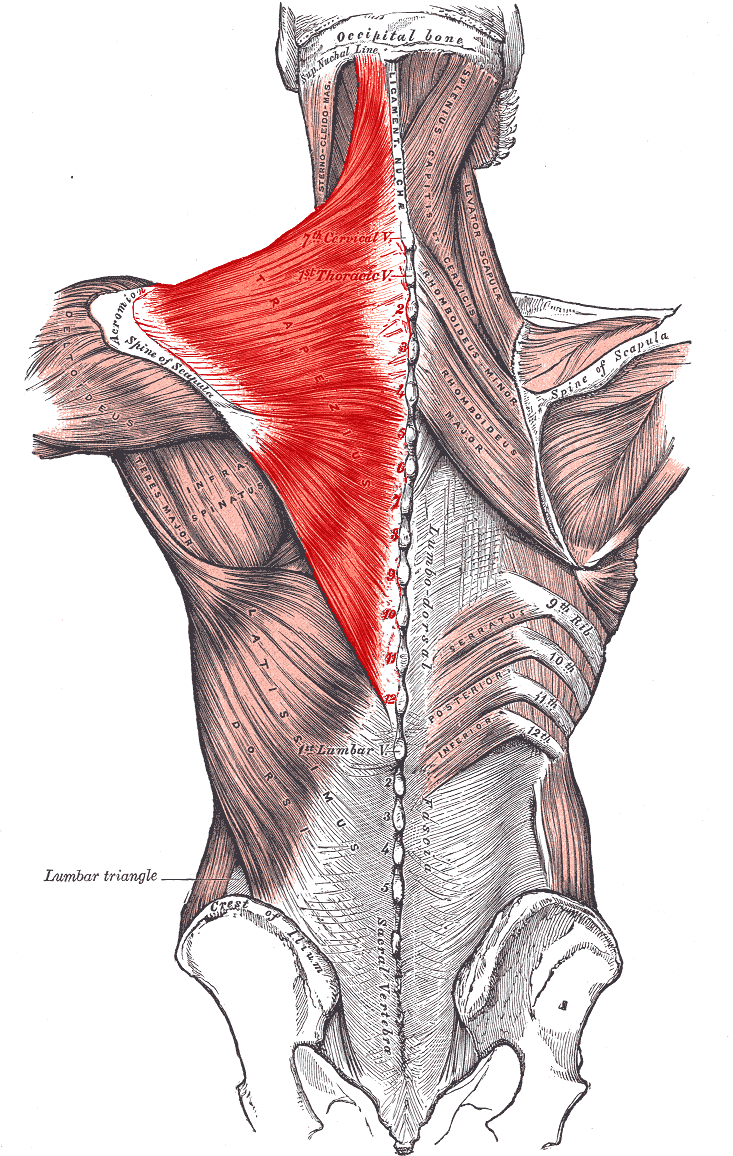
The trapezius is a large, flat, triangular muscle. It runs from the back of the skull and the spine of the neck down to the middle of the back, and out to the collarbone and shoulder blade. It lifts the shoulders, supports the weight of the arms, and holds the head upright. The upper fibers are the ones trap tox targets, and they are the fibers that bulk up in people who carry tension in their shoulders, train their traps heavily, or simply have a naturally prominent upper trapezius.
The treatment is quick: multiple small injections across the upper trapezius on each side, 15 to 30 minutes, no downtime. The dose is set per side, and the two sides often differ.
What Does Trap Tox Actually Change?
Trap tox promises two things, and they are not equally supported. The cosmetic change is a slimmer neck to shoulder transition and a longer looking neck. The functional change is less neck and shoulder tension, fewer tension headaches, and better posture. Only one has decent evidence behind it, and it is not the one most clinics lead with.
The cosmetic change is gradual and subtle. As the upper trapezius relaxes and loses a little bulk over 4 to 6 weeks, the slope from neck to shoulder becomes gentler and the neck looks longer in photos. The change is most visible in people whose trapezius is genuinely bulky. If your traps are already slim, there is little muscle to shrink, and a good injector tells you that at the consultation instead of after you have paid.
The functional change arrives first. Tension and heaviness in the shoulders typically begin to ease within 5 to 7 days, before any visible change. People describe it as the shoulders dropping and the band of tightness across the top of the back loosening. For people whose headaches start in the neck and shoulders, that relief can feel significant. The catch, covered in the evidence section below, is that the pain research is much weaker than the marketing suggests. Posture can improve as a side effect, but no trial measured it as a primary endpoint.
How Long Does Trap Tox Take to Work, and How Long Does It Last?
Trap tox follows the same two clock pattern as masseter Botox: relief comes first, slimming comes later.
| Timeframe | What usually happens |
|---|---|
| Days 1 to 7 | Little visible change at first. Tension and heaviness begin to ease within 3 to 7 days. |
| Days 7 to 14 | Relief peaks at about two weeks. Headaches linked to shoulder tension may ease in this window. |
| Weeks 2 to 4 | The trapezius starts to soften as it contracts less. The shoulder line begins to look less bulky. |
| Weeks 4 to 6 | Visible slimming of the neck to shoulder transition is usually most apparent. This is the change people notice in photos. |
| Weeks 6 to 12 | The cosmetic result is at its fullest. A 2026 trial found the reduction in trapezius area was significant at 12 weeks. |
| Months 3 to 4 | The effect fades. Most clinics quote 3 to 4 months for the cosmetic result, sometimes 3 to 6 months for tension relief. |
| After 4 months | Most people are back near baseline and repeat quarterly if they want to keep the result. |
Facial Botox, by comparison, is fully kicked in at 10 to 14 days. Trap tox takes longer to show because the muscle is bigger and the visible change depends on atrophy, not just relaxation. Our day by day guide to how long Botox takes to kick in for first timers explains the facial timeline. Do not judge trap tox at two weeks, when only the tension relief has arrived.
How Much Does Trap Tox Cost?
Trap tox is priced by the unit in most US clinics, and the dose is large, so the total is higher than a forehead treatment. The table below uses published clinic prices checked on November 16, 2026.
| Clinic or source | Price per unit | Typical total |
|---|---|---|
| InjectCo, Texas, 9 clinics | $12, or $7.77 with a $24.99 monthly membership | 80 units is $960, or $621.60 with membership |
| Renew Med Spa, Eagan, Minnesota | $15, or $14 for members | 80 units is $1,200, or $1,120 for members |
| Spectrum Skin Clinic, Irvine, California | From $15 per unit | 100 to 150 units is $1,500 to $2,250 at that rate |
| South Florida Face and Body, Miami | $13 to $18 per unit, Miami Beach range | 80 units is $1,040 to $1,440 |
The dose moves the price. South Florida Face and Body reports about 40 units per side, 80 units total, as the average cosmetic dose. Spectrum Skin Clinic reports 50 to 75 units per side, or 100 to 150 units total. Higher ranges of 100 to 250 units total appear in shoulder spasticity protocols, which are medical, not cosmetic.
A realistic US range is $600 to $1,200 a session, reaching $1,500 or more at high dose clinics. At 3 to 4 sessions a year, that is roughly $1,800 to $4,800. Insurance does not cover cosmetic trap tox, and pain coverage is unlikely given the weak evidence. Ask for the unit count before you compare quotes: $12 a unit for 80 units beats $15 a unit for 100 units.
What Does the Evidence Actually Say?
Here the marketing runs far ahead of the research. Two different literatures get quoted as though they were one, and they point in different directions.
For the shoulder line, the studies are small. A randomized, double blind trial published in 2026 gave 20 women either 40 units or 80 units of letibotulinumtoxinA, the same molecule sold in the US as Letybo, spread over 10 points along the trapezius. Both doses produced a statistically significant reduction in trapezius area at 12 weeks, with no measurable advantage for the higher dose, and a median satisfaction score of 4. That is a real result from 20 people in one trial. A randomized trial in 30 women measured the muscle on ultrasound and found it roughly 2 to 3 millimeters thinner at 3 and at 6 months. A split shoulder trial in 20 volunteers used 30 units per side under ultrasound guidance, and at one year the side treated with incobotulinumtoxinA was still measurably thinner than at baseline, while the onabotulinumtoxinA side had regained size. These are small, early, and encouraging. They are not proof.
Patient satisfaction in these small studies is high: one study found 80 percent of women treated for bulky trapezius muscles were very pleased, and another reported mean satisfaction of 8.5 out of 10. Both come from small, mostly unblinded studies where expectation shapes the answer.
For pain, the better evidence is less encouraging. A 2025 systematic review and meta-analysis pooled 7 randomized trials and 261 patients with myofascial pain of the neck and shoulder, at doses from 20 to 400 units, and found that botulinum toxin beat saline by about 10 points on a 100 point pain scale. That difference is statistically real and below what anyone would call a clinically meaningful difference. The authors concluded that it cannot be recommended for that use. Separately, a 2016 neurology guideline rated Botox probably ineffective for chronic tension type headache, a finding that InjectCo discloses on its own traptox page. If your main goal is pain relief, trap tox is a weak bet.
The regulatory status is plain. No botulinum toxin product is FDA approved for injection into the trapezius, for contour or tension. Botox Cosmetic is approved for frown lines, crow’s feet, forehead lines, and neck bands only. Trap tox is an off label use, and the 360 unit cumulative 3 month cap in the FDA prescribing information applies across all indications.
Who Is a Good Candidate for Trap Tox?
The best candidates have a visibly bulky upper trapezius, have tried posture work without a shape change, understand the result is subtle and temporary, and can afford quarterly sessions. People who also want the relaxation effect tend to be the most satisfied, because they get something in the first week even before the slimming shows.
The poor candidates are just as clear: traps that are already slim, neck pain from a disc, arthritis, or a nerve issue, where relaxing a muscle will not fix the cause, or a wish for a dramatic or permanent result. Do not get it while pregnant or breastfeeding, with a neuromuscular disorder such as myasthenia gravis, with an infection at the injection site, or while taking drugs that affect neuromuscular transmission. Tell your injector every medication you take.
Heavy lifters and athletes should pause and think. Trap tox can weaken the muscle used for shrugs, deadlifts, and overhead work, and shoulder strength can dip for a few weeks after treatment. That matters if you compete or train hard.
What Are the Risks and Red Flags?
Trap tox is generally well tolerated. Common side effects are short lived: soreness, swelling, or bruising where the needle went in, and a headache for a day or two. Neck weakness for 1 to 2 weeks is reported, and lifting overhead or carrying heavy bags can feel harder. Strength returns as the toxin wears off.
The red flags that mean you should call your injector promptly are:
- Trouble swallowing, speaking, or breathing after treatment
- Weakness spreading beyond the shoulders, or unusual muscle weakness anywhere
- A visibly uneven shoulder line that is getting worse, not better
- An allergic reaction: swelling of the face or tongue, trouble breathing, or a rash
- Severe or worsening headache that does not respond to ordinary pain relief
There is no reversal agent for Botox. If the dose is too strong, the only treatment is waiting for it to wear off. That is why the first dose should be conservative: the 2026 trial found no advantage to 80 units over 40 units. The trapezius sits near muscles that stabilize the shoulder blade, and a misplaced injection can weaken the wrong one for weeks. The injector’s experience with this muscle matters more than the brand of toxin.
What Are the Alternatives?
Trap tox is not the only route to a longer looking neck, and for many people it is not the best one. Physical therapy and posture work are the strongest alternative for the functional goal. Strengthening the lower trapezius and rhomboids, stretching the upper trapezius and chest, and changing how you sit at a desk address the cause of the tension rather than muting the muscle. The result is slower and takes effort, but it does not wear off in 3 months.
Reducing trap dominance in training is the alternative for lifters, and weight loss can help when the bulk is partly fat, because that fat does not respond to Botox at all. An honest injector checks whether the bulk is muscle before treating, by feeling it while you shrug and relax.
For the cosmetic goal alone, no cream, device, or exercise shrinks a specific muscle the way a neuromodulator does. That is trap tox’s real selling point, and its limit: a temporary, subtle, expensive change to one muscle. Sculptra vs Radiesse for cheeks is a useful comparison, because those treatments also build their result gradually over months. If you are choosing any injector for the first time, our patient guide on how to find the right doctor in Los Angeles covers the vetting questions that matter.
Frequently Asked Questions
What is trap tox?
Trap tox is Botox injected into the upper trapezius muscle, between the neck and the shoulders. Relaxing the muscle can make it look smaller over several weeks, so the neck looks longer and the shoulder line softer. It is also called trap Botox, trapezius Botox, and Barbie Botox.
How long does trap tox take to work?
Tension relief usually starts in 3 to 7 days and peaks at about two weeks. Visible slimming develops over 4 to 6 weeks, with the fullest cosmetic effect at 6 to 12 weeks. Results last 3 to 4 months.
How much does trap tox cost?
Most US sessions cost $600 to $1,200, based on $12 to $15 per unit and a typical cosmetic dose of 80 to 150 units total. Always ask for the unit count, because the per unit price means nothing without the dose.
Does trap tox help neck pain?
The evidence is weak. A 2025 meta-analysis of 7 trials and 261 patients found botulinum toxin beat saline by about 10 points on a 100 point pain scale for myofascial neck and shoulder pain, below a clinically meaningful difference, and the authors concluded it cannot be recommended for that use. A 2016 neurology guideline rated Botox probably ineffective for chronic tension type headache.
Is trap tox FDA approved?
No. No botulinum toxin product is FDA approved for injection into the trapezius, for shoulder contour or for neck and shoulder tension. It is an off label use. Botox Cosmetic is approved for frown lines, crow’s feet, forehead lines, and neck bands.
This article is for general information only and is not medical advice. Trap tox is an off label use of a prescription treatment. Individual results vary. Talk to a qualified clinician before starting, stopping, or changing any treatment.






