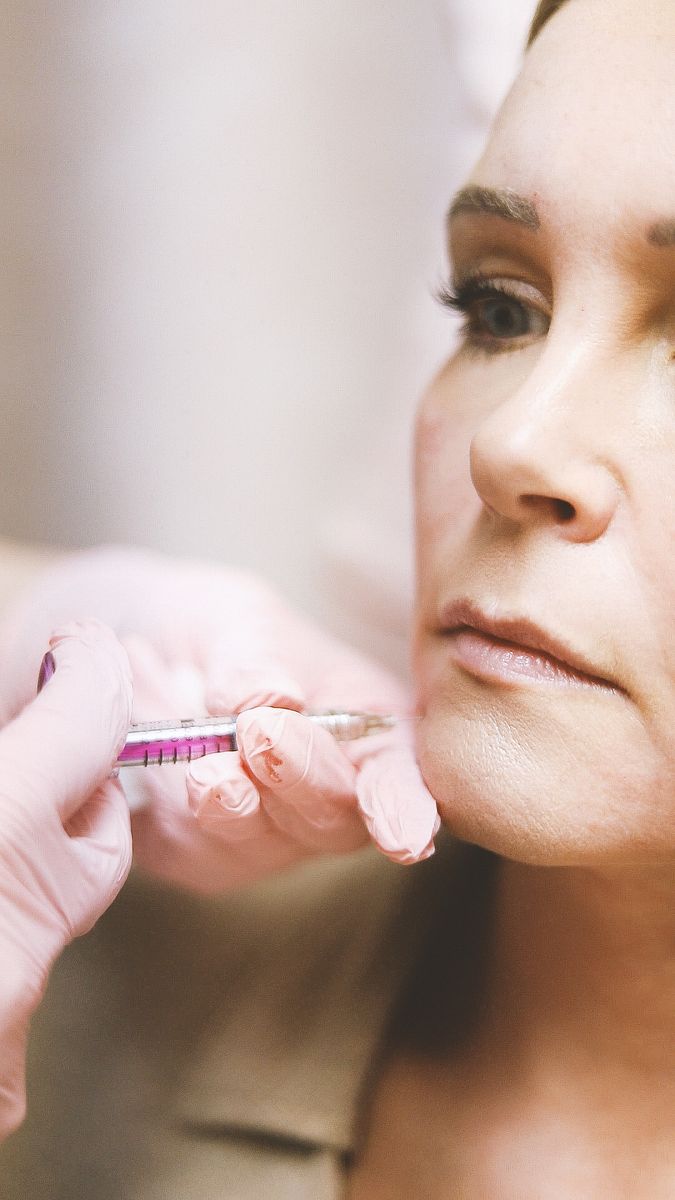
Botox does not work on the day it is injected. According to the Botox Cosmetic prescribing information (Allergan, AbbVie), treated muscles begin to relax one to two days after injection, with the effect building through the first week. Most people first notice a change around day three or four, and Cleveland Clinic puts full results at 10 to 14 days.
If this is your first treatment, the waiting is the hard part. First-timers tend to study the mirror and worry that nothing is happening, or that one side is working faster than the other. Almost all of that is normal. This timeline walks through what to expect on each day, why the timing differs from person to person, and the few signs that actually merit a call to your injector.
What happens on day 0, the day of your first Botox treatment?
On day 0, expect no visible change at all. Mayo Clinic describes botulinum toxin injections as a quick office procedure, and the injections themselves usually take only a few minutes. You may see small raised bumps at the injection points, mild redness, or slight tenderness, and Cleveland Clinic lists a slight headache and minor bruising among the common short-lived effects. The bumps typically settle within the first hour or so.
The standard aftercare is simple. Mayo Clinic advises avoiding rubbing or massaging the treated area for 24 hours and not lying down for two to four hours after treatment, so the product stays where it was placed. Behind the scenes, the toxin is already binding to nerve endings in the treated muscles, even though your face looks the same.
What should you expect on days 1 to 2 after Botox?
On days 1 and 2, most people see nothing in the mirror, and that is the expected pattern. The Botox Cosmetic prescribing information states that the initial doses induce chemical denervation of the injected muscles one to two days after injection. In plain terms, the nerve signals that tell those muscles to contract are only beginning to quiet down, so movement and lines still look unchanged.
Some people feel a faint sense of heaviness in the forehead during this window; many feel nothing at all. Any small bruise from the needle is most likely to show up now. The only rule for days 1 and 2 is patience: judging your result this early tells you nothing about the final result.
When do most first-timers notice Botox starting to work, around days 3 to 4?
Days 3 to 4 are when most first-timers notice the first real change. Cleveland Clinic notes that after Botox treatment, most people notice the desired effects around the third or fourth day. The change usually arrives as a feeling before it becomes a look: raising your eyebrows or frowning takes slightly more effort, and the movement simply does not go as far as it used to.
Lines soften first while you are making expressions, not while your face is at rest. It is also common for one area, or one side, to respond ahead of the other. Uneven progress at day 4 is not a failed treatment. It is the treatment mid-arrival, and the slower side usually catches up.
What changes during days 5 to 7 after Botox?
During days 5 to 7, the effect becomes clearly visible. The prescribing information notes that the effect of the initial doses increases in intensity during the first week, and by the end of that week most treated areas look noticeably smoother. Frown lines are shallower, forehead lines fade when you raise your brows, and crow’s feet crinkle less when you smile.
Your face is still changing, so this is not the moment to judge the final result or to ask for more product. Some muscles respond faster than their neighbors, and a spot that looks strong on day 6 may be fully relaxed by day 12. Experienced injectors will not assess or adjust a result until it has finished developing.
When is Botox fully kicked in, at days 10 to 14?
Botox is considered fully kicked in between days 10 and 14. Cleveland Clinic states that full results are visible within 10 to 14 days of treatment. By this point the treated muscles have reached their maximum relaxation, lines have had days of reduced folding to smooth out, and the balance between the two sides of your face has settled.
This is the result you actually paid for, and it is the earliest point at which the treatment can be judged fairly. Take a photo on day 14 in the same lighting as your pre-treatment photo, making the same expressions. If something still looks uneven in that comparison, you have a real finding to bring to your follow-up rather than a worry from day 4.
Why does Botox take longer to kick in for some people?
Two people treated on the same day can follow noticeably different timelines. Cleveland Clinic notes that results vary depending on the severity of the wrinkles and the strength of the muscles treated. Beyond that, the main factors are dose, muscle size, treatment area, metabolism, and treatment history.
A conservative first dose, which many injectors prefer for new patients, may come on more gently than a full corrective dose. Stronger muscles, such as a heavy forehead or a powerful frown complex, take longer to relax fully than the smaller muscles around the eyes. Individual metabolism affects how quickly the effect develops and fades. First-timers also tend to perceive the onset as slower, partly because they have no baseline for comparison. Cleveland Clinic notes that with repeated treatments, some patients find the effect lasts longer.
What are the signs that your Botox is starting to work?
The earliest signs are about movement, not appearance. You try to frown or lift your brows and the movement stops short, as if the muscle has lost interest. Expressions feel quieter, the treated area may feel slightly tight or heavy for a few days, and makeup often sits more smoothly because the skin is folding less.
A practical test is to compare expressions rather than your resting face. In the first week, lines soften while you animate long before they soften at rest, because the product works on the muscle movement that creates the line. If your frown is clearly weaker than it was before treatment, your Botox is working, even if the line itself has not caught up yet.
When should you worry and call your injector?
Most first-week oddities resolve on their own, but a short list of findings deserves a call. Contact your injector if one side remains much more active than the other at the two-week mark, if a brow sits lower or feels heavy, if an eyelid begins to droop, or if you have no change at all by day 14. Cleveland Clinic lists temporary eyelid droop, eyebrow droop, and eyebrow asymmetry among the known side effects of these injections. Droops are usually temporary and fade as the treatment wears off, but your injector should assess you in person, because small adjustments can sometimes help.
One set of symptoms is different and urgent. MedlinePlus warns that onabotulinumtoxinA can, rarely, spread beyond the injection area, with symptoms appearing hours to weeks after treatment. Difficulty swallowing, speaking, or breathing, weakness spreading through the body, double or blurred vision, voice changes, or loss of bladder control are emergencies. Seek emergency medical care immediately rather than waiting for your clinic to reply.
What happens at the two-week follow-up, and can you get a touch-up?
A review at about two weeks is standard practice, particularly for first-time patients, because that is when the result has finished developing. Your injector will ask you to frown, raise your brows, and smile, compare movement from side to side, and check the outcome against your pre-treatment photos. If one spot is still slightly strong, a small top-up of a few units is a normal part of the process, not a sign that the treatment failed.
Touch-ups are deliberately small, done only once the full effect can be seen. Adding product earlier, while the first dose is still arriving, risks overcorrection. Full repeat treatments are a separate question: the prescribing information notes that the safety of dosing with Botox Cosmetic more frequently than every three months has not been clinically evaluated, so full sessions are generally planned about three months apart.
How long do the results of a first Botox treatment last?
For most people, a first treatment lasts about three to four months. The Botox Cosmetic prescribing information gives the duration of effect for glabellar lines as approximately three to four months, Cleveland Clinic gives the same three to four month range, and Mayo Clinic states that the effect may last up to three months or longer.
The fade is gradual rather than sudden. Movement creeps back over several weeks, usually in the strongest muscles first, and lines slowly reappear with expression. First treatments often sit at the shorter end of the range, especially when the dose was conservative. If you liked the result at day 14, the simplest plan is to note when movement returned for you and book the next session accordingly, rather than chasing the calendar.
This article is for general information only and is not medical advice. Botox Cosmetic is a prescription treatment; individual results vary, and your injector can advise on what is appropriate for you.