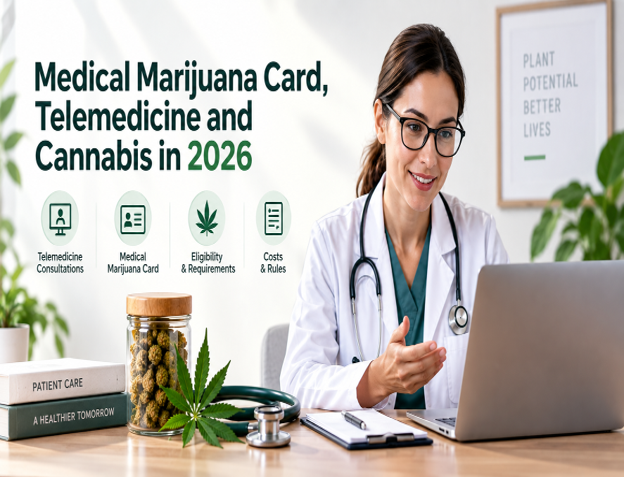
A clean visual guide to medical marijuana cards, telemedicine consultations, eligibility, costs, and cannabis care in 2026.
Medical cannabis is no longer a niche topic for patients willing to navigate complicated healthcare systems. In 2026, the bigger challenge is understanding what state law actually allows, what a physician consultation involves, and which costs belong to the state versus the healthcare provider.
A Medical Marijuana Card is not simply a pass to purchase cannabis. In states with regulated medical programs, it connects a qualifying patient to a legal framework that can include physician certification, state registration and regulated dispensaries. At the same time, telemedicine and cannabis services are changing how some patients begin the process, particularly when traveling to a medical office is difficult.
What Is a Medical Marijuana Card?
A Medical Marijuana Card generally identifies a patient who has been certified under a state’s medical cannabis program. The exact eligibility rules, qualifying conditions, registration fees and renewal periods vary by state.
That distinction matters. A person may live in a state where cannabis is legal for adult use but still need separate medical authorization to participate in a medical program. Patients should therefore check their state’s current regulations rather than relying on information from another state or an outdated article.
How Does a Medical Marijuana Card Work?
The process usually involves determining whether the patient has a qualifying condition, completing a physician consultation and registering with the applicable state program. Some states require additional documentation or identification before a card is issued.
For patients researching an online Medical Marijuana Card Pennsylvania option, Pennsylvania provides one example of how a state-regulated process works. Patients must register with the state, receive certification from an approved practitioner, pay the applicable state fee and use their card at a Pennsylvania dispensary. Pennsylvania’s current guidance states that a practitioner certification cannot exceed one year.
The important takeaway is that the card itself is only one part of the process. Certification, state registration and compliance with local regulations all matter.
Medical Marijuana Card, Telemedicine and Cannabis: What Has Changed?
Telemedicine has made physician consultations more accessible, but it does not eliminate the need for a legitimate medical evaluation. A telehealth cannabis doctor still has to follow applicable state regulations and professional standards.
A remote appointment can allow patients to discuss their medical history, symptoms, previous treatments and questions about cannabis without making an unnecessary trip to a medical office. However, convenience should not be confused with automatic approval.
State rules are especially important because telehealth policies are not identical nationwide. In Pennsylvania, for example, the Department of Health says approved practitioners can issue medical marijuana certifications through synchronous interaction, including phone or video conferencing. The practitioner must still determine that the patient has an eligible serious medical condition and may receive therapeutic or palliative benefit from medical marijuana.
What Happens During an Online Cannabis Consultation?
A legitimate online cannabis consultation should resemble a medical appointment rather than a simple purchasing process.
Depending on state requirements and the clinician’s approach, the consultation may involve questions about:
- Current medical conditions and symptoms
- Previous treatments and their effectiveness
- Prescription and over-the-counter medications
- Relevant medical records
- Potential concerns about cannabis use
- Treatment goals and expectations
Patients should also use the consultation as an opportunity to ask questions. They may want to understand which forms of medical cannabis could be appropriate, what potential side effects to watch for, and whether cannabis could interact with existing medications.
Where telehealth is permitted, patients should also confirm that the physician is properly licensed and authorized to participate in the relevant state medical cannabis program.
Once a patient decides to prepare for an evaluation, checking the Pennsylvania medical marijuana qualifying conditions and gathering relevant health records helps make the physician consultation far more productive. A telehealth evaluation should ultimately support a well-informed care plan rather than simply focus on the administrative process.
How Much Does a Medical Marijuana Card Cost?
The total cost of participating in a medical cannabis program is usually made up of several separate expenses. Patients may encounter a physician evaluation fee, a state registration or card fee and the cost of medical cannabis itself.
These expenses should be considered separately when comparing options.
State fees can also change over time. Pennsylvania, for example, currently requires a $50 annual payment for a medical marijuana card, although eligible patients may qualify for a fee reduction through the state’s Medical Marijuana Assistance Program. The state also notes that the physician visit may be an additional out-of-pocket expense because it is not necessarily covered by insurance.
For patients comparing costs, the advertised consultation price is therefore only part of the overall picture. It is useful to check whether the state charges an annual fee, how frequently certification must be renewed and whether financial assistance is available.
Medical Cannabis in 2026: What the Numbers Show
The growth of regulated medical cannabis programs demonstrates why patients increasingly need reliable, current information.
Pennsylvania’s Department of Health reported $9.1 billion in medical marijuana sales program-to-date in its March 2026 program update. The state also publishes ongoing information about patients, certifications, practitioners and dispensing activity.
The numbers show the scale of an established medical cannabis market, but market growth does not mean every cannabis product or treatment approach is suitable for every patient. Medical decisions should remain individualized and discussed with qualified healthcare professionals.
What Patients Should Know Before Visiting a Dispensary
Receiving a Medical Marijuana Card is only the beginning. Patients should understand how their state regulates possession, purchasing, product forms and purchase limits.
Before visiting a dispensary, patients should make sure their identification and certification information are current. They can also ask questions about product categories, ingredients, potency, directions and appropriate use.
Keeping a simple record of products used, amounts, timing and effects may also make future discussions with healthcare providers more productive.
Most importantly, medical cannabis should be treated as part of a broader healthcare conversation. Patients should tell their healthcare professionals about cannabis use, particularly when taking prescription medications or managing an ongoing medical condition.
Medical Marijuana Card and Telemedicine FAQs
Can I get a Medical Marijuana Card online?
In states that permit telemedicine for medical cannabis certifications, a qualifying patient may be able to complete the physician consultation remotely. The state still determines eligibility and registration requirements.
Is telemedicine the same in every state?
No. Telehealth rules, physician requirements and certification procedures vary by state and can change. Patients should review current state regulations before beginning the process.
Does a Medical Marijuana Card make cannabis legal everywhere?
No. A state medical marijuana card generally applies to that state’s regulated medical program. It does not automatically authorize possession or use in every state or location.
What should I bring to a physician consultation?
Patients should be prepared to discuss their medical condition, relevant records, current medications, previous treatments and questions about medical cannabis. Providing accurate information helps the clinician make an informed decision.
The Bottom Line
In 2026, navigating medical cannabis is less about finding the quickest route and more about understanding the rules that apply to you. A Medical Marijuana Card, physician consultation and telemedicine appointment can each play a role, but the details depend on state law.
Patients who take time to verify eligibility, understand costs and discuss cannabis openly with healthcare professionals are better positioned to make informed decisions. For anyone considering medical cannabis, current state regulations should be the starting point—not outdated advice or assumptions based on another state’s program.