Food as Medicine: The Doctor-Backed Nutrition Approach Reshaping Chronic Disease Care in 2026
Introduction: When the Doctor Says ‘Eat Real Food,’ It’s Now Official Policy
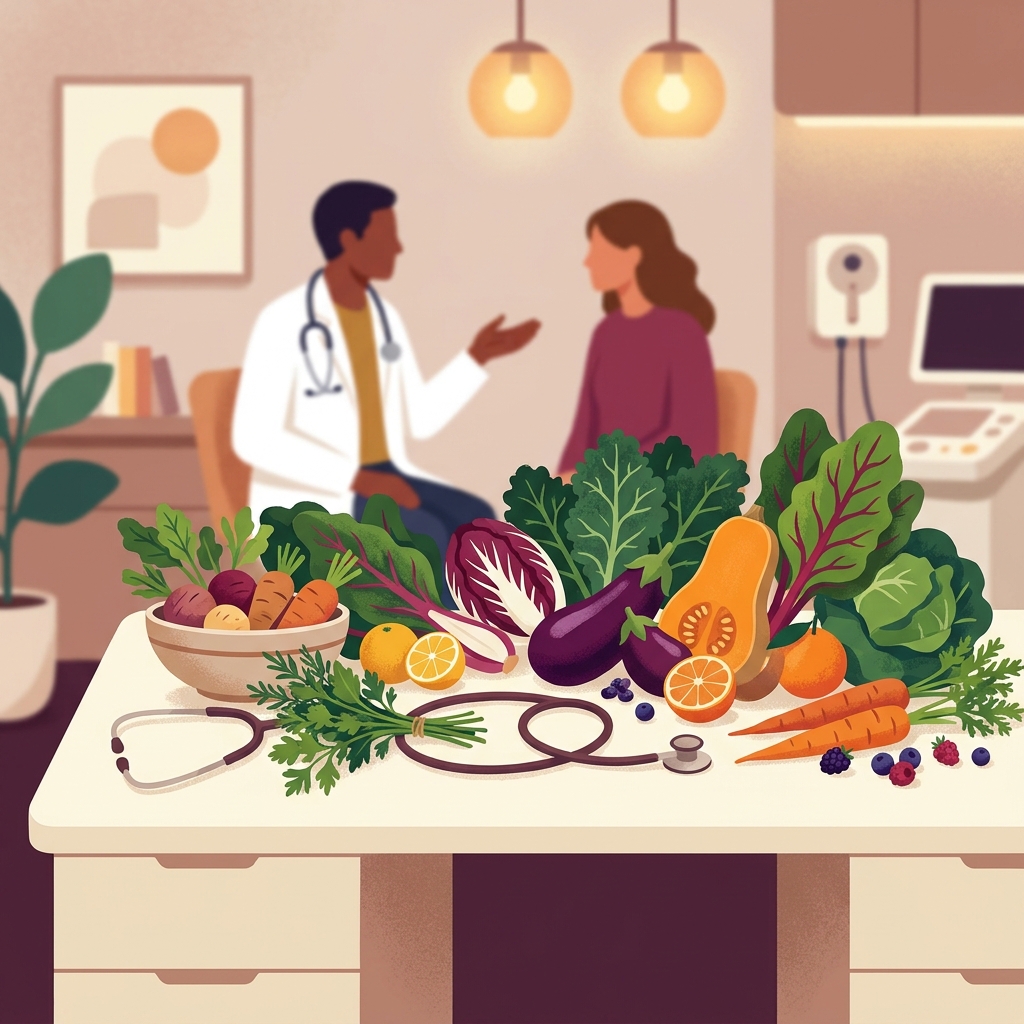
Picture a cardiologist finishing an appointment with a patient who has heart disease. Instead of handing over only a prescription slip, the physician writes a referral for medically tailored meals: prepared, condition-specific dishes delivered to the patient’s door. And here is the part that would have seemed implausible only a few years ago: the intervention is covered by Medicaid.
This scene is no longer hypothetical. In 2026, food-as-medicine has crossed a decisive threshold, moving from the integrative fringe into mainstream clinical protocol. That shift has been propelled by a rare convergence of forces: a formal American Medical Association resolution, sweeping new federal dietary guidelines, landmark cost-savings data, and fast-moving Congressional legislation.
The stakes are enormous. Poor diet is responsible for 12.2% of all deaths globally, according to the Institute for Health Metrics and Evaluation. In the United States, poor diets now cost an estimated $1.1 trillion each year in healthcare spending and lost productivity. Ultra-processed food consumption alone is tied to more than 124,000 preventable American deaths annually.
This article is not a list of superfoods. It is a close look at how board-certified physicians across specialties are integrating therapeutic nutrition into patient care right now, where the evidence stands, and how policy is finally turning science into access.
The 2026 Tipping Point: A Perfect Storm of Policy, Science, and Economics
Four simultaneous forces are reshaping the food-as-medicine landscape in 2026: institutional endorsement from the AMA, a landmark set of new federal dietary guidelines, mounting Medicaid cost-savings evidence, and active Congressional legislation.
Taken together, these developments represent a genuine inflection point rather than incremental progress. This is a structural change in how American medicine views nutrition as a clinical tool. Notably, even physicians who once dismissed dietary interventions as soft science are paying attention, drawn largely by the economic argument and peer-reviewed cost data.
The voices carrying this transformation are board-certified physicians in cardiology, endocrinology, nephrology, and oncology who are actively prescribing food-based interventions today.
The AMA Resolution and the 2025–2030 Dietary Guidelines: Institutional Validation Arrives
At the 2026 AMA Annual Meeting, physician delegates voted to formally advance the food-is-medicine movement. The American Medical Association affirmed that nutrition is a critical component of both prevention and long-term health, committing to advance nutrition education, research, and policy efforts to improve chronic disease outcomes.
For practicing physicians, this signals that nutritional counseling is now endorsed by the nation’s largest physician organization as legitimate clinical practice, not an optional wellness add-on.
Days earlier, the federal government reinforced that message. The 2025–2030 Dietary Guidelines for Americans, released January 7, 2026, were described by HHS and USDA leadership as “the most significant reset in decades,” placing real, whole foods back at the center of health. The AMA’s guidance to physicians distilled the directive into a simple message: eat real food and avoid highly processed products that now make up roughly 60% of the U.S. food supply.
For the first time, the nation’s largest physician organization and the federal government’s nutrition authority are aligned on a food-first clinical message.
The Economic Case That Changed the Conversation
If the AMA and the Dietary Guidelines provided the credibility, economics provided the momentum. The $1.1 trillion annual cost of poor diet, documented by the Rockefeller Foundation in January 2026, is the figure bringing skeptical administrators and policymakers to the table.
A landmark Tufts University study published in June 2026 analyzed 1,866 Medicaid patients across 11 Massachusetts healthcare systems. It found that medically tailored meals (MTMs) generated net cost savings for Medicaid, even after accounting for the cost of the meals themselves, for patients with heart disease, chronic kidney disease, diabetes, and depression. Reductions in hospitalizations and emergency room visits appeared within months.
A Health Affairs simulation study reinforced the finding, concluding that MTMs were net cost-saving in the first year in 49 of 50 states, with the largest savings reaching $6,299 per patient in Connecticut. Earlier research documented a 49% reduction in inpatient admissions and 72% fewer skilled nursing facility admissions among MTM recipients.
Scaling matters as well. The Rockefeller Foundation’s March 2026 report found that reaching an estimated 43 million eligible Americans through Food is Medicine programs could generate over $45 billion in state economic activity, create 316,000 jobs, and deliver $5.6 billion in annual revenue to small and mid-sized farms.
The economic argument is uniquely persuasive because it reframes food-as-medicine from a wellness philosophy into a cost-containment strategy, language that resonates with hospital administrators, insurers, and legislators alike.
Legislation and Medicaid: How Policy Is Turning Evidence Into Access
The infrastructure to prescribe food is being built rapidly. As of early 2026, 15 to 17 state Medicaid programs have approved or pending Section 1115 waivers covering Food is Medicine interventions, including medically tailored meals, produce prescriptions, and medically tailored groceries.
At the federal level, two landmark bills arrived in April 2026: the National Food as Medicine Program Act of 2026, which would establish a Food as Medicine Medicaid waiver grant program, and the Accountable Produce as Medicine Act of 2026, which would require CMS to test a model reducing chronic diseases through food.
States are leading as well. Kentucky formally declared itself a “Food is Medicine state” via Senate Joint Resolution 23 in April 2026, and Pennsylvania Governor Shapiro proposed $900,000 in state funding for a Food is Medicine Medicaid pilot in the 2026–27 budget. Thirteen states now use Medicaid dollars to pay for medically tailored meals. The Rockefeller Foundation has committed over $220 million to nutrition initiatives, including $100 million dedicated to expanding Food is Medicine access.
These legislative and reimbursement changes are the infrastructure that finally allows physicians to prescribe food-based interventions and have them covered.
Condition-Specific Dietary Interventions: What the Evidence Shows by Specialty
This is the clinical core of the story. What follows is a specialty-by-specialty breakdown of evidence-based dietary interventions grounded in 2025–2026 research. These are not generic tips; they are condition-specific protocols with measurable outcomes, increasingly recognized by specialty boards and professional societies.
Cardiology: Diet as a First-Line Cardiovascular Intervention
The burden is staggering: 31% of cardiovascular disease deaths were attributed to poor diet in 2021, according to IHME data. Research in Frontiers in Nutrition identifies low-grain diets as the leading dietary factor in cardiovascular disease deaths globally.
Cardiologists are increasingly incorporating Mediterranean-style diets, whole-food plant-based approaches, sodium reduction protocols, and advanced omega-3 supplementation, the last of which was a featured topic at the 2026 Integrative Healthcare Symposium. The American Heart Association’s June 2025 systematic review confirmed that Food is Medicine programs show “great potential” for improving diet quality and food security, and its Health Care by Food initiative is funding 23 pilot trials.
In practice, a cardiologist might identify a heart failure patient as a candidate for medically tailored meals, refer to a registered dietitian, and coordinate meal delivery. The Tufts study linked this approach to measurable cost savings and reduced hospitalizations within months.
Endocrinology and Diabetes: Food as a Remission Tool
A 2025 randomized controlled trial published in Diabetologia, the largest and longest plant-based diet trial for type 2 diabetes, found that a whole-food plant-based diet combined with exercise induced diabetes remission in 23% of participants with baseline HbA1c below 9.0%, reducing medication use more than any prior plant-based diet trial.
Real-world programs echo this. A peer-reviewed UC Irvine Health study found that diabetes patients in a food-as-medicine program saw average A1C levels fall from 8.5% to 7.5%. That one-point drop corresponds to roughly a 40% reduction in the risk of complications including kidney damage, nerve damage, and vision loss.
Meanwhile, increased processed meat intake is the leading dietary driver of diabetes burden globally. As Medicare expands GLP-1 coverage to 3.8 million seniors, endocrinologists increasingly recognize the need for concurrent nutritional support, including medically tailored meals and dietitian counseling, to optimize outcomes and prevent muscle loss. A 2025 survey of more than 3,000 food-as-medicine participants reported eating 1.17 fewer fast-food meals per week alongside measurable reductions in symptom frequency.
Nephrology: Medically Tailored Nutrition for Kidney Disease
Nephrology is among the most evidence-rich specialties for food-as-medicine. Dietary management of chronic kidney disease, including protein, potassium, phosphorus, and sodium restriction, has long been standard of care. Medically tailored meals now formalize this into a scalable intervention.
The Tufts/Medicaid study specifically found that MTMs generated net cost savings for CKD patients while reducing hospitalizations and emergency room visits, and the Health Affairs simulation counted CKD among its target conditions. Because CKD protocols must be individually calibrated to disease stage and lab values, this specialty makes an especially strong case for registered dietitian involvement rather than generic dietary advice. Nephrologists integrate dietary prescription directly into disease management, coordinating closely with dietitians and meal delivery programs.
Oncology: Nutrition as Supportive and Potentially Therapeutic Care
Dietary interventions are not positioned as cancer cures, but the evidence for nutrition’s role in prevention, treatment tolerance, recovery, and survivorship continues to grow. The 2026 Integrative Healthcare Symposium identified brain health and immunometabolism as top convergence trends, both relevant to metabolic approaches in cancer care.
Medically tailored meals help address malnutrition, treatment side effects, and immune function during active treatment, and MTM programs are increasingly integrated into oncology care pathways. The American College of Lifestyle Medicine’s 2026 position statement identifies registered dietitian nutritionists certified in lifestyle medicine as essential members of the optimal clinical team, a particularly important recommendation in oncology settings where integrative oncologists routinely refer to dietitians and food-as-medicine programs.
The Physician Education Gap: Why Most Doctors Were Never Taught This
Here lies a central paradox. Despite overwhelming evidence linking diet to chronic disease, most physicians receive fewer than 20 hours of nutrition training in medical school. The consequences are predictable: physicians who lack that training discuss diet less often, feel less confident offering dietary guidance, and default to pharmacological options even when dietary changes could be equally or more effective.
The 2026 response has been swift. As reported by Medical Economics, HHS Secretary RFK Jr. announced in July 2026 that 19 medical schools pledged to require at least 40 hours of nutrition education for students starting in fall 2026, and eight leading accrediting boards committed to reforming physician training. The NIH launched a $2.1 million challenge grant to identify scalable curricular models.
Culinary medicine is emerging as a promising solution. A Larner College of Medicine pilot found that 91% of medical students reported enhanced understanding of the diet-disease relationship, and 95% reported increased confidence in providing nutrition counseling after completing the program. This gap is also generational: many practicing physicians trained before nutrition science was integrated into curricula, creating strong demand for continuing medical education in nutritional medicine.
Culinary Medicine and Teaching Kitchens: The New Clinical Tool
Culinary medicine has emerged as a formal discipline built on a physician-chef-dietitian partnership that translates nutrition science into practical cooking skills for both patients and providers.
A Tufts/Harvard scoping review of 100 Food is Medicine studies found that among educational components, printed materials (43%), cooking classes (35%), and individual counseling (32%) were the most common delivery methods, with most interventions delivered in person (55.3%). Teaching kitchens function as clinical tools where patients learn to prepare condition-specific meals under trained guidance, producing measurable improvements in dietary adherence.
This surge aligns with broader trends. Integrative medicine adoption climbed 22% in 2025, driven by GLP-1 metabolic shifts and regenerative approaches, with personalized nutrition, including continuous glucose monitors and biomarker-guided plans, becoming standard in holistic practices.
The Team-Based Approach: Physicians, Dietitians, and the Integrated Care Model
The ACLM’s 2026 position statement defines the optimal clinical team for nutritional medicine as including registered dietitian nutritionists certified in lifestyle medicine working alongside physicians.
This collaboration is the practical answer to the education gap. Physicians identify candidates for food-as-medicine interventions and provide clinical oversight, while dietitians deliver specialized counseling and meal planning. The scoping review’s finding that most interventions are delivered in person underscores how central trained nutrition professionals are to the care team.
Technology is enhancing the model. Continuous glucose monitors, metabolomics, and AI-analyzed dietary patterns are enabling biomarker-guided plans that are increasingly standard in integrative and functional medicine in 2026. Crucially, the APHA’s August 2025 report frames food-as-medicine as a health equity imperative, with Medicaid-focused programs and produce prescriptions in food-insecure communities representing a vital application for underserved populations.
What Skeptical Physicians Need to Know: Addressing the Evidence and Objections
Physician skepticism has been legitimate. Historically, the evidence base was thin, interventions were hard to standardize, and reimbursement did not exist. The 2025–2026 evidence changes that calculus.
- On evidence quality: The Diabetologia RCT, the Tufts/Medicaid cost study, the Health Affairs 49-state simulation, and the AHA systematic review all represent peer-reviewed, high-quality research.
- On compliance: The 2025 survey of over 3,000 participants showed sustained behavioral change, including 1.17 fewer fast-food meals per week, held through program completion.
- On reimbursement: With 15 to 17 states covering interventions through Medicaid waivers, most Medicare Advantage plans offering meal benefits, and two Congressional bills advancing, the landscape is transforming rapidly.
- On time: Team-based care means physicians do not need to become nutrition experts. They need to know when and how to refer.
Ultimately, the economic argument is the decisive persuader. A $1.1 trillion annual cost and $45 billion in potential savings make food-as-medicine a fiscally responsible clinical strategy, not merely a wellness ideal.
The Road Ahead: Emerging Trends in Food-as-Medicine for 2026 and Beyond
Technology is the next frontier. AI-enabled tools, including the FAM-Bench multimodal benchmark for condition-aware food-as-medicine reasoning, alongside continuous glucose monitors and metabolomics-guided plans, are pushing toward precision nutritional medicine.
The GLP-1 intersection is generating fresh practice opportunities in metabolic medicine as Medicare expands coverage. The 2026 Integrative Healthcare Symposium flagged brain health and immunometabolism, peptide therapeutics, and cardiovascular nutrition as leading convergence areas. Reducing the risk of cognitive decline through lifestyle interventions, including diet, is an area of growing clinical interest — for more on this, see our coverage of 5 ways to prevent dementia. The research pipeline, from the AHA’s 23 pilot trials to the NIH’s $2.1 million challenge grant, promises to keep strengthening the evidence base.
The remaining challenge is equity: scaling programs to reach all 43 million eligible Americans, not only those inside integrated health systems, will require sustained policy advocacy and community-based program development. With the AMA, HHS, Congress, and major health systems aligned, the question is no longer whether food-as-medicine will become mainstream, but how fast the infrastructure can scale.
Conclusion: Food as Medicine Is No Longer a Philosophy. It’s a Clinical Protocol.
The convergence of the 2026 AMA resolution, the new Dietary Guidelines, landmark Medicaid cost-savings data, and Congressional legislation has transformed food-as-medicine from a fringe idea into a mainstream clinical protocol backed by institutions, peer-reviewed evidence, and expanding reimbursement.
Board-certified physicians in cardiology, endocrinology, nephrology, and oncology are not waiting for perfect evidence. They are integrating therapeutic nutrition into their practices now, guided by the best available science and driven by clear economic and clinical imperatives.
The human stakes justify the urgency: 12.2% of global deaths are linked to poor diet, $1.1 trillion in annual U.S. costs accumulate each year, and more than 124,000 preventable deaths per year are tied to ultra-processed food consumption. The cost of inaction is measured in both lives and dollars.
As medical schools add nutrition training, Medicaid waivers expand, and Congress advances Food is Medicine legislation, the physicians integrating nutritional medicine today are not ahead of the curve. They are on the right side of an irreversible shift. Top Doctor Magazine will continue to feature the physicians, programs, and policies driving this transformation.
Take the Next Step: Connect With Physicians Leading the Food-as-Medicine Movement
Readers can explore Top Doctor Magazine’s ongoing coverage of integrative, functional, and lifestyle medicine physicians who are actively incorporating food-as-medicine into clinical practice.
- Healthcare professionals are encouraged to nominate colleagues pioneering nutritional medicine approaches for Top Doctor Magazine features and awards recognition.
- Patients and health-conscious readers should consult a board-certified physician or registered dietitian about whether food-as-medicine programs, including medically tailored meals, produce prescriptions, or culinary medicine, may support their chronic disease management. For those exploring how dietary choices affect inflammation and joint health, our article on anti-inflammatory eating for joint health offers a useful starting point.
- Stay informed by subscribing to the Top Doctor Magazine newsletter for the latest on the evolving food-as-medicine policy landscape, clinical evidence, and physician profiles.
Physicians integrating therapeutic nutrition into their practices are exactly the kind of medical professionals Top Doctor Magazine profiles, and they make exemplary candidates for editorial features and awards consideration.