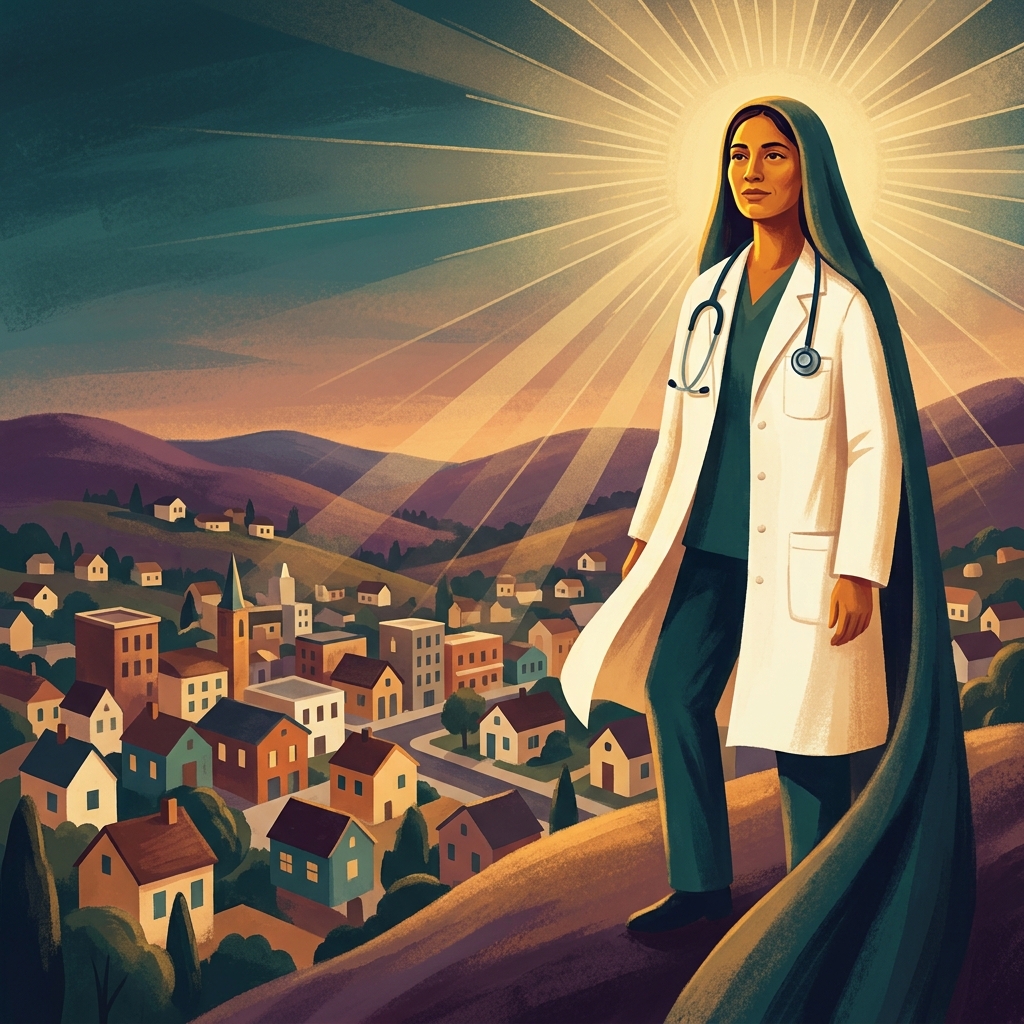
Physician Community Impact Stories 2026: Healthcare Heroes Closing America’s Care Gaps
Introduction: America’s Care Crisis and the Physicians Refusing to Walk Away
More than 120 million Americans, roughly one in three people, now live in a healthcare desert where access to primary care, pharmacies, hospital beds, or trauma services is constrained or out of reach. Against this stark reality stands a generation of physicians who could practice anywhere, yet choose to serve the very communities most in danger of being left behind.
The stakes in 2026 are sobering. The United States faces a shortfall of roughly 65,000 physicians, with 417 rural hospitals currently vulnerable to closure and more than 40% of rural hospitals operating at a loss. These are not abstract numbers. They represent communities one closure away from losing all local care.
This article advances a central thesis: individual physician community impact stories are not merely inspirational anecdotes. They are living counterarguments to a national health equity crisis. Even as 41.9% of physicians still report at least one symptom of burnout, a powerful counternarrative is emerging. Physicians who anchor their work in community service consistently report renewed purpose and resilience.
The pages ahead explore four physician archetypes closing America’s care gaps: the rural last-responder, the food-insecurity fighter, the maternal health champion, and the chronic disease community educator. Throughout, TopDoctor Magazine’s mission to celebrate frontline healthcare heroes and bridge the gap between physicians and the communities they serve provides the editorial lens.
The National Crisis Behind Every Local Hero: Understanding America’s Care Gaps in 2026
The scope of America’s care gaps is difficult to overstate. According to research cited by Barton Associates, more than 120 million Americans live in healthcare deserts, and in over 80% of U.S. counties, access to essential healthcare services is limited or constrained.
The physician shortage compounds the problem. The AAMC and HHS, as referenced by EY, project the current 65,000-physician shortfall could grow to approximately 86,000 by 2036. Every community-embedded physician becomes exponentially more critical with each passing year.
Rural America bears the heaviest burden. Between 2010 and 2025, 150 rural hospitals closed, forcing rural residents to travel 20 to 40 miles farther for care, according to a position paper in the Annals of Internal Medicine. The 2026 Chartis report confirms 417 additional facilities remain vulnerable to closure.
The chronic disease burden adds another dimension. Approximately 60% of adult Americans live with at least one chronic disease, and 40% have two or more conditions, according to HRSA. Behavioral health access is equally dire: 89% of rural census tracts are designated Healthcare Professional Shortage Areas for behavioral health, with 13 states at 100% HPSA designation.
The American Medical Association’s Community Health Impact Lab frames physicians as “critical connectors between communities and health systems.” Against this data landscape, the physicians profiled here are not simply doing good. They are holding the American healthcare system together at its most vulnerable seams.
Archetype 1: The Rural Last-Responder
The rural last-responder is the physician who chooses to practice in rural or frontier communities where they are often the sole or near-sole provider of primary, emergency, or specialty care. With 417 rural hospitals vulnerable to closure and 150 already shuttered since 2010, these physicians are the last line of defense for millions of Americans.
The reality of their work defies easy categorization. They manage conditions that urban physicians would routinely refer to specialists. They perform procedures outside their formal training out of pure necessity. They serve as de facto mental health resources, social workers, and community anchors. When a clinic stays open, an entire local economy often stays viable.
The measurable outcomes are profound: reduced emergency transport times, prevention of avoidable deaths, and maintenance of community economic stability. The personal cost is equally real. Long hours, professional isolation, and limited peer support are constant companions. Yet many rural last-responders cite deep community connection as their primary reason for staying.
Systemic support is beginning to catch up. The AMA’s Community Health Impact Lab Micro Grants Program, launched in November 2025, awards $1 million in $50,000 grants to up to 20 physician-led initiatives. Recognition matters as well. The Connecticut Hospital Association’s 2026 Healthcare Heroes Award has honored physicians with nearly four decades of community-embedded rural service.
What Drives Physicians to Choose Rural Service
The psychology behind rural physician choice is rooted in mission-driven medicine, personal connection to rural communities, and the appeal of practicing comprehensive, relationship-based care. Notably, the share of physicians who reported feeling valued rose to 56.2% in 2025, with community purpose identified as a key retention driver, according to the AMA. Rural service may actually protect against burnout rather than accelerate it.
Narrative competence, the ability to engage empathically and listen actively, is especially critical in rural settings where physicians must build deep community trust. Recognition programs play a quiet but essential role in sustaining morale and attracting the next generation of rural-committed physicians.
Archetype 2: The Food-Insecurity Fighter
The food-insecurity fighter has moved beyond clinic walls to confront food insecurity, nutrition access, and social determinants of health as direct contributors to medical conditions. The connection is well documented: food insecurity drives higher rates of diabetes, cardiovascular disease, obesity, and mental health conditions, the very chronic diseases affecting 60% of American adults.
These physicians pioneer creative interventions, including produce prescription programs, food pharmacy partnerships, community garden initiatives, school nutrition advocacy, and food security screening built directly into clinical workflows. Food insecurity is one of the explicitly named target areas for the AMA’s $1 million micro grants program.
The community outcomes are tangible: reduced A1C levels in diabetic patients, decreased emergency room utilization, improved pediatric growth metrics, and stronger health literacy. The Milbank Memorial Fund has found that strong, accessible primary care is associated with reduced health disparities, validating this community-focused work.
The financial landscape is shifting in their favor. Value-based care models now account for roughly 60% of U.S. healthcare payments, finally beginning to reward the upstream, social-determinants-focused work these physicians have long performed without adequate compensation.
The Prescription That Goes Beyond the Pharmacy
Social prescribing, the practice of formally prescribing community resources and nutrition programs alongside traditional treatments, is redefining what medicine means. These physicians work in communities where poverty, food deserts, and housing instability are the primary drivers of poor outcomes. Advocating for patients’ social needs within systems not structured to reimburse such work requires real professional courage. In doing so, they expand the very definition of healthcare, embodying TopDoctor Magazine’s mission of empowering communities to make informed healthcare decisions.
Archetype 3: The Maternal Health Champion
The maternal health champion includes OB-GYNs, family medicine physicians, midwives, and community health doctors specifically focused on reducing maternal mortality and morbidity in underserved and rural communities. The crisis context is severe: the United States has the highest maternal mortality rate among high-income nations, with stark racial and geographic disparities.
Maternal health is one of the explicitly named focus areas for the AMA Community Health Impact Lab’s micro grants program, signaling national recognition of the physician’s role. These champions lead community-based prenatal care programs, telehealth maternal monitoring, doula integration, postpartum mental health support, and advocacy for hospital-level maternal safety protocols. Physicians and patients alike can find guidance on healthy pregnancy meals as one component of comprehensive prenatal wellness.
The rural dimension is especially urgent. As hospital closures eliminate labor and delivery units, maternal health champions often fight to keep birthing services alive in communities where the nearest alternative is hours away. Their measurable outcomes include reduced preterm birth rates, improved postpartum depression screening, and decreased maternal mortality.
The tradition of honoring such physicians runs deep. The NFID recognized Dr. Richard J. Hatchett in 2026, following its 2025 honor for Dr. Anne E. Goldfeld, whose work helped change global HIV/TB treatment guidelines estimated to save more than 150,000 lives annually.
Why Maternal Health Champions Are Among Medicine’s Most Courageous Advocates
These physicians take genuine risks: challenging institutional norms, advocating publicly for policy change, and working in under-resourced settings with limited backup. They embody narrative competence, building trust with vulnerable patients through empathic, culturally responsive communication. The field’s appreciation for diverse heroes is evolving, with Schneps Media adding DEI-focused award categories in 2026. TopDoctor Magazine’s awards program, particularly its Philanthropy and Patient Recommendation categories, offers a natural vehicle for recognizing these champions.
Archetype 4: The Chronic Disease Community Educator
The chronic disease community educator builds education programs, wellness initiatives, and preventive care outreach targeting the 60% of American adults living with chronic disease. With 40% managing two or more conditions and healthcare deserts limiting specialist access, community-based education is often the only preventive intervention many patients receive.
The formats are inventive: community health fairs, church-based wellness programs, school health education, barbershop and beauty salon health screenings, and workplace wellness partnerships. Social media has become a powerful amplifier. Instagram, Facebook, YouTube, and LinkedIn are now the primary channels through which physician community impact stories achieve viral reach in 2026, and chronic disease educators are among the most effective communicators on these platforms.
The outcomes speak clearly: improved medication adherence, increased preventive screening uptake, reduced hospitalizations for manageable conditions, and stronger health literacy. As CMS moves toward enrolling all Medicare and most Medicaid beneficiaries in value-based programs by 2030, this educational work is becoming financially recognized. With physician employment projected to grow 4% through 2033, producing roughly 23,600 new openings, these educators are modeling the future of medicine.
From Clinic to Community: How Chronic Disease Educators Are Rewriting Patient Engagement
These physicians leverage storytelling, empathic engagement, and active listening to make complex medical information accessible. Cultural humility and community trust-building are central to their effectiveness. The most impactful educators meet patients where they are, both literally and culturally. Physicians who invest in community education often report higher job satisfaction and lower burnout rates, suggesting this work is not an added burden but a source of professional renewal. They embody TopDoctor Magazine’s mission to empower readers at scale.
The Systemic Support Behind Individual Heroes
Physician heroes do not work alone. An ecosystem of grants, recognition awards, professional networks, and policy frameworks sustains their efforts. The AMA’s Community Health Impact Lab Micro Grants Program, launched in November 2025, awards $1 million in $50,000 grants to up to 20 physician-led initiatives targeting food insecurity, maternal health, and caregiving support.
The national recognition landscape is robust. Ingram’s Magazine’s Heroes in Healthcare is now in its 23rd year, having celebrated more than 460 individuals. Westchester Magazine’s Healthcare Heroes reached its 13th year, while the Greater Miami Chamber’s Health Care Heroes program marked 27 years. The Daily Record’s Maryland Health Care Heroes and Sentara Health’s nine 2026 awards round out a thriving field.
Recognition is more than ceremonial. As physicians who feel valued rose to 56.2% in 2025, intent to leave within two years fell to 31.1%. Celebrating heroes is, in measurable terms, a workforce retention strategy. TopDoctor Magazine’s own awards program, with categories including Philanthropy, Patient Recommendation, and Local Area, serves as a national vehicle for identifying and amplifying these heroes.
How to Recognize and Nominate a Physician Community Hero
Readers who know a deserving physician should look for measurable contributions, positive patient testimonials, and a demonstrated commitment to community impact. TopDoctor Magazine’s criteria require nominees to be a force for positive change with meaningful contributions and positive patient testimonials. Crucially, nominations must come from someone other than the physician, positioning patients, colleagues, and community members as active participants in recognizing the heroes among them.
The Human Journey: What Drives Physicians to Become Community Heroes
Behind every community hero is a personal story. Many trace their path to formative experiences with healthcare inequity, mentors who modeled service, or specific patient encounters that revealed systemic gaps. Narrative competence, recognized in peer-reviewed literature from Nature’s Humanities and Social Sciences Communications as a transformative framework, is both a clinical skill and a community-building asset.
For many, community service emerged as an antidote to the burnout affecting 41.9% of their peers. These heroes come from every specialty, demographic, and career stage, from residents staffing their first community health fair to physicians with four decades of embedded service. The early-career and resident physician hero remains an underrepresented but deeply aspirational narrative, one that resonates with the next generation.
Each physician’s personal decision to serve is simultaneously a micro-level act of compassion and a macro-level contribution to closing care gaps, fulfilling the AMA’s vision of physicians as critical connectors between communities and health systems. Understanding how mental health can affect physical health is one dimension of this holistic approach that community-focused physicians increasingly champion.
Conclusion: Every Community Deserves a Hero, and Every Hero Deserves to Be Seen
The four archetypes profiled here (rural last-responders, food-insecurity fighters, maternal health champions, and chronic disease community educators) represent a national movement of purposeful medicine actively countering America’s most urgent health equity crises.
Viewed through this lens, the opening statistics transform. The 120 million Americans in healthcare deserts, the 65,000-physician shortage, and the 417 hospitals at risk are not just numbers. They are the communities where physician heroes show up every single day.
Storytelling is how these narratives travel from local communities to national consciousness, inspiring other physicians and motivating future medical students. Yet individual heroism, however extraordinary, must be supported by policy change, funding mechanisms, recognition programs, and healthcare reforms that make community medicine sustainable.
Whether a reader is a patient touched by a community physician, a colleague who has witnessed extraordinary service, or a physician quietly changing lives, these stories matter and deserve to be told. As the national publication connecting individual physician stories to the broader health equity stakes of 2026, TopDoctor Magazine is not just celebrating heroes. It is building the narrative infrastructure that makes more heroes possible.
Nominate a Healthcare Hero or Share Your Story With TopDoctor Magazine
Readers who know a physician making a difference can nominate them through TopDoctor Magazine’s doctor nomination platform. Nominations must come from patients, colleagues, or community members, never from the physicians themselves. The awards categories most relevant to community impact, including Philanthropy, Patient Recommendation, and Local Area, offer meaningful recognition for physicians who rarely seek the spotlight.
Physicians are invited to share their own community impact stories with TopDoctor Magazine’s editorial team, an opportunity to inspire peers, attract community support, and contribute to the national conversation about health equity.
Readers can subscribe to TopDoctor Magazine’s free biweekly newsletter and follow along on Instagram, Facebook, YouTube, and LinkedIn to stay connected with ongoing physician community hero coverage throughout 2026. Sharing this article and tagging healthcare heroes within one’s own network further amplifies the recognition these physicians deserve.
TopDoctor Magazine exists to bridge the gap between healthcare providers and patients through personal stories, celebrating the physicians who are closing America’s care gaps one community at a time.