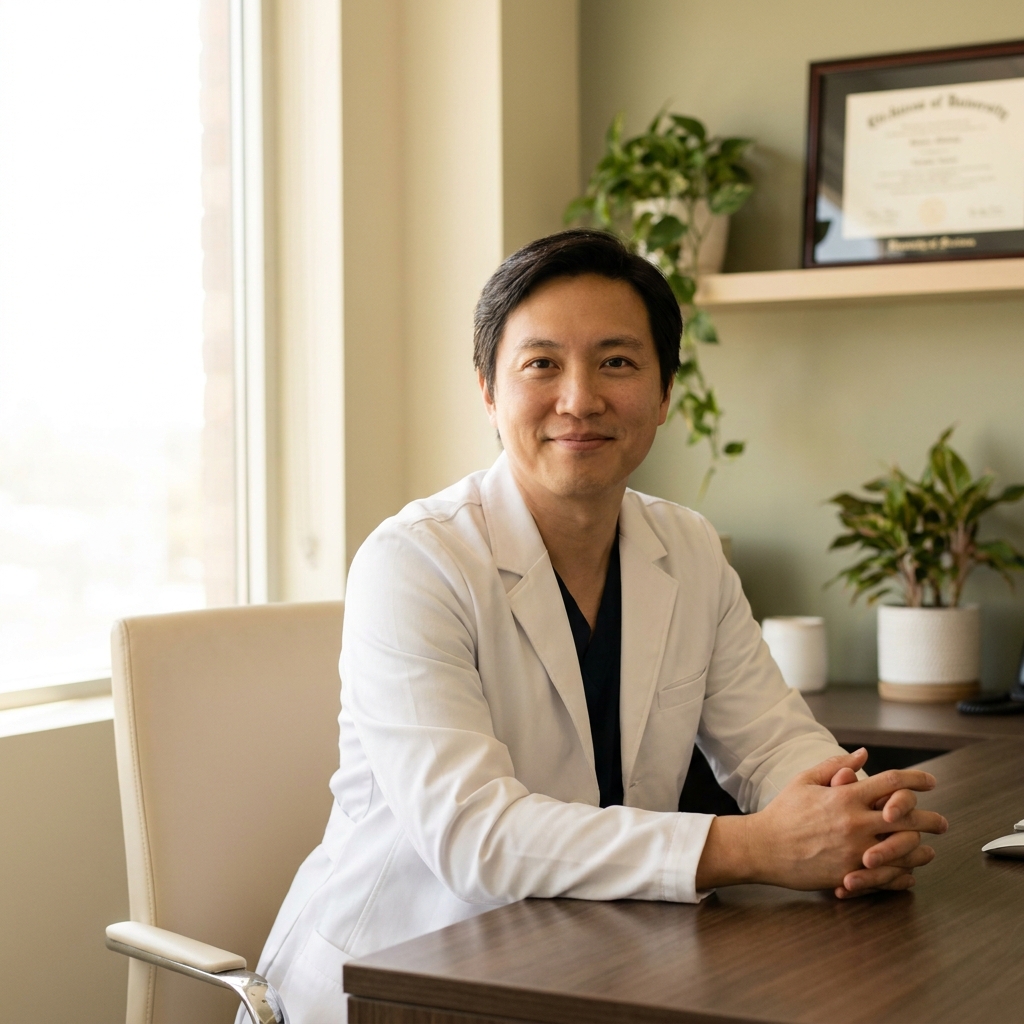
Christian Drapeau is not looking to change how medicine treats disease; he is looking to change how the human body maintains health. As a stem cell scientist, neurophysiologist, and the founder of STEMREGEN®, Drapeau has spent the better part of three decades pioneering a field of science that many once dismissed: the idea that the body’s own bone marrow stem cells are the primary repair system for every organ and tissue in the human body.
In an era where “stem cell therapy” is often synonymous with expensive, invasive injections, Drapeau is championing a different path – one that focuses on “endogenous repair,” or the ability to stimulate the release of one’s own stem cells through plant-based supplementation.

The McGill Origins and the Algae Epiphany
Drapeau’s journey began in the world of brain research. Educated at McGill University and the Montreal Neurological Institute, his early work focused on the intricate mechanisms of learning and memory. However, his career took a pivotal turn in 1995 when an American company hired him to research a specific type of blue-green algae being sold as a dietary supplement.
“I was hired in 1995 to document the mechanisms of action of this plant in order to support any of the marketing claims that would be made,” Drapeau said. “But as I was doing this work, I also came across people reversing multiple sclerosis, insulin-dependent diabetes, heart disease, Parkinson’s, and liver failure – conditions that medicine deems incurable.”
At the time, the medical community lacked a framework to explain how a simple botanical extract could lead to such diverse and profound health improvements. It wasn’t until the turn of the millennium that the scientific pieces began to fall into place.
“In early 2001, I came across the first scientific papers showing that stem cells from bone marrow – long understood as precursors to blood cells – could also become cells of other tissues,” Drapeau explained. “Given my background in brain research, the finding that these cells could become neurons was especially fascinating.”

A New Hypothesis: Stem Cells as the Repair System
In 2002, Drapeau published a groundbreaking article in the journal Medical Hypotheses where he proposed a radical idea: stem cells were not just for making blood; they were the body’s universal repair system.
“The human body has a repair process. Everybody has had a broken bone, a cut, or a bruise, and we all see that the human body can repair them,” Drapeau said. “We clearly know today that this is fundamentally a stem cell-based repair process.”
This realization became the “turning point” of his career. To test the theory, Drapeau manufactured 200 bottles of this algae extract and sent them to a naturopathic doctor who treated “last resort” patients. The results, he noted, were “quite spectacular,” ranging from improvements in Parkinson’s to spinal cord injuries.
“If you have any revelation through this exchange, it’s to really realize that the body’s innate capacity to heal is remarkable,” he said. “And it happens by releasing your own stem cells. Everything I have done for the past 25 years has been to try to bring this message of endogenous repair to medicine and into the world.”

The STEMREGEN® Protocol: Release, Mobilize, and Signal
Today, Drapeau’s research has culminated in STEMREGEN®, a company dedicated to optimizing the body’s innate repair system through daily stem cell support. The approach is three-pronged, utilizing three distinct products designed to support the body’s natural stem cell decline with age and address the obstacles that prevent stem cells from doing their job.
The flagship product, STEMREGEN Release, is a blend of five plants documented to trigger the release of stem cells from the bone marrow.
“Two capsules will put an average of 10 million additional stem cells into circulation,” Drapeau said. “On average, a 50-year-old has about 10 to 12 million stem cells in circulation. So, we are roughly doubling that number.”
However, Drapeau discovered that simply releasing stem cells wasn’t always enough. In many patients, the stem cells couldn’t reach the site of injury due to poor circulation or “lost” signaling from systemic inflammation.
To address this, he developed STEMREGEN® Mobilize, which focuses on enhancing microcirculation.
“We need to reopen this microvasculature, so stem cells can gain access to all the areas of the body where they’re needed,” he noted.
The third component, STEMREGEN® Signal, addresses systemic inflammation. Drapeau explained that inflammation in the body is meant to act as a specific signal that directs stem cells to sites of repair; when inflammation becomes systemic, that signaling breaks down.
“The signal that should be localized is becoming systemic,” Drapeau said. “It’s as if stem cells have lost their GPS tracking capability and are no longer able to identify where repair is needed in the body.”

Challenging the “Injection-Only” Misconception
One of Drapeau’s most significant challenges is overcoming the medical community’s perception of stem cells. He argues that the public and many doctors view stem cells solely as a “one-time treatment” or an expensive injection.
“The first misconception is that stem cells are just a treatment,” Drapeau said. “Stem cells are the repair system of the body; they have been there during the entire lifespan of any living human being. If you ran out of stem cells, you would not live more than a few months.”
He advised those considering stem cell injections to view endogenous stem cell mobilization as a necessary partner to the procedure.
“The data that we have so far says that essentially, if you can afford a stem cell injection, you would be foolish not to couple this with endogenous mobilization,” he said. “If you cannot afford a stem cell injection, then enhancing the release of the ones you already have can still give you excellent results.”

2023: The Turning Point in Public Acceptance
For over two decades, Drapeau felt he was facing a wall when trying to share his research. However, he noted a massive shift in 2023. He attributed this to several factors, including the publication of Tony Robbins’ book Life Force, which helped “democratize” the concept of stem cell therapy.
“Before, I often encountered questions from people who believed stem cells were essentially ‘baby parts’ or some form of Frankenstein-style medicine,” Drapeau said. “In 2023, it seemed that people were suddenly much more open to stem cells.”
He also believes the post-COVID era has changed how people view their own health.
“Generally speaking, it left people with this understanding that the medical system was not really there for them,” he observed. “They started to take their health into their own hands, searching for alternative methods to optimize their well-being, relying less and less on modern medicine for traditional allopathic treatments. Like it or not, the people lost trust in the system, and the result has been a much more personalized and empowered approach to health.”

The Future: Clinical Trials and a New Vision for Aging
As 2026 unfolds, STEMREGEN® is doubling down on clinical research. The company is currently conducting trials on heart failure, Parkinson’s disease, and COPD (Chronic Obstructive Pulmonary Disease).
In a recent heart failure study, Drapeau noted that the first 10 participants, all of whom had stable, chronic congestive heart failure, returned to “normal heart function” after six months of boosting their endogenous repair capacity.
Beyond the lab, Drapeau is working on a new book that redefines the very nature of disease formation. He argues that we shouldn’t view illness as a sudden “onset” of degeneration, but rather as the tipping point at which we don’t have enough stem cells to keep up, and the organ fails.
“Disease formation is not about degeneration,” Drapeau said. “Our ability to repair declines dramatically as we age. So, the development of various problems is actually caused by the failure of endogenous repair.”
By focusing on maintaining the number and functionality of circulating stem cells, Drapeau believes we can fundamentally change the trajectory of aging.
“The main difference between a 70-year-old who is healthy and a 70-year-old who has developed a slew of health issues is that the healthy one has more stem cells in circulation,” Drapeau concluded. “How many stem cells you have in your blood will dictate what your quality of life is going to be in the decades to come. No question in my mind, it will be the biomarker that predicts healthspan and lifespan.”

A Paradigm Shift in Personal Health
As the medical landscape continues to evolve, Christian Drapeau’s work stands at the vanguard of a significant paradigm shift. By shifting the focus from just treating symptoms to enhancing the body’s innate ability to heal itself, STEMREGEN is offering a new narrative for the aging process. It is a vision where “getting older” does not have to be synonymous with “breaking down,” but can instead be a period of sustained vitality supported by a robust internal repair system.
For Drapeau, the mission remains as clear today as it was when he first began his research in the 1990s: to empower individuals with the knowledge and tools to take charge of their biological destiny. Whether through the launch of his upcoming book, the expansion of clinical trials, or the development of new stem cell support systems, his goal is to make the power of stem cells accessible to everyone.
Ultimately, the STEMREGEN® philosophy suggests that the most sophisticated pharmacy in the world isn’t found on a shelf, but within our own bone marrow. As Drapeau continues to unlock the secrets of endogenous repair, he isn’t just offering a supplement; he is offering a roadmap for a longer, healthier, and more resilient life.
To learn more about STEMREGEN and Christian Drapeau, visit stemregen.co.