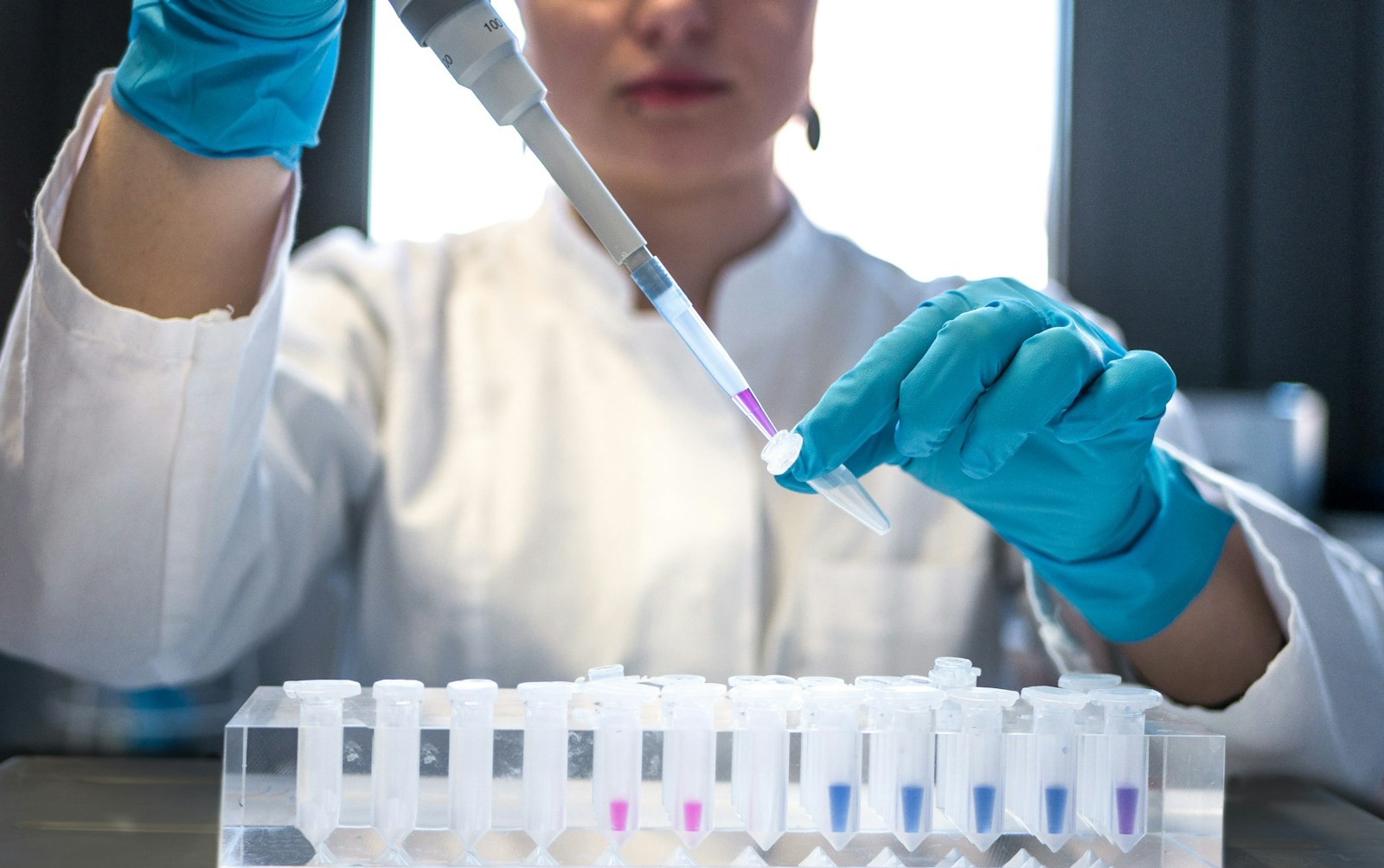
Preclinical research is the first step in developing new medical treatments. Before a new drug reaches human trials, scientists must study how it works in the lab.
These early tests help researchers understand how a drug affects living cells and tissues. They also help identify safety risks and find suitable doses for future studies.
Continue reading to discover everything you need to know!
Translating Laboratory Discoveries Into Patient Care
Translational research turns laboratory findings into possible medical treatments. Scientists begin testing drug compounds against specific disease targets. They study how these compounds affect cells and biological processes, and this helps them identify promising options and remove weak candidates before human trials begin.
Early tests also show how a drug moves through the body. Researchers study how it enters tissues, breaks down, and leaves the body. These findings help explain whether a treatment may work as expected.
They can also reveal signs of toxicity before a drug advances to the next stage. Target validation is another key part of drug development. Researchers test whether changing a specific biological target can affect a disease.
If the target does not produce the expected result, the team may need to change its approach. This process helps scientists focus their time and funding on treatments with real potential.
Precision Oncology and Advanced Patient-Derived Models
Cancer research requires careful testing because tumors can differ greatly from one patient to another. Even people with the same type of cancer may respond to treatment in different ways. Advanced tumor models help researchers study these differences before human trials begin.
Organizations such as the XenoSTART Center for Cancer Research provide preclinical models that support cancer drug development. These models help scientists study tumor growth, drug response, and treatment resistance. Their findings can guide the design of future studies.
Patient-derived models offer a closer view of human cancer biology. Researchers create these models using cells or tissue taken from patient tumors. Unlike many standard cell lines, they can preserve important features of the original tumor. These features may include genetic changes and patterns of drug resistance.
This makes patient-derived models useful for testing new cancer treatments. Scientists can compare how different tumors respond to the same drug. They can also study why some tumors shrink while others continue to grow.
Cell Screening and Biomarker Discovery
Modern laboratories use advanced screening systems to test large numbers of chemical compounds. High-throughput screening allows scientists to examine thousands of candidates in less time than traditional methods require. Automated systems can measure several cell features during a single test.
High-content screening adds more detail by combining imaging with cell analysis. Researchers can observe changes in cell shape, growth, and activity. These results help show how a compound affects different biological processes.
They can also reveal early signs of unwanted effects. Single-cell sequencing provides another useful tool. It allows researchers to study genetic activity in individual cells rather than treating an entire tissue sample as one group, and this can reveal differences between cells that look similar but behave in different ways.
Biomarkers are measurable signs of a biological process or disease. Researchers use them to track how a disease develops and how a treatment affects the body. Finding useful biomarkers early can help teams identify which patients may respond best to a new drug.
Molecular profiling helps researchers match treatments to specific biological features. This is especially useful in precision medicine, where care is based on the needs of individual patients. By combining screening, imaging, and genetic analysis, scientists can make better choices about which drug candidates should move forward.
Microfluidic Organs and 3D Tissue Engineering
Microfluidic devices are changing how scientists test new treatments. These small systems use tiny channels to move fluids around living human cells. They can copy some of the key functions of organs, such as the liver, lungs, and kidneys.
These systems are often called organ-on-a-chip models. They allow researchers to study how cells respond to drugs in controlled environments. Some models can also mimic features such as fluid flow and contact between different cell types.
Traditional laboratory tests often use cells grown in flat dishes. While these tests remain useful, they cannot always show how cells behave in real tissues. Three-dimensional, or 3D, cell cultures offer a more realistic setting.
Cells can form structures and connections that better reflect their natural environment. This matters because a drug may behave differently in a 3D tissue than it does in a flat cell culture. It may struggle to reach cells deep inside a tissue.
It may also affect nearby cells in unexpected ways. Testing these effects can help researchers understand a drug’s strengths and limits.
Scientists are also building systems that connect models of different organs. These systems can help show how one organ affects another during drug exposure. For example, researchers may study how the liver breaks down a drug and how the resulting compounds affect other tissues.
These models can reduce the need for some animal tests. However, they do not replace every type of animal study or fully reproduce the human body. Their greatest value comes from adding useful human-based evidence to the wider preclinical process.
Toxicology and Drug Safety Testing
Safety testing is one of the most important parts of preclinical research. Before a drug enters human trials, scientists must look for signs that it could cause harm. Toxicology studies help researchers understand these risks and decide whether a candidate is suitable for further testing.
Researchers examine how the body absorbs, distributes, breaks down, and removes a drug. These processes are often called pharmacokinetics. They help explain how long a drug stays in the body and how much may reach certain tissues.
Scientists also test for possible genetic damage. These tests, known as genotoxicity studies, can show whether a compound may harm DNA or cause mutations. Other safety tests focus on vital organs and body systems, including the heart, brain, and nervous system.
Repeated-dose studies help researchers understand what may happen after ongoing exposure. Scientists may examine changes in liver and kidney function, as well as other signs of organ damage. The results help teams identify risks that may not appear after a single dose.
These tests can also reveal problems linked to the chemical structure of a drug. Researchers may then change the compound to reduce harmful effects while keeping its intended action. This process can improve safety before clinical testing begins.
No single test can prove that a drug is completely safe. Instead, researchers review findings from several studies to build a clearer picture of risk. This evidence helps guide decisions about whether, and how, a drug should move into human trials.
Reducing Failure in Late-Stage Clinical Trials
Drug development takes time and requires major financial investment. One of the biggest challenges is that many drug candidates fail during clinical testing. Some do not work well enough in people, and others cause side effects that were not clear during early research.
Strong preclinical studies can help reduce these risks. By testing drug activity, safety, and behavior early, researchers can identify weak candidates before spending more time and money on them. This does not remove all uncertainty, but it can support better decisions.
Early studies also help teams plan clinical trials. Researchers use laboratory findings to estimate suitable starting doses and choose useful safety measures. They can also identify possible drug interactions and study how a treatment affects different tissues.
A clear understanding of how a drug works is especially important. When researchers know which biological process a drug targets, they can better judge whether the results support further testing. They can also design studies that focus on the most relevant outcomes.
Preclinical research cannot predict every result in humans. Human biology is complex, and patients may respond in ways that laboratory models cannot fully capture. Still, careful early testing gives development teams a stronger base for making decisions.
Advancing Research Into Rare and Complex Diseases
Rare diseases often create special challenges for medical research. Many affect small patient groups, which can make large clinical trials hard to organize. Researchers may also have limited information about how these diseases develop.
Preclinical models help scientists study these conditions before enough patients are available for large studies. These models may use animal systems, patient-derived cells, engineered tissues, or other laboratory tools. Each approach offers different insights into disease processes.
For some rare conditions, these methods can reveal new drug targets. They can also help researchers test whether a possible treatment changes the biological process linked to the disease. This early evidence may support the development of treatments for patients who have few options.
Gene therapy adds another layer of complexity. These treatments aim to deliver genetic material into cells to change or support how they function. Before human testing, scientists must examine how well the delivery system works and where it sends the genetic material.
Researchers also study how long the treatment remains active and whether it causes harmful immune responses. They assess possible risks linked to the delivery system and the genetic material itself. These checks help guide dose selection and future safety monitoring.
Better preclinical tools can support research into rare and complex diseases. While progress may take time, early testing can help scientists focus on the most promising treatment options.
New Diagnostic Tools and Early Detection
Preclinical research also supports the development of new diagnostic tools. These tools aim to detect disease, identify biological changes, or track how a condition develops. Some may help doctors find signs of illness before clear symptoms appear.
Early detection can make a major difference in disease care. When a condition is found sooner, healthcare teams may have more time to plan treatment and monitor changes. However, a diagnostic tool must be tested carefully before it can be used in clinical practice.
Researchers examine how accurately a test detects its intended target. They also check whether it produces false-positive or false-negative results. A false positive suggests that a disease or marker is present when it is not.
A false negative may miss a real sign of disease. Sickle cell disease affects about 100,000 people in the United States. It can cause serious health problems and shorten life expectancy.
Research into better diagnostic and monitoring tools may help healthcare teams detect complications and guide care. Preclinical studies help researchers test the accuracy and reliability of new diagnostic methods. Scientists may compare test results with known biological markers or established methods.
They can then improve the test before it moves into clinical studies. Reliable diagnostic tools can support better treatment decisions. They may also help doctors monitor disease changes over time and assess whether a treatment is working.
Machine Learning and Predictive Modeling
Machine learning is becoming a useful part of preclinical research. These computer-based methods can study large datasets and find patterns across complex biological information. They help researchers explore possible drug candidates and plan laboratory tests.
Some models use past data to estimate how a chemical compound may behave. They can help predict whether a compound may bind to a target or show signs of toxicity. This allows scientists to rank candidates before moving them into more costly experiments.
Machine learning can also support the study of genetic data. It may help researchers identify patterns linked to disease, drug response, or treatment resistance. These findings can guide further tests and help teams focus on the most relevant biological questions.
Still, computer predictions are not proof that a drug will work. Models depend on the quality of the data used to train them. If the data are limited or biased, the predictions may be unreliable.
For this reason, scientists must test promising results in the lab. Combining machine learning with laboratory research can improve the drug discovery process. Computer models help narrow the field, while experiments show whether the predictions hold up in practice, and this approach can save time and resources when used with careful scientific review.
As these tools improve, they may help researchers design better experiments, study biomarkers, and choose more promising drug candidates. Human expertise remains essential to judge the results and decide what to test next.
The Foundation of Future Medical Innovations
Preclinical research is a key part of modern medical progress. It helps turn early laboratory discoveries into treatments and diagnostic tools that may improve human health. Through cell screening, patient-derived tumor models, 3D tissue systems, and safety testing, scientists gain a clearer view of how new medical options may work.
Make sure to check out the rest of our articles!