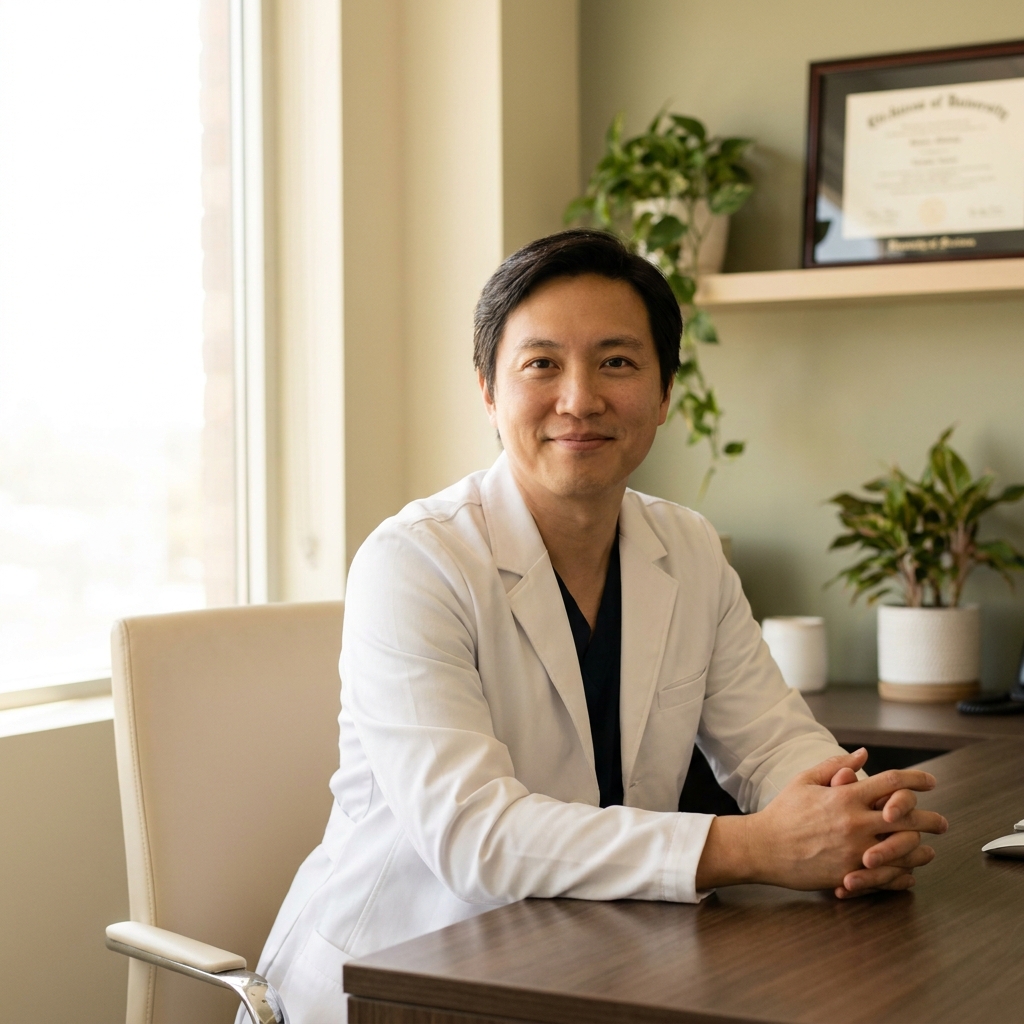
Health Magazine Cover Story Physician Profile: The 2026 Complete Guide to What It Is, What It Delivers, and How to Secure One
Introduction: Why Physicians Are Suddenly Searching for Health Magazine Cover Story Physician Profiles
Something has shifted beneath the feet of practicing physicians in 2026, and many are only now noticing. Today, 87% of searches trigger AI responses, more than 52% of patients use AI platforms to find healthcare providers, and 55% of patients have walked away from at least one doctor based on what they read online, a 15 percentage point increase from the prior year. The digital environment now decides which physicians patients trust before an appointment is ever booked.
Here lies the central tension. Most physicians built their careers on clinical excellence, not on personal brand infrastructure. They invested years in training, board certifications, and patient outcomes, while the mechanics of online visibility evolved rapidly and quietly around them.
A health magazine cover story physician profile addresses this problem in a structured, specific way. It is not merely a prestige milestone; it is a functional asset that solves several visibility challenges at once.
This guide serves as a definitive orientation for physicians encountering this concept for the first time. It explains what a cover story profile is, what it actually delivers, the two distinct pathways to obtain one, and how to evaluate whether it is the right move for a given practice.
What Is a Health Magazine Cover Story Physician Profile?
A health magazine cover story physician profile is an in-depth editorial feature, typically 800 to 2,500 words, that places a physician’s image on the cover of a publication and their professional story inside it.
It is distinct from a standard directory listing, a paid advertisement, a press release, or a social media post. The cover story is a journalistic product, complete with editorial structure, professional photography, and narrative depth.
A typical cover story package includes several components:
- Personal journey and origin story
- Clinical philosophy
- Specialty expertise
- Patient impact narratives
- Board certifications and hospital affiliations
- Professional achievements
Publications seek human-interest angles, not just résumés. Minneapolis-St. Paul Magazine, for example, has featured a physician whose career path changed after her father became sick with heart failure. That kind of personal narrative is what editors prioritize.
Cover story profiles appear across multiple publication types: national digital health magazines such as TopDoctor Magazine, regional city magazines with annual Top Doctors issues, and specialty-focused medical publications. In 2026, the profile exists in both print and digital formats, with digital-first publications offering compounding online authority that print alone cannot deliver.
The Two Pathways to a Cover Story: Earned vs. Paid
Before pursuing any cover story opportunity, physicians must understand that two fundamentally different pathways exist. They differ in timeline, eligibility requirements, and strategic application. Neither pathway is inherently superior; each serves a different physician profile and practice situation.
Pathway One: The Earned/Merit-Based Cover Story
The earned pathway is peer-nomination driven. No payment is accepted, and selection depends on clinical reputation, peer recognition, and editorial judgment.
One benchmark example is the Castle Connolly Top Doctors program, established in 1991, which selects only the top 7% of all U.S. practicing physicians through peer nomination and rigorous screening. Doctors cannot pay to be listed.
The timeline is significant: typically 12 to 24 months from nomination to potential feature, with no guarantee of selection. Regional city magazine Top Doctors issues offer similar earned placements. In 2025, 392 Emory physicians were named in Atlanta Magazine’s Top Doctors issue, and 195 Boston Medical Center physicians were named to the 2025 Top Doctors list. These placements reach local patient populations directly.
Who benefits most? Physicians at academic medical centers, those with institutional support infrastructure, and those with established peer networks in their specialty.
The limitations are real. The timeline is a barrier for physicians who need visibility now, and the process is largely outside the physician’s direct control.
Pathway Two: The Paid/Sponsored Integrated Visibility Partnership
The paid/sponsored pathway is an integrated visibility partnership. A physician or practice invests in a cover feature placement with a credible publication that maintains journalistic standards.
This is not a paid advertisement. It is an editorial product produced with journalistic integrity, professional graphic design, and narrative depth, funded through a partnership model rather than editorial selection. Importantly, paid cover features published by credible outlets with journalistic standards generate the same E-E-A-T and AI-citation benefits as earned features, because search engines and AI systems evaluate content quality and source authority, not payment structure.
Who benefits most? Solo practitioners, small group practices, and physicians in emerging medicine fields such as regenerative, functional, integrative, and personalized medicine, who lack the institutional infrastructure that supports earned editorial coverage.
The immediate action advantage is decisive. Unlike the 12-to-24-month earned pathway, this route allows a physician to initiate the process and receive coverage within a defined, manageable timeframe. TopDoctor Magazine’s model exemplifies this pathway, combining the cover feature with podcast amplification, webinar participation, live event recognition, and multi-platform social distribution.
What a Cover Story Physician Profile Actually Delivers in 2026
Moving beyond prestige, a cover story serves five concrete functions in the current digital and AI-driven landscape. In 2026, a magazine cover feature functions simultaneously as an E-E-A-T signal, a GEO asset, a patient trust builder, a career advancement tool, and a repurposable content engine.
E-E-A-T Signal: How a Cover Story Strengthens Search Authority
Google’s E-E-A-T framework stands for Experience, Expertise, Authoritativeness, and Trustworthiness. It matters especially for healthcare content, where Google applies heightened scrutiny to health-related pages. Google’s December 2025 core update reinforced topical authority, AI readiness, and user experience as key ranking factors.
A cover story in an established publication creates an indexed, authoritative third-party reference. It signals to Google that the physician is a credible, recognized expert, not merely self-reported. With 94% of patients using online reviews to evaluate physicians and more than 77% reading reviews before choosing a provider, a cover story elevates the entire review ecosystem with authoritative editorial content.
GEO Asset: Visibility in AI-Generated Search Results
Generative Engine Optimization (GEO) is the practice of structuring content so AI systems, including ChatGPT, Google AI Overviews, Perplexity, and Copilot, cite it when answering user queries.
The scale of the opportunity is significant. With 87% of searches triggering AI responses and over 70% of health-related queries resulting in zero-click searches, the AI answer is effectively the result. Physicians not cited in authoritative indexed content are invisible to this growing segment of patients. Meanwhile, 64% of medical practices maintain minimal or no AI visibility, creating a substantial patient acquisition gap.
A cover story profile in a publication with domain authority creates an indexed content asset that AI systems can cite when a patient asks, “Who is the best cardiologist in Denver?” or a similar query. Social media posts are not reliably indexed by AI systems, and directory listings lack the narrative depth AI uses to construct authoritative answers.
Patient Trust Builder: The Psychology of the Cover Story
A magazine cover signals social proof, editorial vetting, and peer recognition. Even when patients do not recognize the specific publication, the format itself carries authority.
The stakes are clear: 55% of patients have walked away from a doctor based on what they read online, making online presence a patient retention issue, not just an acquisition one. Research shows that including a care philosophy in a physician profile converts healthcare shoppers into patients, and the cover story format naturally incorporates this element. With more than 80% of patients using search engines and social media before scheduling care, a cover story that surfaces during this research phase directly influences appointment decisions.
The cover story is also repurposable. It can be linked from the practice website’s “About” page, shared in patient email newsletters, and displayed in the waiting room, extending its trust-building function across every touchpoint.
Career Advancement Tool: The Professional Credentialing Function
A peer-reviewed study published in Medical Education by researchers from Yale, Stanford, and Johns Hopkins concluded that physicians can and should see themselves as their own unique brand, with applications spanning career promotion, reputation management, and professional fulfillment.
Sermo data reinforces this: 26% of physicians credit branding with advancing their careers and patient care, while 14% report branding has directly improved patient trust relationships. A cover story functions as a credentialing asset for speaking engagements, hospital privileges, insurance panel negotiations, media inquiries, and academic appointments.
Networking matters as well. Thirty-five percent of physicians believe networking is the most effective approach to building a personal brand. The example of Dr. Atul Gawande illustrates the potential: thought leadership through writing and public speaking led to a TED Talk and New Yorker contributions.
Repurposable Content Engine: Maximizing the Cover Story Investment
A cover story is not a one-time event; it is a content asset repurposable across multiple channels, including the practice website’s “In the News” section, email marketing, social media, speaking bios and media kits, patient intake materials, and press release distribution.
The healthcare digital content creation market reached $12.85 billion in 2025 and is growing at over 22% annually. The multi-platform amplification model, combining magazine, podcast, social, and live events, compounds reach beyond any single channel. Unlike a paid advertisement, which stops delivering value when the budget stops, a cover story continues generating search visibility, AI citations, and patient trust signals indefinitely as long as it remains indexed.
The Anatomy of a TopDoctor Magazine Cover Story Package
TopDoctor Magazine is a digital-first, physician-focused publication with 197+ biweekly issues published, making it one of the most prolific physician-focused digital publications in the U.S. It covers both traditional medical specialties and emerging fields including regenerative, functional, integrative, and personalized medicine, making it accessible to a broader range of physicians than publications focused solely on conventional medicine.
Its integrated visibility partnership model is distinct from a simple cover feature placement; it combines editorial depth with multi-channel amplification.
Editorial Component: The Cover Feature and Profile
The nomination criteria require a 30-to-45-minute initial interview, professional photos, and video content, the same preparation standard as earned editorial features. The content structure includes personal journey, clinical philosophy, specialty expertise, patient impact stories, board certifications, hospital affiliations, and professional achievements.
The publication maintains journalistic integrity standards, so the cover story is an editorial product, not an advertisement. This is precisely what generates E-E-A-T and GEO value. The professional graphic design component produces a publication-quality asset suitable for repurposing across all physician marketing channels.
Amplification Component: Podcast, Webinars, and Social Distribution
The TopDoctor Magazine Podcast, hosted by Rob Fletcher (with 30+ years in health, fitness, and martial arts), extends the cover story’s reach to an audio audience. Podcast episodes are indexed by search engines and cited by AI systems, adding a second content asset to the physician’s digital authority infrastructure.
Educational webinars position the physician as a subject matter expert beyond the written profile. Multi-platform social distribution across Facebook, Instagram, YouTube, LinkedIn, and Pinterest creates multiple indexed touchpoints that compound visibility over time. This multi-channel model addresses the gap that earned pathway programs leave unfilled: they offer the credential but not the amplification infrastructure.
Recognition Component: Awards Program and Live Events
The TopDoctor Magazine Awards Program spans seven categories: Technology, Patient Recommendation, Peer Review, Local Area, Ultimate Practice, Entrepreneurship, and Philanthropy. Combined with a cover story, award recognition creates a layered credentialing stack; the cover story provides narrative depth while the award provides categorical recognition.
Live events follow a multi-day structure: Day 1 features a charity golf event benefiting Veterans and an evening networking party, Day 2 offers educational training and a gala awards ceremony, and Day 3 includes additional education and presentations. Given that 35% of physicians identify networking as the most effective personal branding approach, these events create relationship assets that extend beyond the cover story itself. The Veterans charity dimension also offers brand alignment for physicians who value community and philanthropic engagement.
How to Evaluate Whether a Cover Story Profile Is Right for Your Practice
This section offers a practical decision framework, not a sales pitch.
The physician profiles most likely to benefit include:
- Solo practitioners and small group practices without institutional PR infrastructure
- Physicians in emerging medicine fields underserved by traditional earned programs
- Physicians entering new markets or launching new services
- Physicians whose online presence does not reflect their actual clinical reputation
The earned pathway may be the better primary strategy for physicians at major academic medical centers with institutional support, those with 12 or more months before a planned career transition, and those whose specialty and geography align well with regional Top Doctors programs.
A self-assessment checklist helps clarify fit:
- Does the physician’s current online presence reflect their clinical expertise?
- Are they appearing in AI-generated responses when patients search for their specialty in their area?
- Is there a third-party editorial asset available for a media kit or speaking bio?
- Are patients being lost to competitors with stronger digital authority?
The two pathways are not mutually exclusive. A physician can pursue a paid/sponsored cover story now while simultaneously building toward earned recognition over the following 12 to 24 months.
How to Prepare for a Health Magazine Cover Story Physician Profile
Preparation applies regardless of pathway or publication.
Physicians should allocate 30 to 45 minutes for an initial interview and prepare to discuss personal journey, clinical philosophy, specialty expertise, and patient impact stories, not just credentials. Professional headshots, practice environment photos, and short video content are standard requirements for a high-quality package.
Patient testimonials matter. TopDoctor Magazine’s nomination process requires positive patient testimonials, so physicians should begin collecting and organizing them proactively. Note that the nomination must be submitted by someone other than the nominee: another doctor, a patient, or a TopDoctor Magazine representative. Physicians can initiate this by contacting the publication directly.
Assembling a professional bio covering board certifications, hospital affiliations, specialty training, publications, speaking engagements, and community involvement is equally important. The cover story will draw from these materials. The preparation process is valuable independent of the cover story, giving physicians a stronger foundation for all personal branding activities.
The Competitive Landscape: What Other Physician Profile Programs Offer and Where They Fall Short
Multiple pathways exist for physician recognition.
Merit-based Top Doctors programs represent the gold standard for peer-driven recognition, selecting only the top tier of U.S. physicians with no payment accepted. However, they offer no integrated amplification, carry a 12-to-24-month timeline, and provide no GEO optimization.
Regional city magazine Top Doctors issues are effective for local patient reach and community credibility, but they are limited to annual publication cycles, lack digital-first compounding authority, and offer no podcast or social amplification.
PR and reputation management firms provide broad visibility strategy but rarely offer a dedicated cover story product with editorial depth, professional design, and multi-platform distribution bundled together.
The integrated visibility partnership model fills a specific gap: the intersection of a cover story as both a patient trust tool and an AI/GEO visibility asset, combined with multi-channel amplification that compounds authority over time. Academic and institutional publications remain inaccessible to most practicing physicians outside elite academic institutions and do not serve the solo practitioner or small group practice market.
Conclusion: From “What Is This?” to “Is This Right for My Practice?”
A health magazine cover story physician profile in 2026 is not a vanity milestone; it is a multi-function strategic asset that simultaneously addresses E-E-A-T authority, GEO visibility, patient trust, career advancement, and content repurposability.
The two-pathway framework clarifies the choice: earned/merit-based for physicians with institutional support and a long timeline, and paid/sponsored integrated visibility partnerships for physicians who need visibility now and lack institutional infrastructure.
The visibility gap is measurable. With 64% of medical practices maintaining minimal or no AI visibility and 55% of patients walking away from doctors based on what they read online, the cost of inaction is real. A cover story is the entry point to a broader personal brand infrastructure, serving as the anchor asset around which social media, reviews, speaking, and SEO can be organized.
As AI-driven search continues to reshape how patients find and evaluate physicians, those who invest in indexed, authoritative, third-party editorial content now will compound that advantage over physicians who wait.
Ready to Explore a Cover Story Profile? Here Is How to Take the Next Step with TopDoctor Magazine
Physicians interested in a TopDoctor Magazine cover story profile can initiate the process by contacting the publication directly at info@topdoctormagazine.com or visiting topdoctormagazine.com.
After initial contact, a conversation assesses fit, specialty alignment, and the specific package components that match the physician’s practice goals. TopDoctor Magazine covers both traditional medical specialties and emerging fields, so physicians in regenerative, functional, integrative, and personalized medicine are specifically welcomed.
Physicians can begin preparation immediately by gathering patient testimonials, scheduling professional photography, and assembling a comprehensive professional bio. The nomination pathway offers an alternative entry point, since another physician, a patient, or a TopDoctor Magazine representative can submit a nomination on a physician’s behalf.
With 197+ issues published with journalistic integrity, professional graphic design, and multi-platform amplification, the TopDoctor Magazine cover story package is a proven, structured product, not an experimental offering.