Doctor Interview Media Training Tips: The 2026 Physician’s Playbook for On-Camera Confidence, Sound Bites, and Rebuilding Public Trust
Introduction: Why Every Physician Needs Media Training in 2026
The numbers tell a sobering story. Public trust in physicians and hospitals collapsed from 71.5% in April 2020 to just 40.1% in January 2024, according to a JAMA study of 443,455 U.S. adults. By late 2025, a Harvard Kennedy School analysis in JAMA Health Forum confirmed that trust in physicians had fallen to its lowest recorded Gallup level, dropping 12 percentage points between 2019 and 2024.
In this climate, a media interview is no longer just a public relations opportunity. It is a professional and ethical obligation to help rebuild the credibility of the entire medical profession. Recognizing this urgency, the New England Journal of Medicine published a Perspective in August 2025 calling on academic and healthcare institutions to equip clinicians to engage effectively across nontraditional media platforms.
This playbook covers everything a physician needs: message preparation, sound bite discipline, the bridging technique, on-camera body language, format-specific strategies, and the distinct dynamics of being interviewed by a health publication like TopDoctor Magazine. As a publication that conducts physician interviews across digital magazine profiles, podcasts, and live event coverage, TopDoctor Magazine offers both tactical guidance and an insider’s view of what physicians should expect.
The Trust Crisis: Understanding Why Physician Media Presence Matters More Than Ever
The trust decline extends even to personal relationships. The Kaiser Family Foundation reports that trust in one’s own doctor fell from 93% in 2023 to 85% in early 2025. A 2025 study in the Journal of Hospital Medicine links this erosion partly to poor communication during COVID-19, including inconsistent and conflicting messages from health leaders.
When trusted medical voices go quiet, misinformation fills the vacuum. The 2014 Ebola panic remains a case study in what happens when clear expert communication is absent: sensationalized coverage led to public fear and policy overreactions.
The upside is measurable. A 2025 PMC study found that digital media engagement increases patient engagement by 30%, satisfaction by 25%, health literacy by 20%, and treatment adherence by 15%. Meanwhile, the Federation of State Medical Boards has declared that physicians “must use the best available scientific evidence” when advising the public, making evidence-based media messaging a professional duty rather than an option. Every media appearance becomes a micro-investment in restoring collective credibility.
Before the Interview: Preparation Is the Foundation of Confidence
Preparation separates confident communicators from those who stumble. Most physicians require at least some training, a reality acknowledged widely across medical society communications teams.
Before agreeing to any interview, a physician should research the outlet and journalist: understand the audience, the format, and the reporter’s recent coverage. Understanding how reporters work matters too. Physicians who fail to grasp journalistic realities, including strict deadlines, often miss opportunities to share valuable health information, according to research tied to the Stanford Global Health Media Fellowship.
A few rules protect the physician:
- Avoid “off the record.” Unless there is an established relationship with the reporter, assume anything said could end up in print or on air.
- Request a written Q&A or the option to review quotes before publication whenever possible.
- Confirm logistics in advance: live or taped, length, topics, and whether the piece will be edited.
Crafting Your 2 to 3 Key Messages: The Core of Every Successful Interview
Every successful interview begins with two to three core messages, prepared in advance and practiced out loud so they sound natural rather than rehearsed. A strong key message is clear, evidence-based, patient-relevant, and repeatable in under 15 seconds.
Key messages are the destination; everything else in the interview is the road to get there. Consider a cardiologist interviewed about heart disease prevention. Every answer can anchor back to three messages: early screening, lifestyle modification, and medication adherence.
Given the current trust environment, evidence-based messaging is non-negotiable. Physicians should also anticipate the three most likely questions and the three most difficult or misleading ones, then map their key messages to both. Preparation for the hard questions is what prevents an interview from going sideways.
The Art of the Sound Bite: Communicating Complex Medicine in 8 to 15 Seconds
According to the American Association for the Advancement of Science, a typical TV sound bite runs only 8 to 15 seconds. A long radio story is 45 seconds, and a typical TV story is about 80 seconds. Physicians must compress complex medicine into extremely short formats.
A reliable sound bite formula: one clear claim + one supporting fact or analogy + one patient-relevant takeaway, all in under 15 seconds.
The difference between a quote and a sound bite is simple: a quote informs, but a sound bite sticks. Editors select clips based on clarity, energy, and quotability. Compare these two answers:
- Weak: “The pathophysiology of this condition involves multiple inflammatory cascades.”
- Strong: “This condition triggers a chain reaction in your immune system, and catching it early can stop that chain before it starts.”
Analogies and plain language make medical messages memorable. Even in longer formats like podcasts and magazine Q&As, sound bite discipline keeps answers focused and prevents rambling that can be misquoted.
Mastering the Bridging Technique: Controlling the Narrative Without Dodging Questions
Bridging means acknowledging a question and pivoting to a key message using transitional phrases. It is one of the cornerstones of media training and is especially critical for physicians facing questions about misinformation, controversial treatments, or off-topic political angles.
The framework has three steps:
- Acknowledge the question briefly.
- Bridge with a transitional phrase.
- Deliver your key message.
Effective bridge phrases include:
- “What I’d want every patient to know is…”
- “The evidence is very clear on this point…”
- “Let me put that in context for your audience…”
A 20-year TV news veteran writing in Ophthalmology Times explains how bridging lets doctors acknowledge misinformation concerns while redirecting to evidence-based messages. Crucially, bridging is not deflection. Bridging is transparent and respectful; deflection is evasive and erodes trust. As ACEP guidance puts it, “the most important goal in an interview is not to be quoted; it’s to get your messages across.”
Eliminating “Doctor-Ese”: Speaking to Patients, Not Colleagues
“Doctor-ese” is the habitual use of jargon, acronyms, and technical language that alienates lay audiences. The essential mental reframe is this: in a media interview, the audience is not made up of colleagues. They are patients who need clarity, not credentials.
A quick jargon-replacement exercise:
- “Myocardial infarction” becomes “heart attack”
- “Hypertension” becomes “high blood pressure”
- “Contraindicated” becomes “not safe to use together”
- “Idiopathic” becomes “we don’t yet know the cause”
- “Efficacious” becomes “it works”
Physicians often feel tension between simplifying and maintaining precision. The resolution is to be accurate without being technical. This matters beyond media: a PMC study found a significant positive correlation (r=0.539, p<0.001) between communication quality and patient satisfaction. The same principle applies on camera.
On-Camera Confidence: Body Language, Eye Contact, and Non-Verbal Credibility
First impressions form within the first 7 to 10 seconds, making non-verbal communication as important as the words themselves.
Core on-camera principles:
- Eye contact with the lens, not the monitor or the interviewer’s on-screen face.
- Upright posture with a slight forward lean to project engagement.
- Avoid touching the face, which is associated with perceptions of deception or nervousness; this is a particularly damaging signal for a physician working to rebuild trust.
- Manage blink rate. Excessive blinking signals anxiety; a steady, natural rate projects calm authority.
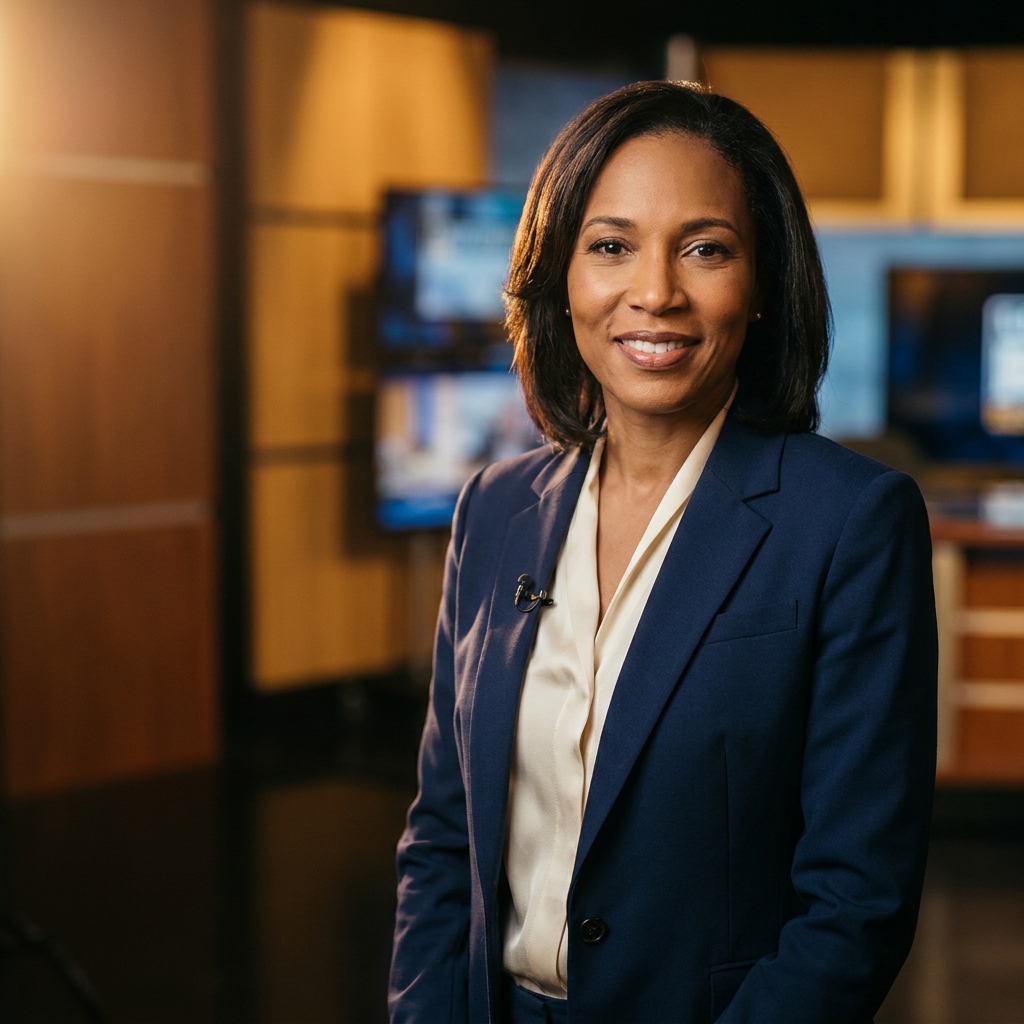
For video, physicians should choose solid colors over busy patterns, wear professional attire consistent with a medical identity, and keep the background clean and uncluttered. To manage nerves, controlled breathing before going live and the “pause and think” technique help avoid filler words such as “um” or “uh.” Practice recordings help enormously. Live TV offers no editing safety net, while taped interviews still reward composure because editors select the calmest, clearest clips.
Format-Specific Strategies: TV, Radio, Podcast, and Print/Digital Interviews
Each media format has distinct demands. A one-size-fits-all approach is a common and costly mistake.
Live Television: High Stakes, No Retakes
Live TV rewards brevity and composure. There are no second chances. Physicians should arrive early, meet the producer, and clarify the first question in advance whenever possible. Every answer should be completable in 15 to 20 seconds with a natural stopping point. When a hostile or misleading question arises, the bridging technique redirects without appearing evasive. Physicians should also beware the “dead air” trap: on live TV, a confident pause is a power move, not a problem to fill.
Radio and Podcast Interviews: The Power of Voice and Depth
Audio formats allow longer, more nuanced answers, but physicians must resist the urge to lecture. Without a visual channel, pace, tone, enthusiasm, and the elimination of filler words carry more weight. Podcast hosts often serve deep niche audiences who expect authenticity, not polished PR talking points. Researching previous episodes and tailoring messages to the listener community pays off. TopDoctor Magazine’s podcast, hosted by Rob Fletcher, exemplifies the conversational, profile-driven style physicians increasingly encounter.
Print and Digital Magazine Interviews: Precision, Quotability, and the Review Process
Print and digital interviews allow time for thoughtful answers but create a permanent, searchable record, so precision matters. Physicians should ask to review quotes before publication when possible; a written Q&A format protects accuracy. Magazine profiles often focus on the physician’s personal story, philosophy, and patient impact rather than clinical expertise alone. TopDoctor Magazine’s interviews specifically aim to humanize medical professionals and bridge the gap between providers and patients, requiring physicians to balance professional authority with personal accessibility.
Navigating Misinformation Questions: The Physician’s Ethical Obligation in the AI Era
In 2026, physicians face a media landscape saturated with AI-generated health misinformation, making the ability to counter false narratives a core skill. The NEJM Perspective is explicit: institutions must equip clinicians to engage effectively to prevent the spread of inaccurate information. The FSMB obligation to use “the best available scientific evidence” applies directly to media appearances.
A framework for misinformation-based questions:
- Do not repeat the false claim verbatim. Repetition amplifies it.
- Acknowledge the concern empathetically.
- Bridge to the evidence-based truth.
- Cite a credible source.
Correcting a journalist who has bad information differs in tone from correcting a patient-facing misconception; both require respect, but the approach differs. History reinforces the stakes: the 2014 Ebola panic demonstrated the real cost of physician silence.
The Growing Landscape of Physician Media Training: Programs, Resources, and What to Expect
Most physicians receive no formal media training in medical school. The gap is real, but the response is accelerating. ACEP’s Spokespersons’ Network now includes more than 500 members who have completed at least one media training course. The AAOS held a sold-out media training workshop at its 2025 Annual Meeting in San Diego.
The Stanford Global Health Media Fellowship, established in 2011, trains one physician per year through Stanford’s Journalism Program and an intensive internship with Dr. Sanjay Gupta at CNN, and is now cited as a global template. In 2025, Yale School of Public Health launched a new skills-based media communications course.
When choosing a program, physicians should look for format-specific practice rather than pure theory, video playback and critique, message development workshops, and crisis communication modules. Some doctors take to media naturally, but most require at least some training, and there is no shame in the learning curve.
TopDoctor Magazine’s Insider Perspective: What Physicians Should Know Before an Interview
TopDoctor Magazine’s editorial mission is to bridge the gap between healthcare providers and patients through personal interviews and professional profiles, empowering readers to make well-informed healthcare decisions. A typical TopDoctor interview is conversational and profile-driven, focused on the physician’s story, philosophy, patient impact, and areas of expertise. It is not a clinical interrogation.
Physicians preparing for a TopDoctor interview should:
- Review recent issues to understand the publication’s tone and depth.
- Prepare a personal narrative alongside clinical key messages.
- Bring examples of patient impact that illustrate their work without violating privacy.
TopDoctor covers digital magazine profiles, podcasts, and live event coverage, each requiring slightly different preparation. Physicians profiled in connection with the TopDoctor Awards program should be ready to speak to their contributions to medicine and patient care, not just their credentials. The publication’s commitment to journalistic integrity means physicians can expect accurate, respectful coverage grounded in the same evidence-based standards outlined throughout this playbook.
Quick-Reference Checklist: The Physician’s Pre-Interview Playbook
Pre-interview preparation:
- Research the outlet and journalist
- Confirm format, length, and topics
- Prepare two to three key messages
- Practice sound bites out loud
- Anticipate likely and difficult questions
On-camera/on-air readiness:
- Wardrobe check (solid colors, professional attire)
- Clean, uncluttered background
- Eye contact with the lens
- Upright posture, slight forward lean
- Blink rate awareness; no face-touching
Message discipline:
- Bridge phrases ready
- Jargon-replacement list reviewed
- Evidence citations prepared
- Misinformation response framework rehearsed
Post-interview best practices:
- Request quote review if appropriate
- Offer future expert availability to the journalist
- Share the published piece through professional channels
Physicians should treat this checklist as a living document, adapting and personalizing it as media experience grows.
Conclusion: Every Interview Is a Vote for a More Trusted Medical Profession
Physician media appearances are not merely a branding exercise. They are a collective professional obligation at a moment of historic trust erosion. The technical skills in this playbook, from message preparation and sound bites to bridging, body language, and format adaptation, are not ends in themselves. They are tools for rebuilding the credibility the profession urgently needs to reclaim.
With trust in physicians at its lowest recorded Gallup level and KFF reporting continued decline through early 2025, the window for proactive communication is now. Media confidence is built through practice, not perfection. Every interview, whether a local podcast or a national broadcast, is a chance to improve. When a physician communicates clearly, compassionately, and credibly, they represent not just themselves but every doctor their patient will ever trust.
Ready to Share Your Story? TopDoctor Magazine Is Listening
Every physician who steps forward to communicate helps close the trust gap the profession needs to heal. A TopDoctor Magazine feature is a professional, profile-driven conversation designed to highlight a physician’s expertise, patient impact, and personal story: exactly the kind of media appearance this playbook has prepared readers for.
Physicians can engage through multiple pathways: digital magazine profiles, podcast appearances, live event coverage, and the TopDoctor Awards program. Colleagues and patients can also nominate outstanding physicians for recognition, offering a low-barrier entry point for those new to media engagement. The importance of independent health professionals in shaping public health narratives makes each of these opportunities especially meaningful.
To explore interview and feature opportunities, reach out at info@topdoctormagazine.com or visit topdoctormagazine.com. TopDoctor Magazine exists to bridge the gap between healthcare providers and patients, and every voice that steps forward brings the profession one interview closer to restored trust. Physicians interested in shared decision-making in healthcare will find that the same principles of clear, patient-centered communication that define great clinical conversations are precisely what make great media appearances.