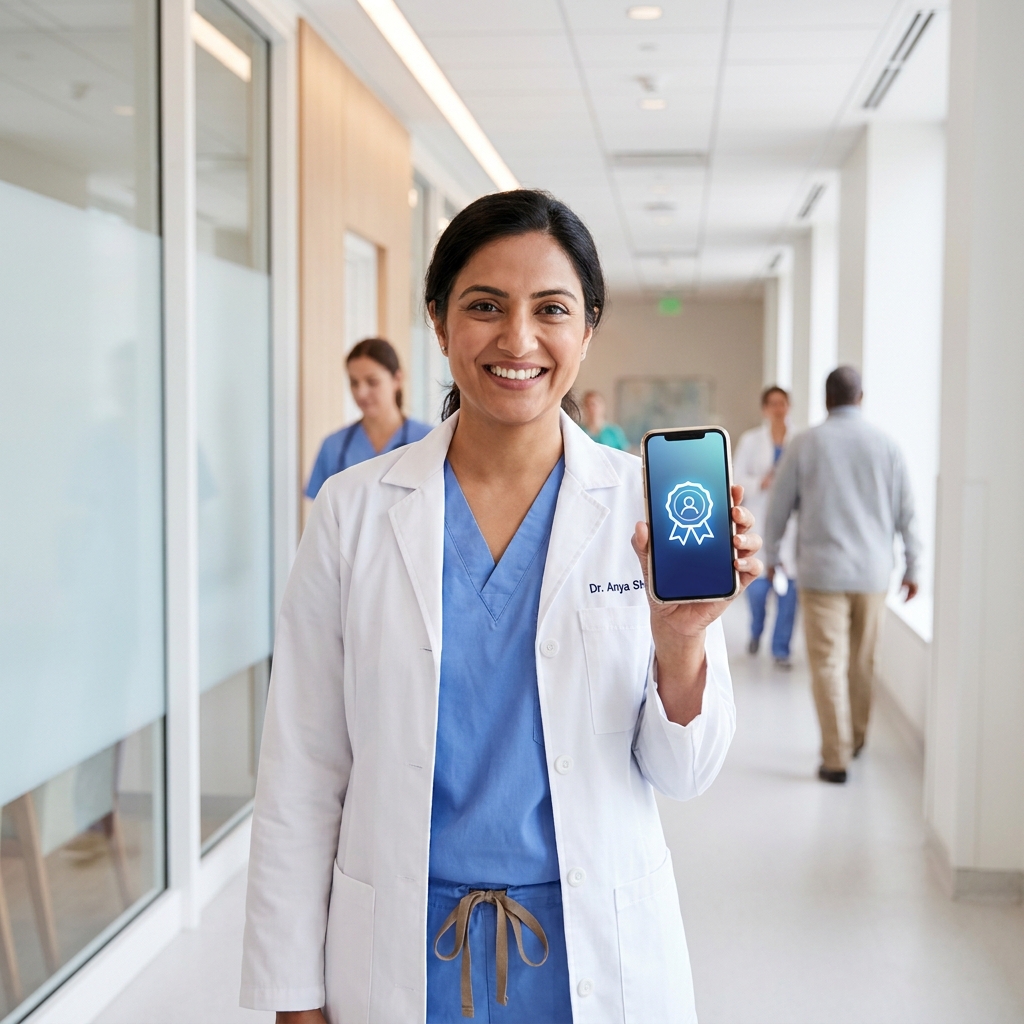
AHA BLS for Healthcare Providers Card: Your 2026 Renewal Guide
Introduction: Why the AHA BLS Card Deserves More Than a Checklist
For many clinicians, credentialing stress tends to arrive at the same moment: a renewal reminder from human resources, a new job offer, or a scheduling system that suddenly blocks shifts. The questions that follow are usually the same. Is the card still valid? Did the rules change? Does a “renewal” class still exist? The AHA BLS for Healthcare Providers card sits at the center of these questions, yet most training-center websites treat it as a simple booking transaction rather than a credential with real clinical and professional weight.
This guide covers four things: what the card actually certifies, how the October 22, 2025 American Heart Association (AHA) Guidelines update reshapes 2026 course content, why the “renewal course” label causes so much confusion, and how to verify, retrieve, or replace an AHA eCard. TopDoctor Magazine has long focused on connecting healthcare providers with accurate, practical information, and this guide is written for clinicians, students, and employers working through 2026 recertification.
What the AHA BLS for Healthcare Providers Card Actually Certifies
The card is proof that a student has completed the American Heart Association’s Basic Life Support (BLS) Provider Course. It is not a generic “CPR certificate.” According to the AHA’s own course page, successful students receive a course completion eCard that is valid for two years from the issue date. Academic medical centers such as UC Davis Health describe the credential the same way: an AHA BLS for Healthcare Provider course completion card with a two-year validity period.
Who the Course Is Designed For
The AHA states that the BLS Provider Course is designed for:
- Healthcare professionals (nurses, physicians, paramedics, dental staff, therapists, and others in clinical roles)
- Trained first responders
- Individuals enrolled in a healthcare training program, such as nursing, medical, or allied health students
This eligibility language separates BLS from the AHA’s Heartsaver CPR courses, which are intended for lay rescuers and the general public.
BLS vs. “CPR Card”: Resolving the Terminology Confusion
Employers, schools, and students often use “CPR card” and “BLS card” as if they mean the same thing. They do not. As TopDoctor Magazine explains in its CPR for Healthcare Providers: 2026 Certification Guide, a BLS card is accepted almost anywhere a CPR card is required, but a standard CPR card will not be accepted for roles that require BLS.
Part of the confusion comes from naming. The AHA’s formal title is the “BLS Provider Course,” while phrases such as “CPR for Healthcare Providers” or “BLS for Healthcare Providers” are common shorthand among hiring managers and students. When a job posting asks for “healthcare provider CPR,” it almost always means the AHA BLS Provider credential.
Course Format, Length, and Skills Verification
The course is offered in two main formats:
- Instructor-led BLS: about 4 hours in a classroom setting.
- HeartCode BLS (blended learning): an online cognitive portion followed by an in-person, hands-on skills session that ranges from 60 minutes to 2 hours, depending on the student’s experience.
In both formats, the hands-on skills check is mandatory. This is what separates an AHA BLS credential from pure e-learning products. The in-person skills verification is also why certain state boards, discussed below, refuse to accept online-only completion.
The October 2025 AHA Guidelines Update: What Changes for 2026 Certifications
On October 22, 2025, the AHA released its newest comprehensive Guidelines for Cardiopulmonary Resuscitation and Emergency Cardiovascular Care (ECC), the first full revision since 2020. The executive summary, published in Circulation, states that the guidelines are organized around the Utstein Formula for Survival, a framework that links resuscitation science, effective education, and local implementation to patient outcomes. For anyone certifying in 2026, these changes shape both the course content and the vocabulary used on the exam.
The Unified 6-Link Chain of Survival
Earlier guidelines used separate Chains of Survival for adult, pediatric, in-hospital, and out-of-hospital cardiac arrest. The 2025 Guidelines combine these into a single, unified 6-link Chain of Survival.
This matters for clinicians who move between patient populations and care settings. An emergency nurse who treats both adults and children, or a paramedic who hands patients off to hospital teams, now works from one consistent mental model instead of switching between frameworks.
Breathing, Compression Ratios, and Mechanical CPR Updates
Several BLS-relevant updates stand out:
- Respiratory arrest with a pulse: rescuers should give one breath every six seconds (about 10 breaths per minute) and make sure the chest visibly rises.
- Compression-to-ventilation ratio: the 30:2 ratio remains in place until an advanced airway is placed.
- Mechanical CPR: the guidelines make no recommendation for routine use of mechanical CPR devices. EMS1 called this the biggest news from the BLS section. Clinicians who rely on these devices should understand this position before they recertify.
Terminology Shift: “Breaths” vs. “Ventilation”
The 2025 Guidelines tighten their language. “Rescue breaths” is now simply “breaths” for patients with a pulse. The term “ventilation” is reserved for professional mechanical respiratory support. The change may seem small, but it affects how exam questions are worded and how accurately events are charted.
New Training Science: RCDP, Gamification, and AR Feedback
The guidelines also endorse newer approaches to training:
- Rapid-cycle deliberate practice (RCDP): short, repeated simulation cycles with immediate coaching.
- Gamified learning modules that build engagement and help students retain material.
- Augmented reality (AR) that gives real-time feedback on CPR quality.
The AHA also cautions against using virtual reality to teach hands-on skills. Students comparing training centers may want to ask which technologies a center uses and how its hands-on practice is structured.
The March 1, 2026 Transition Deadline
All AHA Training Centers and instructors were required to switch to the updated 2025-based materials by March 1, 2026. In practice, this means anyone certifying or renewing in 2026 is trained under the refreshed guidelines and terminology, no matter which authorized center they choose. Before booking, prospective students should still confirm that their chosen center has completed the transition, especially if it is a smaller or independent provider.
Why AHA No Longer Offers a Standalone “Renewal” Course: Clearing Up the Confusion
The AHA has stated that it no longer offers a separate, standalone BLS renewal course. Providers whose cards are lapsed or close to expiring generally register for the same BLS Provider Course that first-time students take.
What Training Centers Actually Mean by “Renewal”
Many private training centers still advertise “renewal” sessions. These sessions are almost always built on the HeartCode blended-learning model: an online cognitive portion followed by a short in-person skills check, often lasting 15 to 90 minutes. This is a delivery format, not a separate AHA course type. The card a student earns is the same BLS Provider eCard either way.
Time and Cost Differences: Renewal-Style vs. Full Initial Course
- Cost: total cost usually falls between about $50 and $150, depending on the format and the training center.
- Time: renewal-style (HeartCode) pathways generally take 3 to 4 hours in total, compared with 7 to 8 hours for a full initial course at some centers.
Because policies vary, providers should ask the training center directly whether their current certification status qualifies them for the shortened HeartCode pathway.
Choosing the Right Pathway for Your 2026 Recertification
| Situation | Typical Pathway |
|---|---|
| Currently certified, renewing before expiration | HeartCode blended format is often the most efficient option |
| Card recently lapsed | Confirm with the training center; some allow a shortened format, while others require the full course |
| First-time certification | Full instructor-led course or HeartCode with a complete skills session |
Whichever pathway a provider chooses, all 2026 course content reflects the October 2025 Guidelines update.
Employer and Compliance Timelines: Avoiding a Credentialing Gap
Employers care about exact expiration dates, not simply whether someone “has a card.” A lapsed BLS credential can create liability exposure, accreditation problems, and staffing gaps, so credentialing departments track these dates closely.
The 30-Day Expiration Window
- Hospitals typically want proof of current BLS within 30 days of expiration.
- Many facilities lock employees out of clinical scheduling systems once a card lapses.
- Some third-party training centers describe a 30-day post-expiration grace window for a shortened course before a full initial course is required again. This is a training-center policy, not an AHA mandate, so providers should confirm it with the specific center rather than assume it applies.
State Licensure and Institutional Requirements Layered on AHA Rules
State boards and health systems can set requirements that are stricter than the AHA’s. New York is a clear example:
- The New York State Education Department requires AHA BLS with a live instructor skills assessment for RN and LPN licensure. Online-only completion is not accepted.
- NYC Health + Hospitals and NewYork-Presbyterian require current AHA BLS for all clinical staff, with no grace period.
Clinicians who are relocating or changing licensure jurisdictions should check local board requirements before assuming their credential will carry over.
International and Cross-Jurisdiction Considerations
Outside the United States, similar credentials may appear under names such as “Basic Cardiac Life Support.” Acceptance of an AHA card varies by country and regulatory body. Clinicians moving abroad, or between states, should confirm acceptance directly with the new licensing board instead of assuming automatic equivalency.
How to Verify, Retrieve, or Replace an AHA eCard
The AHA eCard system is the authoritative record of completion. Each eCard has a unique ID and QR code, which makes it far more resistant to tampering than a printed card.
Verifying an eCard’s Authenticity (For Employers and Credentialing Staff)
- Visit heart.org/CPR/mycards.
- Enter the eCard code, or scan the QR code on the student’s eCard.
- Review the result, which shows the issuing instructor’s and Training Center’s credentials.
Verification is available 24 hours a day and creates a clear audit trail. Credentialing staff should treat it as the single source of truth instead of relying only on screenshots or PDFs.
Retrieving a Lost or Forgotten Card (Self-Service for Clinicians)
- Use the student portal at ecards.heart.org/student/myecards and search by name and email, or by eCard code.
- Alternatively, text “eCard” to 51736 for quick retrieval by SMS.
Simple lookups like these do not require contacting the original training center.
Replacing a Damaged or Permanently Lost Card
Reissuing a lost or damaged card is handled by the original AHA Training Center, not by the AHA directly. Clinicians should keep a record of which center and instructor issued each card. Note the difference between the two processes: retrieving is instant self-service, while replacing requires the issuing center.
Conclusion: Treating Your BLS Card as a Credential, Not Just a Checkbox
In 2026, the AHA BLS for Healthcare Providers card represents more than a new expiration date. It reflects newly validated science: a unified Chain of Survival, updated breathing guidance, a clear position on mechanical CPR, and more precise terminology. The renewal question also has a clear answer. There is no standalone “renewal” course, only the BLS Provider Course delivered through traditional or HeartCode blended formats. Checking credentials early through myCards, and understanding how employer and state rules add to AHA requirements, helps prevent costly credentialing gaps. TopDoctor Magazine remains committed to pairing clinical accuracy with practical compliance guidance.
Next Steps: Stay Current With TopDoctor Magazine
- Explore related guides: TopDoctor Magazine’s CPR for Healthcare Providers guide offers a deeper comparison of BLS and CPR credentials.
- Subscribe to the newsletter: the free biweekly TopDoctor newsletter covers AHA Guidelines updates and credentialing changes affecting 2026 and beyond.
- Bookmark the essentials: save the myCards verification steps, and confirm a training center’s 2025 Guidelines transition status before booking a 2026 course.
- Connect with the team: questions about credentialing compliance or professional recognition opportunities can be sent to TopDoctor’s editorial team at info@topdoctormagazine.com.