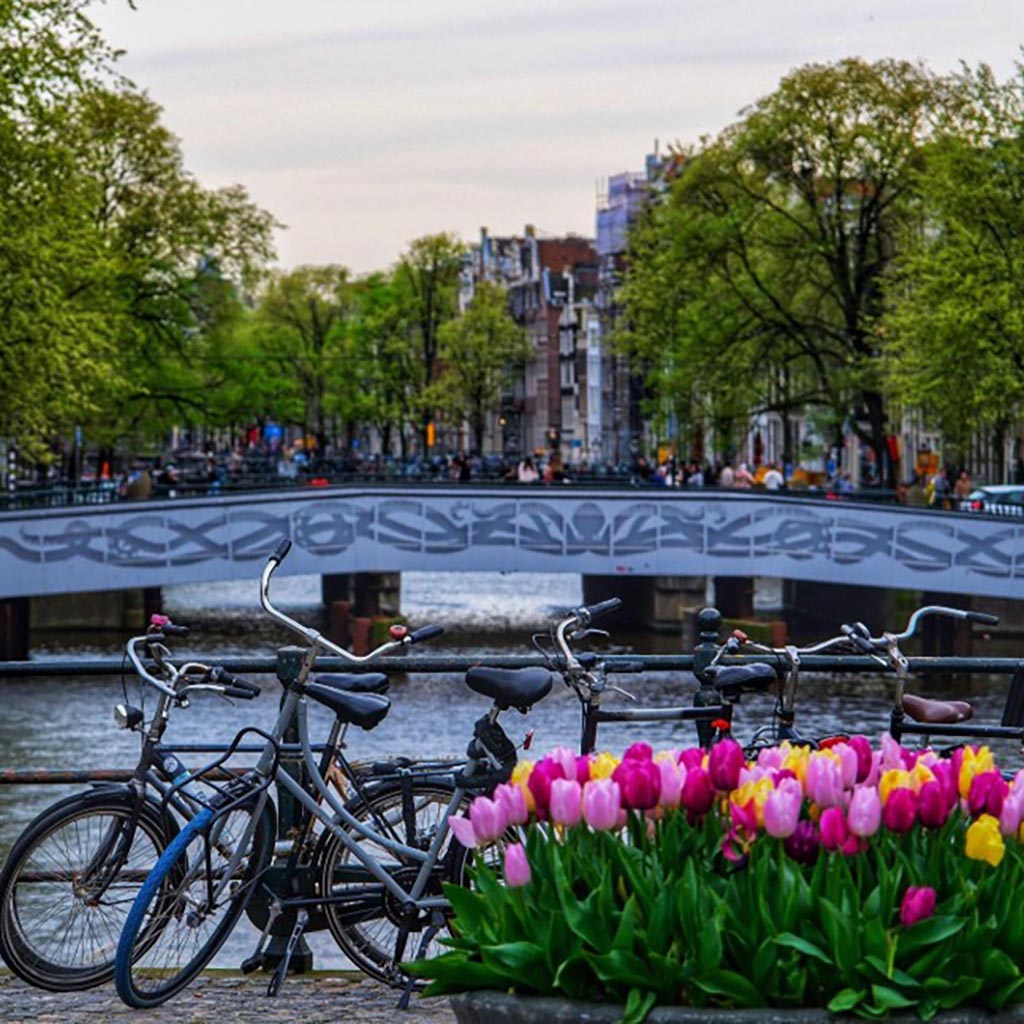
Photo by Doğukan Akbaş: https://www.pexels.com/photo/bicycles-and-tulips-along-amsterdam-canal-29343111/
The Real Reason a Change of Scenery Works in Spring
Most people assume a spring trip works because it’s simply a break from routine. New sights, less stress, a mental reset from the daily grind.
That’s not wrong, exactly, and there’s genuinely nothing wrong with enjoying it that way too. It’s just incomplete as a full explanation. There’s an actual biological mechanism behind why spring travel specifically tends to lift mood, and it has almost nothing to do with vacation psychology or simply escaping obligations for a week.
What’s Actually Happening in Your Brain
The real driver is light, and specifically how much of it your brain has been getting over the preceding months.
According to Harvard Medical School, a lack of natural light throws off circadian rhythm, causing the brain to produce excess melatonin, the sleep hormone, while releasing less serotonin, the neurotransmitter most closely tied to mood regulation. That imbalance is the documented mechanism behind seasonal affective disorder specifically, but the underlying biology affects mood on a spectrum, not just in people who meet a full clinical diagnosis.
Researchers describe this through what’s called the monoamine hypothesis, the idea that circadian-regulated brain regions directly influence serotonin, dopamine, and norepinephrine pathways based on how much light a person is actually exposed to. A peer-reviewed review on circadian rhythms and seasonal mood describes this pathway in detail, tying reduced light directly to measurable shifts in these same mood-regulating brain chemicals over time.
In plain terms, winter doesn’t just feel duller in some vague, subjective way that’s hard to pin down. It’s genuinely altering brain chemistry in a specific, well-documented direction, and spring’s return of daylight reverses that shift in a measurable, reproducible way that researchers can actually track using standard depression rating scales and biochemical markers.
That distinction matters for how seriously to take the “spring energy” cliché that gets repeated every year without much explanation. It’s not a metaphor or a seasonal marketing phrase. It’s a description of an actual neurochemical process happening on a predictable schedule, tied directly to how many daylight hours a person’s brain has been receiving over the preceding weeks and months.
Why Netherlands Tulip Cruises Line Up With the Science on Timing
Getting more light isn’t just about total volume across a day. Timing turns out to matter almost as much as sheer quantity does.
A clinical review on seasonal affective disorder and circadian rhythms found that light exposure works best when it happens during morning hours specifically, when the circadian system is most responsive to phase advancement. Treatment effects typically take two to four weeks to fully develop, similar to how long standard antidepressants take to show measurable results in clinical trials.
That timing detail is exactly what makes a trip built around consistent, sustained daylight genuinely different from an occasional sunny afternoon at home squeezed between overcast days. Celebrity Cruises’ seasonal Netherlands and Belgium sailings, timed to tulip bloom season each spring, put travelers outdoors through blooming fields and along canal paths across consecutive mornings, not just a single scattered exposure caught by chance. A week of consistent morning daylight is a meaningfully different biological dose than a lucky sunny weekend squeezed between gray days at home, even if the total hours of sunlight end up roughly similar on paper.
Why Natural Light Specifically Seems to Matter
Not all light exposure works the same way, and the research on this particular distinction is genuinely interesting once you dig into it.
A study of the Old Order Amish community, whose lifestyle involves minimal artificial lighting compared to the general population, found that their natural light exposure patterns tracked closely with the same circadian and mood-regulating mechanisms researchers study in clinical light therapy settings. Living in a way that follows natural daylight patterns, rather than relying primarily on indoor artificial light supplemented by occasional outdoor time, appeared to support more stable circadian timing overall throughout the year.
That’s a meaningful data point for anyone assuming a light box or a bright office is functionally equivalent to real outdoor light exposure. Genuine outdoor exposure, across a full range of natural daylight conditions and intensities, still appears to do something that indoor lighting doesn’t fully replicate, however bright the bulbs.
The Scenery Might Not Be Incidental Either
None of this means the “new scenery” feeling is pure placebo, even though light exposure is clearly doing most of the measurable biological work behind the scenes.
Novel environments are associated with their own mild boosts in engagement and attention, separate from the light mechanism entirely and documented in a different body of research altogether. Combined with a genuine circadian and serotonin shift from consistent morning daylight, a spring trip stacks two real, distinct effects rather than relying on just one mechanism to do all the work. That combination likely explains why the mood lift from spring travel tends to feel more substantial and longer-lasting than either factor would produce entirely on its own.
What This Means Practically
None of this requires an elaborate plan, and it doesn’t require perfect conditions to actually work either.
Morning light exposure matters more than any other time of day, so a trip or daily routine that gets you outside earlier rather than later delivers more of the actual measurable benefit. Consistency across several days appears to matter more than a single intense exposure crammed into one afternoon, which is part of why a multi-day trip built around outdoor time functions differently than a single sunny errand run on a Saturday.
The takeaway isn’t that everyone needs to book a European river cruise specifically to feel better in spring. It’s that the instinct toward a change of scenery in this specific season is tracking something real happening in brain chemistry, not just a vague cultural habit passed down without reason. Understanding the actual mechanism just makes it easier to act on that instinct deliberately, choosing morning light and sustained outdoor time on purpose, rather than leaving the whole thing to chance and whatever weather happens to show up.