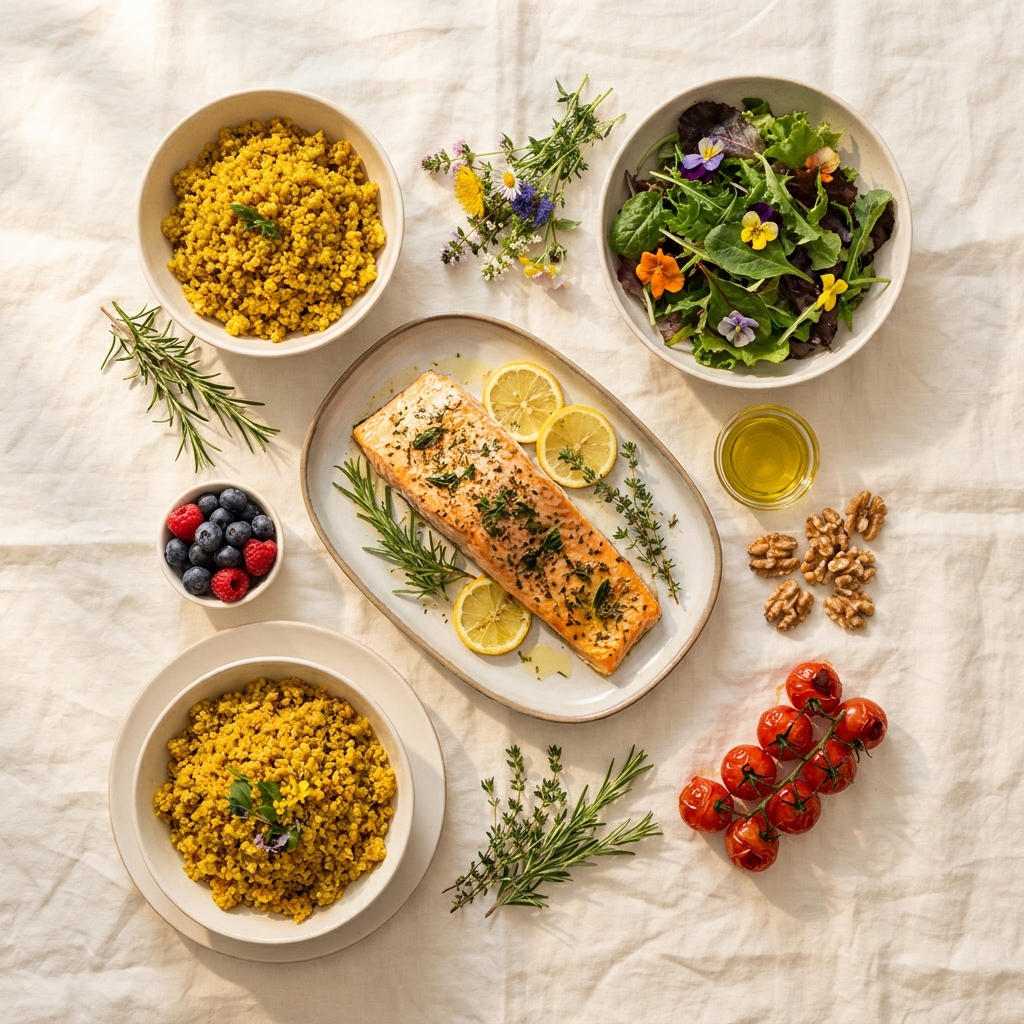
Anti-Inflammatory Diet Menus for Your Health Goal in 2026
Introduction: Why One Menu Does Not Fit Every Health Goal
Most anti-inflammatory diet menus share a common flaw: they are generic. A single seven-day meal plan gets copied across the internet with no regard for whether a reader is trying to protect their heart, sharpen their mind, ease their joints, or age gracefully. The result is advice that technically works but rarely feels relevant.
The stakes justify a more precise approach. Chronic low-grade inflammation is now recognized as a root driver of cardiovascular disease, neurodegeneration, cancer, and mental health disorders. Dietary risk factors were linked to 6.58 million cardiovascular disease deaths in 2021, and roughly 90% of Americans still do not eat enough fruits and vegetables. Food is not a wellness trend; it is a lever on longevity.
This article offers four distinct weekly menu frameworks, each anchored to a specific health priority: cardiovascular and nitric oxide optimization, brain health and mood support, joint and mobility recovery, and longevity for adults 50 and older. Every menu rests on the same validated foundation: the Dietary Inflammatory Index (DII) and decades of Mediterranean diet research. Each section includes a rationale, key foods, a sample weekly structure, and foods to minimize, giving readers an actionable tool matched to their personal context.
The Science Behind Anti-Inflammatory Diet Menus: DII and the Mediterranean Framework
The Dietary Inflammatory Index is a validated scientific scale ranging from −8.87 (highly anti-inflammatory) to +7.98 (highly pro-inflammatory), built on the effects of 45 food components. It is the measurement tool anchoring all four menus below.
A 2025 umbrella review in Nutrition Reviews assessed 15 dietary patterns across 225 primary studies and found the Mediterranean diet had the most consistent beneficial association with CRP, IL-6, and adiponectin levels. Participants with the highest adherence showed 20% lower hs-CRP, 17% lower IL-6, and 14% lower white blood cell counts (Nutrition Reviews).
The U.S. Department of Veterans Affairs offers a practical structure that underpins each menu: its June 2025 anti-inflammatory framework organizes food into three pillars: Color and Fiber (non-starchy vegetables, fruits, and whole grains), Healthy Fats, and Repairing Protein (VA Nutrition Services).
Across validated indexes, fruits, vegetables, whole grains, and legumes are consistently favorable, while red and processed meats and added sugars are consistently unfavorable. Ultra-processed foods do measurable biological damage: they alter gut bacteria, harm the intestinal lining, and activate inflammatory genes.
A note on timelines: some people notice improved energy within one to two weeks, but significant biomarker changes typically require several weeks to months of consistent adherence.
How to Use These Anti-Inflammatory Diet Menus
Readers should begin by identifying their primary health goal: cardiovascular health, mental wellness, joint recovery, or healthy aging. While each menu is goal-specific, all four share a Mediterranean foundation and can be adapted for vegetarians, vegans, and those with gluten intolerance while preserving the core components of omega-3s, polyphenols, and fiber.
These are frameworks, not rigid prescriptions. Portion sizes and recipes can flex to personal preferences and caloric needs. Anyone managing a chronic condition should pair a menu with a healthcare provider conversation. As a baseline, the 2025 U.S. Dietary Guidelines recommend two servings of fruit and three of vegetables daily, with half the plate being produce at each meal, a target all four menus meet or exceed.
Menu 1: Cardiovascular and Nitric Oxide Optimization
Anti-inflammatory dietary patterns improve blood pressure, lipid profiles, and hs-CRP through modulation of inflammatory mediators. The PREDIMED trial found 30% lower cardiovascular event rates with high Mediterranean adherence, and multiple meta-analyses show 10 to 25% lower all-cause mortality.
Nitric oxide (NO) is a key vasodilator and endothelial protector. Dietary choices that support NO bioavailability, including nitrate-rich vegetables and antioxidant-dense foods, are central to this menu. The oral microbiome plays a direct role in converting dietary nitrate into NO, a research area pioneered by Dr. Nathan S. Bryan, founder of N1O1, whose science-based nitric oxide products complement dietary strategies. The DII target for this menu is a strongly negative score.
Key Foods for Cardiovascular and Nitric Oxide Support
- Nitrate-rich vegetables: beets, arugula, spinach, Swiss chard, celery
- Omega-3 fatty acids: salmon, sardines, mackerel, walnuts, flaxseed, chia
- Polyphenol-rich foods: blueberries, pomegranate, 70%+ dark chocolate, green tea, extra-virgin olive oil
- Allium vegetables: garlic, onions, leeks
- Legumes: lentils, black beans, chickpeas
- Minimize: red and processed meats, refined carbohydrates, added sugars, trans fats, excess sodium
Sample 7-Day Cardiovascular and Nitric Oxide Menu Framework
- Day 1: Overnight oats with blueberries and walnuts; arugula-beet salad with grilled salmon; lentil-spinach soup with whole-grain bread.
- Day 2: Greek yogurt with pomegranate and chia; sardine and white bean salad; baked mackerel with Swiss chard and quinoa.
- Day 3: Spinach-beet-banana smoothie; chickpea and arugula wrap with tahini; garlic-braised lentils with roasted root vegetables.
- Day 4: Avocado and smoked salmon toast; tomato and white bean soup; grilled salmon with spinach and brown rice.
- Day 5: Chia pudding with berries; tuna and olive salad; baked cod with roasted beets and farro.
- Day 6: Oatmeal with walnuts and dark chocolate chips; lentil-arugula salad with pomegranate vinaigrette; shrimp stir-fry with garlic and bok choy.
- Day 7: Berry-spinach smoothie bowl; Mediterranean grain bowl with chickpeas; herb-baked salmon with asparagus and quinoa.
Snacks: walnuts, celery with hummus, dark chocolate squares, or green tea.
Menu 2: Brain Health and Mood Support
A 2026 scoping review synthesizing 42 RCTs and 23 systematic syntheses found anti-inflammatory diets, especially Mediterranean-style, associated with reductions in depressive symptoms. A 2025 meta-analysis found higher DII scores linked to a 53% increased risk of depression. Higher DII scores were also associated with a 21% increased incidence of dementia in the Framingham cohort (Alzheimer’s & Dementia).
The mechanism is the gut-brain axis: Mediterranean diets increase microbial diversity and short-chain fatty acid production, reducing neuroinflammation.
Key Foods for Brain Health and Mood Support
- Omega-3 DHA/EPA: salmon, herring, anchovies, algae-based supplements
- Polyphenol brain foods: blueberries, dark cherries, turmeric with black pepper, green tea
- Fermented foods: kefir, yogurt, kimchi, sauerkraut, miso
- Magnesium sources: pumpkin seeds, dark leafy greens, black beans, almonds
- B-vitamin sources: eggs, leafy greens, legumes, nutritional yeast
- Minimize: ultra-processed foods, refined sugars, alcohol
Sample 7-Day Brain Health and Mood Support Menu Framework
- Day 1: Blueberry-kefir smoothie; salmon and greens salad with walnuts; turmeric lentil dal with brown rice.
- Day 2: Scrambled eggs with spinach; miso soup with tofu and edamame; baked herring with sweet potato and kimchi.
- Day 3: Overnight oats with dark cherries; chickpea-avocado salad; anchovy-tomato whole-grain pasta.
- Day 4: Greek yogurt parfait with walnuts; lentil-beet salad with goat cheese; grilled salmon with kale and quinoa.
- Day 5: Turmeric golden-milk oatmeal; white bean soup; mackerel with Brussels sprouts and farro.
- Day 6: Chia pudding with cherry compote; tuna-avocado rice bowl; stir-fried tofu with bok choy and ginger.
- Day 7: Smoked salmon toast; Mediterranean quinoa bowl; miso-glazed cod with edamame and soba.
Snacks: mixed berries, dark chocolate with green tea, yogurt with walnuts.
Menu 3: Joint and Mobility Recovery
Anti-inflammatory diets improve outcomes in arthritis and joint pain, with condition-specific RCT evidence supporting targeted design. Elevated IL-6, TNF-alpha, and CRP drive synovial inflammation and cartilage degradation, and these are the same biomarkers most responsive to Mediterranean eating (20% hs-CRP and 17% IL-6 reductions). This menu suits rheumatoid arthritis, osteoarthritis, post-surgical recovery, and general stiffness.
Key Foods for Joint and Mobility Recovery
- Omega-3 EPA: salmon, sardines, mackerel, walnuts, flaxseed
- Curcumin: turmeric paired with black pepper (boosts absorption up to 2,000%)
- Anthocyanins: tart cherries, blueberries, blackberries, pomegranate
- Vitamin C for collagen: bell peppers, citrus, kiwi, broccoli
- Ginger: inhibits COX-2 similarly to NSAIDs without GI side effects
- Collagen support: bone broth (glycine, proline, hydroxyproline)
- Minimize: refined sugars, trans fats, excess omega-6 oils, alcohol
Sample 7-Day Joint and Mobility Recovery Menu Framework
- Day 1: Tart cherry-ginger smoothie; sardine and roasted pepper salad; turmeric-ginger salmon with broccoli.
- Day 2: Oatmeal with blueberries and turmeric; bone broth vegetable-lentil soup; baked mackerel with sweet potato.
- Day 3: Greek yogurt with cherry compote; chickpea and roasted pepper wrap; ginger-glazed salmon with bok choy.
- Day 4: Scrambled eggs with turmeric; tuna-avocado salad with orange; lentil-kale stew.
- Day 5: Chia pudding with pomegranate; grain bowl with grilled sardines; herb-roasted chicken with broccoli.
- Day 6: Cherry-ginger-spinach smoothie; white bean soup; baked cod with mango-ginger salsa.
- Day 7: Avocado and smoked salmon toast; beet-walnut salad; turmeric chicken stir-fry with peppers.
Snacks: unsweetened tart cherry juice, walnuts, ginger tea, bell peppers with hummus.
Menu 4: Longevity and Healthy Aging for Adults 50+
The Mediterranean diet has been studied for longevity for over 60 years. A JAMA Network Open study tracking 25,000+ women for up to 25 years found close adherence associated with up to a 23% lower risk of dying from any cause.
Adults 50 and older face declining nitric oxide production, sarcopenia, bone density loss, and heightened cognitive risk. This cohort aligns closely with N1O1’s core audience: adults whose natural NO synthesis has declined. Protein adequacy matters (1.2 to 1.6 g/kg body weight), and nutrient density should be prioritized over volume to ensure adequate calcium, vitamin D, B12, and magnesium.
Key Foods for Longevity and Healthy Aging
- Anti-inflammatory proteins: fatty fish, legumes, eggs, Greek yogurt, poultry
- Bone support: kale, bok choy, broccoli, canned sardines with bones, fortified plant milks
- Longevity polyphenols: olive oil, blueberries, pomegranate, green tea
- Nitrate-rich vegetables: beets, arugula, spinach
- Fermented foods: yogurt, kefir, kimchi, miso
- B12 sources: eggs, fish, dairy, fortified foods
- Minimize: ultra-processed foods, excess sodium, refined sugars
Sample 7-Day Longevity and Healthy Aging Menu Framework
- Day 1: Greek yogurt with blueberries and walnuts; sardine-arugula salad; baked salmon with beets, kale, and quinoa.
- Day 2: Scrambled eggs with spinach and tomatoes; lentil-vegetable soup; herb-roasted chicken with broccoli.
- Day 3: Oatmeal with pomegranate and pumpkin seeds; tuna salad with white beans; miso-glazed cod with bok choy.
- Day 4: Kefir smoothie with spinach and chia; chickpea grain bowl with tahini; baked mackerel with asparagus.
- Day 5: Avocado and smoked salmon toast; white bean and kale soup; turmeric-ginger chicken stir-fry.
- Day 6: Chia pudding with berries; beet-walnut salad with goat cheese; grilled salmon with spinach and farro.
- Day 7: Omelet with mushrooms and feta; lentil-arugula salad; herb-baked cod with root vegetables.
Snacks: mixed nuts, yogurt with berries, green tea with dark chocolate, apple with almond butter.
Foods to Always Include and Always Avoid Across All Four Menus
Always include: extra-virgin olive oil, fatty fish, leafy greens, berries, legumes, nuts and seeds, whole grains, and colorful non-starchy vegetables.
Always minimize: red and processed meats, refined carbohydrates and added sugars, trans fats, ultra-processed packaged foods, and excess alcohol. Ultra-processed foods are especially damaging because they alter gut bacteria, harm the gut lining, and activate inflammatory genes.
The half-plate-produce rule applies to every framework. Individual sensitivities, such as reactions to nightshades or gluten, warrant personalization. Importantly, these are abundance-focused plans, not elimination diets: they crowd out inflammatory foods by filling the plate with better options.
Tracking Progress: Connecting Diet to Measurable Outcomes
Because biomarker shifts take weeks to months, benchmarks help sustain motivation. Readers should discuss key markers with a provider before and after beginning a framework: hs-CRP, IL-6, fasting glucose, lipid panel, and blood pressure. Subjective measures such as energy, sleep quality, joint stiffness, mood, and cognitive clarity may improve within one to two weeks.
The DII framework also doubles as a self-assessment tool: foods with negative DII contributions (omega-3s, fiber, polyphenols) should dominate the plate, while positive contributors (saturated fat, refined sugar) should shrink. For those pursuing cardiovascular and nitric oxide goals, dietary strategies can be complemented by evidence-based nitric oxide support for a comprehensive approach.
Frequently Asked Questions About Anti-Inflammatory Diet Menus
How quickly will results appear? Improved energy and reduced bloating may appear within one to two weeks; meaningful biomarker changes usually take several weeks to months.
Can these menus be followed as a vegetarian or vegan? Yes. Replace fish with flaxseed, chia, walnuts, and algae-based DHA, and replace animal proteins with legumes, tofu, and tempeh.
Can frameworks be combined? Absolutely. A 55-year-old with joint pain and heart concerns can blend the longevity and joint recovery menus.
Are these menus safe alongside medications? Consulting a provider first is essential, particularly for those taking blood thinners (warfarin interacts with vitamin K in leafy greens), statins, or immunosuppressants.
How does the DII work in practice? It scores each food component by its effect on inflammatory biomarkers; a diet rich in omega-3s, fiber, and polyphenols scores strongly negative.
What role does nitric oxide play? NO regulates vascular tone, blood pressure, and immune function. Dietary nitrates from beets, arugula, and spinach support NO production, which declines with age.
Conclusion: Match the Menu to the Health Goal
A generic anti-inflammatory menu is a starting point. A goal-specific framework, anchored by the DII and Mediterranean research, is a far more powerful tool. The four menus presented here target distinct priorities: cardiovascular and nitric oxide optimization, brain health and mood, joint recovery, and longevity for adults 50 and older. All share one evidence base: the Mediterranean dietary pattern, a low DII score, and the VA’s three pillars. Diet is one component of a comprehensive strategy, working synergistically with science-based supplementation and lifestyle habits. Beginning with even one framework this week is a meaningful step toward lower inflammation. You are, quite literally, what you eat.
Take the Next Step Toward Reducing Inflammation
Readers should select the framework matching their primary goal and commit to a four-week trial. Those following the cardiovascular and longevity menus may find N1O1’s science-based nitric oxide products a natural complement. Developed by Dr. Nathan S. Bryan, Ph.D., with 30+ years of research, 94+ published papers, and technology validated in multiple clinical trials, N1O1 offers a credible partner to a diet-first approach. Readers are encouraged to bookmark this article, revisit it seasonally as goals shift, and explore N1O1’s website to learn how nitric oxide support can reinforce cardiovascular health, healthy aging, and longevity. A healthcare provider should always be consulted to personalize the plan to individual history and biomarkers.