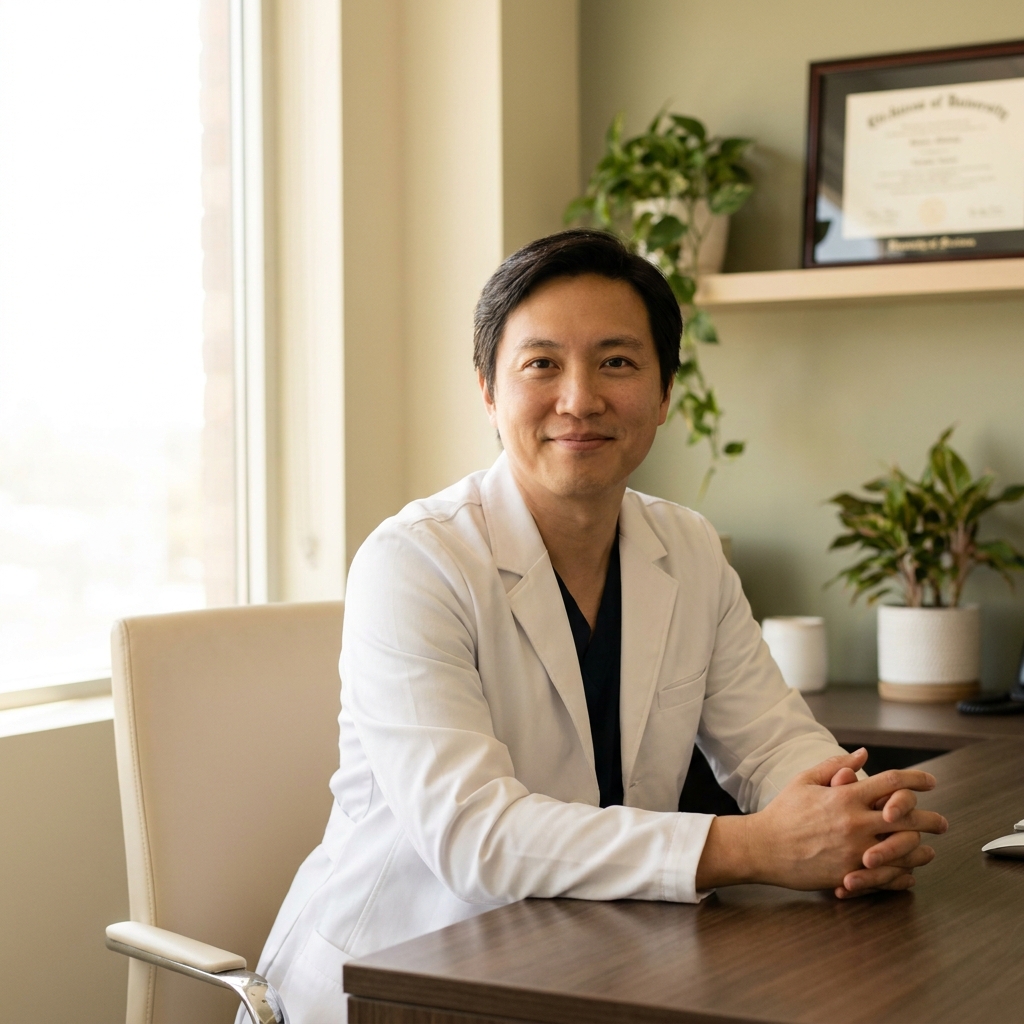
In the high-stakes world of clinical research, Dr. Sabine Hazan has long been known as a “closer.” For over 30 years, she was the “visual doctor” whom global pharmaceutical giants turned to when they needed to determine the viability of a new drug. If a product was good, she helped shepherd it to market; if it was flawed, her data ensured it went no further. But, after decades of navigating the rigid, often profit-driven structures of traditional medicine, Dr. Hazan has shifted her focus from the corporate laboratory to the microscopic frontier of the human gut.
As a gastroenterology specialist and pioneer in microbial research, Dr. Hazan is now leading a global movement. She argues that the trillions of microbes living within our digestive tracts are not merely passive residents, but the primary architects of human health, longevity, and even personality.

From Pharma Specialist to Microbial Rogue
Canadian-born and medically trained, Dr. Hazan has spent three decades at the forefront of medical advancement. Her early career was a whirlwind, spanning diverse clinical trials and treatments for heart disease, gastrointestinal disorders, vaccines, and dermatology. However, her trajectory changed when the pharmaceutical industry began investigating the therapeutic potential of fecal microbiota transplants (FMT), also known as “poop in a capsule.”
As she began to look closer at the data, Dr. Hazan realized that the traditional medical model was missing the “forest for the trees.” She eventually went rogue, pivoting her entire practice toward understanding the microbiome as a complex, living ecosystem.
“I started as a gastroenterologist doing clinical trials for pharmaceutical companies,” Dr. Hazan explained. “When those companies became interested in the microbiome, I shifted my gears. Instead of just bringing drugs to market, I wanted to understand the microbiome at a precise level within individual variations. We’re mapping the microbiome and diseases, but we’ve come to realize it’s not that simple, because everybody is different and the microbiome changes with various factors.”
The “Lost Microbes” of the Pandemic
Dr. Hazan’s research took on a new level of urgency during the COVID-19 pandemic. Her laboratory, ProgenaBiome, was the first to detect SARS-CoV-2 in stools, a discovery that provided public health officials with a crucial tool for tracking the virus through municipal septic systems. However, her most significant discovery involved what wasn’t there.
Through her research, Dr. Hazan identified a specific group of microbes, particularly Bifidobacterium, that seemed to serve as a biological shield. Her data suggested that those who suffered the most from COVID-19 were often entirely lacking these essential bacteria.
“We discovered the lost microbes of COVID,” Dr. Hazan said. “People who got COVID were lacking a certain group of microbes. One of them is Bifidobacterium, which is present in newborns but often absent in the elderly. We started looking at who else was lacking this bacteria, and we found it in kids with autism, people with Type 1 diabetes, Lyme disease, those with Crohn’s disease or long COVID, and invasive cancer.”
Her findings also delved into the impact of medical interventions on these microbial populations. Dr. Hazan noted that her data showed the messenger RNA vaccines could temporarily suppress Bifidobacterium for more than 90 days.
“This was not something that made me popular,” she admitted. “But as a researcher, I have to see the truth. On my first day at the University of Florida in Jacksonville, I learned that if a drug is bad, it doesn’t go to market. That’s the way I roll, and that’s the way I’ve rolled for 30 years.”

The “Save the Bif” Movement and the Autism Connection
The observed disappearance of these vital bacteria led Dr. Hazan to launch a mission she calls “Save the Bif.” This isn’t just a catchy slogan; for Dr. Hazan, it is a matter of species survival. She fears that if current trends continue, humanity could face a microbial extinction that leads to a surge in chronic disease and neurological disorders.
One of the most profound applications of her research has been in the field of autism. Dr. Hazan recently presented a study at the American College of Gastroenterology (ACG) involving identical twins. By manipulating their microbiomes to restore missing bacteria, Dr. Hazan observed a dramatic clinical shift.
“We saw the Bifidobacterium improving and the pathogenic bacteria decreasing,” Dr. Hazan noted. “And then, we saw the kids speaking. That’s really the gold. Those two twins are now fully verbal and reading books. The judge at ACG said this was a great proof of concept.”
Dr. Hazan emphasizes that treating these conditions requires a “whole family” approach. She has found that a microbe causing autism in a child might be the same one causing severe anxiety or depression in the mother.
“We tend to think of disease in one person, but you have to remember to treat the family,” she said.
The Art of Medicine in a Robotic Age
Despite her heavy reliance on high-tech genetic sequencing and cutting-edge laboratory data, Dr. Sabine Hazan is a vocal critic of what she perceives as the growing dehumanization of modern healthcare. She views her work not merely as a data-driven exercise, but as a sophisticated blend of rigorous science and the “art of medicine, “a philosophy she believes is rapidly being lost to the sterile efficiency of automation and standardized “checkbox” treatments. To Dr. Hazan, the microbiome is too dynamic and individualized to be handled by a rigid algorithm.
“We’re heading into a world of robots,” Dr. Hazan warned. “And I can assure you, the last thing I want when I’m sick in bed is for a robot to tell me that my chances of death are 50 percent and that I need Pill A, B, or C. When that pill doesn’t work, and I’m getting worse, and the robot says, ‘I’m sorry, there’s nothing more I can do-‘ that is where the system fails. I want a human touch. I want a doctor who tells me, ‘You’re a warrior, keep going,‘ and gives me hope. A doctor should be a human being who truly understands another human being’s suffering.”
This “art” involves moving beyond the role of a traditional prescriber to become a medical detective and a lifestyle coach. Dr. Hazan often spends months working intensely with patients to peel back the layers of their daily existence. She cites the example of a high-stress venture capitalist suffering from Crohn’s disease; in such cases, she argues that clinical intervention alone is insufficient.
“You can give them all the medications in the world and attempt to change their microbiome, but you’re not going to change the trajectory of the disease until they change their lifestyle,” she insisted. “Whether it’s the alcohol they drink, the pesticides in their salads, or the constant state of anxiety they live in, you have to address the poison and the pressure. It’s a coaching process. It’s about uniting clinical improvement with a fundamental shift in how that person lives.”

A 100-Year Vision for Humanity
Looking toward the horizon, Dr. Hazan is focused on creating a legacy of research that will far outlast her own career. She is currently collaborating with the FDA on groundbreaking protocols for “familial fecal transplants.” This process seeks to identify a “super-donor” within a patient’s own family to help treat members suffering from complex neurological or gut-based illnesses like autism, Parkinson’s, and ALS. By keeping the treatment “in the family,” Dr. Hazan hopes to create a safer, more compatible standard of care.
She acknowledges that we are only at the very beginning of this journey. While she envisions a “pharmacy of the future” where doctors can precisely add or subtract specific microbes to cure disease with the same ease as a chemist balances a formula, she admits that such a reality might be 100 or even 200 years away. However, she believes the foundation for that future must be laid today through uncompromising, unbiased research.
To achieve this, she stresses that doctors must remain resistant to the pull of financial corruption and the influence of stock prices.
“Once you start thinking about the money aspect of a product, it biases you in research,” Dr. Hazan said. “In science, it is vital to stay true to the truth, even if it means admitting you were wrong. I’ve had to be as unbiased as possible because I’m going to be that patient in that bed one day. I have to be humble.”
Dr. Hazan has even structured the Microbiome Research Foundation to ensure that data remains the priority over profit. She sees her current role as a bridge builder, connecting innovative “artist” doctors who are willing to look beyond traditional silos.
“My job now is to bring humanity and doctors back to the microbiome,” she concluded. “It’s not about us competing for notoriety or financial gain; it’s about us uniting as a team to see the truth in diseases. If we can save the Bifidobacterium and understand what is killing our internal ecosystems, we aren’t just treating a patient, we are healing humanity for generations to come.”

How to Get Involved
Dr. Hazan is calling on fellow physicians to join the “BIOME SQUAD” to collaborate on microbiome research. She also encourages the public to support the Microbiome Research Foundation, a non-profit dedicated to advancing this frontier of science.
For more information, visit microbiomeresearchfoundation.org.