
For most, a mystery virus that triggers a debilitating autoimmune response would be a finishing line. For Alex Tarnava, it was a starting block – but if you ask him, he’ll tell you it was more a matter of luck than anything.
A former competitive amateur athlete who spent upwards of six hours a day, six days a week training, and who benefited from a profitable, largely hands-off business in another industry, Tarnava’s life was upended when his health suddenly collapsed. Forced to abandon his physical pursuits, he turned his focus to the only thing that mattered: survival.
“I was desperate to find anything that could bring me back to who I was before my health deteriorated, and this desperation drove me to start looking for anything emerging that could help. That’s where I discovered hydrogen research,” Tarnava said. “There was nothing available, and I tend to be an obsessive person when it comes to problem-solving. The result was a DIY project that became something much more.”
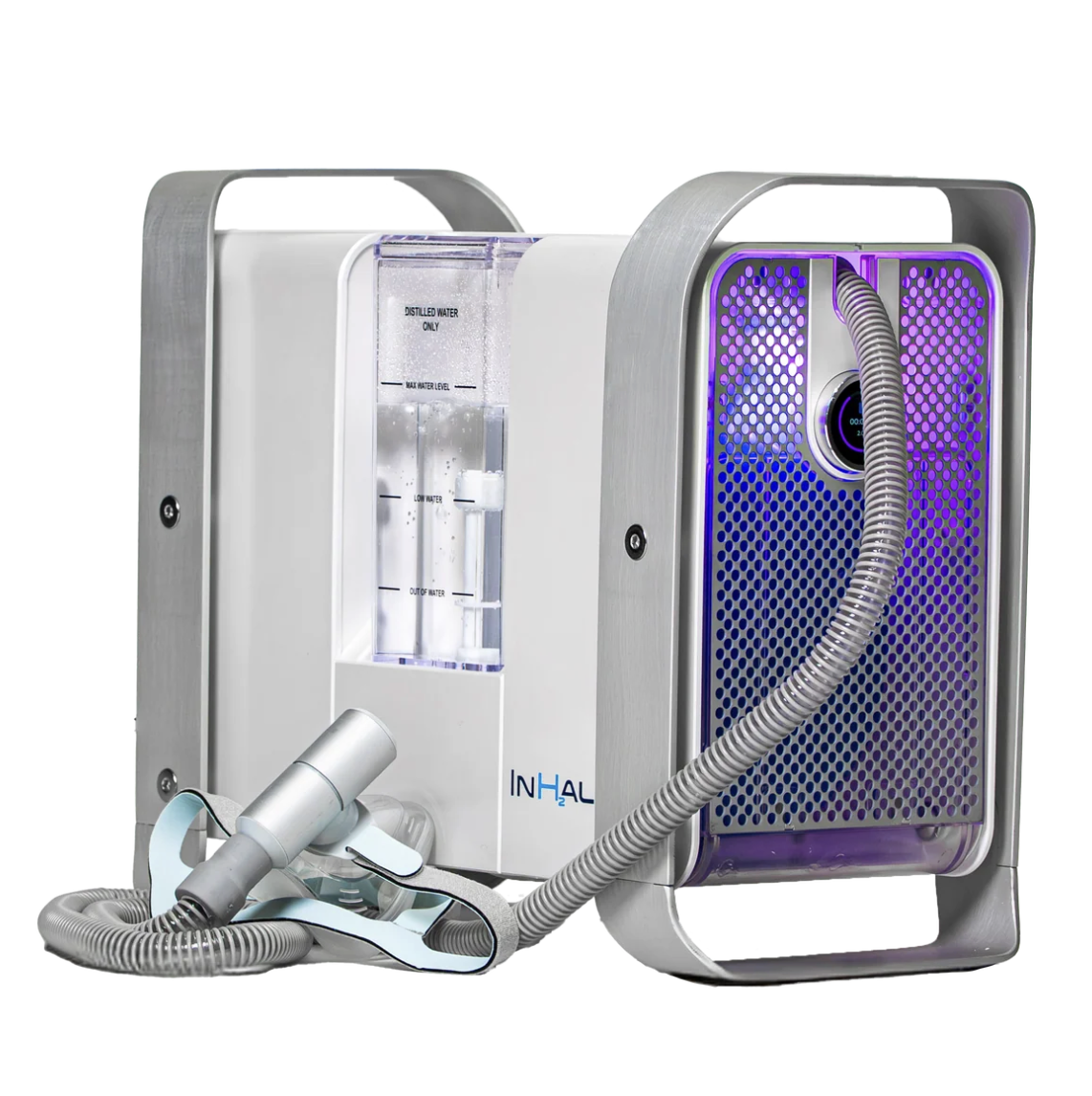
That “DIY project” led to the development of several patents, including hydrogen water tablets now licensed to approximately 100 brands and backed by over 25 clinical trials. Today, Tarnava is pushing the industry’s boundaries further with the launch of the “Inhale H2” units, a project born from over seven years of research and a deep-seated frustration with the lack of safety and efficacy in the current market.
 A Journey of Constant Struggle
 A Journey of Constant Struggle
While many entrepreneurs lean into the “eureka moment” narrative, Tarnava remains a staunch pragmatist. He rejects the idea of a singular defining moment that shaped his journey, instead emphasizing the grueling nature of innovation.
“I don’t really believe in that,” Tarnava said regarding redemption stories. “I think proper advancement is a slow journey, one step at a time. I know people love redemption stories of one singular moment that changed everything, and that’s because people want to live in a fantasy where a single thing can help them change who they are without doing the hard work.”
This commitment to the “hard work” of science saw Tarnava spend seven and a half years collaborating with Dr. Tyler LeBaron, MSc, PhD, a leading authority in the field, to develop a device that could meet the rigorous standards of clinical trials. The result was a technology designed to move past substanceless marketing hype and deliver safe, precise dosing, which is necessary to ensure physiological results.
The Science of Stress and Redox Homeostasis
One of the most significant hurdles in the hydrogen industry is a fundamental misunderstanding of the biology involved. Tarnava explained that hydrogen is not a traditional antioxidant, despite how it is often marketed. Instead, it acts as a hormetic agent, an adaptive stressor similar to exercise, fasting, or cold exposure.
“Hydrogen works in a similar manner to exercise, or fasting, or cold exposure,” Tarnava said. “It’s an adaptive stress, like a hormetic agent. To date, it’s the lifestyle intervention that has the highest safety profile and has extremely outsized responses for the stress that it induces on our body.”
By inducing a mild, acute stress on the mitochondria, molecular hydrogen triggers the NRF2/Keap1 pathway, prompting the body to produce its own endogenous antioxidants. This process builds towards redox homeostasis, the harmony between oxidation and reduction, and helps regulate the body’s natural response to physiological and psychological stressors.
He warned that taking excessive amounts of exogenous antioxidants can be detrimental to health because the body requires a certain level of oxidative stress to function properly.

The Hidden Dangers of High-Flow Inhalation
A glaring safety gap in existing products drove his decision to move into inhalation therapy. Tarnava observed that many machines on the market were not only ineffective but also potentially dangerous. He noted that hydrogen is highly combustible, comparing it to historical disasters to emphasize the gravity of the risk.
“H2 is explosive–think Hindenburg,” Tarnava said. “Many of these machines are delivering hydrogen-oxygen combinations, increasing the oxygen, and making it even more explosive.”
He pointed to published case studies involving “deflagrations” where users suffered facial fractures and lung burns due to the highly combustible nature of H2 gas when mixed improperly. Tarnava mentioned that there are approximately 15 reported and published case studies of these machines exploding, though he suspects the real-world number is much higher.
The Fallacy of Constant Flow Rates
Traditional hydrogen machines often market themselves by “flow rate,” but Tarnava argued that this metric fundamentally misunderstands human physiology. He explained that humans do not breathe at a constant rate. Instead, we breathe intermittently, with each person displaying different breathing patterns and inhaling different volumes at different speeds. As a result, this can create substantial differences in how high a constant flow rate would need to be in order to deliver an accurate dosage to each person.
“These other companies are referring to the flow rate—how much hydrogen is being produced and moving through—but that flow is constant,” Tarnava explained. “They’re not accounting for averages in our minute ventilation–basically, how much we breathe per minute–nor do they account for the vast differences in how we breathe. Think about it this way: there is a vast difference between short, panicked breaths and long, intentional deep breaths. You’re breathing intermittently, and when you breathe intermittently, you get a very large volume in a short period.”
Because of this, Tarnava asserted that the vast majority of hydrogen produced by constant-flow machines simply goes into the nose and straight back out the mouth without ever reaching the lungs. This results in the user receiving a dose that, in some instances, is vastly below the minimum therapeutic threshold required to saturate the blood and distribute H2 to the rest of the body.
Engineering a Precise Closed-Circuit System
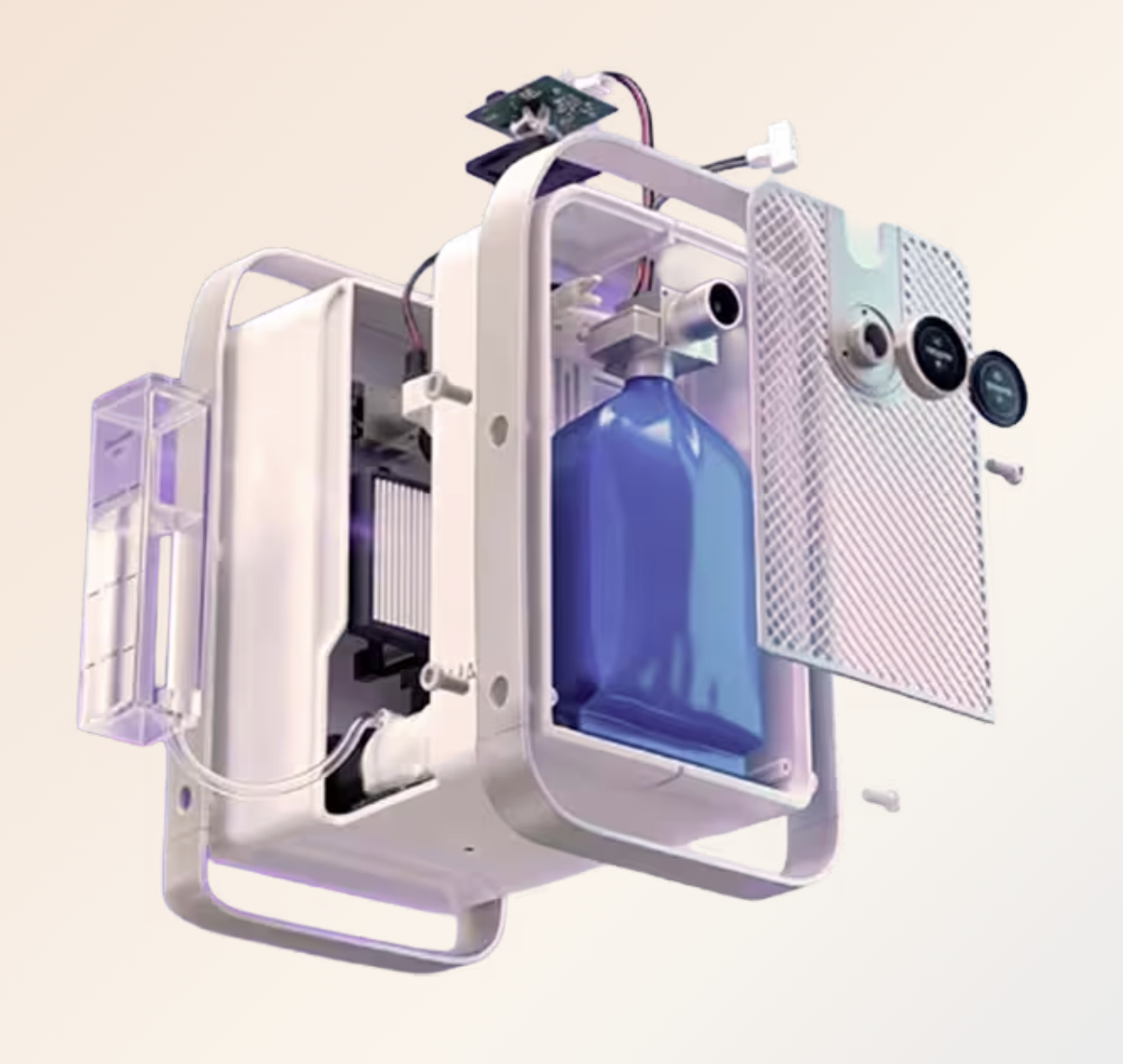
To solve the dosing and safety issues, Tarnava and Dr. LeBaron spent over seven years developing a closed-circuit system that syncs with the user’s natural breathing patterns. Instead of letting gas escape into the room, the machine utilizes a reservoir bag and a patent-pending mask designed with two separate one-way valves.
“We’ve created a machine that matches the way that humans breathe, no matter how each individual breathes,” Tarnava said. “It produces a variable between 1% to 4% H2, which we know from published literature are levels that best show physiological effects.”
In this system, when a user inhales, 100% of the hydrogen-enriched air comes directly from the reservoir bag through a one-way valve, ensuring they receive the exact concentration intended. When they exhale, the CO2 is pushed out through a different one-way valve, preventing any dilution or loss of the therapeutic gas. This precision allows practitioners to set specific concentrations based on the best available clinical evidence.
Universal Accessibility for All Body Types
A primary goal of the InhaleH2 project was to ensure the technology worked effectively for everyone, regardless of their physical condition or lung capacity. By focusing on concentration rather than just flow, the device provides a consistent therapeutic dose to diverse populations.
“It doesn’t matter if you’re a 90-year-old grandmother with lung cancer, a young adult having a panic attack, or a 300-pound bodybuilder practicing deep breaths,” Tarnava said. ” You’re getting the same concentration into your system, so you’re doing the same functional dose.”
This inclusivity is vital because different models of disease response in scientific literature suggest that while some conditions respond best to a 2% concentration, others require a 4% concentration. Tarnava’s technology enables that level of clinical specificity, which was previously unavailable in the home-use or clinical markets.

Ethics Over Shareholder Primacy
In an era of rapid-scale startups and venture capital dominance, Tarnava has taken a different path.
“I try to keep my businesses privately owned without outside investors,” he said. “That way, I don’t have to consider shareholder primacy. I can create my business through a lens of ethical considerations.”
This ethical framework ultimately convinced Dr. LeBaron to join the venture as Chief Science Officer. Tarnava noted that despite his 16 years in academia, Dr. LeBaron had never endorsed a product before this. Their shared vision involves making the machines as affordable as possible, even though they cost more to manufacture than many competitors.
Confronting the Crisis of Trust in Healthcare
Tarnava acknowledged a significant decline in trust in traditional medicine and healthcare. However, he cautioned that jumping to alternative medicine is not always the answer, as many companies in that sector lack the evidence and have no better ethics than the pharmaceutical industry they aim to replace.
“We shouldn’t abandon science and medicine for pseudo-science,” Tarnava said. “Just as we shouldn’t abandon a major airline after they have a plane crash and switch to some upstart airline that does absolutely no safety checks on their planes.”
He believes the solution lies in fixing the system from within by adhering to proper science and corporate governance. For Tarnava, this means being honest about what H2 can and cannot do. He explicitly stated that his company makes no claims that the machine will cure everyone, emphasizing that patients should know the costs, potential benefits, and current limitations of the evidence.

Looking Ahead: The Scale of 2026
As of early 2026, the demand for Tarnava’s technology is surging. Having just moved out of the pre-launch phase in late December 2025, the company nearly sold out its first 500 units primarily through word-of-mouth and podcast appearances. Clinics are already beginning to adopt the technology, with 15-20 locations purchasing units in the first few weeks after shipping began.
“The scale-up is one of the challenges,” Tarnava admitted. “I think we will be widespread in clinics by the end of 2026. We have pretty substantial demand, and we have a lot of interest from major distributors and wholesalers.”
Despite the commercial success, Tarnava’s final piece of advice remains grounded. He views hydrogen as a powerful tool, but one that must be part of a larger lifestyle strategy.
“It’s not a miracle. There’s no one thing you can do to make yourself healthy,” Tarnava emphasized. “Hydrogen is just one component. People can use something like hydrogen as a tool and a head start to get back on track with their health.”
To learn more, visit inhaleh2.com, and to gain more insight into who Alex is and his other prestigious accomplishments, visit AlexTarnava.com.