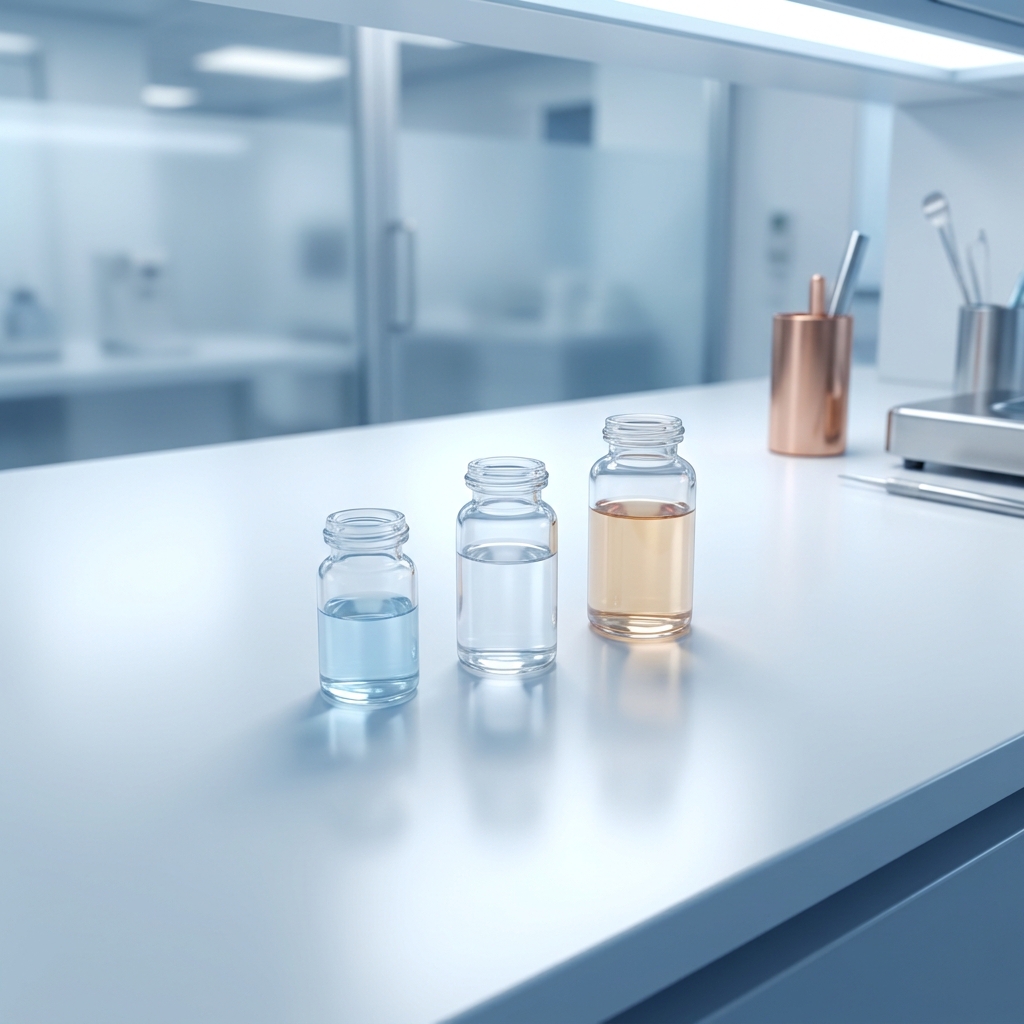
Bacteriostatic Water 10 mL: Which Format Fits Your Protocol?
Introduction: The Size Question Nobody Answers
Search for bacteriostatic water 10 mL and the results are almost entirely product listings. What buyers rarely find is a straight answer to the question that actually matters: is 10 mL the right size for their specific workflow? Most product pages assume the reader already knows.
This article closes that gap with a practical, decision-oriented framework. It walks through 3 mL, 10 mL, and 30 mL formats so researchers can choose with confidence rather than by default.
Bacteriostatic water for injection is sterile, nonpyrogenic water containing 0.9% benzyl alcohol as a bacteriostatic preservative, supplied in a multiple-dose container per USP specification. It exists specifically to allow repeated withdrawals from a single vial.
Some readers are confirming that the 10 mL format fits an established protocol before buying. Others are comparing formats for the first time. This guide serves both. It covers format comparison, the 28-day preservative window, a concrete reconstitution calculation, the quality indicators worth verifying, and why a purpose-built 10 mL vial matters.
What Bacteriostatic Water Actually Is (And Why Format Matters)
The core functional advantage over sterile water is durability across repeated use. When proper aseptic technique is applied, bacteriostatic water supports repeated withdrawals without compromising solution integrity. Sterile water, which is preservative-free and single-use, can show bacterial growth within 24 to 72 hours of the first breach. Bacteriostatic water, by contrast, allows refrigerated storage of reconstituted solutions for roughly 30 days.
Benzyl alcohol accomplishes this by disrupting bacterial cell membranes, suppressing common contaminants including Staphylococcus aureus, Escherichia coli, and Pseudomonas aeruginosa throughout the labeled 28-day window.
The near-acidic pH of approximately 5.7 is not incidental. It sits close to the isoelectric point of many research peptides, which generally improves the shelf life of reconstituted solutions. There is also a scientific argument against using sterile water for multi-draw protocols: when bacteria in a reconstituted vial die, they release lipopolysaccharide (LPS), a potently pro-inflammatory endotoxin that can confound cell-based assays.
Key contraindications deserve to be stated plainly. Bacteriostatic water is not for use in neonates or premature infants (benzyl alcohol is associated with gasping syndrome), not for undiluted IV injection (hemolysis risk), not for epidural or spinal use, and not for fluid replacement.
Critically, format does not change chemistry. A 3 mL, 10 mL, and 30 mL vial all contain the same USP-standard formulation. What format changes is workflow efficiency, waste, and compliance with the preservative window.
The 28-Day Preservative Window: Why Volume Selection Is a Protocol Decision
Once a vial is punctured, the in-use window is 28 days, per USP <797> compounding guidance and standard prescribing information. After that point, the vial must be discarded.
This is not arbitrary. After 28 days, the antimicrobial effectiveness of 0.9% benzyl alcohol begins to decline while cumulative puncture risk increases. This rule is the governing constraint for format selection.
The implications for volume selection are direct. A researcher working at low to moderate volume has a finite window to consume a vial. A 30 mL format becomes wasteful if that volume cannot realistically be used within 28 days. The 10 mL format resolves this: it carries enough diluent to reconstitute several peptide vials at standard concentrations while remaining small enough for a single researcher to fully consume well inside the window.
Storage requirements reinforce the same logic. Unopened vials are stable at controlled room temperature (15 to 30°C) for two to three years. Once opened, vials should be refrigerated at 2 to 8°C and used within 28 days. Any solution that is cloudy, contains particulates, is discolored, or has an unusual odor should be discarded immediately. The window applies regardless of format; the only question is whether the chosen volume can be consumed within it.
Volume-Selection Framework: 3 mL vs. 10 mL vs. 30 mL
The decision reduces to four variables: the number of compounds being reconstituted, frequency of use, number of researchers sharing the vial, and total volume consumed within 28 days.
When the 3 mL Format Makes Sense
Best fit: single-compound, single-use, or very low-frequency reconstitution where only a small amount of diluent is needed. A researcher reconstituting one small peptide vial (for example, 2 mg of lyophilized peptide requiring 1 to 2 mL of diluent) with no anticipated repeat use is well served by this format.
The limitation is margin. The 3 mL format leaves little room for dilution adjustments or additional vials. It is also less commonly stocked, with fewer quality-verified supplier options than the 10 mL and 30 mL formats.
When the 10 mL Format Is the Right Choice
Best fit: single-researcher use, single-compound or limited multi-compound protocols, and workflows that need to stay inside the 28-day window without excess waste.
A researcher reconstituting two to five peptide vials over a three to four week period is the ideal case. The 10 mL volume provides sufficient diluent while remaining consumable within the preservative window. The fill volume works equally well with standard 1 mL or 3 mL syringes and with cartridge-style reconstitution devices, making it highly adaptable across lab setups.
For researchers who do not need 30 mL, the 10 mL format avoids discarding significant unused volume at the 28-day mark. Using a fresh vial per compound or per research cycle also supports cleaner documentation and reduces cross-contamination risk. The 10 mL is the size most commonly specified in individual reconstitution protocols.
When the 30 mL Format Is the Right Choice
Best fit: high-volume users, multi-researcher labs, or workflows involving frequent reconstitution of multiple compounds where 10 mL would be consumed quickly. A lab with several researchers reconstituting different peptides daily benefits from fewer vials opened per cycle.
The caveat holds firm: the 30 mL format makes sense only if the volume can realistically be consumed within 28 days of first puncture. Otherwise, the researcher pays for waste. The 30 mL is TM BioWater’s flagship production format, appropriate for higher-volume applications, while the 10 mL is designed for smaller-volume applications and individual workflows.
The 10 mL Reconstitution Calculator: How Many Peptide Vials Can You Reconstitute?
A common question, rarely answered: how many peptide vials can a 10 mL vial reconstitute?
The general formula is straightforward:
Number of vials = (Available diluent volume in mL) ÷ (mL required per vial at target concentration)
Account for approximately 0.1 to 0.2 mL of syringe dead volume per draw when estimating available volume.
- 2 mg peptide at 1 mg/mL: requires 2 mL per vial. A 10 mL vial yields approximately 5 reconstituted vials.
- 5 mg peptide at 1 mg/mL: requires 5 mL per vial. A 10 mL vial yields approximately 2 reconstituted vials.
- 2 mg peptide at 2 mg/mL: requires 1 mL per vial. A 10 mL vial yields approximately 9 to 10 reconstituted vials.
This ties directly back to the 28-day window. For a single researcher using two to five peptide vials per cycle, the 10 mL format is naturally sized to be consumed on schedule. Bacteriostatic water is the preferred diluent for reconstituting lyophilized peptides such as BPC-157, GHK-Cu, CJC-1295, retatrutide, and tirzepatide in research settings.
A brief technique note: inject the diluent against the vial wall rather than directly onto the lyophilized cake, swirl gently rather than shaking, and avoid introducing air bubbles.
Quality Indicators: What to Verify Before Purchasing
There is real confusion between “research-grade” and “pharmaceutical-grade” bacteriostatic water. Research-use-only (RUO) products can still be manufactured to USP compendial standards, and USP-standard sterilization testing is the meaningful benchmark.
The Buyer’s Quality Checklist
- USP-grade labeling: “Bacteriostatic Water for Injection, USP” confirms compendial composition and pH.
- Benzyl alcohol concentration: confirmed 0.9% (9 mg/mL) per FDA/USP labeling.
- Sterility testing: USP <71> performed on every lot.
- Endotoxin/pyrogen testing: confirms the product is nonpyrogenic, critical where LPS would confound results.
- Conductivity and TOC testing: confirms water purity beyond sterility alone.
- Benzyl alcohol verification: HPLC or equivalent confirming the labeled concentration.
- Lot-specific COC or COA: batch-specific documentation, not a generic template.
- Lot traceability: clearly labeled lot numbers and expiration dates, traceable from raw materials to release.
A proper certificate should contain sterility results, endotoxin results, benzyl alcohol concentration, conductivity, TOC, and pH. With some established suppliers experiencing supply constraints during 2026, verifying reliable domestic inventory is itself a quality-adjacent consideration for research continuity.
TM BioWater 10 mL: Built for the Single-Researcher Protocol
TM BioWater’s 10 mL bacteriostatic water is designed for smaller-volume applications, making it a purpose-built solution for the single-researcher, lower-volume workflow rather than a scaled-down version of a larger format.
Every lot is tested in-house against compendial requirements including sterility (USP <71>), bacterial endotoxin, conductivity, TOC, and benzyl alcohol concentration, directly matching the checklist above. Each lot is fully traceable from raw materials to final release, with a Certificate of Conformance available for every production lot and lot numbers and expiration dates clearly labeled on every vial.
Manufacturing is domestic, based in New Orleans, Louisiana. In the context of 2026 supply constraints affecting some established suppliers, a domestic manufacturer offers supply chain resilience that import-dependent sellers cannot. The company was founded specifically to address a critical domestic supply shortage, making reliability a design principle rather than a marketing claim. Researchers evaluating the 10 mL format can review full product specifications and request documentation at tmbiowater.com.
The 10 mL is sized for individual researchers who want to stay within the preservative window without waste, and the 30 mL remains available for higher-volume applications. The choice between formats is a workflow decision, not a quality compromise.
Compatibility and Safety Considerations for Research Use
Not all compounds are compatible with bacteriostatic water. Live vaccines and some sensitive compounds should not be mixed with benzyl alcohol-containing solutions; always verify the compound’s documentation before reconstituting.
The neonatal contraindication is absolute: bacteriostatic water is contraindicated in neonates and premature infants due to benzyl alcohol’s association with gasping syndrome and neurological complications. Preservative-free sterile water must be used instead.
Bacteriostatic water should not be used for undiluted intravenous injection because of hemolysis risk; it is labeled for IV, IM, and SC use only when additives produce an approximately isotonic admixture. It is not suitable for epidural or spinal procedures and is not a fluid replacement solution.
Storage discipline is essential: refrigerate at 2 to 8°C after first puncture, discard after 28 days, and discard immediately if the solution appears cloudy, contains particulates, is discolored, or has an unusual odor. These considerations are largely absent from competitor product pages; their inclusion here reflects the standard that professional research buyers deserve.
Conclusion: Match the Format to the Protocol
The right bacteriostatic water format is determined by one question: how much volume can a researcher realistically consume within 28 days of first puncture? The answer should drive the decision, not habit or default.
For single-researcher use, single-compound reconstitution, or limited multi-compound protocols, the 10 mL format fits naturally within the preservative window, minimizes waste, and supports cleaner documentation. Regardless of format, buyers should verify USP-standard testing, lot-specific COC documentation, lot traceability, and confirmed benzyl alcohol concentration before purchasing.
With 2026 supply constraints affecting some established suppliers, sourcing from a purpose-built domestic manufacturer with documented lot control and reliable inventory is a genuine research continuity consideration. Choosing the right format and the right supplier are both protocol decisions, and both deserve the same rigor applied to the research itself.
Ready to Source the 10 mL Format Built for Your Workflow?
For researchers who have confirmed the 10 mL format fits their protocol, the next step is verifying supply and documentation. TM BioWater’s sales team can provide availability, documentation requests, and order information, and is reachable at sales@tmbiowater.com, Monday through Friday, 9:00 AM to 6:00 PM Central.
The team is also available to answer research-specific questions about format selection, reconstitution applications, and documentation requirements, positioning TM BioWater as a responsive technical partner rather than simply a product vendor. For buyers who have completed their due diligence, it is a straightforward way to confirm supply availability and documentation before committing.