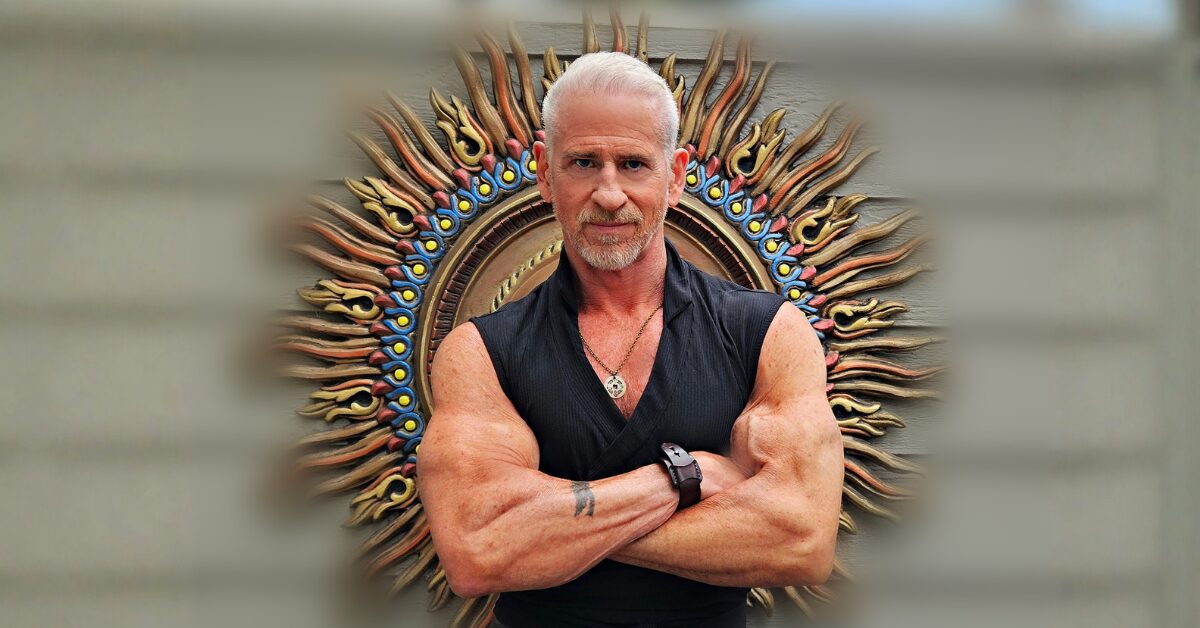
Former Mr. America, Tom Terwilliger, on Performance, Longevity, and the Signals That Shape a Life
In speaking with Tom Terwilliger, one thing becomes immediately clear: his life has been defined by reinvention. From leaving behind the outlaw biker lifestyle to becoming Mr. America, and later evolving into a transformational strategist focused on longevity, performance, and what he calls “Body Rapport,” Terwilliger’s journey has been shaped by discipline, resilience, and self-awareness.
Throughout our conversation, he spoke candidly about identity, aging, recovery, strength, purpose, and the signals the body gives long before breakdown occurs. His philosophy centers on the idea that transformation is never physical first—it is identity before physiology—and that true mastery comes not from force but from learning to listen more deeply to the body, the mind, and ultimately life itself.
You’ve gone from outlaw biker to Mr. America to transformational strategist. What did that journey teach you about reinvention at any age?
Reinvention begins long before external change appears. It begins with identity.
For me, leaving the outlaw biker lifestyle after five years was the first great turning point in my life. It taught me that transformation starts with one courageous decision, often made before you feel ready—in fact, we very rarely feel ready. I sure didn’t. Like the classic hero’s journey, the “hero” is always reluctant and never feels worthy, capable, or “good enough” for the task ahead.
For me, it wasn’t so much that I knew I was destined for something more. It was more an inability to tolerate what I was becoming. I rode my first Harley-Davidson chopper, full throttle, into the world of one percenters, eyes wide shut. “One percenter” represents an outlaw motorcycle club that operates outside the rules of the American Motorcyclist Association (AMA) and mainstream society.
I was a dyslexic kid who couldn’t read, with low self-worth, constantly fighting, and in trouble with the law. I was drifting hard in the wrong direction and searching for camaraderie, brotherhood, and, more than anything else, a place where I could fit in. I found that in the hardcore biker community.
But if you stay in that world for too long, you become it. You not only start to overlook the dark side but begin to fully engage in it. I knew deep down inside that wasn’t me.
Once I found my way back to bodybuilding, it became more than just physical training; it became a vehicle for rebuilding self-respect, discipline, and belief in myself. Every workout was, in a sense, a vote for a different future, a better future.
Bodybuilding didn’t just change my physique…It gave me evidence that I could become someone else. The discipline, the focus, the outrageous goal of becoming “Mr. America” gave me a new identity.
That’s something people tend to miss—transformation is never physical first. It’s identity before physiology. I didn’t build the muscles first…the pecks, the biceps, the quads take a lot of time to develop. It’s the process that builds self-respect and personal power. Mr. America was just a byproduct, although a monumental achievement.
That first transformational journey taught me something I now share with my clients: “Your past may explain you, but it does not have permission to define you.” At any age, reinvention remains possible when you are willing to act in alignment with who you know you can become. Or in my case—when who you have become is no longer tolerable.
After decades in fitness and human performance, what do you think most people get wrong about aging?
Many people mistake the body’s signals of imbalance for inevitable aging. And often they get angry that their body has betrayed them.
Fatigue, slower recovery, loss of vitality, brain fog—these are often dismissed as natural age-associated decline when they may actually be feedback signals shouting for attention.
I believe much of what we call aging is not simply chronological aging but the result of accumulated disconnection—from movement, proper recovery, a sense of purpose, and the body’s intuitive intelligence. All of which falls under the blanket of what I call “Body Rapport”. Having rapport with your body is to know, like, and trust it.
After a certain age, most people look in the mirror, take a flight of stairs, run out of energy while making love, and stop liking their body or no longer trust it. What we don’t realize is that we don’t lose “rapport” with our body overnight or even at one specific age. It tends to happen gradually—often beginning somewhere between the late 30s and mid-40s—depending on lifestyle, stress load, trauma history, identity, and cultural conditioning.
I love the quote by George Bernard Shaw: “We don’t stop playing because we grow old; we grow old because we stop playing.”
Aging, in my view, is not something to battle against; it’s something to engage in wisely.
You often say “the body whispers before it shouts.” Is that an aspect of Body Rapport? And why do high achievers often miss the message?
Body Rapport is the ability to develop a relationship with your body rather than treating it like a machine or servant you can override. As a young athlete in the world of “no pain, no gain,” I learned to ignore and override the messages my body was sending. That’s the exact opposite of Body Rapport. Early on, when recovery happened faster, my body was more resilient and forgiving. That grind mentality served the intended purpose without far-reaching ramifications.
High achievers fall into a similar category as high-level athletes. They are often rewarded for pushing through fatigue, tension, stress, and overtraining—until the “push through” and the “I’ll rest when I’m dead” attitude become their identity.
That identity often carries over into their later years when that same fatigue, tension, and stress, if ignored, can take a serious toll. The body provides signals long before the actual symptoms show up.
Body Rapport is learning to listen to and respect those signals early.
I teach that the body communicates in three stages:
Whisper
Shout
Slap
First, it whispers. This might be fatigue. “Hey buddy, you haven’t been sleeping well…let’s work on fixing that.”
Ignore that whisper too long, and it starts shouting. Exhaustion!
Override that shout, keep pushing, and the next communication is more like a slap in the face. Breakdown, injury, heart attack.
Learning to listen early is the key, but it is never too late to create a much higher level of rapport with your body. Like a great relationship with your lover or partner, rapport with your body will pay big dividends.
That principle has become one of the foundational components of my work because I’ve seen too many successful people win outwardly while becoming disconnected inwardly.
Mastery begins when we stop overriding feedback and start partnering with it.
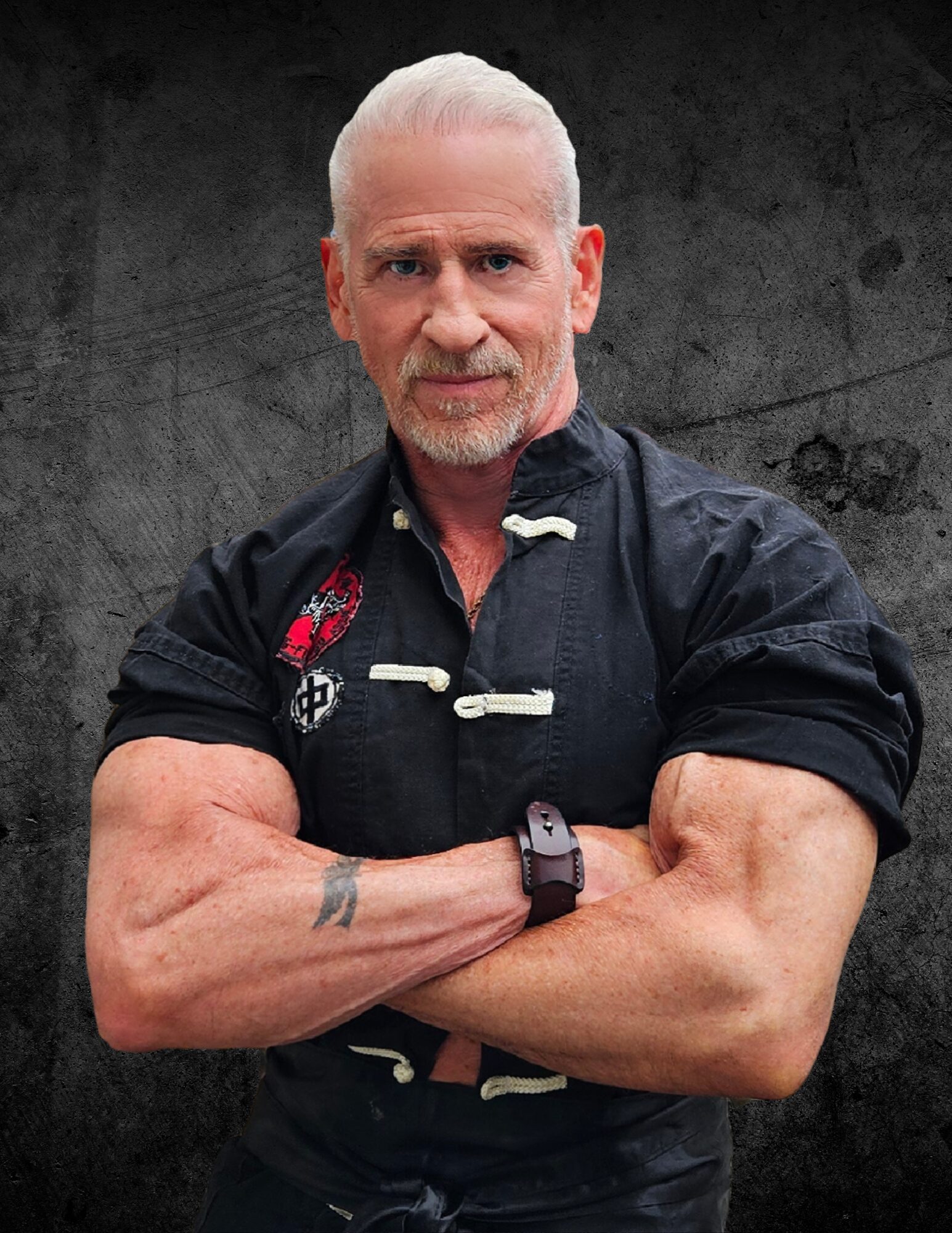
What is Force vs Mastery™, and how can it help people stop fighting life and start working with their energy and health?
Back in my biker days, I would spend half my time in my garage rebuilding Harley-Davidson engines as a hobby. Heads, pistons, valves, and crankcases. I loved understanding how everything worked together. I remember the first time I reattached the cylinder heads to the barrels on the engine of a very valuable Harley.
There are four bolts. Each one must be tightened in sequence and to a very precise torque specification. So, I made sure I understood the instructions in the manual precisely: 42-45 ft-lbs of torque for each bolt. But something happened. They just didn’t feel tight enough. And in my mind—tighter meant safer. Tighter meant stronger. So, I kept tightening.
Each bolt in sequence—back and forth–right-left—far-near.
More pressure. More force. It felt right, it felt good, 50 ft-lbs, 60, 70, 100. Until one bolt pulled loose. By applying too much force, I had stripped the casing and destroyed the motor.
Not because I didn’t know the instructions.
Because I did not trust precision.
I trusted force; I was familiar with force.
Force is effort rooted in strain, grind, and a win-at-all-costs mentality. Force ignores the signals.
Mastery is effort guided by awareness, precision, and a listen-to-the-signal mentality.
Years later, when I truly understood the distinction, it changed my life.
Often the greatest breakthrough isn’t through more effort, but rather more precision.
I believe that principle applies equally to health, leadership, relationships, and performance…especially as we mature.
What do elite performers understand about longevity that ordinary people often overlook?
The best performers understand recovery is not the opposite of performance—it is part of performance. As we get older, it becomes an even bigger part of the performance equation.
There’s a rhythm to it all; as we mature and gain experience, we come to understand and respect it. When we’re younger, less experienced, and have all the natural energy in the world along with high ambitions and massive egos, we tend to ignore these rhythms in lieu of force.
When training for a major competition like the Mr. Olympia, the athletes, myself included, did everything in our power to maximize the intensity, duration, and frequency of the training program, often to the detriment of our health. We knew recovery was important, but would often ignore and override our bodies’ cries—the whispers and the shouts—and go ahead and train as hard as possible anyway.
Early in my career, I was sick, worn out, and exhausted every time I stepped on stage and was never able to perform at my best. Until my mentor stepped in and said: “Hey moron, you’re overtraining; you need to take some time off and recover once in a while!”
Had I not learned to understand and respect the rhythms, I never would have risen to the top of the sport.
I believe longevity is built on those same rhythms.
The highest performers I’ve known and coached don’t simply train hard, work hard, and play hard; they know when it’s time to recover. They don’t resist, fight it, or deny it; they respect it. Most importantly, they act on it.
They regulate well. They understand that sustainable power is very different from endless output. That lesson becomes even more important with age. Most mature individuals who have not come to understand these rhythms fall under three categories when it comes to force versus mastery.
- They completely ignore the whispers and the shouts and think they can go, go, go, go, go even when they’re running on fumes.
- They give too much credence to the whispers and the shouts, exaggerate them, and surrender to their internal aging blueprint: “I guess I’m just getting old.”
- They recognize the whispers and shouts, but are determined not to let age define, control, or limit them. As a result, instead of adjusting and tweaking, they continue to apply the same force to their exercise, work life, and relationships as they did when they were younger—until they get slapped in the face.
You’ve said strength is one of the most overlooked anti-aging strategies. What do you mean by that?
I often say muscle is not cosmetic tissue—it is longevity infrastructure. Despite what we see being flaunted all over Instagram and Meta, strength supports more than just confidence. It bolsters metabolism, resilience, function, and independence as we age. But I mean more than just muscular strength alone.
There’s physical strength, of course, and that in itself is vital for maintaining our physical structure and functional capability as we mature. But there’s also mental strength, emotional strength, and even moral strength.
All of them influence how well we age. If you’re physically strong but lack moral strength and courage, you’re likely to break when the inevitable age-related slap in the face happens.
I’m a deep believer in the afterlife. As a result, I don’t fear death in the same way others might. A scary part of getting older is having to face our own mortality. Without “spiritual strength,” that reality can bring even the strongest man or woman to their knees.
I consider strength training one of the most overlooked anti-aging strategies because of all the cosmetics, pills, supplements, and hacks at our disposal that cause only an estimated 20-30% of adults over age 50 to engage in regular strength training.
If you narrow it further to people who train regularly and rigorously—meaning progressive resistance training with real intensity, consistency, and structure—the number is likely much lower, probably in the single digits to low teens.
Yet, regular and rigorous training can contribute to the development of strength in all those areas, not just muscular. Strength is not merely an anti-aging strategy. It may be one of the deepest expressions of vitality.
What have martial arts taught you about resilience and aging that traditional fitness often misses?
I’ve had the honor of studying with the likes of Grand Master Alen Lee and Guru Dan Inosanto, both of whom are now well into their 80s. They are both still teaching, and what they are capable of has profoundly altered my perception of aging.
I often hear from the younger guys in the gym, “I want to look as good as you when I’m your age.” Well, my goal is to “move” as well as Lee and Inosanto when I’m their age and beyond.
Over 40 years of Martial arts have taught me that relaxed power often outperforms forced effort. It is the essence of Yin and Yang.
That lesson extends far beyond combat. In nature, rigid things break. Oak versus bamboo, for example. Rigid buildings and bridges collapse under nature’s wrath; flexible structures survive. Adaptation survives.
Martial arts, as much as anything else, is about flexibility. When I first started studying as a young kid, it was Kung Fu, and, man, that was the end-all, be-all for me. Spinning back kicks looked so impressive and, in most cases, were. But later, when I began studying a variety of different arts like Silat, Kali, Muay Thai, combined with Kung Fu, it gave me tremendous flexibility.
I believe flexibility—mentally, physically, and emotionally—creates a foundation for resilience, the ability to weather the storm and bounce back, often stronger and more experienced.
To me, that is one of the true secrets of longevity.
Many people age and ultimately die, not only in, but also as a result of chronic resistance, physically, psychologically, and being emotionally rigged in their thinking, attitudes, and values. Without even realizing it, they acquire a fixed, predetermined conclusion about when and how they will age.
Martial arts taught me fluidity, responsiveness, and intelligent use of energy.
Was there a moment that fundamentally changed how you saw performance and life?
Yes—when I first moved from NY to beautiful Colorado back in the early 90s, I was at the height of my bodybuilding career and had just competed in the Mr. Olympia. I was determined to experience what Colorado had to offer outside the bodybuilding world. In Colorado, they actually do things like skiing, mountain biking, hiking 14ers, and so on— stuff I never did living in NY.
A friend of mine from Switzerland and his girlfriend, who happens to be the women’s Swiss mountain bike champion, were staying with my wife, Dawn, and me for a few days. We decided to drive up to the mountains, rent a few mountain bikes, and, as an inexperienced mountain biker, hit one of the toughest single-track trails in Colorado.
The trek up to the summit proved to be a lesson in humility for me. The women’s Swiss mountain bike champion “cleaned my clock”. From an ego perspective, it was humbling. I was determined to get revenge on the way back down, but I soon found out that downhill single tracking on an unfamiliar bike and a badly bruised ego was a sure-fire recipe for disaster. However, I had to redeem myself.
The ego-driven crash that followed left me with a compound-fractured wrist, broken ribs, and a dislocated clavicle. It ended my bodybuilding career, but awakened my understanding of force versus mastery.
I realized afterward I had been riding with force and driven by ego—not mastery. I was trying not to lose rather than fully experiencing the ride. And if I’m honest, I was living my life that way too.
That may have accidentally ended my bodybuilding career, but it became a major pivot point in my evolution from bodybuilder to longevity performance strategist.
That distinction has shaped much of my work ever since.
If someone in midlife feels they’ve lost their edge—energy, confidence, vitality—where should they begin?
Begin by rebuilding trust with yourself and your body through small wins. Don’t try to reclaim who you were—it’s probably gone. Instead, get busy building who you are becoming.
First and foremost, make sure you are medically sound and healthy. If not, that’s where you need to start. Start there; don’t quit there.
Then have a full hormone blood panel done by a provider that knows and understands exactly what they are looking at. Even if your hormone levels, particularly testosterone, are in the “normal” range, consider working with a specialist for optimization. Normal or within range for a 50- or 60-year-old is BS.
I’m not going to say that optimizing your testosterone level is the magic bullet it is often touted as being. What I will say definitively is that suboptimality is frequently the culprit behind the fatigue, muscle loss, loss of sex drive, weight gain, and a painful lack of drive and motivation.
Next, move your body every day, stretch, rotate, roll, bend, and walk. Strength train 2-3 times a week with intention and intensity—not force. Respect recovery and provide it with naps, adequate sleep, hydration, and proper clean nutrition.
Reconnect to a renewed or recaptured sense of purpose. I can’t overstate this enough. Purpose gives life meaning, provides energy, and offers massive intrinsic reward. I’m a big believer that when you serve others, you nurture your soul.
Start listening to the signals—the whispers and the shouts—instead of waiting for the slap that you may recover.
In the grand scheme of manifestation, action is the bridge between where you are now and where you want to be. Age should not be the obstacle. Age is an opportunity.
After everything you’ve achieved, what does living “ageless and timeless” mean to you personally now?
That’s a great question. I love it because there is a powerful presupposition built into it.
“I am somehow ageless and timeless.”
But there is an undeniable truth. None of us are ageless. None of us will live forever, and we all age, some faster than others. There is a sad mythological lesson about the goddess Eos who asked Zeus to make her lover, Tithonus, immortal but forgot to ask for eternal youth to go along with his immortality. Tithonus lived forever but continued to age, eventually becoming a shriveled, babbling immortal.
I don’t think that’s what any of us want.
I believe we do want to live as long as humanly possible, but, more importantly, we want to be healthy, active, and vibrant—and even look good for as many of those years as we can.
All my life I’ve been a fighter in one form or another. The fight gave me a sense of purpose and an illusion of control. What has taken me decades to discover, however, is that the fight, regardless of its context, will take years off your life. It keeps you stuck in the sympathetic nervous system.
Ferociously resisting the changes to my body—the wrinkles in my skin, the thinning of my hair, the aches and pains, and even being called “sir”—the real enemy is my need to throw a few more good punches at a time to keep fighting.
At 67, letting go of that need has been the most difficult challenge I face every morning when I look in the mirror. Now I smile and say, “You’re still here, you’re still powerful, now what are you going to do with that power today to serve others?”
To me, being ageless isn’t about resisting time. It’s about truly expressing the embodied principles I’ve learned over the decades: courage, discipline, faith, mastery, love, and fun.
I am exceedingly fortunate to have a partnership in life with my wife, Dawn, who keeps the fighter in check and helps me find alignment with our collective purpose.
At this stage of life, I think less about proving, and through my coaching, more about serving. If I’ve learned anything, it’s this:
The great turning points in life often come not from pushing harder, not from force, but when we listen deeper and exercise mastery. I’m listening to my heart and my soul more now than I ever could when all the noise and distraction seemed so freaking important.
That, to me, feels both ageless and timeless.
About Tom Terwilliger
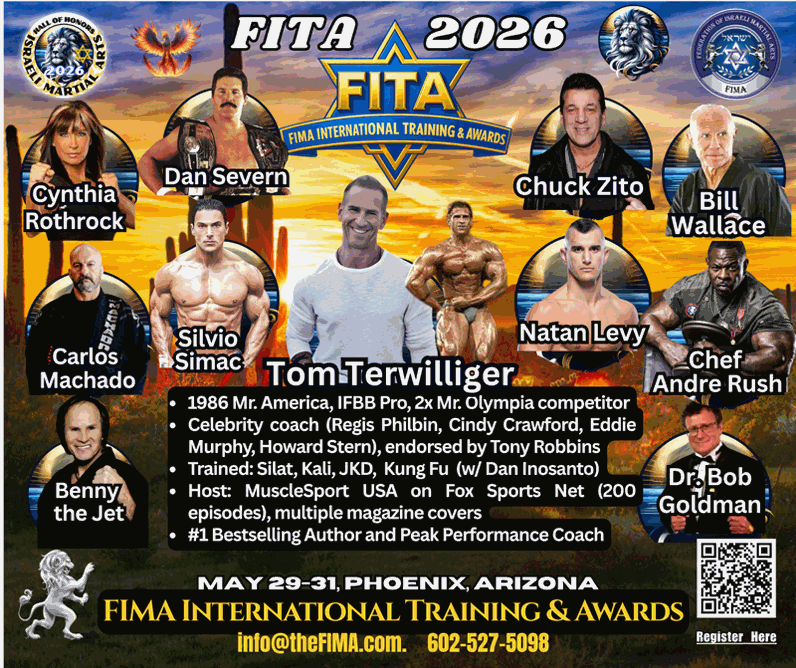
Tom Terwilliger is a Performance & Longevity Strategist, former Mr. America, and creator of the Force → Mastery™ Method, a framework that helps high-achieving individuals sustain peak performance while protecting long-term health, resilience, and vitality.
For more than four decades, Tom has studied the intersection of human performance, metabolic health, nervous system regulation, and mindset. His work focuses on helping driven professionals, athletes, and leaders transition from force-based living—characterized by stress, overdrive, and burnout—to mastery-based performance that supports sustainable energy, strength, and longevity.
Tom is a #1 bestselling author, recipient of the Health 2.0 Outstanding Leadership Award, U.S. Martial Arts Hall of Fame inductee, member of the Federation of Israeli Martial Arts, and sits on the board of advisers for Longevity Masters. His background includes decades of study in martial disciplines including Jeet Kune Do, Kali, Silat, and Kung Fu, as well as elite-level strength training and performance development.
He is also the co-founder of High Achievers University, an educational platform focused on leadership, performance psychology, and personal transformation for entrepreneurs and professionals.
Tom has been featured on the covers of Muscle & Fitness, Flex, Muscular Development, and numerous international publications. He is also the former host of the Fox Sports Net television show “Muscle Sport USA.”
Today, Tom works with leaders, entrepreneurs, and high performers worldwide, helping them build bodies and nervous systems capable of sustaining success across the entire performance curve of life.

About Michele Hughes
Michele Hughes is the visionary founder of Ageless and Timeless and the dynamic host of the Ageless and Timeless Podcast®. As a monthly contributor to TopDoctor Magazine, she offers powerful insights on wellness, longevity, and living fully at every stage of life. With a deep passion for health and vitality, and serving as a role model for timeless elegance, Michele empowers audiences to embrace their highest potential and live with purpose and grace. Michele’s podcast, Ageless and Timeless, was one of 20 Inaugural Podcasts selected for the Muscle and Fitness Plus platform that began in 2023. Michele is the VP of Business Development and Advisory Board Member for Longevity Masters Global, an exciting start-up venture founded by Dr Robert Goldman and Rob Fletcher, two of the most influential leaders in the longevity industry.
For more information, please reach out to express interest in being a potential guest on the Ageless and Timeless Podcast® or to be featured in the TopDoctor Magazine Ageless and Timeless column with Michele Hughes. For podcast collaborations or to have Michele Hughes on your show, please contact her at:
Email: themichelehughescompany@gmail.com
Website: www.agelessandtimeless.com
Instagram: @agelessandimeless
LinkedIn: https://www.linkedin.com/in/michele-hughes-83a3b935/
Facebook: https://www.facebook.com/michele.hughes.186
Ageless and Timeless podcast, on YouTube, iTunes, Spotify, and wherever podcasts are available.