Sleep Health Tips from Doctors: The 2026 Physician-Backed Guide to Restoring Your Rest
Introduction: Why Your Doctor Is Talking About Sleep More Than Ever
Six out of every ten adults do not get enough sleep. According to the National Sleep Foundation’s 2025 Sleep in America® Poll, nearly four in ten adults struggle to fall asleep three or more nights per week, while almost half have difficulty staying asleep with the same frequency. These statistics reveal that sleep deprivation has become a widespread clinical crisis—not a personal failing or mere inconvenience.
Physicians across sleep medicine, cardiology, neurology, and psychiatry now routinely raise sleep as a primary health concern in the exam room. The stakes are significant: poor sleep is linked to heart disease, obesity, diabetes, depression, and a measurably higher mortality risk. This is a life-or-death conversation, not a lifestyle preference.
The period from 2025 to 2026 has been a landmark era for sleep medicine. The American Academy of Sleep Medicine celebrated record attendance at its annual meeting, the FDA cleared multiple new sleep-related devices, clinical guidelines received substantial updates, and December 2025 saw the highest number of sleep medicine fellowship matches ever recorded—208 physicians matching for the 2026 appointment year.
This guide delivers sleep health tips from doctors that go beyond generic checklists. Grounded in the latest data from the AASM, National Sleep Foundation, and ResMed, the following physician-backed recommendations reflect what doctors actually tell patients—plus insights into emerging trends like wearable sleep tracking that are reshaping how clinicians and patients approach rest.
The True Cost of Poor Sleep: What the Data Reveals in 2026
Understanding why sleep matters provides the foundation for meaningful change. The economic and health consequences of insufficient sleep are staggering.
Insufficient sleep costs the U.S. economy up to $411 billion per year—approximately 2.28% of GDP—and results in roughly 1.2 million lost working days annually, according to RAND Corporation research. A peer-reviewed study published in PLOS ONE in January 2026 confirmed these findings, noting that sleep deprivation imposes substantial economic burdens with higher prevalence among racial minorities and low-income populations.
The mortality data is equally compelling. People sleeping fewer than six hours per night face a 10% higher mortality risk compared to those getting seven to nine hours. Even those averaging six to seven hours carry a 4% increased risk.
Beyond mortality, sleep quality directly impacts well-being. The National Sleep Foundation found that 72% of people with good sleep health are flourishing, versus only 46% of those with poor sleep health—a 26-point gap that physicians cite as clinically significant.
The CDC has designated insufficient sleep as a public health problem, and approximately 70 million Americans struggle with sleep disorders. Health disparities compound the issue: insufficient sleep disproportionately affects adults ages 18 to 64, racial minorities, lower-income adults, and those with disabilities.
How Much Sleep Do You Actually Need? What Physicians Recommend
The physician consensus is clear: seven to nine hours per night for adults is the universally recommended range across sleep medicine, cardiology, neurology, and internal medicine.
Analysis from NapLab’s 2026 State of Sleep report, which examined data from over 50,000 U.S. adults, found that the bottom ten states for sleep all average under seven hours per night—the threshold sleep experts consider the bare minimum for adult health.
Sleeping under seven hours is associated with increased risk of heart disease, obesity, diabetes, depression, and weakened immune function. A common misconception holds that sleep needs decrease with age, but physicians note that older adults still require seven to eight hours, even as sleep architecture naturally changes.
Sleep is now widely described by physicians as the “third pillar of health” alongside nutrition and exercise. World Sleep Day 2026, held on March 13, embraced the theme “Sleep Well, Live Better”—a physician-endorsed focus on individual daily sleep experience that reinforces the principle that quality matters alongside quantity.
Sleep Health Tips from Doctors: What Physicians Tell Patients in the Exam Room
The following recommendations represent what physicians across multiple specialties consistently share with patients seeking to improve their sleep.
Protect Your Sleep Schedule: The Circadian Rhythm Imperative
Sleep medicine physicians consistently cite a consistent sleep and wake schedule—even on weekends—as the single most impactful behavioral intervention for sleep quality.
The body’s internal clock, or circadian rhythm, regulates sleep-wake cycles, hormone release, and metabolism. Irregular schedules disrupt this system at a cellular level. The American Heart Association’s October 2025 guideline on circadian health elevated sleep timing as a cardiovascular risk factor, underscoring its importance beyond rest alone.
Harvard-affiliated sleep physicians recommend establishing a consistent wake-up time daily as a foundational step—even before addressing other sleep hygiene factors. The practical approach: anchor the wake time first, then work backward to set an appropriate bedtime that allows for seven to nine hours of sleep.
Optimize Your Sleep Environment: The Bedroom as a Clinical Tool
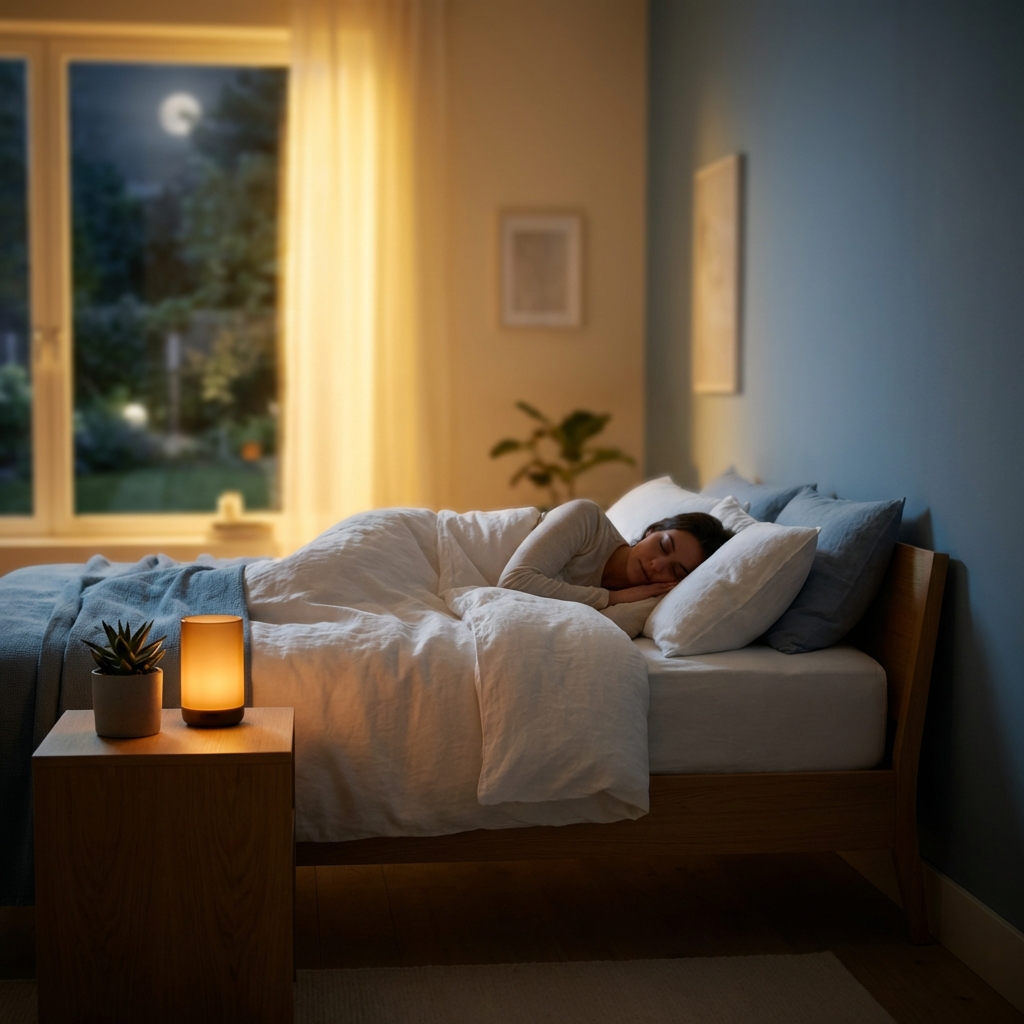
Physicians across sleep medicine and neurology recommend a cool, dark, and quiet bedroom environment. Each element has a physiological basis.
Temperature: Core body temperature must drop to initiate sleep. Sleep medicine specialists recommend bedroom temperatures between 65 and 68°F (18 to 20°C) for most adults.
Light: Neurologists explain that even low-level light suppresses melatonin production. Blackout curtains or sleep masks are clinical recommendations, not luxury preferences.
Noise: Cardiologists note that nighttime noise exposure—even below the level of waking—elevates cortisol and disrupts restorative sleep stages. White noise machines or earplugs are physician-endorsed tools.
Screen light: Harvard-affiliated physicians recommend avoiding backlit screens at least one hour before bed. Blue light wavelengths specifically suppress melatonin and delay sleep onset.
Sleep medicine specialists teach the “bedroom is for sleep” principle: associating the bed with wakefulness—working, scrolling, or watching television—undermines the brain’s conditioned sleep response. Some patients also find that weighted blanket benefits support relaxation and sleep onset as part of their bedroom environment optimization.
Caffeine, Alcohol, and Sleep: What Doctors Want Patients to Know
Caffeine: Sleep medicine physicians recommend cutting off caffeine intake by early afternoon, typically 2 to 3 PM. Caffeine’s half-life of five to seven hours means an afternoon coffee remains active at midnight.
Alcohol: Psychiatrists and sleep specialists consistently address the misconception that alcohol aids sleep. While alcohol may accelerate sleep onset, it fragments sleep architecture, suppresses REM sleep, and worsens sleep apnea symptoms.
Over 55% of adults struggle with sleep latency—taking more than 20 minutes to fall asleep—according to World Sleep Day 2026 data. Both caffeine and alcohol are frequently implicated contributors. Physicians also flag late-night heavy meals as disruptors of sleep quality, particularly for patients with GERD or metabolic conditions.
Exercise, Stress, and the Sleep Connection
Cardiologists and internists routinely recommend regular physical activity as a sleep-promoting intervention. Exercise improves sleep quality, reduces sleep latency, and increases slow-wave deep sleep.
Timing matters: sleep medicine physicians note that vigorous exercise within one to two hours of bedtime can delay sleep onset in some individuals by elevating core temperature and adrenaline levels. Understanding how to balance working out with recovery and sleep is a consideration physicians increasingly raise with active patients.
Psychiatrists emphasize the bidirectional relationship between stress and poor sleep: poor sleep worsens anxiety, and anxiety worsens sleep—creating a cycle that requires targeted intervention. Physician-recommended relaxation techniques include progressive muscle relaxation, diaphragmatic breathing, and mindfulness meditation.
Poor sleep disrupts hormones regulating stress (cortisol), hunger (leptin and ghrelin), and metabolism—a clinical fact physicians use to motivate patients who are resistant to sleep behavior changes.
Recognizing Sleep Disorders: When Lifestyle Changes Are Not Enough
Approximately 70 million Americans struggle with sleep disorders, and 30 to 40% of U.S. adults report insomnia symptoms at some point each year. Persistent sleep problems warrant physician consultation—not continued sleep hygiene optimization alone.
Insomnia: The Most Common Sleep Disorder and What Doctors Prescribe First
Chronic insomnia is clinically defined as difficulty falling or staying asleep at least three nights per week for three or more months, with daytime impairment.
The physician consensus on first-line treatment is clear: Cognitive Behavioral Therapy for Insomnia (CBT-I) is the gold-standard treatment recommended by the AASM, American College of Physicians, and Mayo Clinic—over sleep medications.
CBT-I receives the only “Strong” recommendation from the AASM for chronic insomnia. Benefits include durable long-term gains without the adverse effects of pharmacologic therapy. The ACP advises that if CBT-I is unsuccessful, short-term drug therapy—maximum four to five weeks—may be considered through shared decision-making.
Digital CBT-I applications are expanding access, with effectiveness comparable to face-to-face approaches. Somryst is currently the only FDA-cleared digital CBT-I application, representing a meaningful access solution for patients who cannot attend in-person therapy.
Obstructive Sleep Apnea: The Underdiagnosed Epidemic
Obstructive sleep apnea affects approximately one billion adults worldwide, with an estimated 80 to 90% of cases going undiagnosed.
Key warning signs physicians screen for include loud snoring, witnessed breathing pauses, gasping or choking during sleep, excessive daytime sleepiness, morning headaches, and difficulty concentrating. Cardiologists are increasingly proactive about OSA screening given its strong association with hypertension, atrial fibrillation, and cardiovascular mortality.
The 2025 AASM clinical practice guideline on management of OSA in hospitalized adults recommends sleep medicine consultation and discharge management plans for at-risk patients. The FDA cleared Nyxoah’s Genio hypoglossal nerve stimulation system in 2025 as a new treatment option for patients who cannot tolerate CPAP.
Emerging pharmacological approaches are also gaining attention. Tirzepatide, a GLP-1/GIP receptor agonist, showed consistent benefits for OSA patients in Phase 3 trials, improving apnea-hypopnea index, hypoxic burden, blood pressure, and body weight.
Restless Legs Syndrome and Other Sleep Disorders: 2025 Guideline Updates
Restless legs syndrome is a commonly underrecognized sleep disruptor characterized by an uncomfortable urge to move the legs, typically worse at night.
A major 2025 AASM guideline update shifted treatment recommendations significantly: physicians are now advised against dopamine agonists due to augmentation risks. The updated guidelines favor iron therapies and alpha-2-delta ligands such as gabapentin as preferred treatments.
Central sleep apnea treatment also received updated 2025 AASM guidance supporting six treatment options, including CPAP, adaptive servo ventilation, and transvenous phrenic nerve stimulation—emphasizing individualized, patient-centered care.
Wearable Sleep Trackers in 2026: What the Data Shows
ResMed’s 2026 Global Sleep Survey of 30,000 respondents found that 39% of people check their sleep at least once a week via wearable device, and 93% of wearable users report making lifestyle changes based on device data.
Wearables now achieve greater than 90% accuracy for sleep-wake detection versus polysomnography, making them useful tools for identifying trends. However, physicians provide an important caveat: wearables show only moderate agreement—50 to 86% sensitivity—for specific sleep stages. They are useful for identifying patterns, not for clinical diagnosis.
The World Sleep Society’s 2025 recommendations note that wearable devices can screen for sleep-disordered breathing and identify circadian rhythm disorders but should not be used in isolation to diagnose sleep disorders.
Physicians also caution about “orthosomnia”—anxiety caused by obsessive monitoring of sleep data. The guidance: look for consistent patterns such as average sleep duration and timing rather than fixating on nightly scores. Bringing multi-week data summaries to physician appointments can facilitate productive clinical conversations. This intersection of future of healthcare technology and patient self-monitoring is an area physicians are actively navigating with their patients.
Special Populations: Physician Guidance for Those with Unique Sleep Challenges
Older Adults, Shift Workers, and Menopausal Women
Older adults (65+): Sleep architecture naturally changes with age, including less deep sleep and more frequent awakenings. However, the need for seven to eight hours remains. Physicians recommend ruling out sleep apnea and medication side effects as contributing factors.
Shift workers: Circadian misalignment is a documented health risk. Sleep medicine physicians recommend strategic light exposure, consistent anchor sleep times, and melatonin use under physician guidance.
Menopausal women: Hot flashes, hormonal fluctuations, and increased OSA risk converge to make menopause a significant sleep disruptor. Physicians recommend discussing hormone therapy options, CBT-I, and sleep apnea screening.
The “sleep divorce” trend—couples sleeping separately for better rest—has emerged as a physician-endorsed option when one partner’s sleep disrupts the other’s, particularly in households with a snoring or restless partner.
When to See a Doctor: Red Flags That Require Professional Evaluation
Certain symptoms warrant clinical evaluation rather than continued self-management:
- Chronic insomnia lasting more than three months
- Loud snoring with witnessed apneas
- Excessive daytime sleepiness despite adequate time in bed
- Uncomfortable leg sensations at night
- Acting out dreams during sleep
- Morning headaches
- Difficulty concentrating or mood changes attributed to poor sleep
The VA/DoD 2025 Clinical Practice Guideline emphasizes patient-centered, evidence-based care spanning internal medicine, sleep medicine, neurology, psychiatry, pulmonology, and psychology—meaning multiple physician types can serve as entry points for evaluation.
The record 208 sleep medicine fellowship matches for 2026 means access to board-certified sleep specialists is expanding, reducing a historical barrier to care.
Conclusion: Sleep Is Medicine
Sleep is not a lifestyle luxury—it is a clinical priority that physicians across every major specialty are actively addressing with patients in 2026.
The physician-backed pillars are clear: maintain a consistent sleep schedule, optimize the sleep environment, pursue evidence-based treatment for sleep disorders with CBT-I as first-line therapy, use wearable data appropriately, and seek timely physician consultation for persistent issues.
The stakes remain significant: the $411 billion annual economic cost, the mortality risk differential, and the finding that 72% of people with good sleep health are flourishing versus 46% of those with poor sleep health underscore the urgency of addressing this issue.
The positive momentum is equally notable. The years 2025 and 2026 have brought new FDA-cleared devices, updated clinical guidelines, expanded treatment options, and growing physician specialization in sleep medicine. Patients have more resources and better-informed physicians than ever before.
The science is clear, the physician guidance is available, and the path to better sleep begins with treating the issue as seriously as any other health condition. As World Sleep Day 2026 reminds us: Sleep Well, Live Better.
Take the Next Step Toward Better Sleep Health
Patients experiencing symptoms of a sleep disorder or struggling with sleep quality for more than a few weeks should consult with a physician—particularly a sleep medicine specialist, neurologist, cardiologist, or psychiatrist.
Top Doctor Magazine offers extensive health and wellness content, including profiles of physicians specializing in sleep medicine and related fields. Those who have experienced meaningful improvement in their sleep health through a physician’s care are encouraged to nominate that doctor through Top Doctor Magazine’s nomination platform.
For ongoing physician-backed health insights, subscribing to Top Doctor Magazine’s free biweekly newsletter provides a convenient way to stay informed about the latest developments in sleep science and medical care.