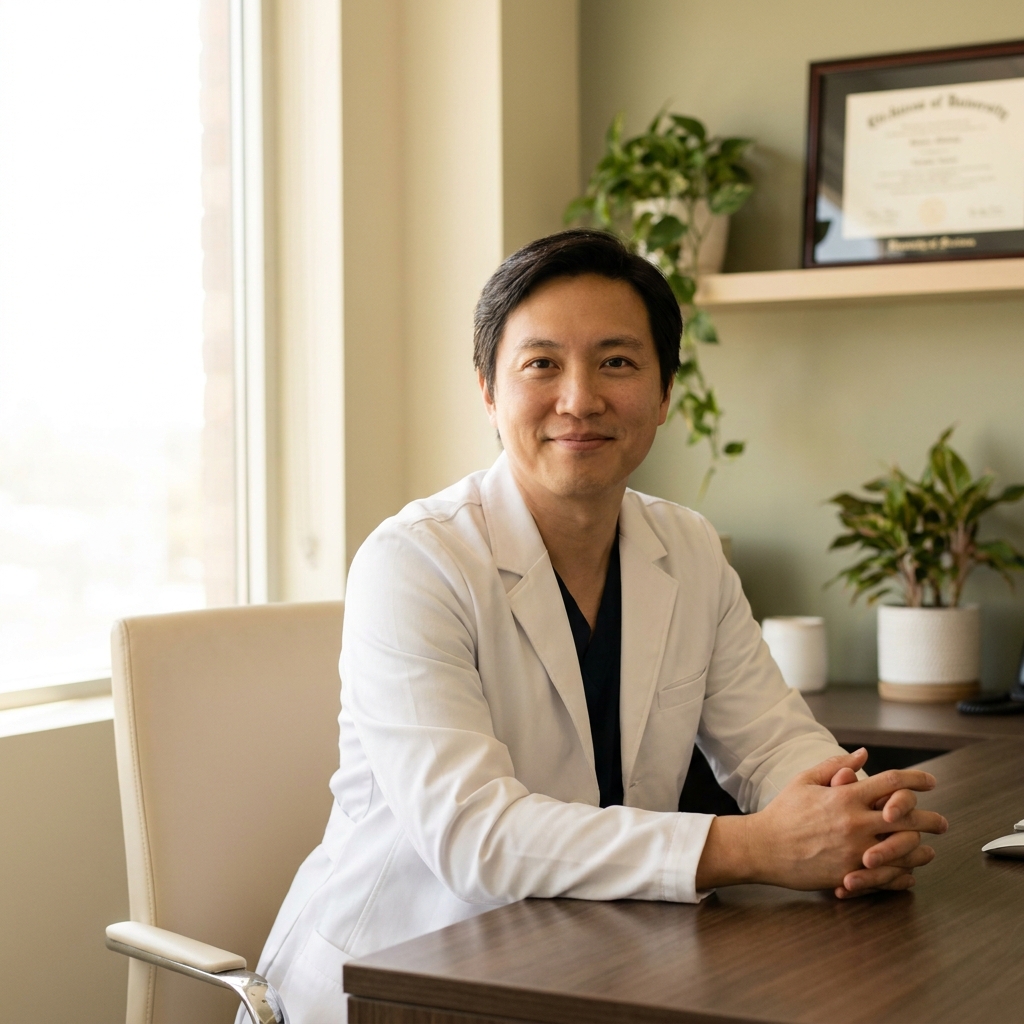
Integrative Medicine Physician Interview Series: Inside the Minds of Doctors Redefining Whole-Person Care in 2026
Introduction: What You Can’t Learn From a Star Rating
Roughly 84% of patients check online reviews before choosing a provider, yet platforms like Healthgrades and Zocdoc reveal almost nothing about a physician’s philosophy, clinical journey, or approach to root-cause care. A patient can learn a doctor’s average wait time, which insurance plans they accept, and how many stars they earned. What the patient cannot learn is why that physician practices the way they do, what convinced them to pivot toward whole-person care, or what they wish every patient understood before a first appointment.
TopDoctor Magazine’s integrative medicine physician interview series exists to fill that gap. It gives patients and health-conscious readers the narrative depth that star ratings and appointment-booking platforms simply cannot offer.
The timing could not be more relevant. The global integrative medicines market is valued at USD 17.47 billion in 2026 and is projected to exceed USD 91 billion by 2035, growing at a compound annual rate of 19.9%, according to Research Nester. This is not a fringe movement. It is a fundamental shift in how Americans understand health.
This article pulls back the curtain on what TopDoctor’s physician interview series consistently reveals: the recurring themes, turning points, and philosophies that define today’s leading integrative doctors. Whether the reader is a patient seeking a different kind of care, a healthcare professional exploring the field, or simply curious about whole-person medicine, this series offers insights found nowhere else.
Why an Interview Series? The Case for Narrative Medicine in 2026
There is a scientific reason TopDoctor built its coverage around conversation rather than credentials alone. Stories are 22 times more memorable than facts presented in isolation. A 2025 PatientPoint Patient Confidence Index found that 83% of patients trust their healthcare provider, and that trust is built on personal familiarity rather than institutional reputation alone.
This is not merely intuition. A peer-reviewed 2025 study from Boston University and Boston Medical Center confirmed that storytelling-based interventions between providers and patients improve patient-centered communication, self-efficacy, and community trust in healthcare.
The competitive landscape underscores the opportunity. Healthgrades and Zocdoc focus on wait times, insurance, and ratings. The Integrative Practitioner Podcast targets practitioners, not patients. Harvard’s Osher Center Grand Rounds are lecture-format and clinician-facing. No major platform currently produces a dedicated, recurring, patient-facing integrative medicine physician interview series that combines personal origin stories, clinical philosophy deep-dives, patient outcome narratives, and commentary on emerging trends.
There is also a discoverability dimension. In 2025, 73% of patients adopted new behaviors to research providers, including the use of AI tools, making narrative-rich, structured physician content increasingly important for modern provider discovery.
TopDoctor brings credibility to this format. With 197 or more issues published on a biweekly cadence, editorial standards rooted in journalistic integrity, and a VP of Research (Joseph Krieger) focused specifically on regenerative and personalized medicine, the publication is well positioned to give integrative physicians a serious, trustworthy platform.
Theme 1: The Turning Point — Why Integrative Physicians Left Conventional Practice
The most consistent and emotionally resonant theme across TopDoctor’s physician interviews is the turning point. Nearly every integrative doctor can name a specific moment when conventional medicine’s limitations became undeniable.
The pattern repeats across conversations. Physicians describe treating patients with chronic conditions such as fibromyalgia, autoimmune disorders, persistent fatigue, and treatment-resistant depression; patients who had seen multiple specialists without resolution. That frustration prompted a search for deeper frameworks.
This mirrors a broader, patient-driven trend. An NIH and NCCIH analysis published in JAMA found that the percentage of U.S. adults using at least one complementary health approach nearly doubled, rising from 19.2% in 2002 to 36.7% in 2022.
Importantly, this pivot is a credentialed choice, not a departure from rigor. Board-certified integrative medicine physicians are licensed MDs or DOs who have completed one- to two-year fellowships recognized by the American Board of Physician Specialties. Major institutions including Mount Sinai, Northwell Health, and the Mayo Clinic now embrace integrative care, validating what many interview subjects describe as a long-held clinical conviction.
For readers, understanding a physician’s turning point helps assess whether a doctor’s values align with their own care philosophy, something no rating platform can convey.
Theme 2: Root-Cause Frameworks — How Integrative Physicians Actually Think
The intellectual core of the interview series is the question of framework. What clinical models do integrative physicians use that differ from the symptom-suppression approach of conventional care?
Several frameworks recur across interviews:
- Functional medicine’s systems biology approach
- Lifestyle medicine’s behavioral root-cause model
- Mind-body medicine integrating psychological and physiological health
- The NCCIH whole-person health framework spanning biological, behavioral, social, and environmental domains
In 2026, these frameworks are being applied to a rapidly advancing clinical frontier. Physicians interviewed this year increasingly address GLP-1 and metabolic weight management, hormone optimization, gut microbiome therapy, personalized genomics, and ketamine-based mental health integration, each requiring a root-cause lens rather than a prescription-first reflex.
A common phrase surfaces in these conversations: “listening differently.” Interview subjects describe spending 60 to 90 minutes on initial consultations, mapping timelines of symptom onset, and investigating upstream triggers such as diet, stress, environmental exposures, and trauma history that a 15-minute appointment cannot surface.
The data supports the philosophy. A June 2025 NEJM Catalyst survey of 525 global healthcare leaders found that 80% said health outcomes for patients receiving integrative care are better or significantly better than those of the general population. The richest interview content tends to come from emerging subspecialties: integrative oncology, functional psychiatry, regenerative pain management, pediatric integrative care, and longevity medicine.
Theme 3: Personalizing Care for Conditions Standard Medicine Has Failed to Resolve
This theme is the one most directly relevant to patients. Integrative physicians interviewed by TopDoctor disproportionately see patients who have already exhausted conventional options, making personalization not a luxury but a clinical necessity.
Physicians describe building individualized care plans that layer evidence-based interventions: nutritional therapy, targeted supplementation, stress physiology work, movement protocols, and, when appropriate, pharmaceutical support. The goal is a customized strategy rather than a single-modality default.
The conditions discussed most frequently include chronic pain, autoimmune conditions, metabolic dysfunction, anxiety and depression, hormonal imbalances, and post-viral syndromes, all areas where 2026 trend data shows growing physician specialization.
The systemic value is measurable. The ACHS 2026 white paper identifies integrative health as a $9.4 trillion driver of workforce, care, and education, with organizations prioritizing whole-person wellbeing reporting 55% lower turnover and 31% higher productivity.
Patient education is central to this model. Interview subjects repeatedly describe teaching patients to understand their own physiology so that care becomes collaborative rather than directive. The NEJM Catalyst 2025 survey reinforces the payoff: 93% of healthcare leaders said integrative care improved or greatly improved the patient experience.
Theme 4: The Philosophy of Whole-Person Care — What It Really Means in Practice
“Whole-person care” has become marketing language. TopDoctor interviews reveal what physicians actually mean when they use it.
Consistently, they describe whole-person care as the simultaneous consideration of physical symptoms, mental and emotional health, social context, spiritual or meaning-making dimensions, and environmental factors, aligned with the NCCIH strategic definition of whole-person health.
The mind-body dimension features prominently. Interview subjects describe incorporating evidence-based practices such as mindfulness, breathwork, biofeedback, and yoga therapy not as afterthoughts but as primary therapeutic tools with measurable physiological effects.
Equally important is the relational dimension. Physicians emphasize the therapeutic relationship itself as a healing mechanism, citing research on the placebo effect, therapeutic alliance, and the neurobiology of trust. A 2026 Journal of Medical Internet Research study on digital narrative medicine confirmed that multimedia storytelling tools foster greater empathy between patients and clinicians, validating both the interview format and the philosophy it captures.
Many interview subjects describe whole-person care as requiring a different kind of physician: one who has examined their own health care, done meaningful inner work, and can meet patients with genuine curiosity rather than clinical detachment.
Theme 5: The 2026 Clinical Frontier — Emerging Areas Reshaping Integrative Medicine
What are integrative physicians most excited about, and most cautious about, in 2026? The interview series maps a live clinical conversation.
- GLP-1 and metabolic medicine: Physicians describe GLP-1 receptor agonists not as standalone solutions but as tools within comprehensive metabolic reset protocols that include nutrition, movement, and stress physiology.
- Gut microbiome and precision nutrition: The expansion of microbiome research validates what integrative practitioners have long observed: gut health is foundational to immune function, mental health, and metabolic regulation.
- Personalized genomics: Physicians use genomic data not to predict disease deterministically but to personalize lifestyle interventions through nutrigenomics, pharmacogenomics, and epigenetic optimization.
- Ketamine and psychedelic-assisted therapy: Integrative psychiatrists discuss supervised ketamine therapy for treatment-resistant depression and PTSD, an area demanding both clinical rigor and philosophical nuance.
- Longevity medicine and cellular senescence: Interview subjects describe targeting cellular aging mechanisms through lifestyle, targeted supplementation, and emerging regenerative protocols. Readers interested in practical applications of these principles can explore super-ager strategies that reflect many of the same longevity-focused approaches discussed in these interviews.
These are precisely the topics covered at the 2026 Integrative Healthcare Symposium, which welcomed 1,700 or more practitioners, confirming that TopDoctor’s interview series tracks the field’s most current dialogue.
What the Interview Format Reveals That No Platform Can Replicate
The value of TopDoctor’s series lies not only in the information it conveys but in the mode of understanding it enables. Readers come to know a physician’s character, not just their credentials.
The format produces this depth through open-ended questions about origin stories, clinical philosophy, patient relationships, professional evolution, and future vision. Rating directories show board certifications and star ratings. TopDoctor interviews show why a physician chose integrative medicine, what keeps them engaged in their work, and what they wish every patient knew.
Given that patient trust is built on personal familiarity, narrative physician content is not a soft differentiator; it is trust infrastructure. The series also benefits physicians, giving credentialed practitioners a platform to articulate their philosophy in their own words. This connects directly to TopDoctor’s awards program, where nominees commit 30 to 45 minutes for an initial interview, ensuring recognized physicians have articulated their philosophy and impact rather than merely submitted a profile.
How to Use the Interview Series as a Patient Decision-Making Tool
For readers actively seeking an integrative physician, the interview series is a practical tool for assessing philosophical alignment before booking a consultation.
Readers should listen for specific signals:
- How does the physician describe their diagnostic process?
- What does “root cause” mean to them specifically?
- How do they handle cases where conventional and integrative approaches conflict?
The credentialing context also matters. Board-certified integrative medicine physicians are licensed MDs or DOs with additional fellowship training. The series features credentialed practitioners, not wellness influencers.
The patients most likely to benefit include those with chronic or complex conditions, those who have felt dismissed by conventional care, those seeking a more collaborative model, and those exploring preventive or longevity-focused medicine. In 2026, patients increasingly seek physician-supervised, root-cause-based care over algorithm-driven telehealth platforms.
A final clarification: leading integrative physicians are evidence-informed, not anti-science. They integrate conventional and complementary approaches based on clinical evidence and individual patient data.
Conclusion: The Interview as a Window Into the Future of Medicine
In a healthcare landscape dominated by ratings, algorithms, and transactional platforms, the physician interview series represents something rare: a window into the human being behind the medical degree.
Five recurring themes define the series: the turning point that led physicians to integrative medicine, the root-cause frameworks they apply, their approach to personalizing care for complex conditions, their philosophy of whole-person care, and their engagement with the 2026 clinical frontier.
With the integrative medicines market projected to reach USD 91 billion by 2035 and 36.7% of U.S. adults already using complementary health approaches, the physicians featured in TopDoctor’s series are not outliers. They are at the leading edge of a fundamental shift in how Americans understand health.
Stories are 22 times more memorable than facts, and these interviews are designed to be remembered. The right story, told by the right physician, can change how a patient understands their own health and what is possible for them. As integrative medicine moves from the margins to the mainstream, the physicians willing to share their journeys are helping redefine what it means to be a healer in 2026.
Explore TopDoctor’s Integrative Medicine Physician Interview Series
Explore the full library. Readers are invited to browse TopDoctor Magazine’s complete collection of integrative medicine physician interviews and medical professional spotlight profiles, where doctors speak in their own words.
Subscribe for more. Sign up for TopDoctor’s free biweekly newsletter to receive new physician interviews, emerging integrative medicine trends, and whole-person health content directly in your inbox.
Nominate a physician. Know an outstanding integrative medicine physician? Whether as a patient, colleague, or community member, readers can nominate them for a TopDoctor Magazine feature or awards recognition.
Listen in. For additional physician conversations in audio format, tune in to the TopDoctor Magazine Podcast hosted by Rob Fletcher.
TopDoctor’s interview series is where integrative medicine physicians speak in their own words, offering the depth, authenticity, and philosophical clarity that no rating platform, directory, or algorithm can provide.