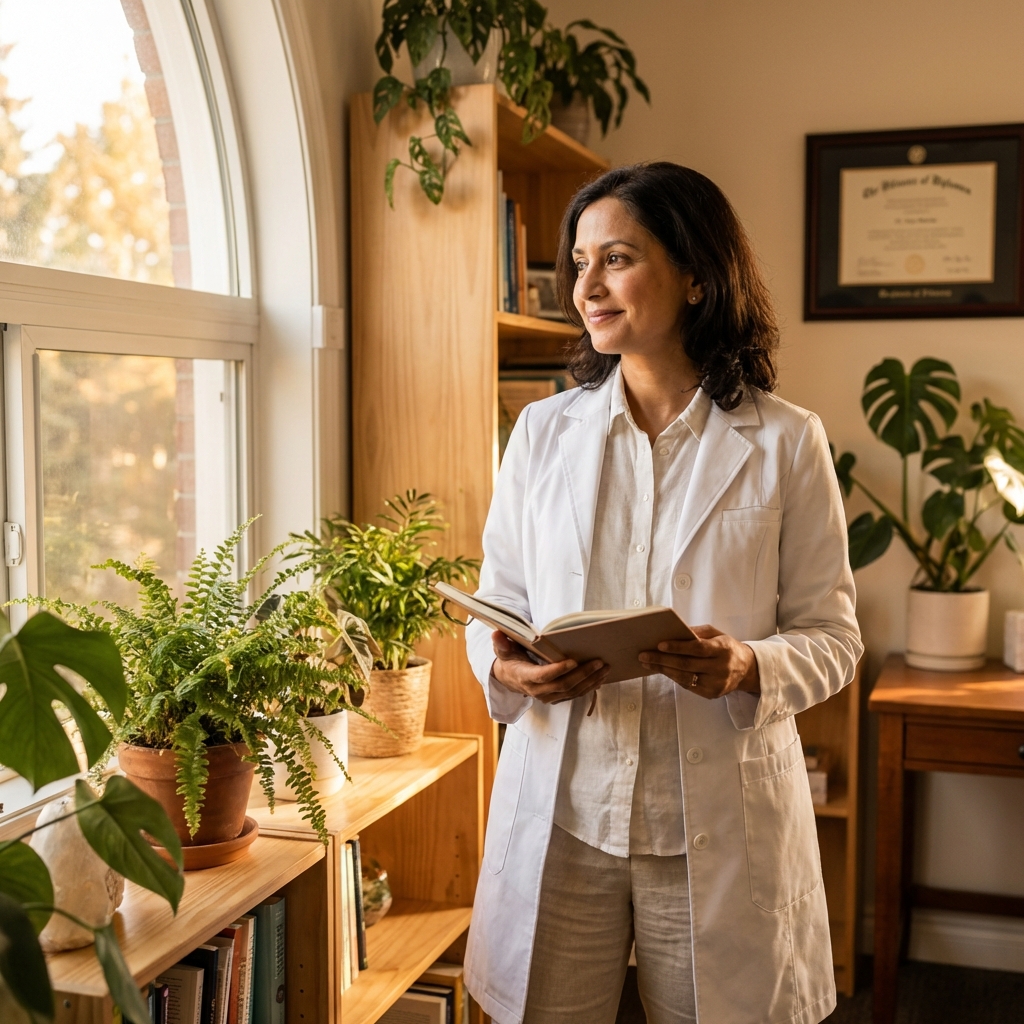
Holistic Wellness Doctor Interview: One Physician’s Path From Burnout to Whole-Person Healing
Introduction: When the Doctor Becomes the Patient
The physician who spent years healing others found herself unable to heal herself. Dr. Elena Vasquez, a board-certified internist with fifteen years of clinical experience, excelled at diagnosing conditions, prescribing medications, and managing her patient panel with precision. Yet behind the white coat, she was quietly unraveling—exhausted, disconnected, and questioning everything she believed about medicine.
As of 2026, holistic wellness has moved from the fringes of alternative medicine to the center of mainstream healthcare, driven by the post-pandemic epidemic of burnout and lifestyle diseases. The global wellness economy reached a record $6.8 trillion in 2024 and is projected to reach $9.8 trillion by 2029, reflecting a fundamental shift in how patients and practitioners alike approach health.
Dr. Vasquez now serves as the medical director of an integrative medicine practice in Denver, Colorado, where she combines her conventional training with functional medicine, nutritional therapy, and mind-body approaches. Her credentials include board certification in internal medicine, fellowship training in integrative medicine, and certification in functional medicine.
What follows is an in-depth look at one physician’s personal transformation, clinical philosophy, and the patient stories that redefined her purpose—a signature expression of Top Doctor Magazine’s mission to bridge the gap between healthcare providers and patients through personal interviews.
Meet the Doctor: Credentials, Background, and the Road Not Taken
Dr. Vasquez earned her medical degree from the University of Colorado School of Medicine, completed her residency in internal medicine at a major academic medical center, and spent the first decade of her career in a large hospital system. Her conventional foundation is unshakeable.
The tension emerged gradually. The gap between the idealism that drove her into medicine and the reality of a system optimized for volume, speed, and symptom management widened with each passing year.
“I went into medicine because I wanted to help people feel better,” Dr. Vasquez explains. “I believed that if I learned enough, worked hard enough, and followed the evidence, I could make a real difference. That idealism carried me through medical school, through residency, through the first years of practice.”
Thirty patients a day. Fifteen minutes per visit. The system rewarded efficiency, not depth. Dr. Vasquez became an expert at pattern recognition—identify the symptom, match it to a diagnosis, prescribe the medication, move on.
She acknowledges what the conventional model does well: acute care, emergency medicine, surgical intervention, and infectious disease management remain the crown achievements of modern medicine. But for the growing population of patients with chronic conditions, fatigue, autoimmune disorders, and lifestyle-driven diseases, the model falls short.
Research confirms her experience. In 2025, 68% of patients reported feeling like “a mere number in a cold medical system,” left to navigate chronic symptoms without a compassionate guide. This disconnect drives patients toward practitioners who will listen.
The Burnout Breaking Point: A Physician’s Honest Reckoning
“Burnout doesn’t announce itself,” Dr. Vasquez says. “It accumulates. It’s the patient you couldn’t help who stays in your mind at 2 a.m. It’s the insurance denial for a treatment you know would work. It’s realizing that you’ve become the kind of doctor you swore you’d never be—rushed, detached, going through the motions.”
The breaking point came during a routine appointment with a patient she had seen for years. The woman had chronic fatigue, joint pain, brain fog, and digestive issues. Dr. Vasquez had ordered every standard test, prescribed every appropriate medication, and referred her to every relevant specialist. Nothing worked.
“She looked at me and said, ‘You’re the tenth doctor I’ve seen. You’re supposed to be the good one. And you can’t help me either.’ I had nothing to offer her. That’s when I knew something had to change—not just for her, but for me.”
The professional isolation of burnout compounded the crisis. In a culture that prizes resilience above all, admitting struggle feels like failure. Dr. Vasquez suffered in silence for months before seeking help.
“I was missing something clinically. The questions I wasn’t trained to ask. The tools I didn’t have. The root causes I never investigated. My own health was deteriorating—I wasn’t sleeping, I was stress-eating, I had no energy. I became my own first case study in what happens when you treat symptoms without addressing the whole person.”
The Turning Point: Discovering Holistic and Integrative Medicine
The discovery came through a colleague who had left conventional practice to pursue functional medicine. Dr. Vasquez was skeptical at first—her training had conditioned her to dismiss anything outside the mainstream.
“I attended a conference on integrative medicine, expecting to debunk it. Instead, I found physicians with credentials as strong as mine who were asking different questions and getting different results. They weren’t rejecting science—they were expanding it.”
The modalities that first resonated included functional medicine’s systems-based approach, nutritional biochemistry, and mind-body medicine. The National Center for Complementary and Integrative Health (NCCIH) has expanded its definition of integrative health to include “whole person health,” empowering individuals across biological, behavioral, social, and environmental domains. This framework transformed Dr. Vasquez’s clinical lens.
“The philosophical shift was profound. I moved from asking ‘What is wrong with this patient?’ to ‘Why is this happening, and what does this person need to heal?’ That single question changed everything.”
The retraining process required significant investment—a two-year fellowship in integrative medicine, certification in functional medicine, and hundreds of hours of self-directed study in nutritional therapy, herbal medicine, and stress physiology.
“I had to reconcile my evidence-based training with approaches that sometimes have less robust randomized controlled trial data but strong clinical outcomes. I learned to hold both—to be rigorous about evidence while remaining open to clinical wisdom.”
Clinical Philosophy: What ‘Whole-Person Healing’ Actually Means in Practice
In Dr. Vasquez’s current practice, a new patient encounter looks nothing like the fifteen-minute visits of her previous career. Initial consultations last ninety minutes. The intake process gathers information across domains that conventional medicine rarely explores: lifestyle patterns, stress levels, sleep architecture, gut health, relationship quality, environmental exposures, and sense of purpose.
“I want to understand the person, not just the problem. What are they eating? How are they sleeping? What’s their stress load? What gives their life meaning? These aren’t soft questions—they’re clinically essential.”
The 2026 wellness model is defined by five pillars: physical vitality, mental and emotional fitness, gut health and nutrition, sleep and recovery, and spiritual or purpose-driven well-being. Dr. Vasquez maps these directly to her clinical framework.
The Five Pillars of Whole-Person Care: A Physician’s Framework
Physical Vitality: Chronic pain affects about 1 in 5 Americans and is the most common reason Americans seek complementary and integrative health practices. Dr. Vasquez addresses movement, chronic pain, and physical health through a combination of conventional diagnostics and integrative interventions, including targeted supplementation, anti-inflammatory protocols, and referrals to skilled bodyworkers.
Mental and Emotional Fitness: Mental health, in Dr. Vasquez’s view, is not a crisis intervention but a daily practice. She assesses emotional well-being in every patient conversation and teaches practical tools for nervous system regulation—an approach that aligns with the Global Wellness Summit’s identification of neurowellness as the next frontier in 2026. Cultivating self-compassion is one of the foundational practices she recommends to patients navigating chronic stress.
Gut Health and Nutrition: The microbiome has become central to Dr. Vasquez’s clinical toolkit. “The gut is connected to everything—mood, immunity, inflammation, energy. Food is medicine, and I treat it that way.” She encourages patients to eat a healthy diet as a primary therapeutic intervention, not an afterthought.
Sleep and Recovery: “Sleep is a clinical intervention, not a lifestyle preference. Poor sleep drives inflammation, hormone dysregulation, and cognitive decline. I assess and address sleep dysfunction with the same rigor I’d apply to any other vital sign.”
Spiritual and Purpose-Driven Well-Being: Dr. Vasquez navigates this pillar carefully, never imposing beliefs. “Meaning and purpose matter to health outcomes. I ask patients what gives their life meaning, what they’re living for. That conversation often unlocks something that medications never could.”
Patient Transformation Stories: Healing Through a Different Lens
Case One: The Chronic Fatigue Patient
A forty-two-year-old woman had cycled through conventional care for six years with persistent fatigue, joint pain, and brain fog. Standard labs were normal. She had been told her symptoms were attributable to stress, depression, or simply aging.
Dr. Vasquez ordered functional testing that revealed severe vitamin D deficiency, subclinical thyroid dysfunction, and significant gut dysbiosis. A comprehensive protocol addressing all three factors—targeted supplementation, thyroid optimization, and gut restoration—produced dramatic improvement within four months.
“She told me she felt like herself again for the first time in years. That case taught me that ‘normal’ labs don’t always mean optimal function.”
Case Two: The Mind-Body Connection
A fifty-five-year-old executive presented with chronic digestive issues that had resisted every conventional treatment. Extensive testing revealed no structural abnormality.
When Dr. Vasquez asked about his stress levels, he broke down. He was working eighty-hour weeks, his marriage was struggling, and he had not taken a vacation in three years. His gut was responding to his nervous system.
A protocol combining stress management techniques, nervous system regulation practices, and targeted digestive support resolved symptoms that had persisted for a decade.
Case Three: Environmental Factors
A thirty-eight-year-old woman presented with hormone imbalances, fatigue, and unexplained weight gain. Functional testing revealed elevated markers of environmental toxin exposure.
“We traced it to her water supply, her personal care products, and her cookware. The Global Wellness Summit has identified microplastics as an emerging human health threat, and I’m seeing it clinically. Reducing her toxic load was essential to her recovery.”
Navigating the Real World: Insurance, Access, and the ‘Wellness-Washing’ Problem
Dr. Vasquez addresses the practical realities that patients and practitioners face with characteristic candor.
Approximately 59 million Americans spend $30.2 billion a year out-of-pocket on complementary health approaches—a significant barrier. Dr. Vasquez works with patients at every budget level, prioritizing interventions that deliver the most impact for the investment.
The proliferation of unqualified practitioners exploiting the holistic medicine label concerns her deeply. “There’s a lot of wellness-washing out there—people with weekend certifications making claims they can’t support. Patients should look for credentialed providers: MDs, DOs, or NDs with legitimate training, board certifications, and a willingness to collaborate with conventional medicine when needed.”
Technology has expanded her reach. Telehealth consultations, AI-assisted health coaching, and remote monitoring allow her to serve patients across Colorado and beyond. “Data-driven, hyper-personalized medicine is the future. I use advanced biomarker testing and wearable data to customize care in ways that weren’t possible five years ago.”
The Bigger Picture: Holistic Medicine’s Place in the Future of Healthcare
Traditional and complementary medicine is projected to be the second fastest-growing wellness sector through 2029, at 10.8% annual growth. Dr. Vasquez sees this as validation of a fundamental shift in patient priorities.
“People are tired of being told their symptoms are normal, that they just need to manage their condition, that there’s nothing more to be done. They want root-cause answers. They want to be seen as whole people.”
Her vision for the future of healthcare includes prevention-first systems, longer appointments, interdisciplinary teams, and lifestyle medicine as the standard of care rather than the exception.
“The longevity conversation is everywhere now, but I want to shift it from ‘how long can I live?’ to ‘how well can I live?’ Healthspan matters more than lifespan. Quality of years matters more than quantity.”
Advice for the Next Generation: What This Physician Would Tell a Medical Student Today
Dr. Vasquez speaks directly to medical students and early-career physicians questioning the conventional model.
“Your skepticism is healthy. Channel it into curiosity. Pursue integrative training alongside or after your conventional education—fellowships exist, certifications exist, and the field is growing.”
She emphasizes the physician’s own wellness as foundational. Practitioners who neglect their personal health—nutrition, movement, sleep, stress management—undermine both their clinical effectiveness and their capacity for empathy. Maintaining life balance is not a luxury for clinicians; it is a professional imperative.
The business realities matter as well. Building a holistic practice requires entrepreneurial thinking: communicating value to patients, understanding the insurance landscape, and recognizing that career paths for holistic practitioners are expanding across clinical practice, academia, research, authorship, and wellness programming.
“Compassion and empathy are the foremost qualities required for success in this work—above clinical knowledge alone. The work is hard. It’s worth it. What sustains me is watching patients reclaim their health and their lives.”
Conclusion: One Physician’s Journey, a Movement’s Momentum
From the burnout that broke the conventional model open to the whole-person practice that emerged from it, Dr. Vasquez’s journey reflects a broader transformation in healthcare.
“Holistic medicine offers what the conventional system cannot: time, attention, root-cause investigation, and the recognition that you are more than your symptoms. You are a whole person, and you deserve to be treated as one.”
Whether the reader is a patient frustrated by symptom management, a physician questioning their own path, or a health-conscious consumer seeking a more integrated approach, Dr. Vasquez’s story offers a compelling perspective. With consumer demand for root-cause, whole-person care at an all-time high, she represents a growing cohort of practitioners redefining what medicine can be.
“Healing is possible,” she concludes. “Not just managing. Not just coping. Actual healing. I’ve seen it. I’ve lived it. And I believe it’s available to anyone willing to look deeper.”
Discover More Physician Stories on Top Doctor Magazine
Top Doctor Magazine invites readers to explore the full library of long-form physician interviews—part of an ongoing conversation about the future of medicine.
Healthcare professionals who practice holistic, integrative, functional, or complementary medicine are encouraged to connect with Top Doctor Magazine for potential features, awards nominations, or editorial profiles. Readers who know a physician who is a force for positive change in medicine and wellness can nominate them through the magazine’s nomination platform.
The free biweekly newsletter offers the easiest way to stay current on physician profiles, wellness trends, and healthcare innovation. For healthcare professionals, a Top Doctor Magazine cover feature or editorial profile can amplify practice visibility, build public profile, and connect practitioners with patients actively seeking whole-person care.
Top Doctor Magazine remains committed to bridging the gap between physicians and patients—celebrating the practitioners who are transforming healthcare, one patient at a time.