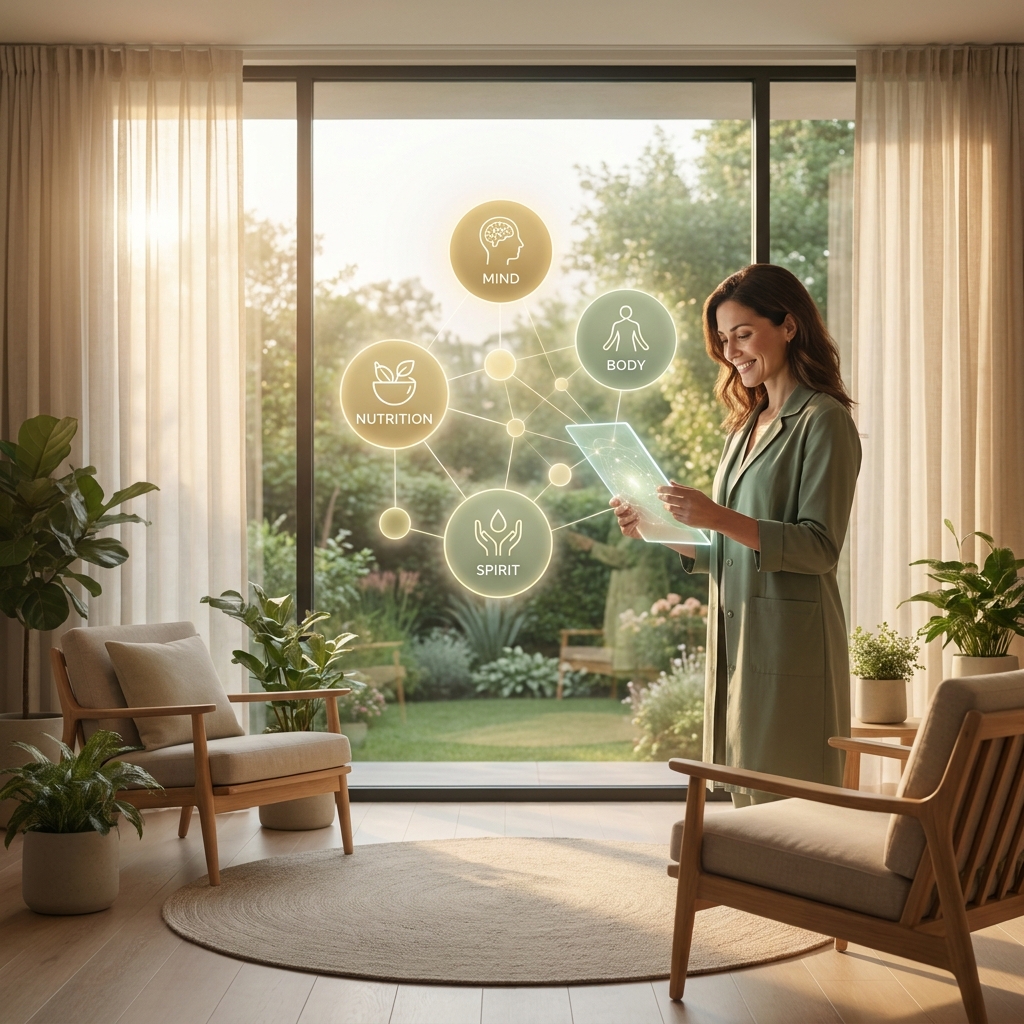
Holistic Health Doctor Patient Education Content: The Physician’s Framework for Teaching Whole-Person Health in 2026
Introduction: When the Doctor Becomes the Teacher
The Latin root of the word “doctor” is docere, meaning “to teach.” Long before the profession became associated with prescriptions and procedures, the physician’s core function was educational: to illuminate, to explain, and to guide. In 2026, that ancient definition has never been more relevant, particularly within holistic medicine, where patient education is not a supplementary service but a foundational clinical obligation.
The urgency is measurable. Only 12% of U.S. adults possess proficient health literacy, a deficit that costs the nation an estimated $300 billion annually in avoidable healthcare expenses. More than 36% of adult Americans, roughly 80 million people, function at or below basic health literacy levels. Yet the modern patient faces a striking paradox: they are more informed than ever, with patient portal messages increasing 153% between 2020 and 2025, and simultaneously more misinformed than ever, as unvetted wellness content proliferates online.
This article advances a single core thesis: holistic health doctor patient education content is not a marketing asset. It is a clinical intervention, and the most effective holistic physicians treat it as such. What follows is a framework showing how holistic physicians structure educational conversations, what they prioritize at each stage of care, and why physician-curated content is the essential bridge between clinical rigor and patient empowerment.
In this landscape, publications like TopDoctor Magazine occupy a credible middle ground, positioned between unvetted wellness blogs and inaccessible academic journals.
What a Holistic Health Doctor Actually Is (And Why It Matters for Patient Education)
A holistic health doctor is a licensed physician (an MD or DO) who holds board certifications and combines conventional medical training with complementary medicine therapies to identify the root causes of illness rather than managing symptoms in isolation. This clinical precision matters because the marketplace is crowded with practitioners whose credentials vary dramatically.
Patients typically encounter several practitioner types: integrative MDs, naturopathic doctors (NDs), functional medicine practitioners, and unregulated wellness coaches. The credential differences among them carry real consequences for patient safety. An integrative MD operates within full medical licensure and can prescribe, diagnose, and coordinate care. An unregulated wellness influencer, by contrast, may offer confident advice with no clinical accountability whatsoever.
The whole-person model treats the biological, behavioral, social, spiritual, and environmental dimensions of health simultaneously. The National Institutes of Health, through its National Center for Complementary and Integrative Health, expanded its definition of integrative health to encompass exactly this concept of “whole person health.” One validated tool reflecting this model is the Whole Person Health Index (WPHI), a nine-item instrument assessing overall health, quality of life, diet, physical activity, stress, sleep, and existential wellbeing, now suggested for use in clinical settings and population surveys.
Adoption has surged. Up to 40% of U.S. adults now use integrative or complementary therapies, and a JAMA study found that 37% of adults sought alternative treatments, up from just 19% two decades ago. This makes definitional clarity itself a patient education priority. Patients who cannot distinguish a licensed integrative MD from an unregulated wellness influencer are vulnerable to both undertreatment and misinformation.
The Docere Philosophy: Patient Education as a Medical Intervention
The Docere principle organizes holistic medicine around a simple truth: the physician’s role is not merely to diagnose and prescribe, but to illuminate. It means helping patients understand the “why” behind their health status and treatment plan.
The evidence supports this approach as clinically meaningful. Research from Taylor & Francis in 2025 found that patients who received educational materials reported significantly higher overall care satisfaction, with a mean score of 4.69 versus 4.18 for controls. Education, in other words, produces measurable outcomes.
Patient education also functions as a behavior change tool. The American Medical Association recognizes that physicians are uniquely positioned to provide behavior change counseling but often lack the training to do so effectively, a gap that holistic physicians are specifically trained to address. The systemic stakes are enormous. Approximately 129 million Americans live with at least one major chronic condition, and these conditions drive 90% of the nation’s $4.5 trillion in annual healthcare costs. Most are largely preventable through the lifestyle interventions holistic physicians teach.
This gives rise to the concept of “educational dosing”: the idea that what a physician communicates, when they communicate it, and how they frame it should be as deliberate as a prescription. The digital dimension amplifies this further. Virtual holistic consultations have jumped 60%, and over 75% of health systems planned to expand virtual services by 2025, making structured educational content essential for between-visit continuity.
The Physician’s Framework: Structuring Holistic Patient Education Across the Care Journey
Effective holistic education is stage-specific. What a physician communicates at initial intake differs fundamentally from what they communicate during active treatment or long-term maintenance. A framework matters here because 65.5% of family medicine residents report that patients inquire about integrative therapies, yet many residents report low confidence in counseling due to limited training. A structured educational framework directly addresses that gap.
Stage One: Initial Intake — Establishing the Whole-Person Baseline
At first contact, holistic physicians prioritize communicating the philosophy of root-cause medicine, the difference between symptom suppression and systemic healing, and the patient’s active role in their own care. Tools like the WPHI serve a dual purpose here, functioning as both a clinical instrument and an educational entry point that reveals dimensions of health (such as existential wellbeing and sleep quality) that patients may never have considered.
Intake conversations also allow physicians to assess a patient’s health literacy level and tailor their approach accordingly, avoiding jargon overload while maintaining clinical accuracy. This initial education builds trust. Patients who understand the “why” behind a holistic approach are more likely to engage with lifestyle recommendations, reducing dropout and non-adherence. It represents a shift from hierarchical to partnership-based care, where patients take an active, informed, and collaborative role beginning at the very first appointment.
Stage Two: Active Treatment — Teaching the Interconnected Systems
During active treatment, holistic physicians educate patients about the biological, behavioral, social, and environmental factors contributing to their specific condition, moving beyond single-organ or single-symptom explanations. They teach the lifestyle medicine pillars, including nutrition, physical activity, stress management, sleep hygiene, and behavioral health, as interconnected levers rather than isolated recommendations.
Functional lab interpretation becomes a rich educational opportunity. Rather than simply flagging abnormal values, holistic physicians help patients understand results (such as thyroid markers or inflammatory panels) from a root-cause perspective. Complementary modalities like acupuncture, mind-body practices, herbal medicine, and nutritional supplementation are framed within an evidence-based context to prevent confusion or over-reliance on unvetted sources.
This active educational role is protective. Research from Frontiers in Digital Health in 2025 confirms that false or misleading health information online makes internet-based patient education challenging to navigate. With patient portal messages up 153% since 2020, active treatment is the stage where between-visit content, including articles, explainers, and video summaries, achieves the highest engagement and impact.
Stage Three: Long-Term Maintenance — Building Health Literacy for Life
Maintenance is the most underserved stage of holistic patient education. Once acute symptoms resolve, patients often disengage, making ongoing education critical for sustained lifestyle change. Holistic physicians use this phase to deepen understanding of preventive care, early warning signs, and self-monitoring tools such as wearables and digital health apps within a clinically supervised framework.
An emerging maintenance-phase tool is “social prescribing,” in which physicians refer patients to non-medical wellness interventions such as community walking groups, art therapy, or social connection programs. Formalized through the NHS, this practice is gaining global traction. AI and advanced diagnostics increasingly personalize long-term plans, and physicians educate patients to interpret and act on personalized health data responsibly. The Global Wellness Institute’s 2025 trends point to combining lifestyle medicine, behavioral health, nutrition, advanced diagnostics, and AI technology to improve wellbeing and longevity.
Health literacy built during maintenance reduces long-term costs. The $300 billion annual burden of low health literacy is largely a maintenance-phase failure, as patients who lack ongoing education revert to reactive, high-cost care patterns.
What Holistic Physicians Prioritize in Patient Education Content: The Core Curriculum
Across their educational materials, holistic physicians consistently prioritize a set of content pillars grounded in the whole-person health model.
- Pillar 1: Root Cause Literacy. Teaching patients to ask “why” rather than “what.” Why does inflammation persist? Why does fatigue recur despite normal standard labs?
- Pillar 2: The Mind-Body-Spirit Connection. Explaining how psychological stress, spiritual wellbeing, and social connection directly affect physical outcomes, presented not as philosophy but as physiology.
- Pillar 3: Lifestyle as Medicine. Communicating the evidence base for nutrition, movement, sleep, and stress reduction as primary therapeutic interventions, supported by the AMA’s chronic disease prevention initiatives.
- Pillar 4: Navigating the Wellness Landscape Safely. Equipping patients to evaluate online health information, distinguish credentialed practitioners from unregulated coaches, and bring their research to clinical conversations.
- Pillar 5: Shared Decision-Making. Teaching patients that their values, preferences, and lived experience are clinical data, and that effective treatment plans are co-created rather than prescribed top-down.
- Pillar 6: Prevention Economics. Helping patients understand that chronic disease drives 90% of the $4.5 trillion annual U.S. healthcare cost burden, and that lifestyle intervention is the most cost-effective treatment available.
The Training Gap: Why Physician-Curated Content Is More Critical Than Ever
The structural problem is clear. Despite 65.5% of family medicine residents reporting patient inquiries about integrative therapies, many lack the confidence to counsel effectively due to limited medical school training.
Medical education is responding. Leading institutions including UCLA, the University of Cincinnati, and the University of Arizona now offer longitudinal integrative medicine curricula, and the Andrew Weil Center for Integrative Medicine Fellowship has trained more than 5,000 alumni across 26 countries. Yet a gap persists between institutional progress and patient-facing reality. Most practicing physicians today were trained in a purely biomedical model, meaning patients often seek holistic guidance their current providers are not equipped to offer.
Physician-curated patient education content fills this gap in real time, extending the reach of trained holistic physicians to patients whose primary providers lack integrative training. A 2025 PMC/NCBI finding underscores the point: whole-person integrative medicine is cost-effective and clinically effective, yet knowledge gaps among healthcare professionals prevent broader application. This positions credible, physician-authored content as a systemic solution rather than a marketing tool. Globally, 80% of healthcare organization leaders in a 2025 survey said outcomes for patients receiving integrative care are better compared to the general population, even as the knowledge infrastructure to deliver that care at scale remains underdeveloped.
Digital Tools and the Future of Holistic Patient Education
Digital platforms are transforming how holistic education is delivered. Patient portals, telehealth platforms, wearables, and AI-driven personalization create new channels for physician-curated content. The telehealth acceleration is dramatic: virtual holistic consultations have jumped 60%, and the telehealth wellness sector is growing at 19.4% annually, making digital education a primary touchpoint rather than a supplement.
Patient portals present both opportunity and risk. With messages up 153% since 2020, portals are now a primary between-visit education channel, but only if physicians populate them with credible, structured content rather than generic health tips. AI-driven personalization allows holistic physicians to tailor educational content to individual patient profiles, incorporating lifestyle factors, lab results, and health goals, moving from population-level messaging to individualized health literacy building.
The misinformation risk remains acute. Frontiers in Digital Health confirmed in 2025 that empowered patients with low eHealth literacy may make harmful decisions based on unvetted content. Digital reach without clinical credibility is dangerous. Physician-authored digital content that is credible, accessible, and clinically grounded meets a standard that neither wellness influencers nor academic journals currently achieve.
Why Physician-Authored Platforms Like TopDoctor Magazine Matter
A content credibility gap defines the current landscape. General health websites offer definitional holistic content without clinical depth. Academic medical centers offer clinical depth without patient-centered narrative. Wellness blogs offer accessibility without credentialing.
TopDoctor Magazine bridges this divide. As a physician-connected publication, it combines journalistic integrity, clinical credibility, and patient-empowerment storytelling: the format holistic patient education actually requires. Its editorial model of personal physician profiles and interviews serves a genuine educational function, humanizing the Docere philosophy by showing patients what a whole-person care relationship looks like in practice.
The context makes this curation essential. The U.S. wellness market alone is valued at $2.1 trillion, and the global wellness economy reached $6.8 trillion in 2024, a landscape so vast that patients need credible guidance to navigate it safely. TopDoctor’s coverage of integrative, functional, regenerative, and personalized medicine aligns directly with the leading edge of clinical science, mirroring the NIH’s 2024 Coalition for Whole Person Health and its 60 member organizations. Through its awards program, events, and physician profiles, the magazine creates a community of practice that reinforces the Docere philosophy at scale, connecting patients to verified, recognized holistic practitioners.
Conclusion: The Prescription Is Education
The most effective holistic physicians are distinguished not solely by the therapies they offer, but by the educational frameworks they use to help patients understand, engage with, and sustain whole-person health. The evidence converges on a single conclusion. The Taylor & Francis satisfaction data (4.69 versus 4.18), the health literacy crisis ($300 billion in avoidable costs), and the chronic disease burden (90% of $4.5 trillion in annual costs) all confirm that patient education is not optional. It is therapeutic.
The systemic momentum is real. With the global wellness economy approaching $9.8 trillion by 2029, the NIH’s whole person health coalition expanding, and medical schools integrating holistic curricula, the infrastructure for physician-led patient education is finally catching up to patient demand.
This returns the conversation to the Docere principle. Every physician who teaches a patient to understand their own biology, interpret their own health data, and make informed lifestyle choices is practicing the oldest and most enduring form of medicine. In 2026 and beyond, the holistic physicians who will have the greatest impact are those who treat their patient education content with the same rigor, intentionality, and evidence base they bring to every clinical decision. TopDoctor Magazine embodies this philosophy at a media scale, committed to connecting patients with credible, physician-authored holistic health content.
Explore Holistic Health Physician Profiles and Patient Education Resources at TopDoctor Magazine
Readers seeking credible, physician-authored whole-person health content can explore TopDoctor Magazine’s integrative and holistic medicine editorial coverage, which delivers clinically grounded guidance in an accessible format. Featured holistic physician profiles and interviews showcase real practitioners demonstrating the Docere philosophy within their clinical practice.
Health-conscious readers are encouraged to subscribe to the TopDoctor biweekly newsletter for ongoing, credible holistic health education delivered directly to their inbox. Medical professionals may consider nominating outstanding holistic and integrative medicine practitioners for TopDoctor Magazine’s awards program, which recognizes physicians who are advancing whole-person patient education.
For those searching for a holistic health physician, TopDoctor’s platform offers a way to find and evaluate credentialed integrative medicine practitioners. TopDoctor Magazine exists to bridge the gap between healthcare providers and patients, and in the era of whole-person health, that bridge is built one educational conversation at a time.