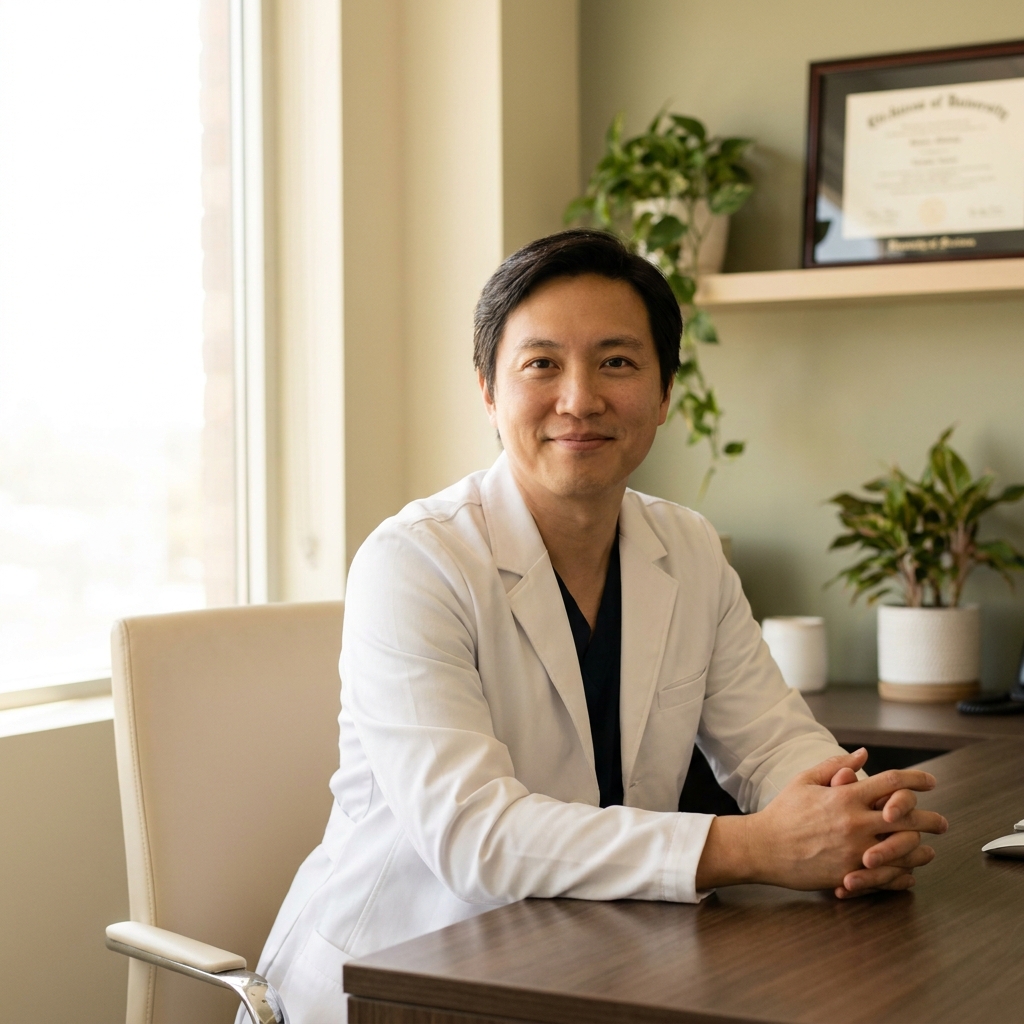
Fertility Doctor Reproductive Health Guide: What Reproductive Endocrinologists Want Every Patient to Know in 2026
Introduction: America’s Fertility Crisis and the Specialists on the Front Lines
The United States is experiencing a demographic shift that demands attention. In 2026, the total fertility rate (TFR) is projected to hit a historic low of 1.53 births per woman, falling far below the 2.1 replacement level needed to maintain population stability. This is not merely a statistical curiosity; it represents a national urgency that touches millions of individual lives.
Recent data reveals that approximately 3.6 million babies were born in the U.S. in 2025, with birth rates rising among women 30 and older while declining sharply among those under 30. This generational shift in family planning timelines has profound implications for reproductive health care and the specialists who deliver it.
At the intersection of cutting-edge science and deeply personal experience stands the reproductive endocrinologist (REI). These specialists serve as guides for patients navigating some of life’s most vulnerable moments. This fertility doctor reproductive health guide is designed to give every patient, and every person curious about their reproductive future, the insider knowledge that REIs wish more people had before walking through their door.
This comprehensive guide explores who REIs are, why they chose this demanding specialty, how they counsel patients through emotionally complex journeys, and how they are adapting to 2026’s legislative, technological, and demographic shifts. From training and credentials to AI integration, insurance changes, mental health support, and LGBTQ+ inclusion, patients will find the information they need to make empowered decisions about their reproductive health.
Who Is a Reproductive Endocrinologist? Training, Credentials, and Why It Matters
A reproductive endocrinologist is among the most rigorously trained specialists in medicine. The path to becoming an REI requires completing medical school, followed by a four-year ACGME-accredited OB/GYN residency, and then a three-year ACGME-accredited REI fellowship.
According to the American Society for Reproductive Medicine (ASRM), fellowship programs include at least 18 months of clinical rotations, 12 months of research, and 6 months of elective rotations. This structure ensures dedicated hands-on training in advanced assisted reproductive technology (ART) procedures.
The distinction between a board-certified REI and a “fertility specialist” is critical. Unlike the unregulated term “fertility specialist,” which anyone can use without certification, a board-certified REI must pass multiple written and oral examinations and remains subject to medical board oversight. This 11-plus years of post-undergraduate education signals a profound commitment to the field.
REIs are the only specialty with standardized training specifically in ART procedures. Patients should understand this distinction when evaluating their care team and seeking treatment for complex reproductive issues.
Why Doctors Choose Reproductive Endocrinology: The Human Story Behind the Science
Reproductive endocrinology attracts physicians drawn to both scientific frontiers and deeply human experiences. The specialty operates at the cutting edge of reproductive science while requiring practitioners to serve as emotional anchors for patients navigating life’s most vulnerable moments.
REIs often describe witnessing a patient’s successful pregnancy as among the most profound experiences in medicine. This unique reward sustains practitioners through the field’s inherent emotional weight, including the grief of failed cycles, complex ethical terrain involving genetic selection and third-party reproduction, and rapidly evolving technology.
In 2026, REIs face unprecedented challenges. They must simultaneously navigate landmark legislative shifts, AI integration, and record-low birth rates. The complexity of this moment makes their role more consequential than ever before.
What Reproductive Endocrinologists Actually Treat: A Broader Scope Than Most Patients Realize
Many patients assume REIs only treat infertility, but their scope extends significantly broader. REIs diagnose and treat polycystic ovary syndrome (PCOS), uterine fibroids, endometriosis, recurrent miscarriage, menstrual irregularities, menopausal issues, and fertility preservation needs.
PCOS affects 5 to 10 percent of women of childbearing age, and women with this condition have infertility rates of 51 percent compared to 21 percent in women without PCOS. It remains one of the most common yet most treatable causes of ovulatory infertility.
Endometriosis affects approximately one in ten women during their reproductive years, and around 40 percent of women with infertility have this condition. Early diagnosis and treatment by an REI can significantly impact outcomes.
Male infertility deserves equal attention. In about one-third of infertile couples, the problem lies with the male partner. REIs address male factor infertility through comprehensive sperm assessment and treatment protocols.
Fertility preservation has emerged as a growing practice area. This includes oncofertility services for cancer patients, support for those undergoing gender-affirming care, and elective egg freezing. Multiple states now mandate iatrogenic infertility coverage as of 2026.
REIs work alongside OB/GYNs rather than replacing them, handling complex hormonal and reproductive issues that fall outside routine obstetric care. Patients interested in learning more about gynecology and women’s health can explore specialist perspectives that complement REI care.
The Infertility Landscape in 2026: Statistics Every Patient Should Know
Approximately one in six people globally have experienced infertility at some point in their lives. In the United States, an estimated 13.4 percent of women ages 15 to 49 and 11.4 percent of men ages 15 to 49 had some form of impaired fertility between 2015 and 2019.
The causes of infertility distribute roughly equally: one-third attributed to female factors, one-third to male factors, and one-third to unexplained or combined causes. This distribution underscores why comprehensive evaluation of both partners is essential.
The record-low TFR of 1.53 projected for 2026 reflects millions of individual stories involving delayed family planning, infertility struggles, and evolving reproductive choices. The Congressional Budget Office projects that by 2030, annual deaths will outnumber births in the U.S. for the first time, contextualizing the societal stakes of reproductive health access.
When Should You See a Fertility Doctor? What REIs Want Patients to Know
Standard clinical guidelines recommend seeking evaluation after 12 months of unprotected intercourse without conception, or six months if the female partner is 35 or older. However, REIs emphasize several earlier referral triggers.
Patients should consider earlier consultation if they have a known PCOS diagnosis, endometriosis history, recurrent miscarriage (two or more losses), irregular or absent menstrual cycles, prior cancer treatment, or known male factor issues.
Same-sex couples and single individuals should consult an REI before attempting conception, as their path to parenthood requires specialist guidance from the outset.
Many REIs advocate a “don’t wait” philosophy, particularly given age-related fertility decline and the emotional and financial cost of delayed diagnosis. One of the most common patient regrets REIs encounter is waiting too long. Early consultation, even without a diagnosis, can be empowering rather than alarming.
The REI Patient Journey: From First Consultation to Treatment
The typical patient journey begins with an initial consultation involving comprehensive medical history review, physical examination, baseline hormone testing, and evaluation of both partners.
The diagnostic workup includes ovarian reserve testing through AMH and antral follicle count, semen analysis, uterine evaluation via HSG or sonohysterogram, and hormonal panels. REIs then develop individualized treatment plans based on diagnosis, age, reproductive goals, and patient values.
Treatment options span a spectrum from lifestyle modifications and oral medications such as letrozole and clomiphene to intrauterine insemination (IUI), IVF, and third-party reproduction including donor eggs, sperm, embryos, and gestational carriers.
Telehealth has transformed access to care. By 2025, half of private fertility clinics were using virtual consultations, and REIs increasingly use telehealth for initial consultations, monitoring, and follow-up care.
IVF in 2026: Success Rates, Costs, and What the Numbers Really Mean
Current IVF live birth rates per single embryo transfer show approximately 45 to 55 percent success for women under 35, dropping to 32 to 40 percent for ages 35 to 37, 20 to 26 percent for ages 38 to 40, and just 4 percent for women over 42 using their own eggs.
Donor eggs transform these outcomes dramatically, with live birth rates exceeding 50 percent regardless of the recipient’s age.
The financial reality requires honest discussion. A single IVF cycle costs $12,400 to $30,000 in the U.S., excluding medications. The average number of cycles needed to achieve pregnancy is 2.5, meaning total out-of-pocket costs can reach $30,000 to $75,000 or more without insurance coverage.
IVF now accounts for approximately 2 to 5 percent of all births globally. Between 1992 and 2019, the IVF birth rate quadrupled, and the rate of single embryo transfer increased seven-fold, reducing multiple pregnancy risks.
Weight loss before IVF in women with obesity is associated with a 21 percent greater overall pregnancy rate and a 47 percent greater rate of unassisted conception.
Egg Freezing and Fertility Preservation: What REIs Are Telling Patients in 2026
Elective egg freezing has grown dramatically. Cycles nearly quadrupled from 4,153 in 2014 to 16,436 in 2021, with the mean patient age declining from 36.0 to 34.9 years. This signals a trend toward younger women proactively preserving fertility.
However, candid utilization data reveals that only 5.7 percent of women who froze eggs between 2014 and 2016 returned to use them within five to seven years. Of those who did return, 78.5 percent obtained at least one usable embryo, and the cumulative live birth rate was 28.9 percent.
Egg freezing is most appropriate for women in their late 20s to early 30s who are not yet ready to conceive, cancer patients facing gonadotoxic treatment, and individuals undergoing gender-affirming care. The decision requires individualized medical assessment, not a generic checklist.
AI and Technology in Reproductive Medicine: How REIs Are Adapting Their Practices
In 2025, the world’s first live birth using a fully automated AI-controlled ICSI system was reported, automating all 23 steps of the procedure using AI and remote operator control.
Current AI applications in ART include embryo selection via time-lapse imaging, personalized ovarian stimulation dosing, sperm motility assessment, and outcome prediction. AI-driven embryo selection software predicts implantation 10 to 15 percent more accurately than human embryologists in some studies.
REIs occupy a unique position at the human-technology interface, serving as both users of AI tools and interpreters of AI-generated data for patients. Transparent communication about how AI assists rather than replaces clinical judgment remains essential. The broader implications of augmented reality and medicine offer additional context for how technology is reshaping patient care across specialties.
Insurance, Legislation, and Access: The 2026 Policy Landscape REIs Are Navigating
California’s landmark Senate Bill 729, effective January 1, 2026, requires large group health plans to cover infertility diagnosis and treatment including IVF. It explicitly extends benefits to same-sex couples and single individuals.
Insurance mandates are associated with increased single embryo transfer rates and broader patient access. However, many patients remain uninsured or underinsured for fertility care, making financial counseling an essential component of initial consultations.
LGBTQ+ Family Building: How REIs Are Expanding Access and Advocacy
LGBTQ+ family building represents a core component of modern REI practice. REIs facilitate multiple pathways including intrauterine insemination with donor sperm, IVF with donor eggs or sperm, reciprocal IVF (where one partner provides eggs and the other carries the pregnancy), gestational surrogacy, and embryo adoption.
The Berton v. Aetna settlement and California SB 729’s explicit extension of coverage to same-sex couples and single individuals represent significant advances toward reproductive equity.
LGBTQ+ patients often require unique counseling addressing third-party reproduction logistics, legal considerations regarding parental rights and surrogacy contracts, and the emotional dimensions of non-traditional family building.
The Emotional Dimension of Fertility Care: What REIs Wish More Patients Understood
REIs are increasingly integrating mental health support through referrals to fertility-specialized therapists, in-house counseling, peer support groups, and digital mental health platforms. This support is not an add-on but a clinical imperative.
How to Choose the Right Fertility Doctor: A Patient’s Practical Guide
Patients should verify board certification status and ask prospective REIs about their clinic’s live birth rate per transfer for the patient’s age group, annual cycle volume, approach to single embryo transfer, and mental health support integration.
Beyond credentials and success rates, patients should consider communication style, availability, telehealth options, and whether the REI’s values align with their own regarding LGBTQ+ care, mental health integration, and financial transparency.
Second opinions are consistently supported by REIs, particularly for complex diagnoses such as unexplained infertility, recurrent implantation failure, or recurrent pregnancy loss.
Top Doctor Magazine’s interview-based profiles of medical specialists provide a unique window into a doctor’s philosophy, communication style, and approach to patient care before a patient ever books an appointment.
Conclusion: The Fertility Doctor as Guide, Scientist, and Advocate in 2026
The reproductive endocrinologist is not simply a technician administering fertility treatments. REIs are among medicine’s most rigorously trained specialists, most empathetic counselors, and most consequential advocates for reproductive equity in 2026.
With the U.S. TFR projected at a historic low of 1.53 and projections that deaths will outnumber births by 2030, the work of REIs has never been more personally meaningful or socially significant.
Armed with the knowledge in this guide, patients are better equipped to seek care earlier, ask the right questions, understand their options, and advocate for their reproductive health. Whether a patient is just beginning to ask questions or is deep in a treatment journey, the right REI can be the most important guide they ever meet.
Ready to Connect With a Reproductive Health Specialist? Top Doctor Magazine Can Help
Readers are invited to explore Top Doctor Magazine’s profiles of reproductive endocrinologists and fertility specialists. These humanizing interviews go beyond credentials to reveal the philosophy, communication style, and patient-centered values of each featured doctor.
Those who know an exceptional REI or fertility specialist can nominate them for a Top Doctor Magazine feature or awards recognition, reinforcing the community-driven mission of the publication.
Subscribing to Top Doctor Magazine’s free biweekly newsletter provides ongoing coverage of reproductive health, fertility medicine advances, legislative updates, and specialist profiles. The Top Doctor Magazine Podcast offers in-depth conversations with medical professionals, including reproductive health specialists discussing the topics covered in this guide.
Patients deserve a specialist who sees their reproductive health journey as uniquely their own. Top Doctor Magazine can help them find that specialist.