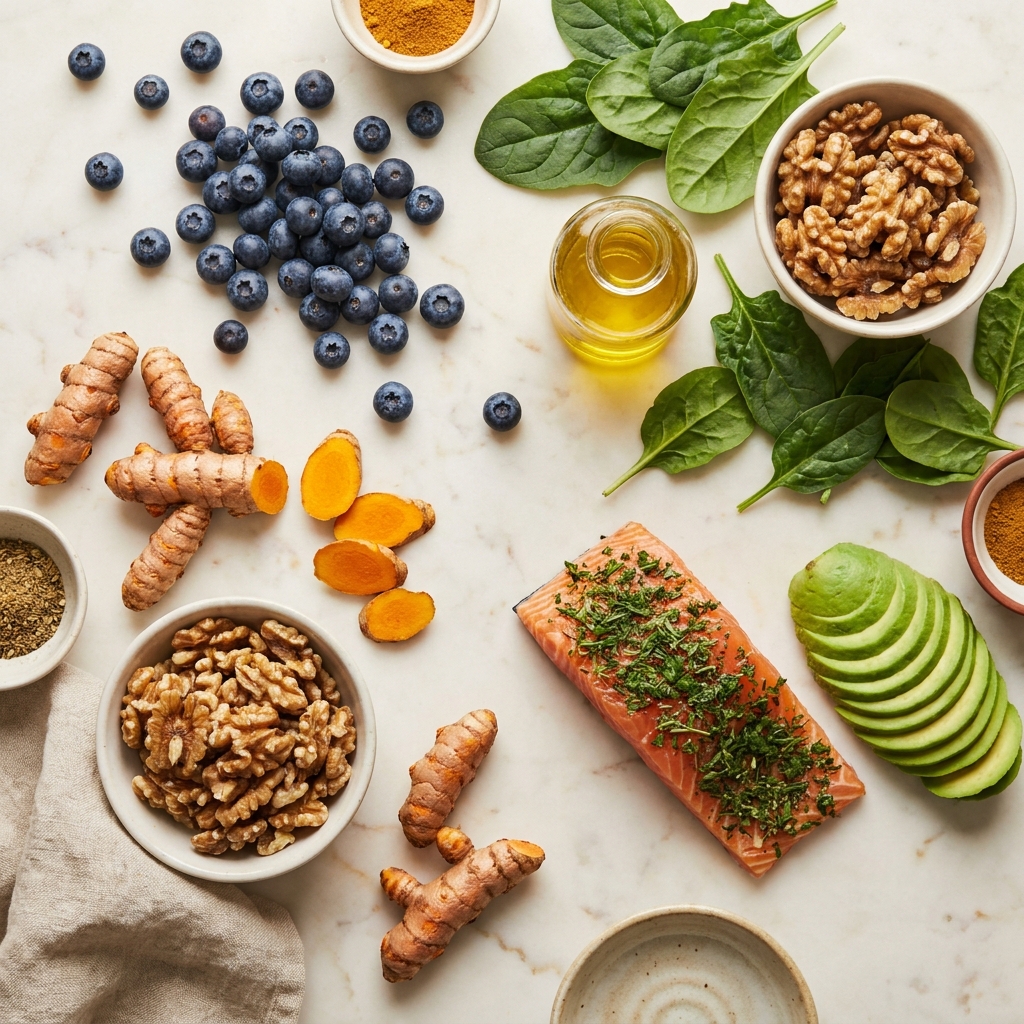
Anti-Inflammatory Diet: The Science-Backed Guide for 2026
Introduction: Why “Eat More Vegetables” Is No Longer Enough
Six out of 10 U.S. adults live with at least one chronic condition, and chronic diseases account for 7 in 10 deaths each year. Behind many of these conditions sits a common, quiet driver: chronic low-grade inflammation.
Unlike acute inflammation (the protective, short-term response that helps the body heal a cut or fight infection), chronic low-grade inflammation is persistent and systemic. It produces no obvious symptoms, yet it steadily promotes disease at the cellular level.
Most readers have encountered anti-inflammatory food lists before. This guide goes further, explaining the why behind anti-inflammatory eating: the NF-κB pathways that switch inflammation on and off, gut microbiome integrity, short-chain fatty acid production, the Dietary Inflammatory Index (DII), and an underappreciated connection between diet and nitric oxide. What follows is not a fad diet but a synthesis of peer-reviewed evidence current as of 2026.
What Is Chronic Inflammation, and Why Does It Matter?
Acute inflammation is a normal, protective immune response. Chronic low-grade inflammation is different: it lingers, spreads systemically, and drives disease over years.
Sustained inflammation contributes to cardiovascular disease, type 2 diabetes, certain cancers, and neurocognitive decline, according to StatPearls. Clinicians track it through biomarkers such as C-reactive protein (CRP), interleukin-6 (IL-6), and adiponectin, all of which shift measurably with dietary change.
Chronic low-grade neuroinflammation is also one of the most consistent independent predictors of cognitive decline, depression, and Alzheimer’s disease risk. Because diet is among the most modifiable drivers of inflammation, dietary intervention represents a high-leverage, evidence-based strategy.
The Cellular Science: How Food Communicates with the Immune System
Food compounds are not passive nutrients. They act as bioactive signals that interact directly with immune and gene-expression pathways. Understanding these mechanisms is what separates genuine anti-inflammatory eating from surface-level food lists.
NF-κB: The Master Switch of Inflammation
NF-κB (Nuclear Factor kappa-light-chain-enhancer of activated B cells) is the primary transcription factor controlling pro-inflammatory gene expression. Refined sugars, trans fats, and ultra-processed foods activate NF-κB signaling, triggering cytokines such as TNF-α, IL-1β, and IL-6.
Certain food compounds suppress NF-κB: curcumin from turmeric, omega-3 fatty acids (EPA/DHA) from fatty fish, polyphenols in berries and olive oil, and sulforaphane from cruciferous vegetables. One important caveat on curcumin: standard turmeric powder is poorly absorbed. Piperine-combined or liposomal formulations are required for meaningful NF-κB inhibition. These effects translate downstream into lower CRP and IL-6, the same markers tracked in a 2026 Nutrition Reviews umbrella review of 30 systematic reviews.
The Gut Microbiome: The Body’s Internal Inflammation Regulator
As many as 70 to 80 percent of immune cells reside in the gut, making it central to systemic inflammation. When gut bacteria ferment dietary fiber, they produce short-chain fatty acids (SCFAs): butyrate, propionate, and acetate.
These SCFAs act as signaling molecules that reduce intestinal permeability, inhibit NF-κB activation in intestinal cells, and support T-regulatory cell differentiation, collectively lowering systemic inflammation. Ultra-processed foods produce the opposite effect. A 2025 Nutrients report found they alter gut bacteria, damage the gut lining, and activate inflammatory genes.
Fermented foods (yogurt, kefir, kimchi, sauerkraut) add microbiome diversity. Through the gut-brain axis, the microbiome also communicates with the brain via neuroendocrine, neural, and immune channels, linking dietary inflammation to mood and cognition.
Nitric Oxide: The Overlooked Link Between Diet and Cardiovascular Health
Nitric oxide (NO) is a signaling molecule that regulates vascular tone, blood pressure, and endothelial function. Chronic inflammation impairs endothelial nitric oxide synthase (eNOS), reducing NO availability, while low NO worsens vascular inflammation. The result is a self-reinforcing cycle.
Dietary nitrates from leafy greens (arugula, spinach) and beets feed the nitrate-nitrite-nitric oxide pathway, converting to NO via the oral microbiome and gut. Anti-inflammatory patterns such as the Mediterranean diet improve endothelial function partly by enhancing NO production.
This connection is central to the work of N1O1, the science-based wellness company founded by Dr. Nathan S. Bryan, Ph.D., who has spent more than 30 years researching nitric oxide biology. The NO-inflammation link is rarely discussed in mainstream diet guides, yet it is mechanistically important to cardiovascular and longevity outcomes.
The Dietary Inflammatory Index (DII): A Science-Based Tool to Score Your Diet
The Dietary Inflammatory Index is a validated system that quantifies the inflammatory potential of an entire diet rather than individual foods. Each parameter (fiber, omega-3s, saturated fat, added sugar) receives a score based on its association with inflammatory biomarkers; scores are then summed to produce an overall rating.
The clinical significance is substantial. In a causal inference study of 33,881 participants, a higher DII was linked to a 7 percent increase in all-cause and cardiovascular mortality risk. The DII reinforces a core message: no single superfood compensates for an overall pro-inflammatory dietary pattern.
Recognized Anti-Inflammatory Dietary Patterns: A Head-to-Head Comparison
There is no single standardized definition of an “anti-inflammatory diet,” a limitation flagged in the 2025 BMJ Nutrition meta-analysis of 23 randomized controlled trials. Still, several well-studied patterns share core principles.
Mediterranean Diet
Built on olive oil, fatty fish, legumes, whole grains, abundant produce, and nuts, the Mediterranean diet has a strong evidence base. The 2026 Nutrition Reviews umbrella review found significant beneficial associations with CRP, IL-6, and adiponectin. The PREDIMED study demonstrated improved cognition, memory, and executive function over four to six years. Best for: cardiovascular health, cognitive longevity, and general prevention.
DASH Diet
The DASH diet emphasizes fruits, vegetables, low-fat dairy, whole grains, and lean proteins while limiting sodium, saturated fat, and added sugar. Its strongest evidence is in blood pressure reduction, with secondary anti-inflammatory effects. A hybrid DASH and Mediterranean approach is gaining research attention. Best for: hypertension and metabolic syndrome.
MIND Diet
A brain-focused hybrid of the Mediterranean and DASH diets, the MIND diet emphasizes berries, leafy greens, nuts, olive oil, fish, and beans. It aligns with the Brain Anti-Inflammatory Nutrition (BrAIN) concept. Higher DII scores have been linked to poorer cognition in individuals with mild cognitive impairment. Best for: cognitive longevity and mental health.
Plant-Based and Vegetarian Patterns
High fiber intake drives SCFA production, polyphenols suppress NF-κB, and the elimination of processed meats removes pro-inflammatory inputs. The 2026 umbrella review rates vegetarian patterns among the best-evidenced alongside the Mediterranean diet. Practitioners should monitor omega-3, B12, iron, and zinc intake. Best for: maximum microbiome support.
Nordic Diet
Centered on fatty fish, root vegetables, rye, oats, berries, and rapeseed oil, the Nordic diet is structurally similar to the Mediterranean diet but adapted to northern European food traditions. Best for: those seeking a Mediterranean-equivalent pattern with different food availability.
The Foods That Fight Inflammation: What the Evidence Shows
Research indicates that dietary patterns can lower inflammation markers within weeks, with fatty fish and berries demonstrating the strongest effects.
Top Anti-Inflammatory Foods and Their Mechanisms
- Fatty fish (salmon, sardines, mackerel): EPA and DHA generate specialized pro-resolving mediators that actively resolve inflammation.
- Berries: Anthocyanins inhibit NF-κB and COX-2.
- Leafy greens: Dietary nitrates support NO production; magnesium and vitamin K provide additional benefit.
- Extra-virgin olive oil: Oleocanthal mimics ibuprofen’s COX inhibition and reduces CRP and IL-6.
- Walnuts and nuts: ALA, polyphenols, and magnesium lower inflammatory markers.
- Whole grains and legumes: Primary drivers of SCFA production.
- Fermented foods: Introduce beneficial bacteria and strengthen the gut barrier.
- Turmeric/curcumin: A potent NF-κB inhibitor; pair with piperine or use liposomal delivery for adequate absorption.
- Ginger: Gingerols inhibit prostaglandin synthesis and NF-κB.
- Beets: Exceptionally high in dietary nitrates, supporting vascular health.
Pro-Inflammatory Foods: What the Science Recommends Limiting
- Ultra-processed foods: Alter gut bacteria and activate inflammatory genes.
- Refined carbohydrates and added sugars: Spike blood glucose and generate advanced glycation end products (AGEs).
- Trans fats: Directly activate NF-κB and impair endothelial function.
- Processed meats: Nitrosamines and sodium drive inflammatory signaling.
- Excessive alcohol: The AICR classifies alcohol as a carcinogen regardless of DII classification; it is wise to limit alcohol intake as part of any anti-inflammatory lifestyle.
- Refined seed oils high in omega-6: Shift the omega-6 to omega-3 ratio toward a pro-inflammatory state.
Anti-Inflammatory Eating and Disease Prevention: The Evidence by Condition
Cardiovascular Disease
A 2025 Frontiers in Nutrition review confirmed that anti-inflammatory dietary patterns reduce CVD risk factors. Because inflammation impairs endothelial NO production, dietary NO support through leafy greens and beets represents a cardiovascular-specific strategy, an intersection central to N1O1’s scientific perspective. Dietary approaches that reverse arterial stiffening are an important component of this cardiovascular benefit.
Cancer Risk and Survivorship
The American Cancer Society notes that anti-inflammatory diets may lower risk across multiple cancer types. A 2025 Dana-Farber study found that a less inflammatory diet may reduce death risk in stage III colon cancer patients.
Cognitive Health and Mental Well-Being
Neuroinflammation is a consistent predictor of cognitive decline. A 2025 study linked higher DII scores to poorer cognition, while PREDIMED demonstrated Mediterranean diet benefits for brain health. The gut-brain axis explains part of the mechanism: diet shapes the microbiome, which in turn signals the brain through neuroendocrine, neural, and immune communication channels.
Type 2 Diabetes and Metabolic Health
Inflammation and insulin resistance reinforce each other. Anti-inflammatory diets reduce HbA1c and fasting glucose, partly through SCFA-mediated gut barrier improvement. The 2025 BMJ Nutrition meta-analysis found improved physical quality-of-life scores in adults with chronic disease.
Beyond the Plate: Lifestyle Factors That Amplify Anti-Inflammatory Eating
Diet works best within a broader lifestyle context. Poor sleep elevates CRP, IL-6, and TNF-α. Regular moderate exercise lowers inflammatory markers and enhances eNOS activity. Chronic stress activates NF-κB independent of diet. Oral microbiome health also matters: antibacterial mouthwashes can disrupt the nitrate-to-NO conversion pathway, a nuance central to N1O1’s oral-systemic health perspective. These factors function as multipliers of dietary benefit.
Practical Implementation: Building an Anti-Inflammatory Eating Pattern
Getting Started: A Practical Framework
The focus should be on the overall dietary pattern rather than individual foods. A “crowd out, don’t cut out” strategy reduces friction during the transition. A simple weekly structure includes fatty fish two to three times per week, leafy greens daily, berries four to five times per week, olive oil as the primary fat, legumes three to four times per week, and fermented foods daily. A useful label rule: if the first three ingredients include added sugar, refined flour, or hydrogenated oil, the product is likely pro-inflammatory.
Navigating Common Challenges
Budget-friendly staples include legumes, frozen berries, canned sardines, and frozen greens. When dining out, grilled fish and olive oil-dressed salads are reliable defaults. Supplements (bioavailable curcumin, omega-3s, dietary nitrate support) can fill nutritional gaps but should complement whole foods rather than replace them. Older adults should prioritize adequate protein to prevent sarcopenia, keeping in mind protein needs as we age; athletes require sufficient whole-food carbohydrates to support performance.
The N1O1 Perspective: Where Anti-Inflammatory Nutrition Meets Nitric Oxide Science
N1O1 sits at the intersection of anti-inflammatory nutrition and nitric oxide biology, an area underrepresented in mainstream dietary guidance. Founder Dr. Nathan S. Bryan, Ph.D., an adjunct professor at Baylor College of Medicine, has spent more than 30 years studying how the body produces, regulates, and depletes nitric oxide, including the roles of dietary and oral microbiome pathways.
An anti-inflammatory diet supports NO by supplying dietary nitrates, polyphenols that protect eNOS, and omega-3s that reduce the oxidative stress responsible for NO degradation. N1O1’s approach recognizes that systemic inflammation and NO deficiency are interconnected, and that addressing both is central to long-term wellness. Dr. Bryan’s authored works on nitric oxide nutrition offer resources for readers who wish to explore the science in greater depth.
Conclusion: From Food Lists to Cellular Intelligence
Anti-inflammatory eating is not about memorizing a food list. It is about understanding how dietary choices communicate with NF-κB pathways, gut microbiome populations, SCFA production, and nitric oxide biology to shift the body’s inflammatory set point.
From the 2026 Nutrition Reviews umbrella review to the 2025 Dana-Farber survivorship study, the evidence consistently demonstrates that dietary patterns measurably alter inflammatory biomarkers and disease outcomes. The DII offers a practical self-assessment framework. Ultimately, the most effective anti-inflammatory diet is the one an individual can sustain: Mediterranean, plant-based, MIND, Nordic, or a personalized hybrid. As research into the gut-brain axis, nitric oxide biology, and precision nutrition advances, this will remain one of the most consequential areas of nutritional science in the coming decade.
Take the Next Step With N1O1
Readers interested in the science connecting nitric oxide to inflammation, cardiovascular health, and longevity can explore N1O1’s evidence-based resources. Dr. Nathan S. Bryan’s books on nitric oxide nutrition offer accessible, research-grounded reading for those who want to go deeper.
Visit n1o1.com to learn how nitric oxide biology intersects with the anti-inflammatory lifestyle principles covered in this guide, and follow Dr. Bryan’s thought leadership for ongoing updates at the crossroads of nitric oxide science and evidence-based nutrition.