Palliative Care Compassionate Medicine Explained Through Physician Stories
Introduction: Medicine at the Edge of Life
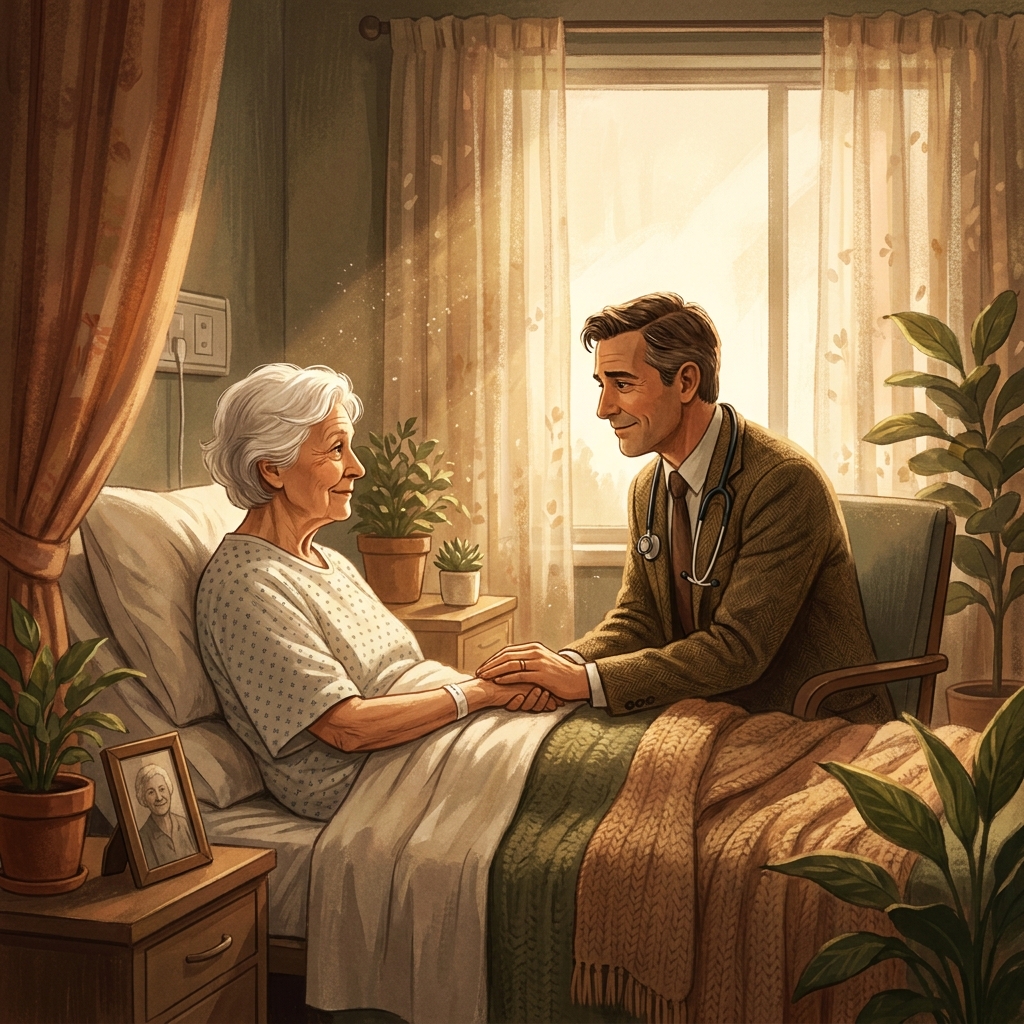
A physician sits beside a patient in the quiet hours before dawn. There are no more treatments to offer, no more tests to run. The monitors hum softly, and the room holds the weight of a life approaching its final chapter. The physician is not there to cure. The physician is there to comfort, to witness, to ensure that this person does not face the end alone.
This moment captures the essence of palliative care compassionate medicine explained through the lens of those who practice it. Rather than clinical definitions and medical jargon, the true nature of this specialty reveals itself through the stories of physicians who have chosen to walk alongside patients through serious illness.
The need for this kind of care is staggering. An estimated 56.8 million people globally require palliative care each year, yet only about 14% currently receive it. Behind this statistic are millions of individuals and families navigating serious illness without the support that could ease their suffering and honor their dignity.
This article moves beyond textbook definitions to give palliative care a human face. Through the narratives of physicians who practice this specialty, readers will discover what palliative care truly is, why it represents the highest expression of compassionate medicine, how physicians find meaning in work that confronts mortality daily, and why storytelling has become recognized as a clinical tool in its own right.
What Palliative Care Actually Is, and What It Is Not
Palliative care is specialized medical care focused on providing relief from the symptoms, pain, and stress of serious illness. It is appropriate at any age and any stage of illness. Critically, it can be provided alongside curative treatment.
The most persistent misconception conflates palliative care with hospice care. They are not the same. Hospice is a specific type of palliative care reserved for patients who are no longer pursuing curative treatment and have a prognosis of six months or less. Palliative care, by contrast, can begin at the moment of diagnosis and continue throughout the course of treatment.
The majority of adults needing palliative care do not have cancer. Cardiovascular diseases account for 38.5% of those in need, followed by cancer at 34%, chronic respiratory diseases at 10.3%, AIDS at 5.7%, and diabetes at 4.6%. This reality challenges the common assumption that palliative care belongs only to oncology wards.
The World Health Organization explicitly recognizes palliative care under the human right to health, affirming that access to this care is not a privilege but a fundamental entitlement.
One palliative care physician describes explaining this distinction to newly diagnosed patients: “I tell them that I am here to help them live as well as possible for as long as possible. My job is not to replace their oncologist or cardiologist. My job is to make sure that while they are fighting their disease, they are not also fighting unnecessary suffering.”
The Physician’s First Encounter: Entering the World of Serious Illness
What draws a physician to palliative care? Those in the field often describe it as a calling rather than a career choice. The specialty requires a particular temperament, one that finds meaning not in the triumph of cure but in the grace of presence.
The first palliative care encounter for many physicians marks a profound shift. Medical training emphasizes fixing problems, solving diagnostic puzzles, and achieving measurable outcomes. Palliative care asks physicians to sit with uncertainty, to be present without an agenda, and to accept that sometimes the most important intervention is simply showing up.
The intimacy of this specialty sets it apart. Palliative care clinicians engage with patients in deeply personal ways, navigating conversations that other physicians often avoid. They discuss death, meaning, regret, hope, and fear. They enter the spaces where medicine meets the soul.
Research published in the Annals of Palliative Medicine notes that the complicated emotions of palliative care may trigger personal memories or even unresolved trauma in physicians. This work demands not only clinical skill but emotional depth and self-awareness.
One physician recalls the moment of realization: “I was a second-year resident, and I walked into a room expecting to adjust medications. Instead, I found myself sitting with a man who wanted to talk about what his life had meant. I stayed for an hour. When I left, I knew this was where I belonged.”
Sitting With Suffering: The Moral and Emotional Weight of Compassionate Medicine
To sit with a patient who is dying is to enter sacred space. The silence carries weight. The physician becomes a witness to the final chapter of a human story, trusted with moments that families will remember forever.
Palliative care physicians experience what researchers call moral distress. This tension arises when medical systems, family wishes, or institutional constraints conflict with what the physician believes is best for the patient. A family may demand aggressive treatment that will only prolong suffering. A hospital may lack the resources for adequate symptom management. The physician must navigate these conflicts while remaining an advocate for the patient.
A palliative care physician writing in STAT News in April 2026 captured this reality: “I spend my days managing pain, breathlessness, nausea, and the existential weight of serious illness.” This contemporary voice speaks to the daily demands of the specialty.
The concept of a “good death” occupies central importance in palliative care. Physicians work to help patients achieve deaths that align with their values, surrounded by loved ones, free from unnecessary pain, and marked by dignity. When they succeed, the fulfillment is profound. When circumstances prevent it, the grief is real.
The emotional toll is significant. Burnout among healthcare professionals providing palliative care ranges from 3% to 66% across studies, with emotional exhaustion being the most common dimension. Yet despite these demands, physicians in this specialty consistently report high levels of professional fulfillment. The meaning they find in the work sustains them through its difficulties.
Why Narrative Medicine Is Now a Clinical Tool in Palliative Care
Narrative medicine uses personal storytelling by patients, families, and clinicians as a structured tool in clinical care. Far from being a soft addition to medical practice, narrative approaches have demonstrated measurable benefits.
For patients, narrative medicine increases hope and sense of peace, decreases distress, and helps them feel valued. When patients share their stories, they become active participants in their care rather than passive recipients of medical intervention.
For clinicians, narrative medicine promotes resilience by highlighting the humanism in care and helping physicians process the emotional weight of their work. The act of telling stories about difficult cases allows physicians to find meaning rather than accumulate trauma.
The Palliative Story Exchange at Dana-Farber Cancer Institute and Massachusetts General Hospital has engaged over 1,000 interprofessional palliative care clinicians and trainees in structured storytelling events. This program demonstrates how narrative practices build community, foster shared meaning, and improve sustainability among those who do this demanding work.
The Center to Advance Palliative Care endorses narrative medicine as a tool to deepen therapeutic partnerships with patients and strengthen connections within clinical teams. Physicians who engage in storytelling report deeper connections, greater empathy, and more sustainable careers.
Systematic reviews have shown that patients’ stories provide palliative care physicians with insight into psycho-emotional, sociocultural, and contextual considerations that clinical data alone cannot capture. These details allow physicians to design more personalized, humane care plans.
Physician Stories: Finding Meaning at the Bedside
The Patient Who Changed Everything
A palliative care physician recalls a patient with advanced heart failure. “Everyone thinks of palliative care as cancer care,” the physician reflects. “But this man with his failing heart taught me more about listening than any oncology patient I had treated.”
The patient was a retired carpenter who wanted to talk about the houses he had built, the grandchildren who played in them, and his fear that his family would remember only his illness. The physician learned to hear not just symptoms but the story of a life. This encounter reshaped how the physician practiced, emphasizing that non-cancer palliative care serves the majority of patients yet remains underrepresented in public awareness.
Research confirms that stories build bridges between patients, relatives, and caregivers. This carpenter’s story became a bridge that connected his medical care to his identity, his values, and his hopes for how he would be remembered.
The Conversation No One Else Would Have
A physician describes initiating a goals-of-care conversation with a patient who had never been told the full truth about her prognosis. “Her oncologist had always spoken in terms of the next treatment, the next scan, the next possibility. No one had ever asked her what she actually wanted.”
The skill and courage required for these conversations cannot be overstated. Palliative care physicians are trained to align care with patient goals rather than simply pursuing medical possibilities. They ask questions that other physicians avoid: What matters most to you? What are you hoping for? What are you afraid of?
Yale’s Shelli Feder has articulated this approach clearly: palliative care focuses on maximizing quality of life and helping patients cope, not just treating disease. The conversation no one else would have often becomes the most important conversation of a patient’s illness.
When Medicine Cannot Cure, Presence Becomes the Treatment
A physician reflects on a patient for whom all curative options were exhausted. “I remember feeling like I had nothing left to offer. Then I realized that my presence was the offering.”
Being present, managing symptoms, and honoring the patient’s wishes became the most meaningful medicine this physician had ever practiced. The concept of therapeutic presence describes the physician’s role as witness, companion, and advocate at the end of life.
Home-based palliative care enhances quality of life, reduces unnecessary hospitalizations, and increases the likelihood of patients dying in their preferred settings. Physicians who make home visits describe these encounters as among the most profound of their careers. Meeting patients where they are, literally and figuratively, represents compassionate medicine in its purest form.
The Weight Physicians Carry, and How They Sustain Themselves
Burnout in palliative care is real and must be addressed honestly. The emotional exhaustion that comes from repeatedly engaging with death and suffering takes a toll that cannot be dismissed.
Physicians cope through various strategies. Peer support and supervision provide safe spaces to process difficult cases. Narrative debriefing allows clinicians to transform painful experiences into meaningful stories. Programs like the Palliative Story Exchange offer structured opportunities for storytelling that build resilience and community.
Interdisciplinary teams share the emotional load. Social workers, chaplains, nurses, and counselors work alongside physicians, preventing isolation and distributing the weight of care across multiple shoulders.
The workforce crisis adds urgency to these concerns. The United States faces a projected shortage of 9,000 to 16,000 palliative care physicians by 2040. Clinician sustainability is not merely a personal concern but a public health issue. Those interested in understanding how survive nursing burnout strategies apply across healthcare disciplines will find parallels in the palliative care experience.
When asked what keeps them in the specialty, physicians almost always return to the same answer: the patients and the privilege of being trusted at life’s most vulnerable moments.
The State of Palliative Care Today: Progress, Gaps, and What Physicians Are Watching
The field has made significant progress. Specialized palliative care teams worldwide reached approximately 33,700 in 2025, representing a 35.6% increase from 2017. In 2024, for the first time, 53.1% of all Medicare decedents received hospice care, marking a historic milestone.
Yet gaps persist. Only 10% of Medicare beneficiaries with distant-stage cancer received early palliative care in 2019. Globally, only 14% of countries have reached “Advanced” palliative care development according to the 2025 WHO World Map.
Access disparities affect men, urban residents, those living alone, and deprived communities disproportionately. Historically underserved populations face barriers that reflect broader structural inequities.
Emerging tools offer hope. AI-driven decision support tools have significantly increased palliative care consultation rates and nearly doubled hospice referrals in oncology settings. Telehealth expands access for rural and mobility-limited patients.
Policy momentum continues with the Palliative Care and Hospice Education and Training Act, reintroduced in July 2025, which aims to establish training centers, fund research, and incentivize careers in the specialty.
What Compassionate Medicine Looks Like in Practice
Compassionate palliative care operates through interdisciplinary teams where physicians, nurses, social workers, chaplains, and counselors work together around the patient and family. This model recognizes that serious illness affects every dimension of a person’s life.
Palliative care physicians balance medical expertise with emotional intelligence. They manage pain and symptoms while also managing fear, grief, and uncertainty. The question “What matters most to you?” precedes the question “What treatment do you need?”
Community-based and home-based palliative care increasingly express this compassionate approach by meeting patients where they are. Narrative medicine connects these practices, as physicians who engage in storytelling report deeper connections and more sustainable careers. Attention to diabetes management and other chronic conditions is a reminder that palliative care extends well beyond cancer into the full spectrum of serious illness.
Conclusion: Why Palliative Care Deserves a Human Face
The physician at the bedside in the quiet hours before dawn embodies what palliative care compassionate medicine truly means. This is not a clinical checklist but a philosophy of presence, dignity, and meaning-making that transforms both patients and physicians.
For general readers, the essential message is clear: palliative care is not about giving up. It is about living as fully as possible for as long as possible, with expert support for both body and spirit.
The physicians who choose this specialty carry a weight that most of medicine avoids. They do so because they believe every person deserves to be seen, heard, and cared for at the end of life.
As palliative care grows in teams, technology, policy, and cultural acceptance, the physician stories at its heart remain its most powerful argument for why it matters.
Discover the Physicians Shaping Compassionate Medicine
Top Doctor Magazine invites readers to explore profiles of palliative care physicians and other specialists who are redefining what it means to practice medicine with humanity. Healthcare professionals are encouraged to share their own stories or nominate colleagues for editorial features.
Patients and caregivers can use Top Doctor Magazine’s physician profiles to find compassionate care providers in their area. Subscribers to the Top Doctor Magazine newsletter receive ongoing coverage of palliative care, narrative medicine, and the human side of healthcare.
Healthcare professionals interested in being featured or nominated for a Top Doctor Magazine award are welcome to visit the nomination platform.
Because every physician has a story worth telling, and every patient deserves a physician whose story includes them.