Adrenal Fatigue Functional Medicine Doctor Perspectives: Why the Diagnosis Is Contested but the Symptoms Are Real in 2026
Introduction: When Real Symptoms Meet a Contested Diagnosis
A patient wakes up exhausted despite a full night’s sleep. By mid-afternoon, a wave of fatigue and brain fog rolls in. She craves salt and sugar, struggles to get out of bed most mornings, and feels overwhelmed by stressors that never used to bother her. She visits her doctor, undergoes standard blood work, and is told that everything looks normal. Yet she feels profoundly unwell.
This scenario plays out in exam rooms across the country every day. “Adrenal fatigue” is simultaneously one of the most Googled health concerns and one of the most firmly dismissed diagnoses in mainstream medicine. That tension leaves millions of people caught between two worlds: dismissive endocrinologists on one side and overclaiming wellness influencers on the other.
The central thesis of this article is straightforward. The symptoms are real, but the label is wrong. Functional medicine doctors increasingly occupy the space between these extremes, reframing the conversation around HPA (hypothalamic-pituitary-adrenal) axis dysfunction, an evidence-backed concept that honors patient experience without sacrificing clinical rigor. A 2025 recommendation in the American Journal of Medicine and new 2026 research in Frontiers in Endocrinology signal that mainstream science is beginning to catch up with what functional medicine practitioners have long observed clinically.
The scale of the problem underscores why this matters. Studies suggest that 60 to 80 percent of doctor visits are linked to stress-related concerns, and 77 percent of people report that stress affects their physical health. That is a vast population searching for answers.
What Is Adrenal Fatigue? Origins, Claims, and Why It Resonates With Patients
The term “adrenal fatigue” was coined in 1998 by James Wilson, PhD, a naturopath and chiropractor rather than an endocrinologist. He described it as a syndrome in which the adrenal glands, worn down by chronic stress, begin to underperform and fail to produce adequate hormones.
The symptom cluster attributed to adrenal fatigue is familiar to anyone who has explored the topic online:
- Persistent exhaustion unrelieved by sleep
- Brain fog and difficulty concentrating
- Salt and sugar cravings
- Difficulty getting out of bed in the morning
- Afternoon energy crashes
- Reduced tolerance for stress
The concept resonates powerfully because it offers a coherent, named explanation for a constellation of symptoms that conventional medicine often dismisses or attributes vaguely to lifestyle. For a patient told repeatedly that “nothing is wrong,” a diagnosis, even a contested one, can feel like validation.
That resonance has been amplified by wellness influencers, supplement marketers, and clinic blogs, creating a large, commercially driven ecosystem around an unvalidated diagnosis. Yet the patient experience driving people toward this label is genuine and deserves a serious clinical response, even if the label itself is scientifically problematic.
The Conventional Medicine Position: Why Endocrinologists Reject the Diagnosis
Adrenal fatigue is not recognized as a formal diagnosis by any mainstream endocrinology society. The Endocrine Society states plainly that no scientific proof exists to support adrenal fatigue as a true medical condition, describing its symptoms as “common and non-specific.”
The evidence backing this position is substantial. A landmark systematic review of 58 studies concluded there is no scientific basis to associate adrenal impairment with fatigue. In 61.5 percent of the studies reviewed, salivary cortisol levels were no different between fatigued and healthy patients.
Conventional endocrinology recognizes only two extremes of adrenal disease: Addison’s disease, characterized by dangerously low cortisol, and Cushing’s syndrome, marked by dangerously high cortisol. There is no accepted clinical category for the “middle ground” that functional medicine practitioners describe.
The conventional camp raises a legitimate safety concern. Accepting an unproven adrenal fatigue diagnosis may delay identification of real, treatable conditions such as depression, obstructive sleep apnea, hypothyroidism, or POTS (postural orthostatic tachycardia syndrome). Endocrinologists at Cedars-Sinai further warn that glandular adrenal supplements sold for adrenal fatigue may initially feel beneficial because they contain steroids, but over time can suppress a patient’s own adrenal function.
A 2026 Medscape report reinforces this caution, noting that true adrenal crisis, while rare, is potentially fatal, and that symptom overlap with adrenal fatigue claims can dangerously delay recognition of genuine adrenal insufficiency. This concern is medically sound and belongs in any responsible discussion.
The Functional Medicine Perspective: Reframing the Conversation Around HPA Axis Dysfunction
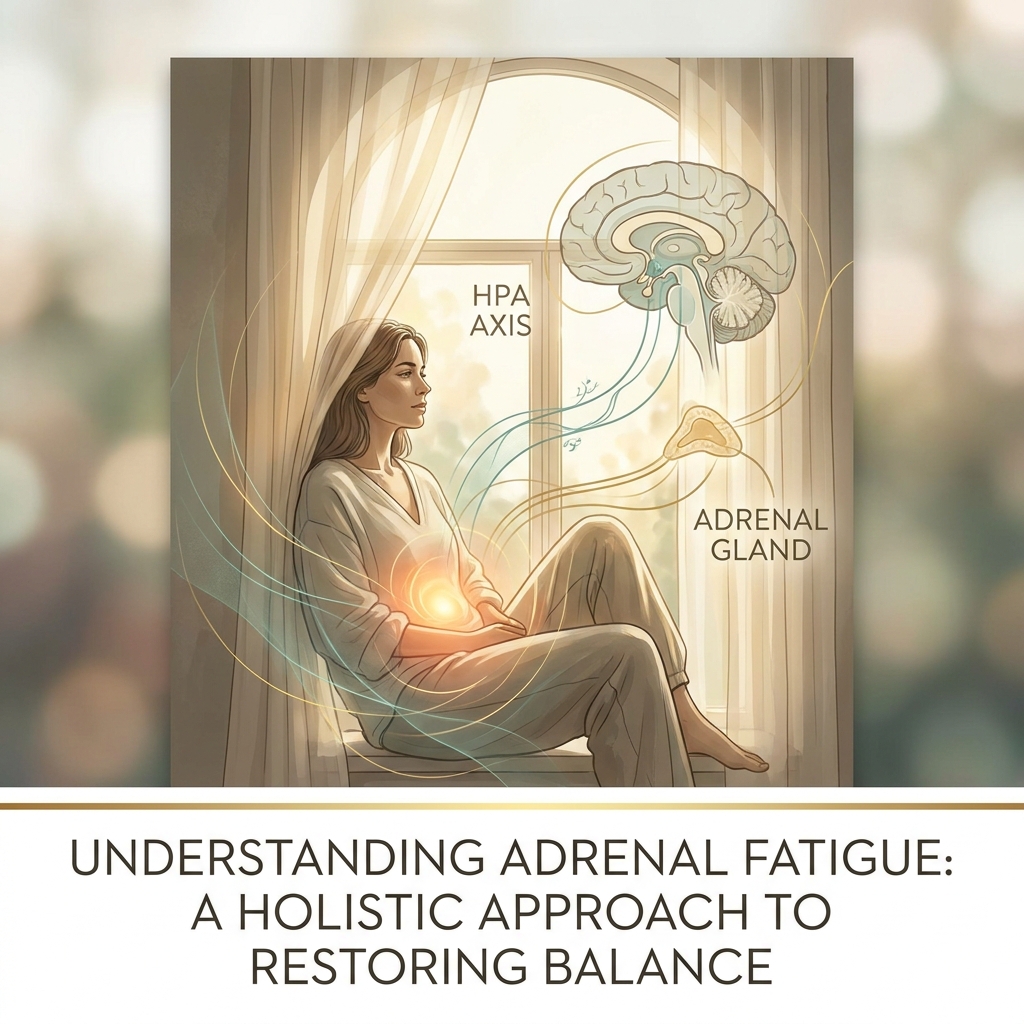
Rather than defending the discredited label, most functional medicine doctors have moved toward the term HPA axis dysfunction: a measurable dysregulation of the brain-adrenal communication system, not a failure of the glands themselves.
The concept, in accessible terms, works as follows. The hypothalamus signals the pituitary gland, which in turn signals the adrenal glands to produce cortisol. Under chronic stress, this feedback loop becomes dysregulated, producing abnormal cortisol patterns even when the glands are structurally healthy. The problem lies in signaling, timing, and feedback sensitivity, not in “exhausted” adrenals.
This reframe has gained meaningful mainstream traction. A 2025 peer-reviewed article in the American Journal of Medicine explicitly recommends that clinicians recognize HPA axis dysfunction as a clinical syndrome distinct from adrenal insufficiency and advises avoiding the problematic term adrenal fatigue. A 2026 Frontiers in Endocrinology narrative review confirms that chronic stress flattens circadian cortisol patterns, alters glucocorticoid pulsatility, and suppresses downstream metabolic axes.
An integrative review of hypocortisolism adds a crucial mechanistic distinction: chronic stress-induced low cortisol occurs through downregulation of receptors, not through autonomous adrenal exhaustion. This nuance bridges functional and conventional perspectives.
How Functional Medicine Doctors Diagnose HPA Axis Dysfunction Differently
The conventional diagnostic approach typically relies on a single mid-day cortisol blood draw. Functional medicine takes a different route, mapping cortisol patterns across the entire day.
The cornerstone is the 4-point salivary cortisol test, with samples taken at waking, mid-morning, afternoon, and evening. This captures the full diurnal cortisol curve and reveals flattening, inversion, or other pattern abnormalities that a single reading would miss. Salivary cortisol also provides a superior readout of tissue-level glucocorticoid exposure compared to total serum levels, particularly when binding globulins are altered by insulin resistance, inflammation, or estrogen therapy.
A cutting-edge 2026 Frontiers in Endocrinology paper proposes reframing the Adrenal Stress Index (ASI), widely used in functional medicine but long dismissed by mainstream endocrinology, as a candidate biomarker of inflammatory adaptation rather than a measure of adrenal secretory capacity. This lends new scientific legitimacy to a testing approach that had previously been rejected outright.
A broader functional medicine panel often includes:
- DHEAS levels
- Blood sugar and insulin evaluation
- Comprehensive thyroid panels (T3, T4, and reverse T3)
- Inflammatory markers such as hs-CRP and IL-6
- Gut health assessments
Crucially, functional medicine treats the patient as an interconnected system, looking for links between gut dysbiosis, chronic inflammation, blood sugar dysregulation, thyroid dysfunction, and HPA axis disruption rather than evaluating each in isolation. This matters because 20 percent of patients with adrenal insufficiency remain undiagnosed for over five years, partly because thyroid disorders, chronic fatigue syndrome, fibromyalgia, and autoimmune diseases mimic adrenal dysfunction.
The Science Supporting HPA Axis Dysfunction: What the Research Actually Shows
Some of the strongest evidence comes from chronic fatigue syndrome (CFS) research. Peer-reviewed studies confirm HPA axis dysfunction in a high proportion of CFS patients, including enhanced corticosteroid-induced negative feedback, basal hypocortisolism, and attenuated diurnal cortisol variation. A 2024 Frontiers in Endocrinology review reinforces these findings, confirming mild hypocortisolism and weakened daily cortisol variation in CFS patients.
This research also highlights a gender dimension that most content ignores: HPA axis dysregulation is more frequent in females, which may help explain why women disproportionately seek answers for these symptom clusters.
It is essential to distinguish what the research supports from what it does not. The evidence supports HPA axis dysregulation as a real physiological phenomenon. It does not support the specific adrenal fatigue mechanism of glands worn out by overuse.
The research is not without limitations. Many studies suffer from small sample sizes, methodological inconsistencies, and varying definitions, which is part of why the debate persists. The scientific consensus as of 2026 can be summarized as follows: the label “adrenal fatigue” lacks evidence, but the underlying reality of chronic stress-induced HPA axis dysregulation is increasingly well-documented and clinically meaningful.
What Patients Should Rule Out First: The Responsible Diagnostic Pathway
Responsible functional medicine doctors, along with the 2025 American Journal of Medicine review, agree that ruling out serious conditions must precede any HPA axis dysfunction diagnosis. Conditions to exclude include:
- True adrenal insufficiency (Addison’s disease)
- Cushing’s syndrome
- Hypothyroidism
- POTS
- Obstructive sleep apnea
- Depression and anxiety disorders
- Fibromyalgia
- Autoimmune diseases
This step is critical because the symptom overlap is substantial, and treating the wrong condition, or missing a serious one, can cause real harm. A responsible functional medicine doctor works collaboratively with conventional specialists, ordering standard endocrine workups, thyroid panels, and sleep studies as part of a comprehensive evaluation.
The practical guidance is clear. Patients experiencing these symptoms should start with a primary care physician or endocrinologist to rule out serious conditions, then seek a functional medicine evaluation if standard workups return normal. Knowing how to talk to your doctor about symptoms can make a meaningful difference in getting the right referrals and evaluations. This pathway honors both the patient’s experience and the legitimate safety concerns of conventional medicine.
Functional Medicine Treatment Approaches: What the Evidence Supports
Functional medicine frames treatment around addressing the root causes of HPA axis dysregulation rather than merely masking symptoms.
Lifestyle interventions carry the strongest evidence. Sleep optimization and circadian rhythm restoration are foundational to HPA axis recovery. Stress reduction practices such as mindfulness-based stress reduction, breathwork, and nervous system regulation help calm chronic activation. Blood sugar stabilization through dietary changes reduces the metabolic burden on the axis.
Nutrition matters as well. Anti-inflammatory dietary patterns, adequate protein intake, and avoiding blood sugar spikes and crashes all support recovery.
Adaptogenic herbs have a growing evidence base. A 2025 peer-reviewed review of ashwagandha confirms that its bioactive compounds modulate the HPA axis, with clinical trials spanning 30 to 112 days showing reductions in cortisol along with improvements in sleep quality and mood. Long-term effects remain under study, and dosage matters.
The gut-HPA axis connection is a defining feature of the functional medicine approach. Gut dysbiosis and chronic low-grade inflammation can perpetuate HPA dysregulation, making gut health assessment integral to recovery.
Recovery timelines deserve honest framing. Mild cases may resolve in weeks, but severe burnout can require 12 to 24 months or longer of consistent intervention. Setting realistic expectations is part of ethical care.
Finally, a clear warning: unregulated glandular adrenal extracts can suppress endogenous adrenal function over time. Patients should be cautious of any supplement marketed for adrenal fatigue without physician oversight. Notably, steroid and opioid use, common among people self-treating, can itself suppress ACTH and cortisol production, creating a serious iatrogenic problem.
How to Find a Functional Medicine Doctor Who Addresses Adrenal Health Responsibly
A responsible functional medicine approach differs sharply from wellness influencer overclaiming. A credible practitioner rules out serious conditions first, uses validated testing protocols, avoids the contested adrenal fatigue label, and integrates with conventional care rather than replacing it.
Patients should evaluate a functional medicine doctor using these criteria:
- Board certification in a recognized medical specialty
- Additional training in functional or integrative medicine (such as IFM certification)
- Transparency about the evidence base behind their recommendations
- Willingness to collaborate with other physicians
Patients should be cautious of practitioners who diagnose adrenal fatigue based solely on a symptom questionnaire, sell proprietary supplement protocols as the primary treatment, or discourage conventional medical evaluation.
The best functional medicine doctors operate in the space between dismissal and overclaiming, acknowledging the physiological reality of HPA axis dysregulation while maintaining scientific rigor. Top Doctor Magazine profiles integrative and functional medicine practitioners, helping patients identify credentialed professionals who take a nuanced, evidence-informed approach to complex conditions. Practitioners focused on health span vs. lifespan longevity medicine are particularly well-positioned to address the long-term consequences of chronic stress and HPA axis dysregulation.
Conclusion: The Diagnosis Is Contested, but the Suffering Is Not
The core message is worth restating. Adrenal fatigue as a label lacks scientific validation, but the underlying reality of HPA axis dysregulation, driven by chronic stress and measurable through appropriate testing, is increasingly supported by peer-reviewed research in 2026.
Both camps hold legitimate ground. Conventional endocrinologists are right to reject an unvalidated diagnosis and warn against unsafe supplements. Functional medicine doctors are right to insist that a normal cortisol blood draw does not mean a patient’s symptoms are imaginary.
The 2025 American Journal of Medicine recommendation and 2026 Frontiers in Endocrinology research represent a meaningful convergence. Mainstream science is beginning to adopt the language and framework that functional medicine has used for years.
For patients, the takeaway is empowering: those experiencing these symptoms deserve a thorough evaluation, not dismissal. A responsible care pathway exists that honors both experience and evidence. As the science of HPA axis dysfunction matures, the gap between conventional and functional perspectives is likely to narrow, and patients who seek integrative practitioners today are ahead of a curve that mainstream medicine is beginning to follow.
Find a Functional Medicine Doctor Who Takes Your Symptoms Seriously
For patients who recognize the symptoms described in this article, the next step is a comprehensive evaluation from a qualified functional medicine or integrative medicine physician.
Top Doctor Magazine’s featured physician profiles offer a valuable resource for finding credentialed, evidence-informed practitioners who specialize in stress-related health conditions, HPA axis dysfunction, and integrative endocrinology. Readers can also nominate a functional medicine doctor who has made a meaningful difference in their care for a Top Doctor Magazine feature or award, reinforcing the publication’s community-driven mission.
For ongoing, evidence-based coverage of integrative medicine, functional health, and the latest research on conditions like HPA axis dysfunction, readers are encouraged to subscribe to the Top Doctor Magazine newsletter.
The best first step is always a conversation with a qualified physician, and Top Doctor Magazine exists to help readers find the right one.