Red Light Therapy Face Mask Benefits: The Cellular Science Most Brands Won’t Tell You (+ Win a $599 Mask)
Introduction: Why Most Red Light Therapy Articles Are Leaving You in the Dark
Red light therapy face masks have traveled a remarkable journey—from NASA research laboratories to celebrity bathrooms to clinical dermatology offices. Yet despite this mainstream acceptance, most consumers still do not understand why these devices actually work at the cellular level. The red light therapy face mask benefits promoted by countless brands tend to blur together: collagen production, wrinkle reduction, acne improvement. These claims, while accurate, rarely explain the underlying science that makes the technology effective—or help consumers distinguish between devices that deliver real results and those that waste their money.
This article goes deeper. TopDoctor Magazine examines the mitochondrial mechanisms driving photobiomodulation, explores the 2024 finding that poorly fitted masks can waste up to 90% of therapeutic light, reviews clinical study protocols, and outlines exactly what to look for in a premium device. Readers will also have the opportunity to enter a giveaway for a $599 red light therapy face mask—a reflection of TopDoctor’s commitment to democratizing access to clinically validated wellness technology.
As a trusted medical media publication bridging healthcare professionals and health-conscious consumers, TopDoctor Magazine approaches this topic with the same journalistic integrity applied to its 197+ published issues.
What Is Red Light Therapy? A Brief History Most Brands Skip
Red light therapy (RLT), clinically known as photobiomodulation (PBM), uses specific wavelengths of light to trigger biological responses at the cellular level. The term “photobiomodulation” was officially added as a Medical Subject Heading by the National Library of Medicine in 2015, triggering a significant surge in peer-reviewed research validating the technology.
The origin story lends considerable scientific credibility: NASA pioneered red light therapy research for wound healing in astronauts and promoting plant growth in space. This foundational work established that specific light wavelengths could stimulate biological processes without heat or invasive procedures.
Two primary wavelength categories appear in face masks:
- Red light (630–670nm): Targets surface-level skin repair and collagen synthesis
- Near-infrared light (NIR, 810–850nm): Penetrates deeper for anti-inflammatory effects and tissue regeneration
The technology has transitioned dramatically from clinical settings to consumer devices. Professional in-office sessions cost approximately $50 each, while at-home masks range from under $50 to nearly $2,000—making the technology increasingly accessible to everyday consumers.
Mainstream medical acceptance continues to grow. The FDA approved a red-light device for dry age-related macular degeneration in 2025, and since 2020, RLT has been included in clinical guidelines for preventing cancer-therapy-related oral mucositis. The global LED light face mask market, valued at approximately $298–$322 million in 2024, is projected to reach $820+ million by 2033—signaling that this technology represents far more than a passing trend.
The Cellular Science Behind Red Light Therapy Face Mask Benefits
This section represents the core differentiator most brands will not explain—the science that goes beyond marketing copy.
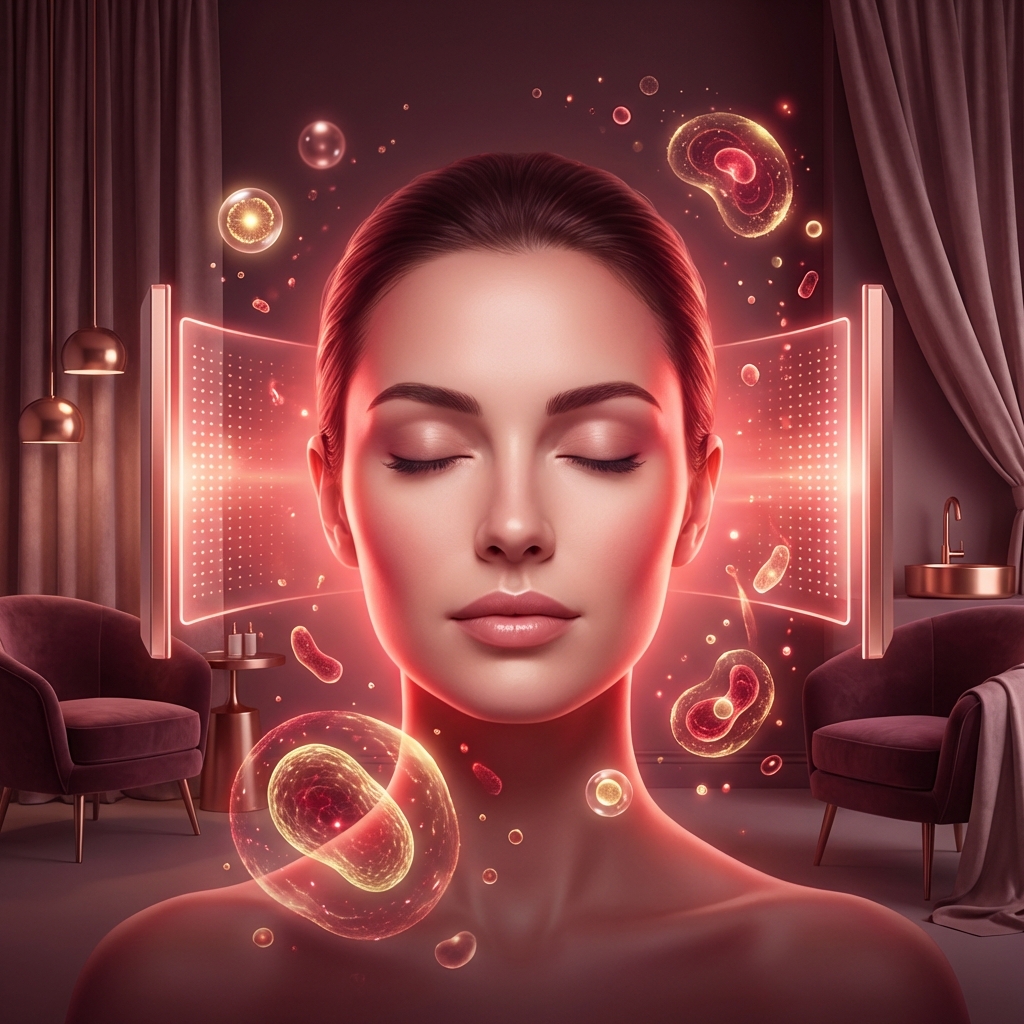
Red light therapy works at the mitochondrial level. Specific wavelengths of light interact with the enzyme cytochrome c oxidase inside mitochondria, stimulating increased ATP (adenosine triphosphate) production—the cell’s primary energy currency.
This interaction triggers a cascade effect: increased ATP production activates cellular repair processes, reduces oxidative stress, and stimulates transcription factors that regulate cell survival, proliferation, and anti-inflammatory pathways. Research from Harvard-MIT identified cytochrome c oxidase and calcium ion channels as primary chromophores in PBM, with secondary effects including ATP increases, reactive oxygen species bursts, nitric oxide release, and activation of survival transcription factors.
A critical and counterintuitive finding emerges from the research: red light therapy’s effects are strongest in stressed, aging, or metabolically compromised cells. When cells are already healthy, external light often produces minimal effect. This explains why the therapy proves most impactful for aging, damaged, or inflamed skin.
The nitric oxide connection also deserves attention: RLT releases nitric oxide from mitochondria, improving local circulation and oxygen delivery to skin tissues—a mechanism rarely discussed in consumer content.
Understanding the biphasic dose-response principle (Arndt-Schulz curve) is essential: too little or too much light can reduce or eliminate therapeutic efficacy. This is why device quality, irradiance levels, and treatment duration matter enormously.
How Red Light Therapy Stimulates Collagen, Elastin, and Skin Renewal
The cellular science connects directly to visible skin outcomes. The mitochondrial ATP boost activates fibroblasts—the specialized cells responsible for producing collagen, elastin, and hyaluronic acid.
A 2023 clinical study demonstrated that twice-weekly red light mask use over three months produced:
- 15.6% reduction in crow’s feet wrinkle depth
- 26.4% increase in skin density
- 12.5% boost in skin elasticity
The landmark Wunsch & Matuschka (2014) controlled trial published in Photomedicine and Laser Surgery demonstrated measurable increases in intradermal collagen density compared to controls. More recently, a 2025 double-blind, randomized, sham-controlled clinical trial evaluating home-use LED/IRED masks at 600–660nm/800–860nm on 60 participants confirmed efficacy and safety for wrinkle improvement and anti-aging.
UCLA Health has confirmed that researchers measuring a red light therapy mask after three months found reversal of visible aging signs, with results lasting up to a month after stopping therapy. Measurable improvements in skin texture, tone, and firmness typically appear after 8–12 weeks of consistent use.
The 2025 multi-specialist consensus published in the Journal of the American Academy of Dermatology (Maghfour et al., 93:429–443), co-authored by more than 20 specialists, confirmed RLT is safe and effective for several clinical conditions, including androgenic alopecia and acute radiation dermatitis.
The 5 Clinically Supported Red Light Therapy Face Mask Benefits
Each benefit below is anchored to specific clinical mechanisms or studies—not marketing claims.
1. Wrinkle Reduction and Anti-Aging
Red light at 630–660nm penetrates the dermis to stimulate fibroblast activity and collagen remodeling—directly addressing the structural causes of fine lines and wrinkles. The 15.6% reduction in crow’s feet depth and 26.4% increase in skin density from clinical studies provide measurable validation. Effects become visible from early sessions, but peak results require 8–12 weeks of consistent use.
2. Acne Reduction and Inflammation Control
RLT reduces pro-inflammatory cytokines and modulates immune cell activity in the skin, calming active breakouts and reducing post-acne redness. Red light in the 630nm range has been studied for acne vulgaris treatment in multiple clinical reviews. This benefit is particularly relevant for individuals with sensitive, reactive, or acne-prone skin types.
3. Post-Procedure Recovery Acceleration
A notable clinical finding: RLT accelerated post-procedure wound healing to 13 days versus 27 days without it—a 50% reduction in healing time. Enhanced ATP production and nitric oxide release accelerate tissue repair, reduce inflammation, and support faster cellular turnover. This positions a high-quality at-home mask as a valuable complement to professional aesthetic treatments.
4. Skin Tone, Texture, and Radiance Improvement
Increased hyaluronic acid synthesis improves skin hydration and plumpness, contributing to more even tone and smoother texture. NIR wavelengths (830–850nm) penetrate deeper to reduce subcutaneous inflammation that can manifest as dullness, uneven pigmentation, and chronic redness.
5. Hair Growth Support (Androgenic Alopecia)
While this article focuses on facial skin, the 2025 JAAD consensus specifically validated RLT for androgenic alopecia. RLT stimulates follicular stem cells and increases blood flow to hair follicles via nitric oxide release—reinforcing the broader clinical credibility of the technology. This mechanism shares similarities with other stem cell-based approaches to tissue regeneration being explored across medical specialties.
The 2024 Finding That Changes Everything: Why Mask Fit Matters More Than You Think
The physics are straightforward: light that does not make direct contact with skin is reflected, scattered, or absorbed by air gaps—dramatically reducing the photon dose delivered to target cells. Connecting this to the biphasic dose-response principle: if 90% of light is wasted, the effective dose may fall below the therapeutic threshold entirely. A poorly fitted mask may deliver zero clinical benefit regardless of its advertised LED count or wattage.
For consumers, this means the number of LEDs and total wattage on a spec sheet are meaningless if the mask does not conform to facial contours. Look for flexible, skin-conforming materials; ergonomic fit around the nose, chin, and eye areas; and irradiance measurements taken at skin contact rather than at a distance.
How to Read a Red Light Therapy Mask Like a Clinician
Understanding clinical specifications separates effective devices from marketing hype:
- Irradiance (mW/cm²): The measure of light power delivered per unit area of skin—the most clinically relevant specification. Top devices deliver 30–55 mW/cm².
- Wavelength specificity: Red light at ~630–660nm is the gold standard for collagen synthesis; NIR at ~830–850nm penetrates deeper for anti-inflammatory effects. Devices with both wavelengths offer broader clinical utility.
- Treatment time: Most clinical protocols recommend 10–20 minutes per session. Longer is not always better due to the biphasic dose-response.
- LED count in context: More LEDs matter only with correct wavelengths, proper calibration, and flush skin contact.
- FDA clearance: A baseline safety signal, though not a guarantee of premium performance.
The optimal protocol from published clinical studies: 3–4 sessions per week, 10–20 minutes per session, for at least 8–12 weeks. A 2025 survey found that 92% of users cited “short treatment time” as the primary reason they remained consistent—reinforcing that a 10–20 minute protocol is both clinically effective and practically sustainable.
Is Red Light Therapy Safe? What the Clinical Evidence Says
Red light therapy is considered safe for most skin types with minimal side effects, as confirmed by the 2025 JAAD multi-specialist consensus and a 2023 systematic review in Aesthetic Surgery Journal. The most commonly reported adverse event is mild, temporary redness in a small subset of participants—no serious adverse events or cancer associations were found.
Contraindications to consider:
- Photosensitizing medications: Isotretinoin, certain antibiotics, some antidepressants, and NSAIDs can increase photosensitivity.
- Pregnancy: Insufficient safety data exists; medical consultation is advised.
- Active skin cancers or lesions: RLT should not be applied over suspicious skin lesions.
- Photosensitive conditions: Individuals with lupus, porphyria, or similar conditions should seek medical guidance.
TopDoctor Magazine recommends consulting a dermatologist or healthcare provider before beginning any new therapeutic regimen.
Red Light Therapy at Home vs. In-Office: The Value Equation
Professional in-office sessions cost approximately $50 each. Following the clinical protocol of 3–4 sessions per week for 12 weeks equals roughly $1,800–$2,400 in clinic costs. A premium $599 device pays for itself within weeks of consistent use.
Budget masks under $50 may lack the wavelength precision, irradiance levels, and skin-contact fit required for clinical efficacy—potentially delivering little to no therapeutic benefit. North America represents the largest market for LED face masks, while Asia-Pacific is the fastest-growing region, with social media platforms driving significant consumer awareness. For those exploring broader health and nutrition strategies to complement their skincare routine, consistent wellness habits remain equally important to device-based therapies.
Win a $599 Red Light Therapy Face Mask: TopDoctor’s Commitment to Accessible Wellness
TopDoctor Magazine is offering readers the opportunity to win a $599 red light therapy face mask—a device representing clinical-grade wavelengths, proper skin-contact design, and the irradiance levels validated in published clinical trials.
This giveaway reflects TopDoctor’s mission: bridging the gap between clinical science and everyday consumers, and empowering readers to make well-informed healthcare decisions. With the global red light therapy market projected to surpass $1 billion by 2030, access to quality devices will increasingly define health outcomes.
Giveaway subject to official terms and conditions. TopDoctor Magazine does not receive compensation for this promotion.
Frequently Asked Questions About Red Light Therapy Face Masks
How long does it take to see results from a red light therapy face mask?
Most users notice subtle improvements in skin texture and radiance within 2–4 weeks. Clinically measurable results typically appear after 8–12 weeks of consistent use.
Can a red light therapy mask be used every day?
Clinical protocols typically recommend 3–4 sessions per week. The biphasic dose-response principle means excessive exposure can reduce therapeutic benefits.
Are red light therapy face masks safe for all skin types?
They are safe for most skin types. However, individuals on photosensitizing medications, those who are pregnant, or those with photosensitive conditions should consult a healthcare provider before use.
What wavelengths should consumers look for?
Red light at 630–660nm for collagen synthesis and near-infrared at 830–850nm for deeper anti-inflammatory effects. Devices offering both provide broader clinical utility.
Why do some inexpensive masks not work?
Two primary reasons: incorrect wavelengths and poor mask fit. The 2024 Korean study found that masks not sitting flush against the skin can lose up to 90% of therapeutic light.
Conclusion: The Science Is Clear — But the Device Matters
Red light therapy face mask benefits are grounded in robust, peer-reviewed science—from mitochondrial ATP production and cytochrome c oxidase activation to fibroblast stimulation and measurable collagen synthesis. The technology works, but only when the device delivers the right wavelengths at the right irradiance with proper skin contact.
The evidence-based protocol is straightforward: 3–4 sessions per week, 10–20 minutes per session, for 8–12 weeks. With FDA approvals expanding, multi-specialist consensus confirming clinical efficacy, and a global market approaching $1 billion, red light therapy has moved firmly from fringe wellness trend to evidence-based medical technology. The importance of sleep for physical and mental health is another foundational pillar that works synergistically with therapies like RLT, as cellular repair processes are most active during rest.
Enter to Win a $599 Red Light Therapy Face Mask — And Start an Evidence-Based Skin Journey
Readers can subscribe to the TopDoctor Magazine newsletter and share this article on social media for the chance to win a $599 clinical-grade red light therapy face mask—the kind of device that delivers the wavelengths, irradiance, and skin-contact fit validated in clinical studies.
TopDoctor Magazine remains committed to providing science-backed education for informed health and wellness decisions—because access to knowledge should never be a luxury.
Giveaway open to U.S. residents, subject to official terms and conditions.