Brain Health Supplements: Why Cell Membranes Matter More Than Neurotransmitters
Introduction: The Brain Health Supplement Aisle Has a Blind Spot
The brain health supplements market is booming. Valued at somewhere between $7.24 billion and $13.99 billion in 2026, depending on the research firm, it is projected to surpass $35 billion by 2035. Consumers clearly take this category seriously, and they have plenty of options competing for their attention.
Yet nearly every product on the shelf competes in the same narrow lane. Most brain health supplements are built around neurotransmitters, herbal adaptogens, and standard omega-3s, all of which work above the membrane level of the brain cell. What almost no mainstream brand addresses is the most fundamental layer of all: the neuronal cell membrane itself.
This is the blind spot. If the membrane is the physical foundation of every brain cell’s function, then supplements that never reach that layer may be addressing symptoms rather than root causes. The structural lipid class at the heart of this conversation is the plasmalogen, and this article explains why it may matter more than most consumers have ever been told.
What Most Brain Health Supplements Are Actually Targeting
The dominant paradigm is neurotransmitter optimization. Acetylcholine boosters such as Alpha-GPC, Huperzine A, and Bacopa appear in nearly every popular formula, alongside L-Tyrosine for dopamine and norepinephrine support and various serotonin-adjacent ingredients.
A second category leans on herbal adaptogens: Lion’s Mane, Ashwagandha, Rhodiola, and Ginkgo Biloba. These have genuine merit for stress and mood, but they do not address structural membrane health.
Then there is the omega-3 question. Harvard Health, in February 2026, confirmed that omega-3 supplements made from fish oil have not shown the same brain-protective effect as eating fish, and that there is no new evidence they are brain-boosting. That creates a real credibility gap.
Some brands now feature phosphatidylserine (PS). This is the closest competitor angle to membrane science, but PS targets a different phospholipid class and does not engage the ether-lipid mechanism unique to plasmalogens.
The common limitation is that most of these products chase acute cognitive enhancement (focus and clarity within hours) while leaving long-term, structural brain health largely untouched. This is not a criticism of the ingredients; it is a recognition that they operate at a different biological layer.
The Architecture of a Healthy Brain Cell: Why Membranes Are the Foundation
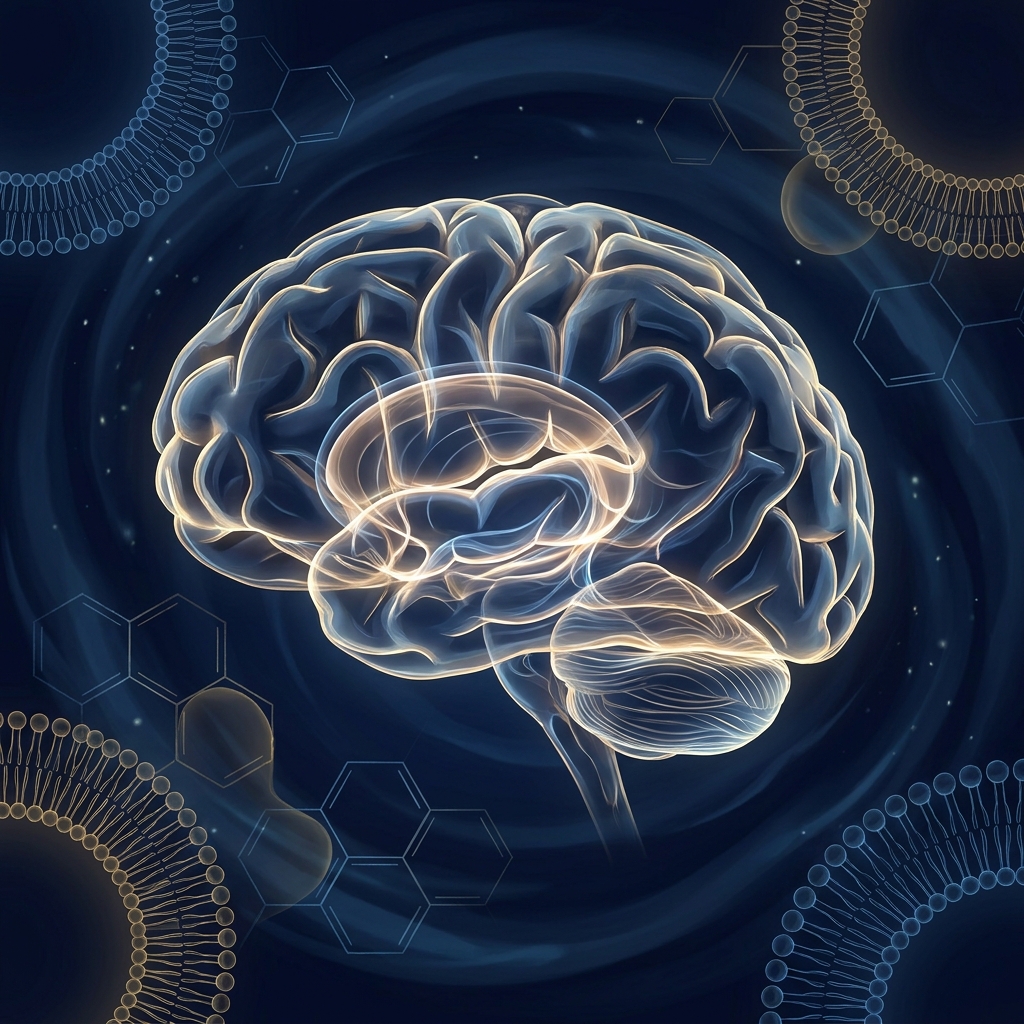
Every neuron is enclosed by a cell membrane, a lipid bilayer that governs signal transmission, receptor function, ion channel activity, and cellular communication. The composition of that membrane determines how efficiently a brain cell can fire, adapt, and survive.
Neurotransmitters operate at the surface of and between cells, but the membrane is the physical infrastructure that makes that signaling possible. If neurotransmitters are the messages, the membrane is the network itself. No amount of message optimization compensates for a degraded network.
Not all membrane lipids are equal. One specific class, the plasmalogens, plays an outsized structural and protective role.
What Are Plasmalogens? The Structural Lipid Most People Have Never Heard Of
Plasmalogens are a class of glycerophospholipids distinguished by a vinyl-ether bond at the sn-1 position, a structural feature that gives them unique antioxidant and membrane-stabilizing properties. Roughly 1 in 5 phospholipids in human tissue are plasmalogens, with the brain, heart, and immune cells especially enriched.
They are not a trace nutrient. They are a major structural component of neuronal membranes, concentrated in the very tissues most vulnerable to age-related decline. Two types matter most for the brain: ethanolamine plasmalogens, found in gray matter neurons, and choline plasmalogens, also present in brain tissue.
Their functions include maintaining membrane fluidity, defending against reactive oxygen species, supporting signal transduction, and facilitating the membrane fusion events critical to synaptic activity. Plasmalogen science spans nearly a century of research and remains active across multiple disciplines. This is established biology, not a fringe concept.
The Age-Related Decline No Supplement Brand Is Talking About
Plasmalogen levels decline naturally with aging because of reduced peroxisomal function. Peroxisomes are the organelles responsible for synthesizing plasmalogens, and their efficiency drops after age 50. This is a biochemically distinct mechanism of brain aging, separate from anything neurotransmitter support or standard omega-3 supplementation addresses.
The epidemiological signal is striking. People with high blood plasmalogen levels have been found to be 80% less likely to experience dementia and tend to live longer. The landmark Goodenowe et al. (2007) study in the Journal of Lipid Research was the first large study to establish that decreased serum ethanolamine plasmalogens are associated with Alzheimer’s diagnosis, cognitive impairments, and cerebrospinal fluid tau levels.
NIH-indexed research adds that Alzheimer’s patients with circulating plasmalogen levels at or below 75% of age-matched controls showed significantly worsened cognitive scores over one year, and a separate study found a 73% decrease in plasmalogen choline in the Alzheimer’s prefrontal cortex, evidence of extensive membrane remodeling and synaptic loss.
With approximately 56.9 million people globally living with dementia today, projected to reach 152.8 million by 2050, the urgency for membrane-level intervention is enormous. Yet no mainstream brand is educating consumers about plasmalogen deficiency as a measurable, age-related root cause.
Gray Matter vs. White Matter: Why Both Brain Cell Populations Need Support
Gray matter is made of neurons, the cells that process and transmit information. White matter consists of glial cells, oligodendrocytes, and the myelin sheaths that insulate axons and enable rapid signaling. Myelin degradation is associated with cognitive slowing, coordination problems, and neurological disease.
Virtually all brain supplements target neurons exclusively, leaving white matter health unaddressed. Glial cells, however, have their own plasmalogen requirements. The primary plasmalogen class in glial cells and white matter is built on omega-9 (oleic acid), distinct from the omega-3 (DHA) plasmalogens concentrated in neuronal gray matter. A comprehensive approach requires supporting both.
How Prodrome Science Approaches Brain Health Differently
Prodrome Science was founded by Dr. Dayan Goodenowe, PhD, a neuroscientist, biochemist, and synthetic organic chemist. His work spans more than 30 years of lipid and metabolomic research, including the patented ion cyclotron resonance mass spectrometry technology he developed in 1999 that enabled large-scale plasmalogen measurement in human populations.
The company’s philosophy is “prodrome-based,” meaning it aims to optimize biochemistry before illness takes root, a preventive paradigm distinct from symptom-based care. Dr. Goodenowe was the first to design, invent, patent, and develop targeted plasmalogen precursors for human use.
The key insight: plasmalogens delivered directly are degraded in the gut. Prodrome’s formulations instead deliver precursor molecules that bypass gut degradation and convert into plasmalogens within the body’s own cells. The concentration advantage is significant: 900mg of plasmalogens per serving and 27,000mg per bottle, compared with other products cited at 0.5mg to 4mg per capsule. This directly answers the dosage and bioavailability limitations flagged in a 2025 FASEB BioAdvances review. Products are manufactured in a cGMP-certified facility in Temecula, CA, and third-party lab tested for purity.
PlasmalogenN3™ and ProdromeGlia™: A Dual-Pathway Approach to Brain Membrane Health
PlasmalogenN3™ (formerly ProdromeNeuro™) is an omega-3 (DHA) plasmalogen precursor formulated to support neuronal gray matter. The rationale is targeted: DHA-containing ethanolamine plasmalogens are the subtype most depleted in Alzheimer’s disease brain tissue and serum.
ProdromeGlia™ is an omega-9 (oleic acid) plasmalogen precursor formulated to support glial cells, white matter, and myelin. Together, the two create a dual-pathway approach addressing both major brain cell populations, something no competitor product ecosystem currently replicates.
The premium PC+ line (Glia PC+ and Neuro PC+) incorporates plasmalogen-enriched egg yolk oil, with egg yolk-derived phosphatidylcholine described as biochemically identical to human PC and capable of crossing the blood-brain barrier. The plasmalogen oils are vegan-compatible, and products are soy-free, gluten-free, and non-GMO.
What the Clinical and Preclinical Research Shows
In a clinical trial presented at the Alzheimer’s Association International Conference in July 2021, 73% of participants with mild to moderate cognitive impairment experienced increased cognition, increased mobility, or both after just four months of ProdromeNeuro supplementation. A registered ClinicalTrials.gov study (NCT04484454) further investigated the omega-3 oil for aging-related cognitive decline.
A 2022 study in Frontiers in Molecular Biosciences found that plasmalogen supplementation in aged mice alleviated hippocampal synaptic loss, promoted synaptogenesis and neurogenesis, and inhibited age-related microglial neuroinflammation. ConsumerLab acknowledges that loss of ethanolamine plasmalogens is linked with aging and Alzheimer’s, with the greatest decreases in the most affected brain areas.
The 2025 FASEB BioAdvances review noted that insufficient dosage and limited bioavailability likely explain why some plasmalogen studies showed no significant improvement, precisely the limitation Prodrome’s high-dose, synthetically pure precursor formulation is designed to overcome. Research is ongoing, individual results vary, and these statements have not been evaluated by the FDA.
The ProdromeScan™: Measuring What Other Brands Cannot
The ProdromeScan™ is a comprehensive blood test reporting over 40 biomarkers, including plasmalogens, phospholipids, mitochondrial function, inflammation markers, cholesterol transport, and kidney function. This matters because plasmalogen deficiency is not detectable through standard blood panels. Without specialized testing, most people have no way of knowing their membrane health status.
No major consumer brain supplement brand offers blood-based plasmalogen testing to guide supplementation. ProdromeScan is available to qualified health professionals registered with Prodrome, with a home blood draw service available through Travalab for $85. This enables a test, supplement, retest model that consumer nootropic brands cannot replicate, supported by Prodrome’s professional-first platform and Elite Practitioner network.
How to Evaluate Any Brain Health Supplement: A Framework for Smarter Decisions
Consumers can apply five questions to any brain supplement:
- Does it address the cell membrane, or only what happens above it? Structural support versus surface-level neurotransmitter support.
- Is the active ingredient bioavailable enough to reach the brain? Standard omega-3 versus plasmalogen precursor form.
- Is the dosage clinically meaningful? The FASEB BioAdvances review identified insufficient dosage as a common failure point; compare against Prodrome’s 900mg per serving.
- Is there peer-reviewed research for the specific mechanism, not just the ingredient category in general?
- Can you measure your baseline and track progress? Biomarker testing versus subjective self-reporting.
Over 41% of manufacturers are now intensifying investment in clinical trials, but consumers should look for published, indexed research rather than brand-commissioned studies. And while roughly 55% of consumers prefer plant-based options (a valid preference), it should be balanced against mechanism specificity and clinical evidence.
Conclusion: True Brain Health Starts at the Membrane
The brain health supplements market is growing explosively toward $35 billion by 2035, yet the vast majority of products compete on neurotransmitter chemistry and herbal adaptogens, never reaching the membrane layer where structural brain health is determined.
Plasmalogens, the critical structural lipids that decline with age, are measurably depleted in Alzheimer’s disease and are not replenished by any conventional supplement on the market. Prodrome Science differentiates through 30-plus years of lipid science, patented precursor technology, high-dose bioavailable formulations, dual-pathway gray and white matter support, and the only biomarker testing infrastructure in the consumer space.
Brain health is not just about optimizing neurotransmitters. It is about maintaining the structural integrity of the cells that make cognition possible. With 56.9 million people living with dementia today and projections pointing to 152.8 million by 2050, the time to invest in foundational brain health is before symptoms appear. Understanding how lipid markers can predict cardiovascular events decades in advance underscores just how powerful biomarker-based prevention can be across multiple organ systems, including the brain.
Ready to Go Deeper Than the Standard Supplement? Explore Prodrome Science
Readers ready to address brain health at the membrane level can explore Prodrome Science’s plasmalogen precursor products: PlasmalogenN3™ for neuronal gray matter support and ProdromeGlia™ for glial white matter support.
To understand personal plasmalogen status, readers can learn about the ProdromeScan™, the comprehensive biomarker test measuring over 40 lipid and metabolic markers, and connect with a qualified health professional or Prodrome’s practitioner network.
For the full science, Dr. Dayan Goodenowe’s book Breaking Alzheimer’s details plasmalogen deficiency and the prodrome-based approach to brain health.
Every product is cGMP-certified, Made in the USA, third-party lab tested, and backed by 30-plus years of peer-reviewed lipid research. For those also navigating the broader landscape of sleep and aging, which intersects closely with cognitive decline and neurological health, foundational membrane support may be a critical piece of a comprehensive wellness strategy.
These statements have not been evaluated by the Food and Drug Administration. This product is not intended to diagnose, treat, cure, or prevent any disease.