Switching From Finasteride to Dutasteride: Protocol, Timeline, and Risks
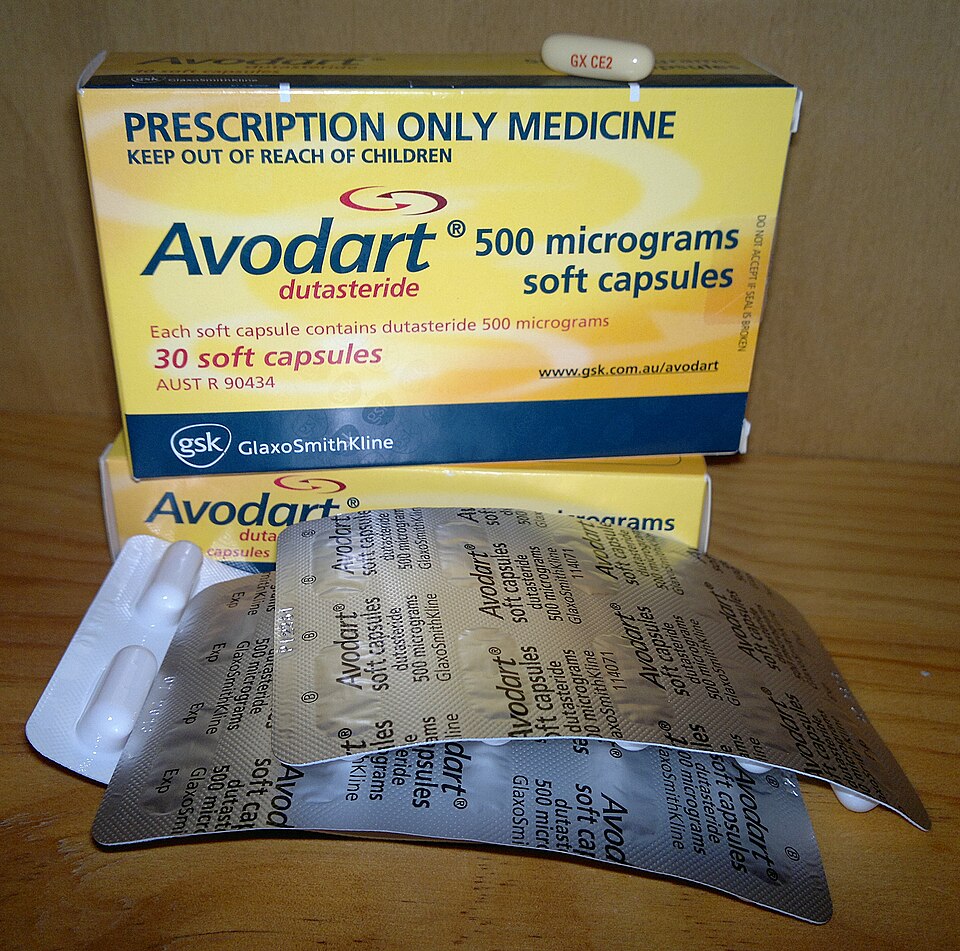
Switching from finasteride to dutasteride is the standard next step when finasteride has stopped working. You do not need a washout: take your last finasteride tablet, then start dutasteride 0.5 mg the next day. Expect a second shed in weeks 2 to 8, visible regrowth at 3 to 6 months, and a full result at 12 to 18 months.
The switch is not a stronger version of the same drug. It is a broader blockade of the hormone that drives hair loss, with a much longer half-life and a commitment that is harder to reverse.
Why Men Switch: What Finasteride Misses
Both drugs are 5-alpha reductase inhibitors. They block the enzyme that converts testosterone into dihydrotestosterone, or DHT, the hormone that shrinks hair follicles in androgenetic alopecia. The difference is coverage.
Finasteride blocks only the type II form of the enzyme. At 1 mg a day, it cuts serum DHT by about 70 percent. That is enough for many men, and finasteride is the most studied hair loss drug in existence. But some men keep losing hair on it, or never gain much in the first place, because the type I enzyme keeps producing DHT in the scalp and skin.
Dutasteride blocks both type I and type II. At 0.5 mg a day, it cuts serum DHT by 90 to 95 percent, and scalp DHT by about 50 to 60 percent more than finasteride does at standard dosing. That deeper suppression is the whole reason for the switch. It is also the reason the side effects deserve a second look before you commit.
What the Head to Head Trials Actually Show
Three randomised trials directly compared the two drugs at hair loss doses, all over 24 weeks.
| Trial | Men | Result at 24 weeks |
|---|---|---|
| Gubelin Harcha, 2014, Phase 3 | 917 men, aged 20 to 50 | Dutasteride 0.5 mg raised vertex hair count by 89.6 hairs per cm2, vs 56.5 for finasteride 1 mg, vs minus 4.9 for placebo. Dutasteride also won on hair width and frontal photographs. |
| Eun et al., 2010, Korean cohort | 153 men | Dutasteride 0.5 mg produced significantly greater vertex hair counts than finasteride 1 mg. |
| Olsen et al., 2006 | 416 men | Dutasteride 2.5 mg outperformed finasteride 5 mg on hair count and global photographs. Note this trial used much higher doses than the standard hair loss protocol. |
A network meta-analysis in JAMA Dermatology in 2022, covering 23 randomised trials of all medical hair loss therapies, concluded that dutasteride 0.5 mg daily had the highest probability of being the most effective treatment for increasing total hair count, ahead of finasteride 1 mg, oral minoxidil, and topical minoxidil.
Two limits matter. First, every head to head trial ran 24 weeks, so they say nothing about year two or beyond. Second, hair count is not the same as a result you can see in the mirror. A gain of 30 extra hairs per cm2 is real and measurable, and it may or may not change how your hair looks.
The One Switch Study: What Happened to Men Who Already Failed Finasteride
The trial data above compares men starting fresh on one drug or the other. The question most readers actually have is different: if finasteride already failed me, will dutasteride help? There is only one study that asks exactly that, and it is small.
Jung and colleagues enrolled 35 Korean men with androgenetic alopecia who had shown no significant improvement after at least 6 months of finasteride 1 mg a day, and gave them dutasteride 0.5 mg a day for 6 months. Of the 31 who finished, 24 (77.4 percent) improved on global photography compared with their post-finasteride photos: 17 slightly, 6 moderately, and 1 markedly. Seven (22.6 percent) were unchanged, and none got worse. Hair density rose 10.3 percent, from 87 to 96 hairs per cm2, and hair thickness rose 18.9 percent. Six patients (17.1 percent) reported transient sexual dysfunction.
Read that study honestly. It is single-arm, with no placebo group and no group that stayed on finasteride, it lasted 6 months, and it enrolled Korean men only. It shows that improvement after a poor finasteride response is possible. It does not prove dutasteride causes more regrowth than staying on finasteride would have.
How to Switch: Direct Switch vs Tapered Crossover
There is no mandatory washout period, because both drugs work on the same hormonal pathway. Two transition protocols are used in practice. Neither has been tested head to head in a trial, so the choice is a matter of prescriber judgment and your tolerance for shedding.
| Protocol | How it works | Who it fits |
|---|---|---|
| Direct switch | Take your last finasteride dose on schedule, then start dutasteride 0.5 mg the next day, once daily. | Most men. Simple, and the standard approach in clinic practice. |
| Tapered crossover | Keep taking finasteride 1 mg daily while adding dutasteride 0.5 mg two or three days a week, for 8 to 12 weeks. Then stop finasteride and take dutasteride daily. | Men who want to soften the transition, or who are anxious about a shedding phase. The idea is to let dutasteride build up in tissue before finasteride leaves the system. |
The tapered crossover is practitioner practice, not trial evidence. The logic is sound: dutasteride takes 4 to 6 months to reach steady state, while finasteride clears within a day, so overlapping the two covers the gap. But no study has shown the taper reduces shedding or improves the final result, and it costs more during the overlap because you are paying for two drugs.
Practical details for either protocol: take dutasteride 0.5 mg once a day, at the same time, with or without food. Swallow the soft capsule whole. If you miss a dose, take it when you remember, unless it is almost time for the next one.
The Half-Life Problem: Why This Switch Is Hard to Undo
Finasteride has a terminal half-life of 5 to 6 hours. It is effectively cleared from plasma within a day of stopping. If a side effect appears, stopping the drug usually resolves it within days to weeks.
Dutasteride has a terminal half-life of about 5 weeks. It takes 4 to 6 months to reach steady state, and it stays detectable in serum for 4 to 6 months after the last dose. If a side effect appears, it may persist for months after you stop, because the drug is still in your tissue.
That persistence changes the risk calculation. A side effect on finasteride is a short experiment. A side effect on dutasteride is a commitment of months, because the drug is still in your tissue. It is also why the FDA label bars blood donation for 6 months after the last dose.
What Happens Month by Month After the Switch
| Timeframe | What usually happens |
|---|---|
| Days 1 to 7 | Nothing visible. Dutasteride is building up in tissue and has not yet reached meaningful levels. Finasteride is gone within a day. |
| Weeks 2 to 8 | A second shedding phase is common. The deeper DHT drop pushes resting hairs out at once, and the shed can look worse than the one you had when you started finasteride. It settles on its own. |
| Months 2 to 4 | Shedding slows. The scalp may look thinner before it looks better, because the shed hairs have not yet been replaced. |
| Months 3 to 6 | Visible regrowth usually starts here: fine hairs thickening, the part looking narrower, the crown looking denser in photos. |
| Months 6 to 12 | Continued improvement. This is when the Jung switch study measured its result, and it is the earliest fair point to judge the switch. |
| Months 12 to 18 | Full result. If there is no improvement by 18 months, dutasteride has probably done what it can do, and the conversation turns to adding a treatment or considering surgery. |
Take baseline photos before you switch, in the same light, same angle, same hair length. Without them, you will not be able to judge months 6 to 12 honestly.
Side Effects: What the Numbers Say
The side effect profile of dutasteride at 0.5 mg a day is similar to finasteride at 1 mg a day, but the numbers are slightly higher and the persistence is longer.
The Avodart FDA label, from 2-year trials at 0.5 mg a day, reports impotence in 4.7 percent of users, decreased libido in 3 percent, and ejaculation disorders in 1.4 percent. In the Jung switch study, 6 of 35 men (17.1 percent) reported transient sexual dysfunction, though the study was small and the figure is higher than the label trials. A 2014 meta-analysis by Gupta and Charrette found no statistically significant difference in adverse event rates between dutasteride 0.5 mg and finasteride 1 mg over 24 weeks.
Other reported effects include breast tenderness or enlargement, dizziness, and depressed mood. The label also lists allergic reactions, including swelling of the face and lips, which need urgent care.
One topic deserves an honest paragraph. Persistent side effects after stopping 5-alpha reductase inhibitors are reported in case literature and patient reports, and they remain contested. The 24-week trials were not designed to capture effects that emerge slowly or persist after stopping. The honest position is that the trials show no difference in adverse events over 24 weeks, the case literature describes men with persistent symptoms, and the question is not settled.
Who Should Not Switch
Do not switch if you are a woman. Finasteride and dutasteride are not prescribed to women, because they can harm a male fetus. Women who are pregnant, or who may become pregnant, should not take these drugs and should not handle crushed or broken finasteride tablets or leaking dutasteride capsules, because the drug can be absorbed through the skin. Men taking dutasteride should keep the capsules away from pregnant partners for the same reason.
Talk to your doctor first if you have liver disease, because both drugs are processed by the liver. Tell your doctor about any history of prostate trouble, because dutasteride lowers PSA, the blood test used in prostate screening, by about half after 6 months, and the result must be interpreted accordingly.
Do not switch because a forum told you dutasteride is simply better. Switch because finasteride has had a fair trial, usually 12 months, and the result was inadequate, and because you understand that the stronger drug brings a longer commitment and a slower exit.
What It Costs
Dutasteride costs more than finasteride, because fewer programs sell it and the capsule is more expensive to make. The figures below are November 2026 published prices, not live quotes.
Dutasteride costs more than finasteride. The figures below are November 2026 published prices, not live quotes.
|—|—|
| Generic finasteride 1 mg, pharmacy with a discount card | 7 to 45 dollars a month |
| Generic finasteride 1 mg, cheapest published program (Keeps) | 14 dollars a month |
| Generic dutasteride 0.5 mg, pharmacy with a discount card | 10 to 30 dollars a month |
| Generic dutasteride 0.5 mg, telehealth programs | 42 to 59 dollars a month |
| Generic dutasteride 0.5 mg, all-in program (Gentle Hair) | 25 dollars a month, medicine, doctor, and shipping |
The cheapest route is almost always a prescription from your own doctor filled at a pharmacy with a discount card, rather than an all-in telehealth program. The telehealth premium buys convenience and follow up, not a different drug.
Red Flags: See a Doctor Promptly
Seek urgent care for swelling of the face, lips, or tongue, difficulty breathing, or a severe allergic reaction. See your doctor soon if you develop breast lumps, pain, or discharge, persistent sexual side effects that do not improve after stopping, depressed mood, or testicular pain or swelling. Tell any doctor who orders a PSA test that you take dutasteride, because it lowers the result and the test must be interpreted accordingly.
The Bottom Line
Switching from finasteride to dutasteride trades a narrower, shorter acting blockade for a broader, longer lasting one. The trials show dutasteride grows more hair than finasteride at 24 weeks, and the one switch study shows that most men who failed finasteride improved on dutasteride over 6 months. But the switch study is small and uncontrolled, the trials are short, and the drug stays in your body for months after you stop.
If surgery is on your mind instead, read our guide to hair transplant at 6 months for what normal regrowth looks like, and our shock loss timeline for the shedding phase that follows a transplant. For a newer non-surgical option, see our review of exosome therapy for hair loss.
Frequently Asked Questions
Do I need a washout period when switching from finasteride to dutasteride?
No. Most dermatologists have you take your last finasteride dose on schedule, then start dutasteride 0.5 mg the next day. The two drugs work on the same hormonal pathway, so no pause is needed.
How long does it take dutasteride to work after switching?
Expect a second shedding phase in weeks 2 to 8, visible regrowth at 3 to 6 months, and a full result at 12 to 18 months. Dutasteride takes 4 to 6 months to reach steady state in tissue.
Is dutasteride stronger than finasteride for hair loss?
Yes, on the measures trials use. Dutasteride 0.5 mg cuts serum DHT by 90 to 95 percent, vs about 70 percent for finasteride 1 mg. In the 917-man Phase 3 trial, dutasteride raised hair count by 89.6 hairs per cm2 at 24 weeks, vs 56.5 for finasteride.
What are the side effects of switching to dutasteride?
The Avodart label reports impotence in 4.7 percent, decreased libido in 3 percent, and ejaculation disorders in 1.4 percent at 0.5 mg a day. A meta-analysis found no significant difference in adverse event rates vs finasteride over 24 weeks, but dutasteride stays in the body for months after stopping, so side effects can persist longer.
Can women switch from finasteride to dutasteride?
No. Finasteride and dutasteride are not prescribed to women, because they can harm a male fetus. Women who are pregnant or may become pregnant should not take them or handle crushed tablets or leaking capsules.
How much does dutasteride cost per month?
Generic dutasteride costs 10 to 30 dollars a month with a pharmacy discount card, or 42 to 59 dollars a month through telehealth programs, as of November 2026. Generic finasteride is cheaper, from 14 dollars a month at the cheapest published program.