GLP-1 Muscle Loss: How to Prevent It
About a quarter to two fifths of the weight you lose on a GLP-1 drug can be lean mass if you do nothing to protect it. You can cut that share sharply with two habits: lift weights two to three times a week, and eat about 1.2 to 1.6 grams of protein per kilogram of your goal weight every day.
That is the range from the body composition scans in the STEP-1 and SURMOUNT-1 trials. Nothing else on the market has trial evidence for this job. This guide covers how much protein that is for your weight, what lifting looks like when your appetite is gone, and which popular fixes have no evidence at all. It is written for patients on Ozempic, Wegovy, Mounjaro, or Zepbound who want to lose fat and keep the muscle that lets them climb stairs, carry groceries, and stay independent.
How Much Muscle Do People Actually Lose on GLP-1 Drugs?
The best numbers come from the DEXA substudies of the two largest trials.
In STEP-1, 1,961 adults took semaglutide 2.4 mg weekly or placebo for 68 weeks and lost about 14.9 percent of their body weight. In the DEXA substudy of about 140 participants, roughly 39 percent of the weight lost was lean mass and about 61 percent was fat. In SURMOUNT-1, the DEXA substudy of 160 participants reported lean mass down 10.9 percent at week 72 on the 10 mg arm, about one quarter of total weight lost. Reviews pooling the data put the fat free mass share at 30 to 40 percent.
Two caveats keep this honest. First, lean mass on a scan is not the same thing as muscle: it also includes water, organs, and connective tissue, so true muscle loss is smaller than the lean mass figure. Second, researchers writing in JAMA in 2024 argued the alarm is overstated, because fat falls proportionally more than lean tissue. Both points are true. Neither makes the problem disappear, because the absolute loss still matters, especially for older adults and people who lose 15 to 20 percent of their body weight.
Why does it happen? A GLP-1 drug does not eat muscle directly. It cuts your appetite, so you eat far fewer calories, and your body covers the gap by burning fat and some lean tissue. The faster the weight comes off, the larger the lean share tends to be.
How Much Protein Do You Need on a GLP-1?
Protein is the raw material, and it is the first thing to fall when appetite drops, because it is the most filling and the hardest to face when you feel nauseous.
A 2025 joint advisory from four US nutrition and obesity organizations suggests roughly 1.2 to 1.6 grams of protein per kilogram of body weight a day while losing weight, based on goal weight rather than current weight. A 2006 meta-regression of 87 studies of energy restricted diets, and a 2016 review, converge on about 1.6 grams per kilogram a day as the minimum intake associated with preserved fat free mass during energy restriction.
Here is what that looks like in practice, using goal weight:
| Goal weight | Protein at 1.2 g per kg | Protein at 1.6 g per kg |
|---|---|---|
| 70 kg (154 lb) | About 85 g a day | About 110 g a day |
| 85 kg (187 lb) | About 100 g a day | About 135 g a day |
| 100 kg (220 lb) | About 120 g a day | About 160 g a day |
If you train hard, some sports nutrition guidance goes higher, up to 2.0 to 2.4 grams per kilogram. In a 2016 trial, young men in a steep deficit who trained intensely and ate 2.4 grams per kilogram gained about a kilogram of lean mass. That is a young, intensely training population, not a typical patient, so treat 2.4 as a ceiling for athletes, not a target for everyone.
Hitting the target on a suppressed appetite takes tactics. Eat protein first at every meal, before anything else on the plate. Split your intake across three or four small meals. Use liquid protein when solid food is unappealing: a shake, Greek yogurt, cottage cheese, or a protein enriched soup is easier to finish than a chicken breast during a nausea flare. Keep a simple protein list on your fridge: eggs, about 6 grams each; Greek yogurt, about 15 to 20 grams a cup; a palm sized portion of chicken or fish, about 25 to 30 grams; a scoop of whey, about 20 to 25 grams.
Tell your doctor your protein target and ask them to check it against your kidney function. High protein is not right for everyone.
What Kind of Strength Training Actually Protects Muscle?
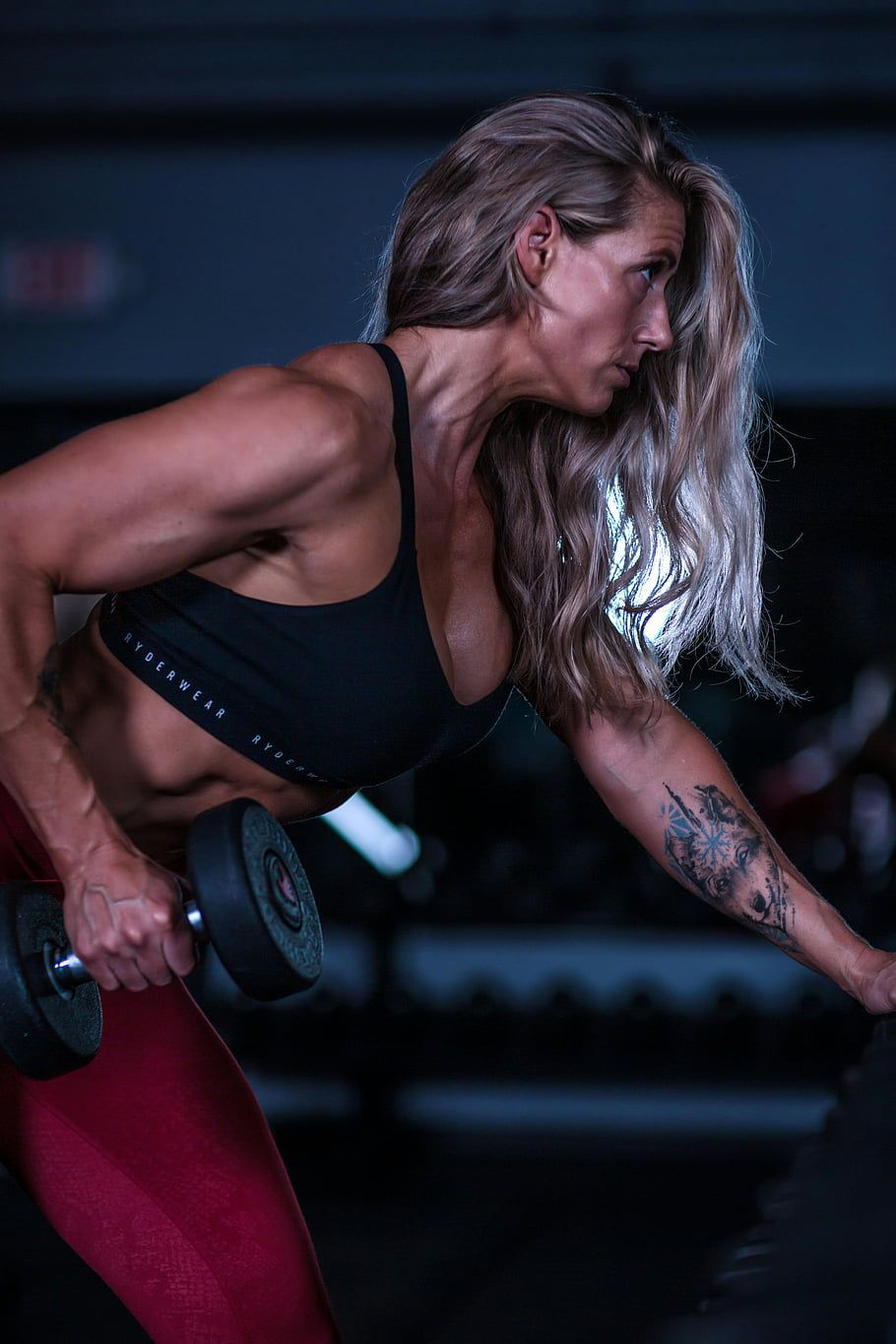
Resistance training is the signal that tells your body the muscle is still needed. Without it, your body sees muscle as expensive tissue it can afford to lose while calories are scarce. With it, your body holds on to muscle even in a deep deficit.
The evidence is consistent. A 2018 meta-analysis found resistance training abolished the lean mass loss otherwise seen with diet alone in older adults. In a 2017 trial, lean mass fell about 5 percent with aerobic exercise only, against about 2 percent with resistance training. Lifting protects muscle. Cardio alone does not.
The protocol is simple, and it does not need a gym membership. Two to three full body sessions a week, on non consecutive days. Six to eight exercises covering the big movements: a squat or leg press, a hinge like a deadlift, a push like a chest press, a pull like a row, an overhead press, and a carry or a core movement. Two to three sets of 8 to 12 repetitions, at a weight that feels hard by the last two repetitions. Add a little weight, a repetition, or a set every week or two. This progression is the signal.
Thirty to 40 minutes a session is enough. Three sessions a week is the pattern most used in the trials, and two still helps a great deal if three is not realistic. Start lighter than you think you need to, especially in the first month on a GLP-1. If you have never lifted before, two or three sessions with a trainer or a physical therapist at the start are worth the cost.
What About Walking and Cardio?
Walking helps, but it does not replace lifting. It burns calories, protects your heart, and keeps you mobile, but it does not send a strong muscle preservation signal, because the load is too light. The 2017 trial above is the proof: the aerobic only group lost the most lean mass.
The right combination is lifting two to three times a week plus walking on the other days. Build your daily step count gradually rather than jumping to a big number in week one. If your knees or back limit you, a stationary bike or swimming can substitute. Cardio is for your heart and your calorie burn. Lifting is for your muscle.
One warning: do not stack a crash diet on top of your medication. A moderate deficit preserves muscle far better than a severe one, and the drug is already cutting your intake. If you are losing more than about 1 percent of your body weight a week, tell your doctor.
What Does a Muscle Protecting Week Look Like?
Here is a sample week for a patient stable on their GLP-1 dose, with no injuries and their doctor’s agreement to exercise.
| Day | What to do |
|---|---|
| Monday | Full body lift, 30 to 40 minutes: goblet squat, dumbbell bench press, one arm row, Romanian deadlift, overhead press, farmer’s carry. Protein target at every meal. |
| Tuesday | Walk 30 minutes. Protein first at lunch and dinner. |
| Wednesday | Rest or gentle stretching. Check your weight and waist once, same time of day, and write it down. |
| Thursday | Full body lift, 30 to 40 minutes: leg press or split squat, lat pulldown, incline press, hip hinge, lateral raise, plank. |
| Friday | Walk 30 minutes. |
| Saturday | Full body lift, 30 to 40 minutes, or a longer walk if you are tired. |
| Sunday | Rest. Plan next week’s meals and make sure protein is on the list. |
Track three numbers once a week: your weight, your waist, and your strength on two lifts. If your weight is falling, your waist is shrinking, and your strength is steady or rising, the plan is working. If your strength is falling fast, eat more protein first, then tell your doctor. A DEXA scan at baseline and again after titration is worth asking about if you are older, losing a large amount of weight, or already low on muscle.
What Does Not Work?
The peptides people add to protect muscle, ipamorelin, CJC-1295, sermorelin, and tesamorelin, have no human trial showing they prevent lean mass loss during GLP-1 treatment. They are prescription products with their own risks and costs, and they are not a substitute for lifting and protein. Our guide to whether peptides are safe covers the side effect picture in full.
Creatine is a partial exception. A 2023 systematic review confirmed that creatine during caloric restriction supports muscle performance, strength maintenance, and lean mass retention. But no GLP-1 specific creatine trial was found in the sources checked, so the evidence is borrowed from dieting studies. It is reasonable to ask your doctor about it, but it is a small addition to lifting and protein, not a replacement. BCAAs, collagen powder, and fat burners do not have evidence for muscle preservation on a GLP-1. A scoop of whey protein does the job that BCAAs claim to do, for less money.
Prolonged GLP-1 use has been associated with low B12, vitamin D, and magnesium, so ask your doctor to check them as part of routine monitoring.
When Should You Talk to Your Doctor?
Most muscle loss on a GLP-1 is gradual and preventable, but some signs mean you should call your doctor rather than push through: you are losing weight very fast, more than about 1 percent of your body weight a week, for several weeks; you feel weak in a way that is getting worse, not just tired after a workout; you cannot climb a flight of stairs or stand up from a chair without help, when you could before; you are losing hair in clumps, feeling dizzy often, or fainting; you cannot keep protein down at all, even in liquid form, for more than a few days; you have kidney disease, or your kidney blood tests have changed since starting the drug.
These are not reasons to stop the drug on your own. They are reasons to call the prescriber and review the dose, the protein plan, and the monitoring. Bring a list of your medicines, your protein target, and your weekly training log to the appointment, so the conversation starts from facts, not guesses. Weight regain after stopping is common, which is why our companion guide on how to keep weight off after stopping Ozempic is worth reading before you make any change.
If your blood sugar is part of the picture, our patient guide on GLP-1 vs metformin for prediabetes covers a 2026 study of 256,492 adults and what it does and does not prove. Bring its questions to your next appointment.
Frequently Asked Questions
How much muscle do you lose on Ozempic?
In the STEP-1 trial, about 39 percent of the weight lost on semaglutide was lean mass. In SURMOUNT-1, the figure was about one quarter for tirzepatide. A fair range is a quarter to two fifths of the weight lost. Lean mass includes water and connective tissue, so true muscle loss is smaller.
Can you prevent muscle loss on a GLP-1?
Yes, largely. The two interventions with trial evidence are resistance training two to three times a week and protein at about 1.2 to 1.6 grams per kilogram of goal weight a day. A 2018 meta-analysis found resistance training abolished the lean mass loss otherwise seen with diet alone.
How much protein should I eat on Mounjaro or Zepbound?
Aim for about 1.2 to 1.6 grams per kilogram of your goal weight a day. For a goal weight of 85 kilograms, that is about 100 to 135 grams a day. Eat protein first at every meal and use liquid protein when solid food is unappealing. Ask your doctor to check the target against your kidney function.
Is walking enough to keep muscle on a GLP-1?
No. Walking is excellent for your heart, your mood, and your calorie burn, but it does not send a strong muscle preservation signal. In a 2017 trial, lean mass fell about 5 percent with aerobic exercise only, against about 2 percent with resistance training.
Do I need creatine on a GLP-1?
Not necessarily. A 2023 review found creatine supports strength and lean mass retention during caloric restriction, but no trial has tested it specifically in GLP-1 patients. It is reasonable to ask your doctor about it, but it is a small addition to lifting and protein.
Will the muscle come back if I already lost it?
Yes, with work. Muscle is rebuildable at almost any age, and the same two levers apply: progressive resistance training and enough protein. It takes longer to rebuild than it took to lose, which is why prevention during weight loss is worth more than repair afterward.
This article is for general information only and is not medical advice. GLP-1 drugs are prescription medicines. Individual results vary. Talk to your own doctor before starting, stopping, or changing any medication, exercise program, or diet.