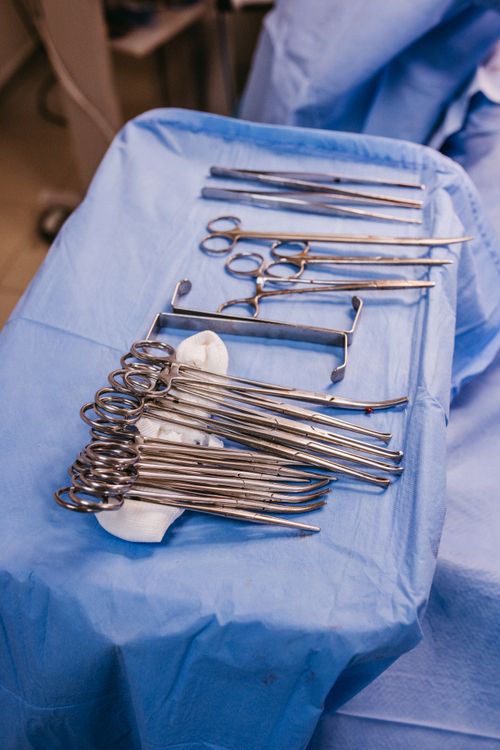
Before a surgeon makes the first incision, hundreds of instruments have already passed through someone else’s hands. Clamps, retractors, scopes and drill bits have been scrubbed, inspected, packed, sterilized and tracked. Most patients will never meet the people who do that work. But every surgery depends on them.
They are sterile processing technicians, also called central service technicians. They work in a department most hospitals keep out of sight, often down in the basement. Their job is simple to describe and hard to do well: make sure every reusable instrument is safe for the next patient.
This article looks at what sterile processing technicians do, why their work matters so much for patient safety, and how they earn the certification that more states and employers now require.
What sterile processing technicians actually do
A single surgical tray can hold dozens of instruments, and a busy hospital processes thousands of them a day. Each one follows the same one-way journey, from dirty to clean to sterile.
- Decontamination. Used instruments arrive from the operating room still carrying blood and tissue. Technicians in protective gear take them apart, soak and brush them by hand, and run them through ultrasonic cleaners and washer-disinfectors.
- Inspection and assembly. Every instrument is checked under magnification for leftover debris, cracks, rust and dull edges. Scissors are tested for sharpness. Insulated instruments are tested for breaks. Then each tray is rebuilt to match a precise count sheet.
- Packaging. Trays go into wraps, pouches or rigid containers designed to keep them sterile until they’re opened in the operating room.
- Sterilization. Most instruments go through high-pressure steam. Heat-sensitive devices, like some cameras and plastics, use low-temperature methods instead. Technicians pick the right cycle based on each manufacturer’s instructions and load the sterilizer so steam or gas can reach every surface.
- Monitoring and release. Chemical and biological indicators confirm that each load actually reached sterilizing conditions. Records tie every tray to a specific load, so it can be traced and recalled if something goes wrong.
- Storage and distribution. Sterile trays are stored under controlled temperature and humidity, then delivered to the operating room for the next case.
It’s precise, physical work. Technicians need to know hundreds of instruments by name, follow detailed manufacturer instructions, and catch problems that are invisible to the naked eye.
Why this work matters to every patient
When sterile processing works, nobody notices. When it fails, the consequences can be serious. A single missed piece of debris inside a hinged instrument or a narrow channel can shelter bacteria through a sterilization cycle. Damaged instruments can break during surgery. A missing instrument can delay or cancel a case.
That’s why infection prevention teams, surgeons and nurses increasingly see sterile processing as a frontline patient safety role, not a back-office task. The work has also gotten harder. Robotic and minimally invasive surgery rely on complex instruments with long, narrow channels and delicate optics, and each comes with its own detailed cleaning instructions.
This shift is a big reason certification has moved from “nice to have” to “required” in more places.
Certification is becoming the standard
For years, many sterile processing technicians learned entirely on the job. That’s changing.
A growing number of U.S. states now require sterile processing technicians in hospitals and surgery centers to hold a national certification, usually within a set period after they’re hired. New Jersey was the first. Other states with certification laws include New York, Connecticut, Pennsylvania, Tennessee, Delaware and Minnesota. More states, including Florida and South Carolina, considered similar bills in 2026. A federal bill introduced in March 2026 would also require certification for sterile processing technicians in Veterans Health Administration facilities.
Even where it isn’t required by law, many hospitals now ask for certification as a condition of hiring or promotion. Rules vary by state and change often, so technicians and employers should check the current requirements where they work.
The two main certifications
Two national organizations certify entry-level sterile processing technicians in the U.S.
| CRCST | CSPDT | |
|---|---|---|
| Full name | Certified Registered Central Service Technician | Certified Sterile Processing and Distribution Technician |
| Issued by | Healthcare Sterile Processing Association (HSPA), formerly IAHCSMM | Certification Board for Sterile Processing and Distribution (CBSPD) |
| Hands-on experience | 400 hours, before the exam or within 6 months after passing | Several eligibility routes, including completing a sterile processing course |
| Renewal | Every year, with 12 continuing education credits | Set by CBSPD |
Both are widely recognized, and state certification laws typically accept either one. The CRCST is the more common of the two, so the rest of this article focuses on it.
How to earn the CRCST
The CRCST is the most widely held entry-level credential in sterile processing. Here’s how the path works.
Step 1: Learn the fundamentals
Most candidates study HSPA’s official central service manual, take a community college or online sterile processing course, or both. Many programs include a clinical externship where students practice in a real hospital department.
Step 2: Choose full or provisional certification
Every CRCST needs 400 hours of documented, hands-on experience in a sterile processing department, covering decontamination, preparation and packaging, sterilization, storage and distribution, and quality assurance. You can either:
- complete the 400 hours first, then pass the exam and become fully certified right away, or
- pass the exam first and earn provisional certification, then complete and submit the 400 hours within six months.
The provisional route helps career changers and new graduates who need a credential to get hired, then earn their hours on the job.
Step 3: Apply and schedule the exam
Candidates apply through HSPA and, once approved, schedule a computer-based exam at a Prometric testing center. The exam fee is about $140.
Step 4: Pass the exam
The CRCST exam has 150 multiple-choice questions, 125 of them scored, with a three-hour time limit. Results are reported as pass or fail. The exam covers seven areas:
- Cleaning, decontamination and disinfection (21%)
- Preparation and packaging (21%)
- Sterilization process (21%)
- Departmental considerations, including regulations and standards (15%)
- Sterile storage, transport and inventory management (9%)
- Professional development and human relations skills (8%)
- Patient care equipment and distribution (5%)
Step 5: Keep it current
The CRCST must be renewed every year with 12 continuing education credits and a renewal fee, so technicians keep up with new devices and standards.
How candidates prepare
The CRCST is an entry-level exam, but it’s broad. Candidates need to know sterilizer cycle parameters, how to read biological and chemical indicators, how different devices are classified by infection risk, and what agencies like the FDA, EPA and OSHA each regulate. Many questions present two answers that both sound reasonable, so understanding the “why” matters more than memorizing facts.
The three heaviest sections, cleaning, packaging and sterilization, make up nearly two-thirds of the exam, and sterilization is where many candidates struggle most. A practical approach:
- Start with a full-length practice exam to find your weakest sections.
- Spend most of your study time on the three 21% sections.
- Read the explanation for every question you miss, not just the correct answer.
- Connect what you study to what you see on the job. If you’re already working in a department, ask to watch how biological indicators are run and read.
Free resources like CRCST study materials from Career Employer offer practice tests weighted like the real exam, along with explanations for each answer. They’re a useful complement to the official manual and hands-on training.
A career with room to grow
Sterile processing is one of the faster ways into a hospital career. Most training programs take weeks or months rather than years, and many technicians start without a college degree.
It can also be a starting point. Experienced technicians can add specialty certifications from HSPA in areas like instrument processing and endoscope reprocessing, or move into lead, educator, supervisor and department manager roles. Others use sterile processing as a stepping stone toward surgical technology, infection prevention or other clinical careers.
The bottom line
Every safe surgery rests on work that patients never see. Sterile processing technicians clean, inspect, package and sterilize the tools that surgeons rely on, and they catch problems long before they reach the operating room.
As instruments grow more complex and more states require certification, earning the CRCST has become the clearest way into this essential field. For anyone looking for a hands-on healthcare career that directly protects patients, it’s worth a closer look.
Related reading