LabFirstPeptides.com Guide: What “Third-Party Tested” Should Mean in Research Supply
What this guide covers
Is “third-party tested” a fact or a slogan? The phrase appears on supplements, skincare and research chemicals alike. It sounds reassuring, and it is frequently true. It is also one of the least examined phrases online, because it tells you a test happened without telling you what the test found. This guide explains what a test produces, the three questions to ask of any certificate, the signs a “tested” claim is thin, and how to verify independently. It concerns laboratory research only.
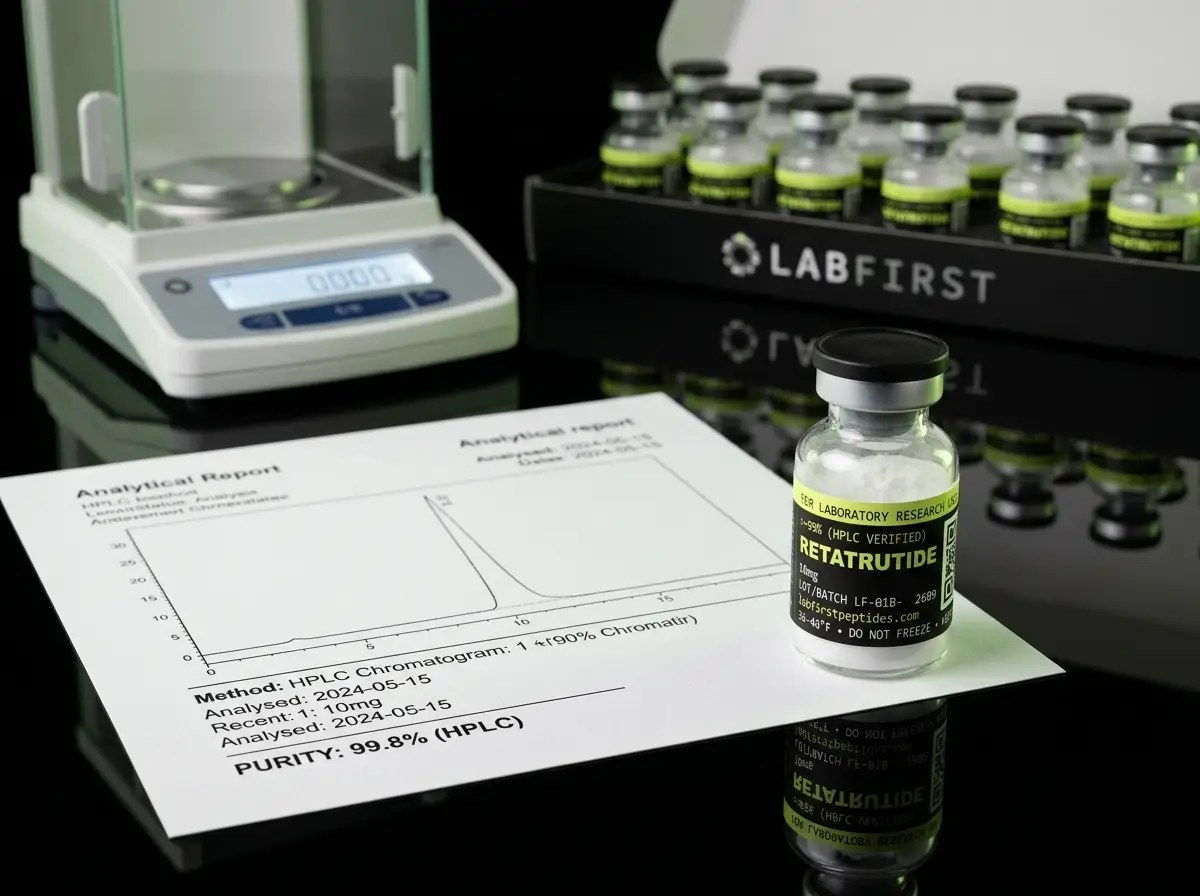
How LabFirst Peptides tests each research lot
What does a test produce?
When an independent laboratory tests a sample, it produces a certificate of analysis: a document listing the methods used, the results, and the batch they apply to. That document is the substance behind the claim. A supplier that says “third-party tested” but cannot show the certificate for the batch you are buying is asking you to take the claim on faith.
That is especially true for heavily searched compounds. A buyer comparing retatrutide peptide suppliers will see “third-party tested” on nearly every listing, and the certificate is the only way to tell them apart.
Which three questions should you ask of any certificate?
Does it confirm identity? The most basic question is whether the compound is what the label says. For peptides and similar research compounds, laboratories confirm identity with mass spectrometry, comparing the measured mass with the expected value. A certificate that reports purity but skips identity has left out the most important result.
Does it report purity with a method? Purity is commonly measured by high-performance liquid chromatography and expressed as a percentage. A useful certificate names the method alongside the number, because a percentage without a method is hard to interpret.
Does it report net content? This is the most frequently missing piece. A vial’s labeled amount includes the compound plus residual water and salts. Net content testing measures how much of the compound itself is present. Without it, a buyer cannot tell whether a labeled amount is accurate, which also makes price comparisons unreliable. In my experience it is the result suppliers least want to publish, which is a good reason to insist on it.
What to do with a “tested” claim
Ask for the certificate for the exact lot you are buying, not a sample report.
Confirm the lot number on the certificate matches the product.
Look for all three results: identity, purity with method, net content.
Find the issuing laboratory and the test date.
Use the lookup code or sample number to confirm the report with the lab directly.
What are the signs a “tested” claim is thin?
The certificate is not tied to a specific lot number.
It shows a purity figure and nothing else.
The same certificate appears across different products or dates.
There is no way to confirm it with the issuing laboratory.
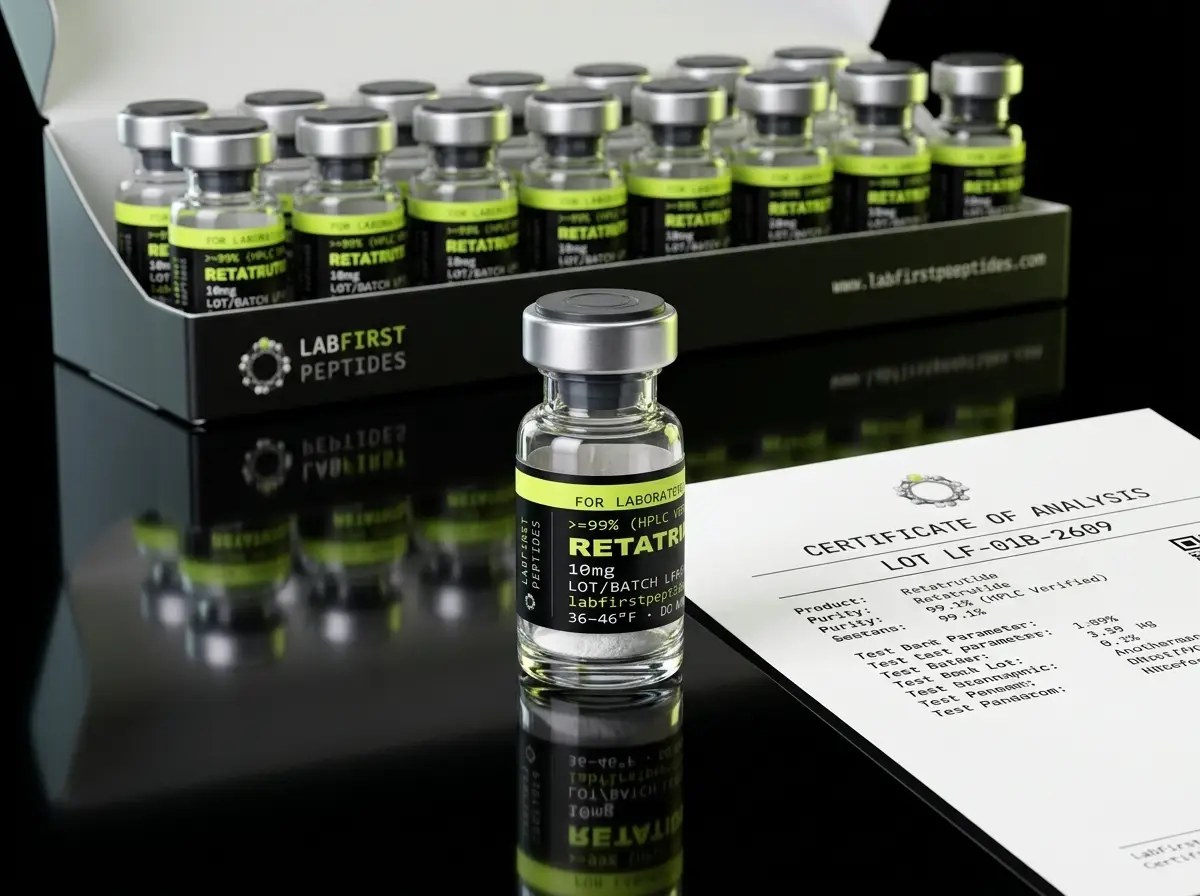
Research peptide lots with their certificates, LabFirst Peptides
How do you verify independently?
The point of third-party testing is that you should not have to trust the seller, so do not. Match the lot number on the certificate to the product. Contact or look up the issuing laboratory directly to confirm the report. For extra certainty, many buyers send a sealed sample to a separate lab and compare the results. Any supplier worth using should prefer that to being taken at its word.
Suppliers that take quality seriously make this easy. They publish a written standard for what every batch must meet, link certificates from each product page, and state what they will do if an independent result disagrees. LabFirst Peptides lays its approach out on its certificates page, including each lot’s measured identity, purity and net content.
Where that leaves you
“Third-party tested” is a promise that evidence exists. Ask to see it, read the three results that matter, and confirm it with the lab. A claim that holds up to that is worth something. One that does not is a phrase.
Common questions
Is “third-party tested” the same as a certificate of analysis? No. The phrase is a claim; the certificate is the evidence behind it. Ask for the certificate.
What if the supplier only shows a purity number? Purity without identity or net content is incomplete. Ask for the full report or treat the claim as unverified.
Can a certificate be checked without contacting the supplier? Usually yes. Most laboratories provide a lookup code or sample number so the report can be confirmed with them directly.
Products discussed are sold for laboratory research use only and are not intended for human or animal use. This guide is general information, not medical advice.