For years, Dr. Daniel Pompa had a rule most people in the wellness space quietly live by but rarely admit: coffee was a compromise.
Not because he didn’t love it. But because what most people call “coffee” is rarely clean.
Even in functional medicine circles, coffee has long sat in a gray zone. It fuels performance, sharpens cognition, and anchors morning rituals. Yet it often comes with hidden variables most consumers never consider: mold contamination, mycotoxins, heavy metals, and one of the least-discussed compounds of all, acrylamide.
Acrylamide is a chemical that forms naturally when coffee beans are roasted at high temperatures. According to the U.S. Food and Drug Administration, acrylamide forms in many foods during high-heat cooking processes such as frying, baking, and roasting, and has been shown to cause cancer in laboratory animals at high exposure levels.
At one point, this issue became so prominent that under California Proposition 65, coffee sold in California was subject to legal action requiring cancer warning labels due to acrylamide exposure concerns, highlighting just how widespread and misunderstood the compound is.
For someone like Pompa, whose work has centered on cellular health, detoxification, and environmental toxin exposure, that gray zone mattered.
And yet, he didn’t give it up.
Instead, he went looking for something better.
The Moment Everything Changed
Pompa had tried dozens of “clean” coffee brands over the years. Organic. Shade-grown. Specialty roasted. All claiming to be better.
None were enough to make him switch.
That changed when he encountered Truista Coffee.
“My wife and I have used the same organic shade-grown coffee for years and have tried many others, but I’ve never switched until Truista,” Pompa shared. “Not only is it cleaner without acrylamides, but we both liked the taste better.”
That statement is more significant than it sounds.
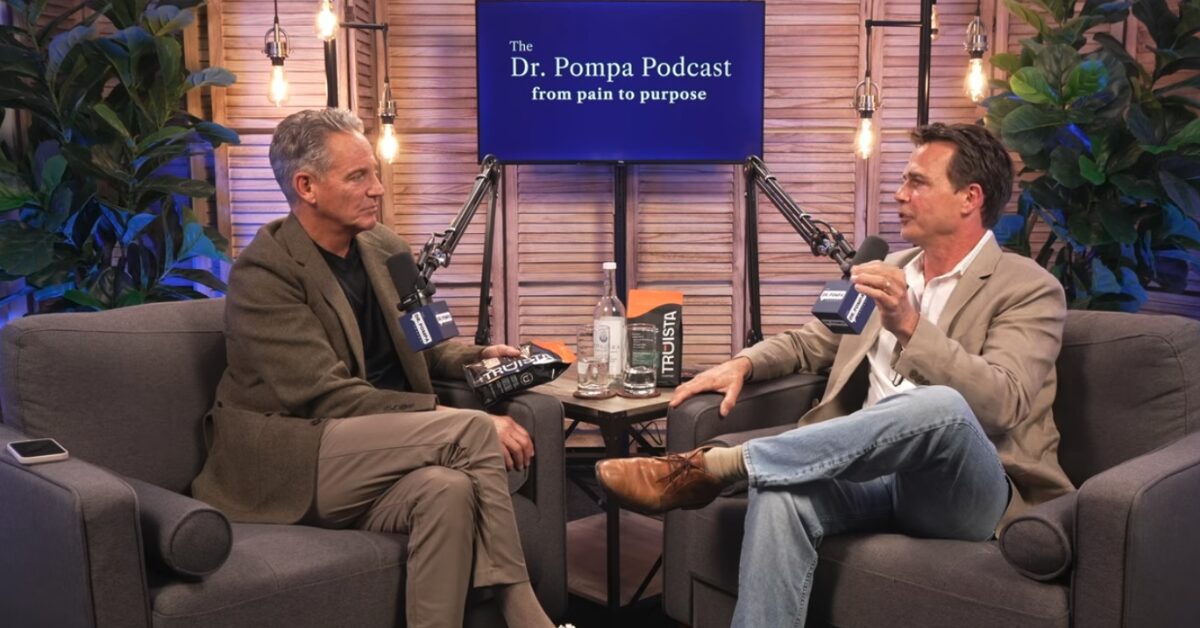
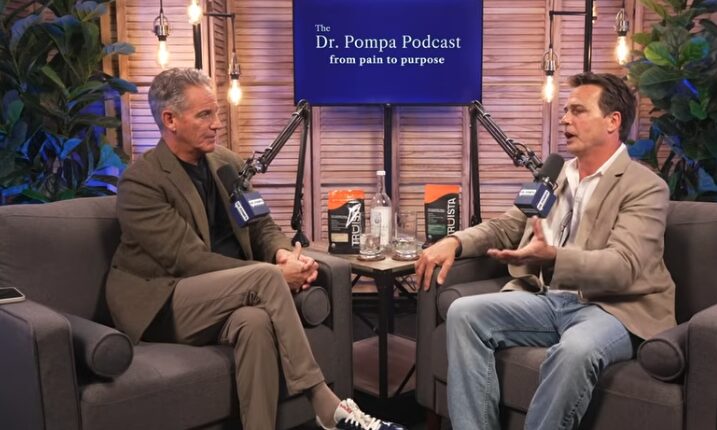
In a category built on habit, switching coffee is rare. For someone who has tested nearly everything, it signals something fundamentally different. That difference was explained on the Dr. Pompa Podcast – in his interview with world-renowned coffee expert Joey Chase.
What Is Clean Coffee
Clean coffee refers to coffee that has been tested and verified for common contaminants that can occur during growing, processing, and roasting – before it’s packaged and delivered.
This typically includes:
- Mold and mycotoxins
• Heavy metals such as lead and cadmium
• Pesticide residues
• Acrylamide levels formed during roasting
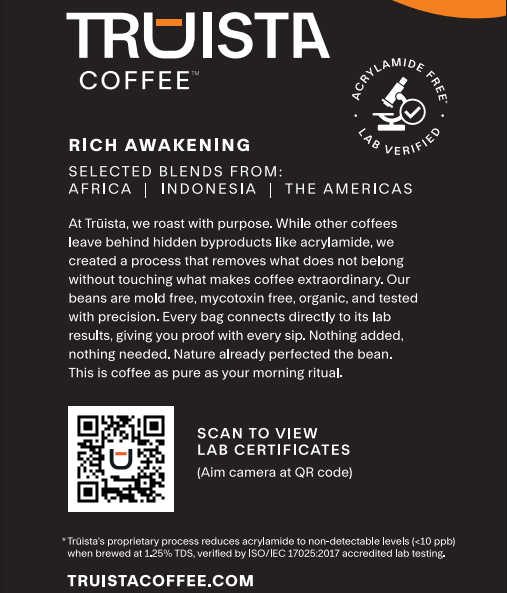
Some companies, including Truista Coffee, conduct third-party lab testing for over 380 toxins in every batch and provide traceable results (via a QR code on every box or bag) tied to specific roast profiles.
Many brands claim to have clean, organic, mold- and toxin-free coffee, but consumers should note that testing standards, detection limits, and verification practices vary by company, and not all claims are independently validated.
If lab reports are not publicly accessible, you cannot confirm the extent of verification. Truista is the only coffee that puts its lab results on every bag or box delivered. No wonder Dr. Pompa fell in love with it.
Why Acrylamide Matters
Acrylamide is not unique to coffee. It is also found in foods like potato chips, bread, and cereals when cooked at high temperatures.
The concern comes from long-term exposure. According to the National Cancer Institute, studies in rodents have shown that high doses of acrylamide can increase cancer risk, but evidence in humans remains limited and inconclusive.
This creates a nuanced but important reality:
- Acrylamide exposure exists in everyday foods
- Risk depends on dose and long-term exposure
- Regulatory bodies continue to monitor, but have not banned coffee
This is why the conversation has shifted toward reduction rather than elimination.
From Ritual to Biological Input
Pompa’s work has always centered on one core idea: what you do consistently matters more than what you do occasionally.
Coffee is not occasional. It is daily.
That makes it biologically relevant.
Most people think about food as their primary exposure point for toxins, but beverages often fly under the radar. Coffee, consumed every day, becomes a repeated input into the body’s environment.
The question is no longer whether coffee is good or bad.
The question is what kind of coffee you are drinking every single day.
Why This Matters Now
The wellness industry is entering a new phase.
Consumers are no longer satisfied with labels like organic or natural. They are asking for proof, data, and verification.
That demand is reshaping entire categories, including one of the most established in the world.
Coffee.
Brands like Truista Coffee are positioning themselves around lab testing, transparency, and contaminant awareness. At the same time, practitioners like Dr. Pompa are bringing attention to the unseen variables that have always existed in everyday products.
The intersection of those two forces is where change happens.
The Bigger Takeaway
This is not just a story about coffee.
It is a story about standards.
For decades, consumers accepted what was available. Now they are beginning to question it.
What is in it?
How is it made?
What does it do over time?
Pompa did not stop drinking coffee.
He raised the bar for what coffee needed to be.
And in doing so, he highlighted something far bigger than a morning ritual.
Not eliminating the things we love…
But upgrading them!