Healthcare Burnout Doctor Mental Health: The Paradox No One Is Talking About in 2026
Introduction: When the Numbers Say One Thing and Doctors Say Another
The statistics paint a picture of recovery. According to the American Medical Association’s 2026 Organizational Biopsy data, physician burnout has fallen for the fourth consecutive year, dropping from a pandemic peak of 62.8% in 2021 to 41.9% in 2025. By all measurable accounts, the crisis appears to be receding.
Yet the physicians living inside those statistics tell a different story entirely.
The Physicians Foundation’s 2025 Wellbeing Survey reveals a troubling contradiction: while burnout rates have technically declined, physician stress and anxiety have surged to levels not seen since the height of the COVID-19 pandemic. Nearly 43% of physicians still report feeling a great deal of stress due to their job. The numbers suggest recovery, but the lived experience suggests something far more complex.
This article explores this contradiction through data, physician voices, and the systemic forces that keep the crisis hidden. From licensure stigma to gender disparities to a deeply entrenched culture of silence, the factors perpetuating physician distress extend far beyond what any single survey can capture.
Understanding this paradox matters beyond the walls of hospitals and clinics. Physician mental health directly affects patient care quality, healthcare system sustainability, and the looming physician shortage projected to reach 86,000 by 2036. Healthcare burnout and doctor mental health do not represent a single, linear crisis. They represent a paradox, and understanding it requires examining both what the data shows and what it conceals.
The Data Paradox: Burnout Is Falling, So Why Are Doctors More Distressed Than Ever?
The AMA’s 2025 Organizational Biopsy findings present seemingly encouraging news. Based on nearly 19,000 physicians across 106 health systems, 41.9% reported at least one burnout symptom in 2025, down from 43.2% in 2024 and 48.2% in 2023.
However, the counterweight to this optimism is substantial. The Physicians Foundation’s 2025 Wellbeing Survey found that physician stress and anxiety have risen to pandemic-era levels. This tension crystallizes in a single data point: nearly 43% of physicians still report feeling a great deal of stress due to their job, even as burnout rates decline.
The distinction between burnout (a clinical syndrome characterized by exhaustion, depersonalization, and reduced efficacy) and stress or anxiety (acute emotional distress) is critical. Declining burnout scores do not necessarily mean physicians are well. They may simply mean physicians have adapted to chronic distress in ways that no longer register on traditional burnout assessments.
A Stanford Medicine-led study published in Mayo Clinic Proceedings in April 2025 adds another dimension: even after adjusting for age, gender, relationship status, and work hours, physicians are 82.3% more likely to experience burnout than other U.S. workers. The profession itself carries inherent risk factors that persist regardless of organizational interventions.
The guiding question becomes clear: if burnout is declining, what is driving the surge in distress, and why are physicians not speaking openly about it?
The Specialties Bearing the Heaviest Burden
The 2025 data reveals that the burnout crisis is distributed unevenly across medical specialties. Emergency Medicine leads with 49.8% burnout prevalence, followed closely by Urological Surgery at 49.5%, Hematology/Oncology at 49.3%, OB/GYN at 45.7%, Radiology at 45.2%, and Family Medicine at 45%.
At the opposite end, Infectious Diseases reports just 23.3% burnout, followed by Ophthalmology at 25.8% and Nephrology at 29.3%. The structural differences accounting for this gap likely include patient acuity, administrative burden, on-call demands, and the emotional weight of end-of-life care.
Hospital-based specialties including emergency medicine, radiology, and anesthesiology performed worse than the national benchmark on three of five well-being indicators in 2025, pointing to persistent operational and workflow failures in high-acuity settings.
An emergency medicine physician working at nearly 50% burnout prevalence is not merely a statistic. That individual manages trauma bays, makes life-or-death decisions under pressure, and then returns home to document cases for hours. OB/GYN physicians face the additional burden of navigating political and legal pressures around reproductive care, a dimension of moral injury that compounds clinical burnout.
Specialty data reveals where the crisis is most acute, but it does not reveal who within those specialties is most vulnerable.
The Gender Gap Nobody Is Talking About Loudly Enough
Female physicians face a 27% higher risk of burnout than male physicians after adjusting for age, specialty, and other factors, according to the Stanford Medicine-led study. In 2024, 47.2% of women physicians reported burnout compared to 38.9% of men, a gap of nearly 9 percentage points.
The organizational recognition disparity compounds this burden. Only 53.3% of female physicians feel valued by their organization, compared to 59.6% of males. This gap in perceived value directly contributes to emotional exhaustion.
The structural drivers of the gender gap include disproportionate EHR and patient inbox burden, childcare and caregiving responsibilities outside the hospital, pay disparity, and the “double shift” phenomenon in which female physicians absorb both clinical and domestic labor.
A Frontiers in Public Health scoping review from 2025 confirmed that female participants consistently showed higher rates of burnout, depression, and anxiety than male counterparts across physician and postgraduate trainee populations.
The compounding effect on physician suicide deserves attention: women physicians die by suicide at higher rates than women in the general population, a fact that receives far less attention than its gravity warrants.
This is not a women’s issue in isolation. It represents a systemic design failure: a healthcare system built around a historical male-physician model that has not adequately adapted to a workforce that is now nearly half female. Physicians navigating these pressures can find perspectives from colleagues across specialties in Top Doctor Magazine’s featured interviews and profiles.
The Hidden Crisis Within the Crisis: Depression, Anxiety, and Suicidal Ideation
Beneath the burnout headline sits a mental health crisis of alarming proportions. Twenty-nine percent of physicians experience depression and 24% face anxiety, rates that far exceed those of the general population.
The most alarming finding: one in six U.S. physicians have contemplated suicide, according to the Medscape Physicians and Suicide Report 2025. After two years of decline, suicidal ideation among physicians is rising again.
The human scale of this crisis is staggering. An estimated 300 to 400 physicians die by suicide each year, the equivalent of losing two to three full medical school graduating classes annually.
The Physicians Foundation’s 2025 survey found that 57% of physicians experienced inappropriate feelings of anger, tearfulness, or anxiety in the past year, and 46% withdrew from family, friends, and colleagues.
Dr. Lorna Breen, an ER physician who died by suicide during COVID-19, has become a symbol of this crisis. Her story catalyzed the Dr. Lorna Breen Health Care Provider Protection Act, federal legislation requiring HHS to fund programs promoting provider mental health and disseminate suicide prevention best practices.
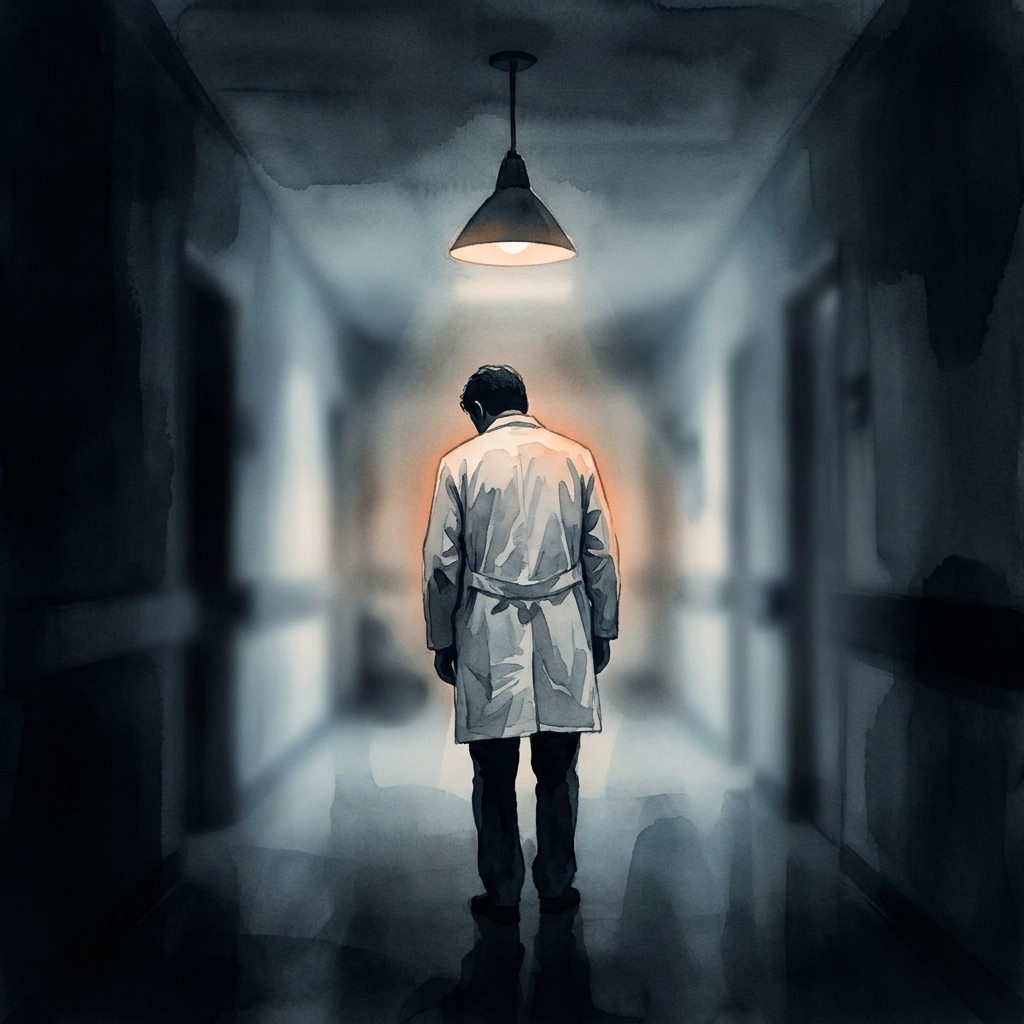
The profound irony cannot be ignored: the people society trusts to heal others are quietly suffering at rates that would constitute a public health emergency in any other profession.
The Licensure Stigma Barrier: Why 74% of Struggling Physicians Don’t Ask for Help
A systemic trap keeps struggling physicians silent. Forty percent of physicians report reluctance to seek mental health care due to concerns about licensure repercussions, and only 26% of physicians with mental health conditions actually seek treatment.
The mechanism is straightforward: many state medical licensing applications and hospital credentialing forms have historically included intrusive questions about mental health history. This creates a documented chilling effect in which physicians fear that disclosing a mental health condition could jeopardize their license or hospital privileges.
The Physicians Foundation’s 2025 survey found that 73% of physicians perceive stigma around mental health and seeking care, a figure that helps explain why the non-treatment rate is so high.
Progress is being made. As of May 2025, 50 licensure boards (including 37 medical boards) and 635 hospitals have verified their applications are free from intrusive mental health questions. This represents meaningful but still incomplete reform.
The Medscape 2025 report found 41% of physicians did not want to risk disclosure to the medical board, and 49% believed they could manage their mental health on their own. Both figures reflect the internalized stigma that the licensure system has created.
Removing the stigma barrier is necessary, but it is not sufficient. The root causes of physician distress must also be addressed.
What Is Actually Driving the Distress: The Administrative Burden Problem
Administrative burden stands as the primary driver of physician burnout. Physicians spend 43% to 52% of their workday in the EHR, and 77% report that excessive documentation leads to longer clinic hours or working from home.
Documentation and charting was cited as the top burnout contributor by 16% of providers, and the total cost of physician burnout to the U.S. healthcare system is estimated at $4.6 to $5 billion annually. For a closer look at how physicians are navigating these pressures in their own practices, the balancing act described by Dr. David Wallace offers a candid perspective on sustaining a demanding specialty alongside personal well-being.
Even as burnout scores improve marginally, the documentation load has not meaningfully decreased. This helps explain why stress and anxiety remain at pandemic-era levels even as formal burnout rates decline.
Staffing shortages compound the problem. Nearly half of U.S. physicians work without fully staffed clinical teams more than 25% of the time, and these shortages are directly linked to burnout and intent to leave.
The moral injury dimension adds another layer: physicians are increasingly forced to act against their values, rationing time with patients, skipping follow-up, and rushing through visits. This is not burnout in the traditional sense; it is moral injury.
The AAMC projects a deficit of 86,000 physicians by 2036, with burnout-driven early retirement and reduced hours accelerating the shortage and creating a feedback loop in which burnout causes shortages that cause more burnout.
The Cost of Silence: What Physician Burnout Means for Patients and the System
Physician burnout is fundamentally a patient safety issue, not just a physician welfare concern. A 2022 systematic review of surgeon burnout found a 2.5-times increased risk of involvement in medical error among burned-out physicians, along with higher rates of temper loss, lower empathy, and more malpractice suits.
The financial stakes for healthcare organizations are substantial. Replacing a single physician costs $500,000 to over $1 million, including recruitment, sign-on bonuses, lost billings, and onboarding costs.
Burnout is tied to poorer quality of care and lower patient satisfaction. The physician who is emotionally depleted cannot give patients the presence and attention they deserve.
The physician shortage projected by the AAMC is not an abstract future problem. It is being accelerated right now by burnout-driven early retirement, reduced clinical hours, and career exits.
Signs of Progress: What Is Actually Working
The fourth consecutive year of declining burnout rates reflects real organizational investments in physician well-being that deserve recognition.
A 2025 JAMA Network Open study of 263 physicians across six health systems found burnout dropped from 51.9% to 38.8% after just 30 days of using an ambient AI scribe. St. Luke’s Health System reported a 35% decrease in after-hours documentation time and a 15% increase in face time with patients.
Peer support programs have shown a 35% reduction in burnout-related complaints over 18 months in some health systems. Progress on licensure reform continues, with 50 licensure boards and 635 hospitals now verified as free from intrusive mental health questions.
In 2025, 56.2% of physicians reported feeling valued by their organization, up 1.7 percentage points from 2024. Narrative medicine, the practice of sharing personal physician stories, has been shown to reduce burnout and compassion fatigue, preserve empathy, enhance self-awareness, and improve emotional regulation.
What Needs to Change: A Path Forward
For Individual Physicians: Reclaiming Permission to Be Human
Seeking mental health care is a sign of self-awareness and professional responsibility, not weakness. Engagement with peer support programs, narrative medicine communities, and physician wellness circles creates spaces where vulnerability is welcomed rather than penalized.
The belief held by 49% of physicians that they can manage mental health challenges alone must be gently challenged. Self-reliance is a professional strength, but it becomes a liability when it prevents access to care that could be life-saving.
For Healthcare Organizations: Moving Beyond Wellness Programs to Structural Change
Organizations must prioritize EHR burden reduction through ambient AI scribes and documentation support. Investment in fully staffed clinical teams addresses a direct burnout driver. Creating genuine psychological safety means ensuring physicians know that disclosing mental health struggles will not jeopardize their position.
Measuring what matters extends beyond burnout rates to include stress, anxiety, moral injury, and intent to leave. Recognizing the gender gap as an organizational equity issue requires addressing the structural factors driving female physician burnout.
For Policymakers: Completing the Structural Reforms Already Underway
Accelerating the removal of intrusive mental health questions from all remaining state licensing boards and hospital credentialing applications is essential. Fully funding and implementing the Dr. Lorna Breen Health Care Provider Protection Act must match the urgency of the legislation’s intent.
Addressing the physician shortage proactively through policies that reduce administrative burden, support medical education funding, and create sustainable practice environments serves as both a retention strategy and a healthcare access strategy.
Conclusion: The Paradox Demands Both Honesty and Hope
Burnout rates are falling for the fourth consecutive year, and that progress is real. But physician stress and anxiety are surging, suicidal ideation is rising again, and 74% of struggling physicians are not seeking the help they need. Both realities exist simultaneously.
Behind every data point is a physician who chose medicine because they wanted to heal people and who deserves a system that supports their ability to do so without sacrificing their own health in the process.
The tools exist: ambient AI, peer support, licensure reform, and narrative medicine. The evidence is accumulating, and the cultural conversation is shifting. The question is whether the urgency matches the scale of the crisis.
Top Doctor Magazine remains committed to bridging the gap between healthcare providers and the communities they serve through in-depth interviews, professional profiles, and stories that humanize the people behind medicine. For physicians reading this and recognizing themselves in these pages: they are not alone, and their stories matter. Asking for help is one of the most courageous things a healer can do.