Physician Education Training Event 2026: Why the Best CME Days Start the Night Before
Introduction: The Night Before Changes Everything
Two physicians arrive at a continuing medical education training day. One spent the previous evening at a networking party, exchanging ideas with colleagues across specialties, learning names and faces, and discussing clinical challenges over casual conversation. The other arrived fresh that morning, knowing no one in the room.
When the first breakout session begins, the differences become immediately apparent. The physician who attended the networking event leans into discussions with familiar faces, asks pointed questions, and contributes case insights without hesitation. The other spends the first hour navigating social dynamics, uncertain who to approach or how to contribute meaningfully.
This contrast illustrates a fundamental truth about physician education: the deliberate sequencing of a peer networking event before a CME educational training day is a structural design advantage, not a social afterthought.
The scale of physician education in 2026 is staggering. According to the Accreditation Council for Continuing Medical Education, roughly 250,000 accredited CME activities and over 22 million physician interactions were reported in 2024. Yet most events still treat the social and educational dimensions as separate, unrelated experiences.
TopDoctor Magazine’s physician education training event 2026 offers a compelling case study in intentional event architecture. This article explores the science and strategy behind its sequencing, examining why physicians seeking CME that actually changes how they think, connect, and practice should pay close attention to how their learning experiences are designed.
The State of Physician Education in 2026
The current CME landscape reflects unprecedented investment in physician education. Total CME/CE reported income reached $3.7 billion in 2024, a record high driven by strong registration revenue and advertising income surpassing $725 million. This financial commitment signals that stakeholders across healthcare recognize the value of ongoing physician learning.
The metrics for measuring CME effectiveness have also evolved significantly. In 2024, 95% of activities measured learner competence, 46% measured performance, and 18% measured patient health outcomes. This shift from participation metrics to impact metrics reflects a maturing industry focused on real clinical results.
Physicians in 2026 face an abundance of options. More than 1,942 medical conferences are scheduled across the USA, with June as the peak month and major cities like Los Angeles, New York, Boston, Las Vegas, and Philadelphia hosting approximately 36.4% of all events.
Despite this record engagement and investment, physician burnout remains a significant challenge. The AMA National Physician Burnout Survey found that 41.9% of physicians reported at least one burnout symptom in 2025. Professional isolation persists as a structural problem that credit accumulation alone cannot solve.
Research from M3 Global Research confirms that physicians remain deeply invested in their professional development. A 2025 survey of 2,500 physicians found that 31% cited discovering new research or clinical breakthroughs as their primary source of excitement for 2026. CME and peer learning remain highly valued.
The problem this article addresses is not the quantity of CME options. The problem is the quality of learning experience design.
Why Most CME Events Fail to Maximize Learning
Most CME days begin with what might be called the “cold-start” problem. Physicians arrive as strangers to one another, creating social friction that suppresses participation, case discussion, and collaborative insight. The first hour of many educational sessions is spent on social navigation rather than clinical learning.
Large-scale health conferences prioritize executive networking and scale over intimate peer-to-peer physician learning. Events with tens of thousands of attendees and thousands of C-suite executives serve important purposes but are not designed for the kind of deep peer connection that practicing physicians need.
Academic medical center CME programs offer strong clinical depth but remain siloed by specialty. They are not designed for multi-specialty peer networking or community building. A cardiologist attending a cardiology-specific CME course gains clinical knowledge but misses the cross-specialty perspectives that can transform practice.
Resort CME programs and cruise conferences serve physicians seeking to combine continuing education with leisure. However, their social elements are incidental rather than intentionally sequenced to enhance learning. The networking happens around the education, not as a deliberate precursor to it.
What competitors universally miss is the integration of peer networking, accredited CME education, and formal physician recognition in a single, sequenced multi-day format. Research published in PMC and supported by ACCME confirms that CME is one of the most effective methods for translating knowledge into improved clinical practice. Event design, however, determines whether that potential is realized.
The Adult Learning Science Behind “Warm Rooms”
The concept of psychological safety in adult learning has been well established. When learners feel socially connected to peers, they are more likely to ask questions, share clinical experiences, and engage in the productive disagreement that drives deeper understanding.
Prior social bonding reduces cognitive load during educational sessions. Physicians who already know their colleagues spend less mental energy on social navigation and more on content absorption and critical thinking. The brain has limited capacity for simultaneous social and intellectual processing; reducing one enhances the other.
Contextual priming plays a significant role as well. Conversations held during informal peer networking activate relevant clinical schemas. Physicians arrive at the CME day already mentally oriented toward the topics at hand because they discussed them casually the night before.
Mayo Clinic’s faculty development philosophy for 2026 explicitly aims to build meaningful connections and cultivate a sense of belonging. This affirms that connection is a prerequisite for effective learning, not a reward for completing it.
Warm peer relationships improve case discussion quality in measurable ways. Physicians who know each other by name and specialty are more likely to offer candid clinical insights, challenge assumptions respectfully, and share real-world practice variations. These exchanges rarely happen among strangers.
The retention advantage of social encoding is well documented. Associating new knowledge with a specific person or conversation is a powerful memory consolidation mechanism that cold-start CME sessions cannot replicate. Physicians remember what they learned because they remember who they learned it with.
TopDoctor’s Physician Education Training Event 2026: The Design in Detail
TopDoctor Magazine’s multi-day physician education training event represents a deliberately engineered learning experience built around three sequenced components: a peer networking party, a CME educational training day, and an awards gala dinner.
With over 197 issues published and a core mission to foster connections within the health and wellness community, TopDoctor approaches event design as an extension of editorial philosophy. The event serves physicians across dentistry, orthopedics, family practice, gastroenterology, holistic wellness, general practice, and more, creating cross-specialty peer exposure that specialty-specific CME programs cannot offer.
Day One Evening: The Networking Party as Learning Infrastructure
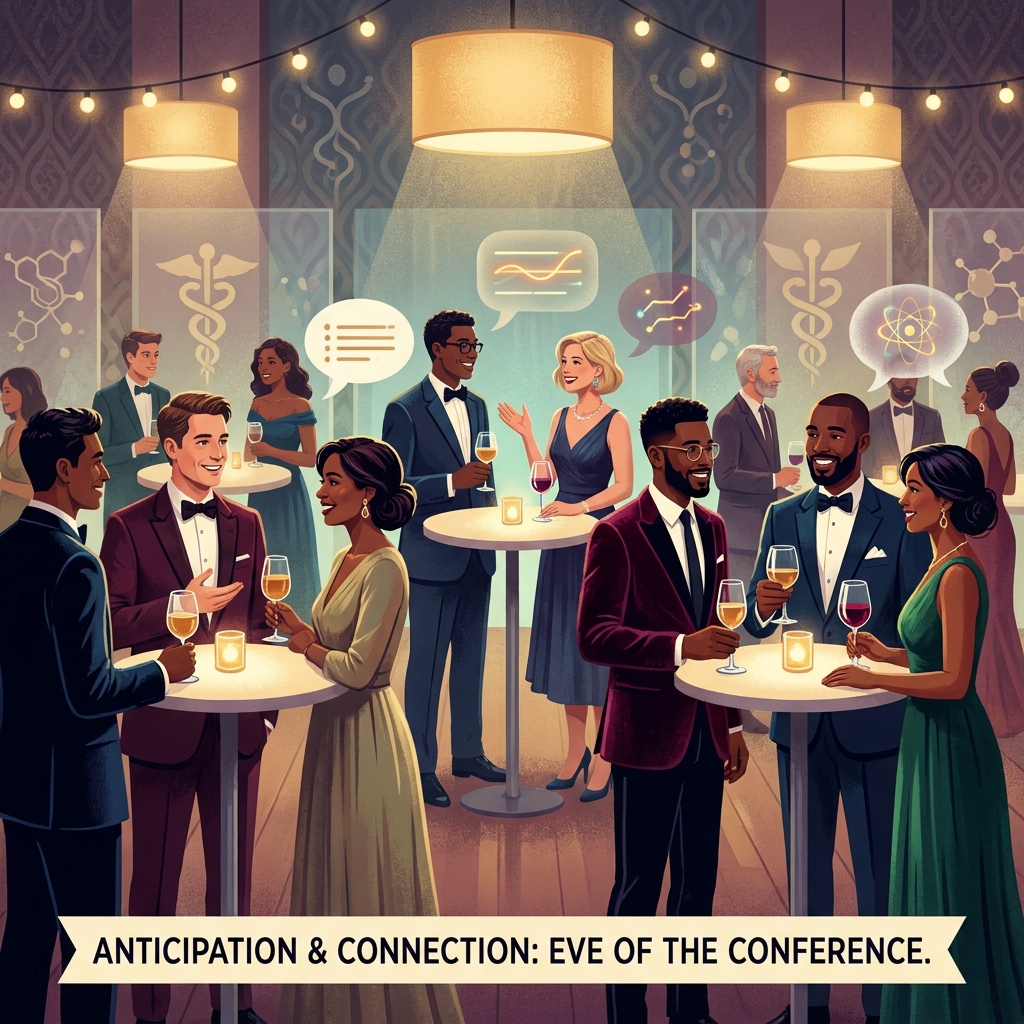
The networking party should not be understood as entertainment. It is the first phase of the educational program, the session where the social architecture of the following day’s learning is constructed.
Physicians gain substantial professional value from the evening event: introductions across specialties, informal case conversations, shared professional context, and the kind of candid peer exchange that structured CME sessions rarely permit. A family practice physician and an orthopedic surgeon can connect as peers in a social setting in ways that a lecture hall format discourages.
With 41.9% of physicians still experiencing nursing burnout symptoms in 2025, an evening of genuine peer connection serves a wellness function that extends beyond the event itself. Professional isolation is not solved by more content. It is solved by more connection.
The strategic timing is intentional. By placing the networking party on Day One evening, TopDoctor ensures that every physician entering the CME training day the following morning already has at least one peer relationship in the room.
Day Two: The CME Educational Training Day: Learning Among Colleagues, Not Strangers
The CME educational training day functions differently when participants arrive with established peer relationships. Discussions are richer, questions are more specific, and collaborative case analysis is more authentic.
The multi-specialty learning advantage becomes apparent immediately. Physicians from different disciplines bring complementary clinical perspectives, and warm peer relationships make cross-specialty dialogue feel natural rather than forced. A gastroenterologist’s perspective on a complex case can illuminate considerations an orthopedic surgeon might never have encountered.
ACCME research has linked CME directly to a decrease in physician burnout and turnover. TopDoctor’s format amplifies this effect by embedding community-building into the educational structure itself. Learning becomes a shared experience rather than an isolated one.
The contrast with cold-start CME is stark. In conventional educational training events, the first hour is often spent breaking social ice rather than deepening clinical understanding. TopDoctor’s sequencing eliminates this inefficiency entirely.
The awards gala dinner that follows the CME day creates a motivational capstone that reinforces professional identity and community belonging, extending the psychological benefits of the day’s learning into the evening.
Recognition as a Learning Accelerator: The Awards Gala Dimension
Physician recognition is not merely ceremonial. It is a pedagogical tool that reinforces professional identity, models excellence, and motivates continued learning.
TopDoctor’s awards categories span Technology, Patient Recommendation, Peer Review, Local Area, Ultimate Practice, Entrepreneurship, and Philanthropy. This multi-dimensional recognition framework honors diverse forms of physician contribution, acknowledging that excellence takes many forms.
When physicians see peers celebrated for specific clinical or professional achievements, it activates aspirational learning. This motivational state increases engagement with subsequent educational content and professional development activities.
No major CME competitor currently combines accredited education with a formal awards gala and press coverage. TopDoctor’s format is structurally differentiated and currently unchallenged in this niche.
Physician job satisfaction data supports the value of recognition. Satisfaction remained stable at approximately 77% in 2025, up significantly from 67.6% in 2022. Recognition events like TopDoctor’s gala are part of the structural support system sustaining that improvement.
How TopDoctor’s Format Compares to the 2026 CME Landscape
A structured comparison reveals TopDoctor’s distinct positioning. Large-scale conferences like the AMA Annual Meeting (June 5-10, 2026, Chicago) and ACP Annual Meeting (April 16-18, 2026, San Francisco) serve important functions but focus primarily on policy and specialty-specific clinical education, not multi-specialty peer recognition or community celebration.
Academic CME programs offer clinical excellence but remain specialty-siloed. Resort and cruise CME providers prioritize credit accumulation and destination appeal over community building.
Digital-first CME platforms aggregate thousands of events but offer no curated, physician-community-building experience. They are discovery tools, not community platforms.
TopDoctor occupies an underrepresented category in the 2026 healthcare event landscape: boutique, physician-recognition-focused, multi-specialty, and deliberately sequenced for learning impact.
What Physicians Can Expect: The Full TopDoctor Experience
The complete event arc includes a Day One charity golf event benefiting Veterans, the Day One evening networking party, the Day Two CME educational training day, the Day Two evening awards gala dinner, and Day Three additional education and presentations.
The charity golf component creates a relationship-building precursor even before the networking party, establishing a layered social warm-up that progressively deepens peer connections. The Veterans charity component signals values alignment: physicians who attend contribute to a cause beyond their own professional development.
The physician audience spans multiple specialties, creating a uniquely diverse peer learning community. TopDoctor Magazine’s media platform means physicians who attend become part of a broader community narrative, with potential for editorial features, award profiles, and professional visibility.
The Broader Implication: Event Design as a Clinical Quality Issue
How physicians learn at CME events is not just a professional development question. It is a patient care question. Better-connected, better-educated physicians deliver better outcomes.
ACCME’s 2024 data showing 18% of CME activities now measure patient health outcomes suggests the industry recognizes this connection. Event design choices, such as sequencing a networking party before a CME day, are upstream variables that influence those downstream outcomes.
The ACGME reported 13,762 accredited graduate medical education programs in 2024-2025, producing a continuous pipeline of physicians entering the CME ecosystem. The quality of their ongoing education depends heavily on how that education is designed and delivered.
The CME industry’s record $3.7 billion in 2024 income creates both an opportunity and a responsibility. Investment at this scale should be matched by design sophistication, not just content volume. TopDoctor’s sequenced event format offers a model worth studying for its potential to influence how the broader CME industry thinks about social architecture as a learning variable.
Conclusion: The Best CME Days Are Built the Night Before
The physician who attended the networking party the night before arrived at the CME day with relationships, context, and readiness. That physician left with knowledge that was socially encoded, clinically relevant, and more likely to change practice.
TopDoctor’s physician education training event 2026 is not just another CME opportunity. It is a structurally engineered learning experience that uses deliberate social sequencing to maximize the educational value of every session that follows.
The key differentiators are clear: multi-specialty peer community, warm-room learning environment, formal physician recognition, charity-linked values, and boutique intimacy that large-scale conferences cannot replicate.
As the CME landscape grows more crowded and more expensive, physicians will increasingly seek events that justify their time investment with genuine learning impact, not just credit accumulation.
In a year with over 1,942 medical conferences scheduled across the USA, the physician education training events that will matter most in 2026 are those designed with the same rigor applied to clinical protocols. TopDoctor’s format is a compelling example of what that looks like in practice.
Ready to Experience the Difference? Join TopDoctor’s 2026 Physician Education Training Event
Physicians ready to experience a sequenced, community-driven, recognition-focused CME experience should visit topdoctormagazine.com for event details, registration information, and the full multi-day schedule.
Physicians who have not yet been nominated for a TopDoctor award can explore the nomination process and discover how peer recognition can enhance their professional journey.
Following TopDoctor Magazine on Facebook, Instagram, YouTube, LinkedIn, and Pinterest, or subscribing to the biweekly newsletter, keeps physicians informed about upcoming events, editorial features, and award announcements.
Medical companies and healthcare brands interested in partnering with or exhibiting at TopDoctor’s 2026 events can contact info@topdoctormagazine.com to explore collaboration opportunities.
The best CME days start the night before. TopDoctor’s 2026 event is designed to prove it.