Doctor-Patient Relationship Storytelling: How Real Stories Rebuild Trust
Introduction: Medicine’s Most Urgent Story Problem
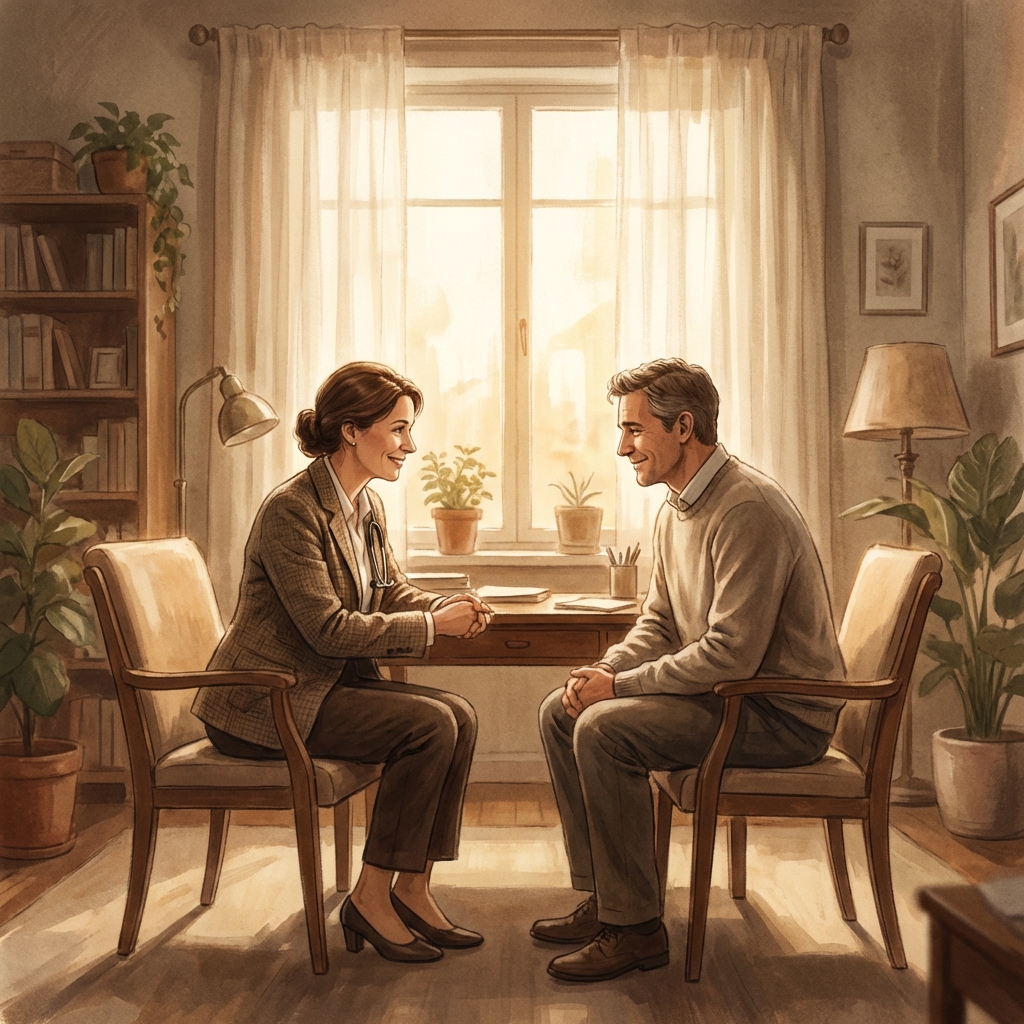
A patient sits across from a physician, separated by more than the width of an examination table. Between them stands an invisible wall—not constructed from indifference or incompetence, but from a healthcare system that has prioritized efficiency metrics over empathetic connection. Both feel it. Neither knows quite how to breach it.
The stakes of this silent divide have never been higher. Public trust in physicians has plummeted from 71.5% in April 2020 to 40.1% in January 2024, according to a 50-state Northeastern University survey published in JAMA—the lowest level since the mid-1990s. In 2026, which healthcare industry analysts have declared “the Year of the Doctor-Patient Relationship,” storytelling is not a soft skill or a marketing tactic. It is a clinical and cultural imperative.
This article explores why the trust crisis demands narrative solutions, what neuroscience and clinical research reveal about the power of doctor-patient stories, and how real stories—told with care and intention—are measurably rebuilding the relationship at the heart of medicine. For publications like Top Doctor Magazine, which has built its editorial mission around bridging the gap between healthcare providers and patients through personal interviews and professional profiles, this moment represents both a responsibility and an opportunity to lead a critical conversation.
The Trust Crisis: Why Medicine Needs a New Kind of Story
The erosion of trust in healthcare is not abstract—it is measurable, accelerating, and consequential. Gallup data reveals that trust in medical doctors has fallen 14 percentage points since 2021, representing the steepest drop of any profession measured.
This decline carries real-world consequences that extend far beyond patient satisfaction surveys. Lower trust correlates with reduced vaccination rates, diminished treatment adherence, delayed care-seeking, and an increasing reliance on artificial intelligence tools for health advice. One in three Americans used AI tools like ChatGPT for healthcare advice weekly in 2025, according to Zocdoc’s annual patient survey. The financial implications are equally stark: a one-point decline in healthcare trust scores can result in more than $12 million in annual lost revenue for a large health system.
The drivers of this distrust are multifaceted. Pandemic-era misinformation fractured public confidence in medical institutions. Transactional, “fast-food” healthcare models have replaced relationship-centered care. Digital health solutions, while offering convenience, have been shown to hinder relationship building, according to 2026 research. Physician burnout—still affecting 43.2% of physicians in 2024—further compromises the emotional availability that meaningful patient connections require.
Yet a paradox emerges: patients still want human care for anything emotionally complex or high-stakes. They want trusted relationships, not just efficient transactions. If data-driven protocols and time-pressured encounters built the wall between doctor and patient, what can tear it down?
The answer, supported by decades of research, is story.
What Neuroscience Tells Us About Why Stories Work
Stories are remembered up to 22 times more than facts alone. This neuroscience finding reframes every clinical communication strategy, transforming storytelling from a nice-to-have into a neurological necessity.
The mechanism is elegant in its simplicity. Narrative activates multiple brain regions simultaneously—sensory, emotional, and motor cortex areas light up as if the listener were experiencing the story firsthand. Data, by contrast, activates only language-processing areas. This makes stories neurologically stickier, emotionally resonant, and fundamentally more memorable than statistics or clinical protocols.
The World Health Organization recognizes this power. Its Communication for Health approach cites neuroscience, psychology, and behavioral science evidence that storytelling changes how people think and influences behavior at population scale.
The clinical implications are profound. Patients who connect with a healthcare story are 22% more likely to follow treatment plans—transforming storytelling from a communications tool into a clinical intervention with measurable outcomes.
As AI and remote monitoring expand healthcare’s digital footprint, the human story becomes more valuable, not less. Healthcare professionals report that digital health solutions hinder relationship building, making narrative-rich human content an essential counterbalance to technological efficiency.
Narrative Medicine: The Science Behind the Story
Narrative medicine provides the academic and clinical framework for understanding how stories function in healthcare settings. Developed at Columbia University in 2001 by Dr. Rita Charon, narrative medicine equips clinicians with the narrative competence to acknowledge, absorb, interpret, and act on the stories and plights of their patients.
The field has achieved remarkable institutional legitimacy. Columbia inaugurated the world’s first Master of Science in Narrative Medicine in 2009. Today, narrative medicine programs exist at 70 medical and osteopathic schools across 31 states, reflecting mainstream adoption of its principles.
The clinical evidence is compelling. Narrative medicine interventions have demonstrated measurable improvement in symptoms and suffering among patients with asthma, rheumatoid arthritis, heart failure, advanced cancer, and diabetes. Outcomes include improved medication adherence and decreased emergency room visits. A 2025 systematic review analyzing 42 studies confirmed a positive impact of narrative medicine on patient and caregiver well-being.
Critically, narrative medicine is not an alternative to evidence-based medicine—it is integrated with it. The methodology represents a union between the physician’s clinical knowledge and the patient’s lived experience, acknowledging that illness episodes are important milestones in a patient’s life story. As one researcher observed: “Not only do we live through storytelling, but often, with our doctor or nurse as a witness, we get sick, we improve, we get worse, we are stable, and finally we also die through the story.”
Real Stories, Real Outcomes: Evidence from the Exam Room
Clinical studies supporting storytelling interventions reveal measurable, replicable outcomes that transcend anecdote.
The 3-Minute Mental Makeover study demonstrated that a brief narrative exercise during outpatient visits resulted in patients feeling “like a real team” with their doctors. The intervention reduced patient stress levels significantly (P < 0.001) while improving practitioner communication scores from 4 to 5 (P < 0.001).
A MyChart narrative pilot invited patients to share personal stories before their first primary care visit. The results were striking: 95% of patients had a positive or neutral response, 86% felt it positively impacted their visit, and 93% felt it increased their comfort level with their new physician.
Research from the Wharton School found that clinics that frequently share patients’ narratives with staff gain measurable advantages. Staff engage with narratives emotionally and cognitively, integrating patients’ stories with frontline knowledge to design more patient-centered practices.
Hospital-wide storytelling events have demonstrated measurable positive impacts on staff and patient connection, creating what researchers describe as “stories that bridge us.”
Perhaps most significantly, the empathy-burnout connection offers hope for physician wellness. In 12 of 14 studies, higher empathy levels in physicians were associated with reduced burnout—and empathy is directly cultivated through storytelling practices. The direct effect of physician empathy on patient trust is substantial (direct effect value = 0.840), making empathy-driven storytelling one of the most powerful trust-building tools available.
The Anatomy of a Trust-Rebuilding Story
What distinguishes a genuinely trust-building doctor-patient story from a promotional testimonial? The difference lies in craft, intention, and ethical care.
Authentic healthcare narratives contain essential elements: a specific human being rather than a patient type, a moment of vulnerability, a turning point in the relationship, and an honest emotional arc that honors both the physician’s and patient’s perspectives. The distinction between trust-building stories and trust-eroding ones lies in specificity, emotional honesty, and the absence of a sales agenda.
Cultural dimensions matter significantly. Cross-cultural research demonstrates that power distance and individualism/collectivism significantly predict communication outcomes. Effective storytelling must be culturally sensitive and inclusive, acknowledging that patients from different backgrounds may express vulnerability and connection in different ways.
The physician’s role as storyteller is increasingly recognized. The American Medical Association offers free storytelling resources for physicians, acknowledging that “the more physicians are able to reflect their stories, the better it is for our patients, both in clinical care and also in creating the systemic change.”
Ethical frameworks must guide this work. Authentic doctor-patient stories require informed consent, careful anonymization where needed, and a commitment to honoring the patient’s dignity. Storytelling in healthcare is both a clinical and journalistic responsibility.
How Storytelling Rebuilds Trust at Every Level of Healthcare
At the Individual Level: The Transformative Moment Between Doctor and Patient
A single story shared in the exam room—a physician’s own experience with illness, a patient’s narrative of their journey—can shift the relational dynamic from transactional to transformational. Research confirms that low trust increases perceived conflict in patient-provider interactions, creating a cycle that only authentic human connection can interrupt.
Active listening functions as a narrative act. When a physician truly hears a patient’s story, the clinical encounter becomes a co-authored narrative rather than a data-collection exercise. A 2026 study found that patients, doctors, and students view AI as a supportive tool rather than a replacement for human care—the irreplaceable element remains the human story.
At the Organizational Level: Stories as a System-Wide Trust Strategy
Health systems and medical practices can embed storytelling into their organizational culture through staff narrative-sharing events, patient story libraries, and narrative medicine training programs. Practices that regularly share patient narratives with staff see improved patient-centered design and care delivery.
The digital dimension offers measurable benefits. Practices that embed patient story content into websites and social channels see dwell times increase by 40%, signaling authority to search engines while building authentic connection. Given that a one-point trust decline costs large health systems over $12 million annually, organizational investment in storytelling culture represents a financial strategy, not merely a values statement.
At the Public Health Level: Stories That Change Behavior at Scale
The WHO’s Communication for Health framework positions storytelling as a core public health tool because it changes how people think and influences behavior at population scale. The trust crisis has real public health consequences, and narrative campaigns have demonstrated the ability to shift health behaviors where data campaigns have failed.
Publications dedicated to authentic doctor-patient stories serve both individual readers and the broader health ecosystem, functioning as vehicles for trust-building public health narrative.
Why 2026 Is the Defining Moment for Doctor-Patient Storytelling
Multiple forces converge to make 2026 a pivotal year. The trust crisis has reached historic lows. The AI revolution raises fundamental questions about human connection in care. Physician burnout still affects nearly half of all physicians. And industry analysts have declared this the Year of the Doctor-Patient Relationship.
As one in three Americans turn to ChatGPT for health advice weekly, the question is not whether technology will play a role in healthcare—it will—but whether the human story at the center of medicine will be preserved or lost.
The burnout crisis adds urgency. Nearly six in ten physicians experienced inappropriate feelings of anger, tearfulness, or anxiety in the past year, matching pandemic-level emotional distress. Storytelling and narrative medicine have been shown to support clinician well-being and mitigate burnout, making this a physician wellness issue as much as a patient trust issue.
The publications, practices, and healthcare systems that invest in authentic storytelling now will define the next era of medicine. Storytelling is not a retreat from evidence-based medicine. It is its completion.
Conclusion: The Story Is the Medicine
Return to that examination room—the patient and the physician across from each other. A single authentic story shared between them, a moment of genuine human recognition, can transform the encounter entirely.
The neuroscience is clear. The clinical evidence is compelling. The cultural moment is urgent. Doctor-patient relationship storytelling is not a supplement to good medicine—it is, in many ways, the medicine itself.
This power carries responsibility. Stories told carelessly can harm. Stories told with integrity, empathy, and craft can heal—both individuals and a fractured healthcare system.
The physician and the patient are co-authors of medicine’s most important narrative: the story of what it means to care for another human being. Top Doctor Magazine, as a publication dedicated to bridging the gap between healthcare providers and patients through personal stories, is not merely covering this moment in medicine—it is part of it.
Explore More Stories That Rebuild Trust in Medicine
Readers seeking to explore the human dimension of healthcare are invited to discover Top Doctor Magazine’s curated collection of doctor-patient relationship stories, physician profiles, and narrative medicine features.
Healthcare professionals who wish to share their own stories can visit Top Doctor Magazine’s nomination platform, where doctors receive recognition for their contributions to patient care and the human side of medicine.
General audience readers can subscribe to the Top Doctor Magazine biweekly newsletter for ongoing coverage of the transformative moments of medicine—stories that go beyond clinical data to capture what healing truly means.
For healthcare professionals seeking to amplify their story and connect with patients, peers, and the broader health community, Top Doctor Magazine’s editorial features and awards program offer meaningful opportunities for recognition and connection.
Because in medicine, the story told—and the story heard—can change everything.